
Reeling cables
Power, control and data cables that wind on and off reels and drums while cranes, stackers, mining machines and tunnel boring machines travel — from low-voltage crane leads to 33 kV mining cables.
How does the cable move?
Pick one or more duties — the list below updates.
34 reeling cables
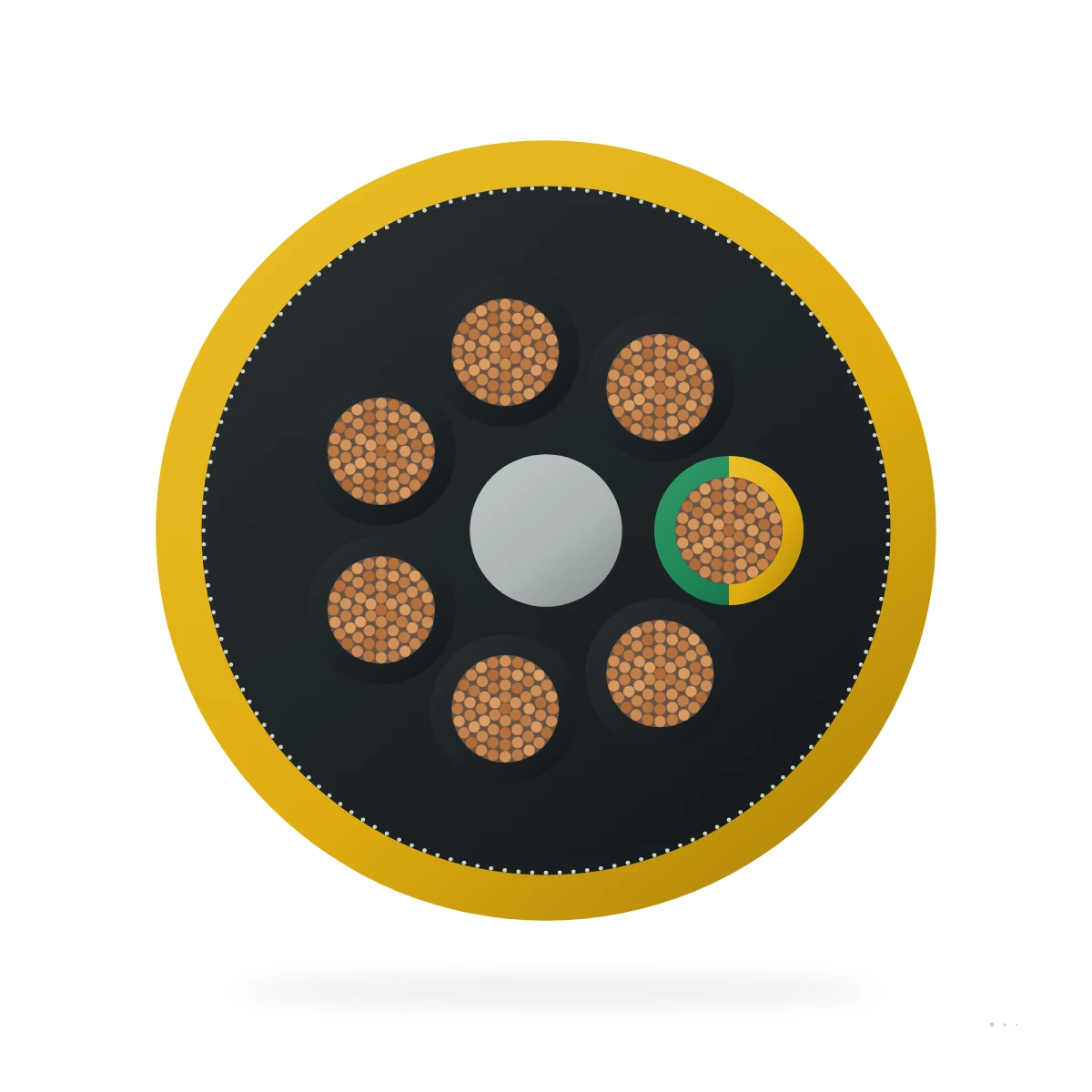
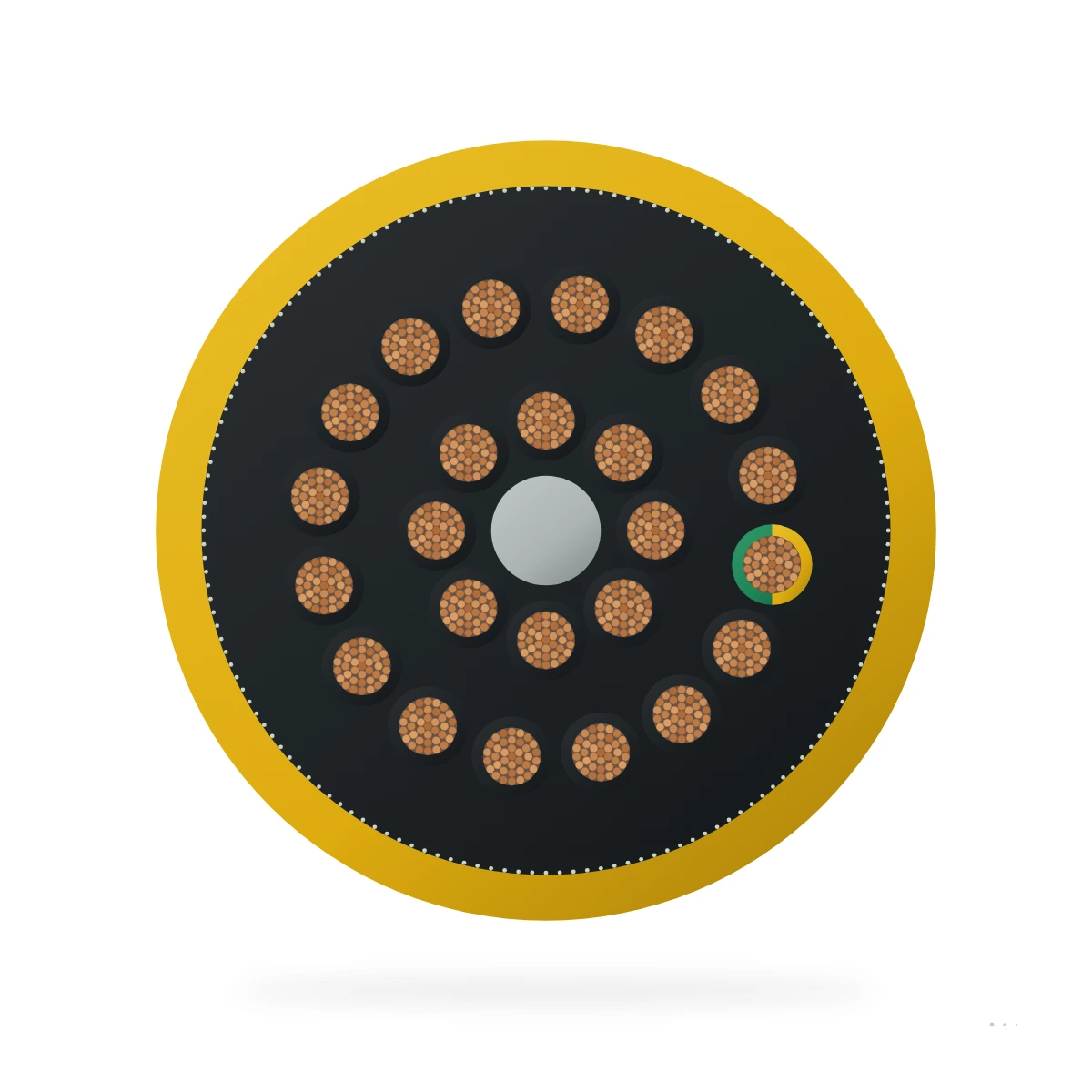
Low-voltage reeling
Up to 0.6/1 kV for cranes, conveyors and material handling, with rubber, PUR or PVC sheaths.
8 cables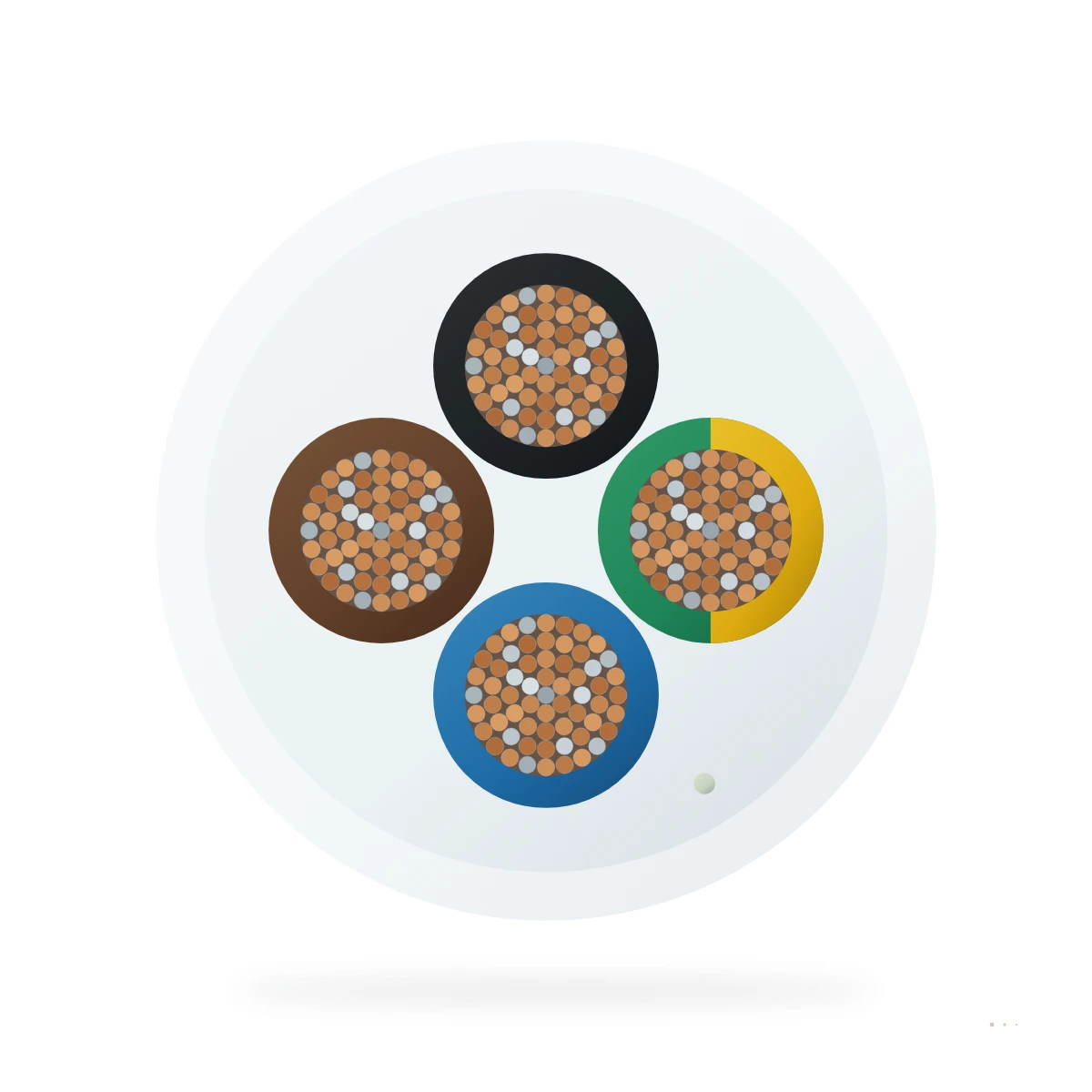
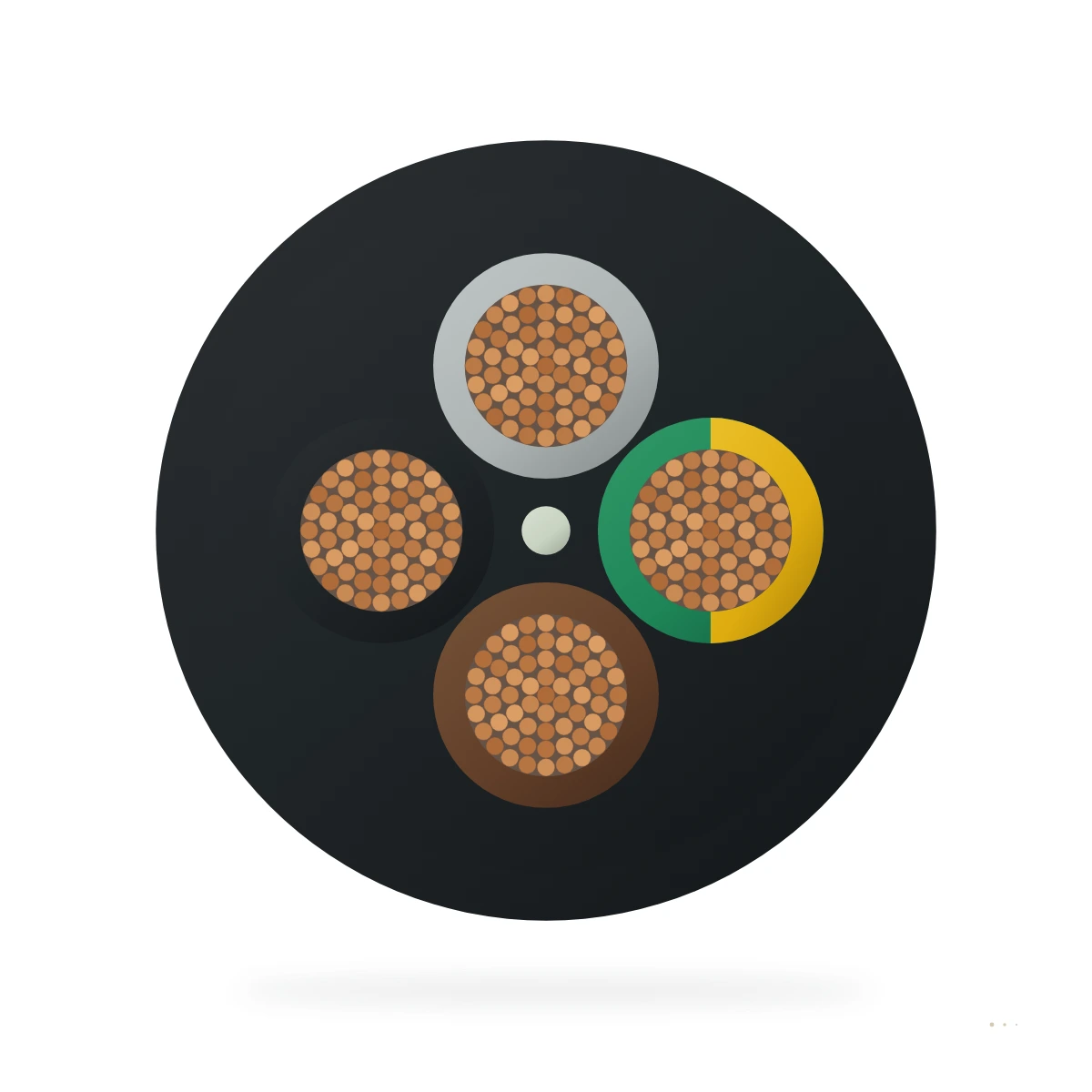
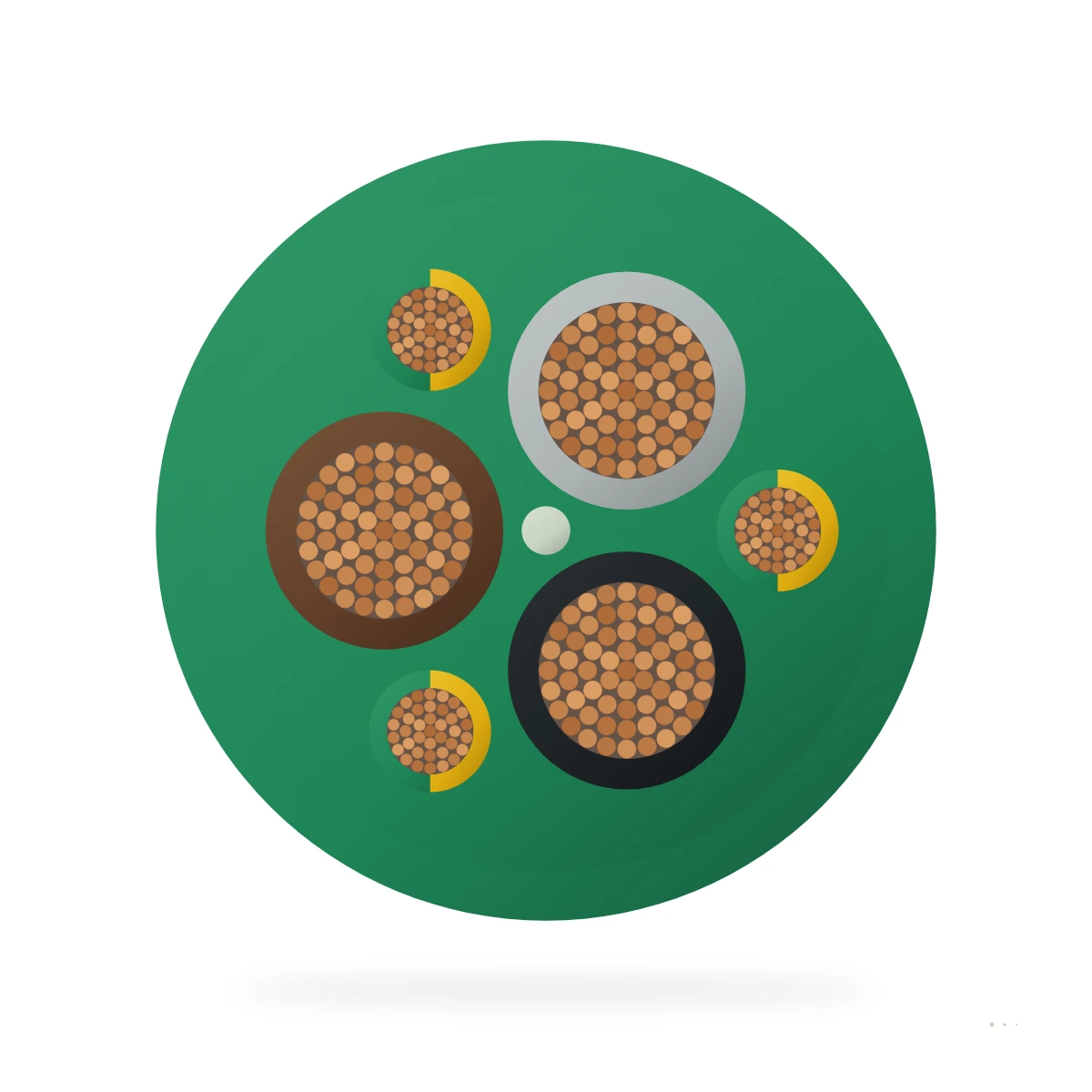
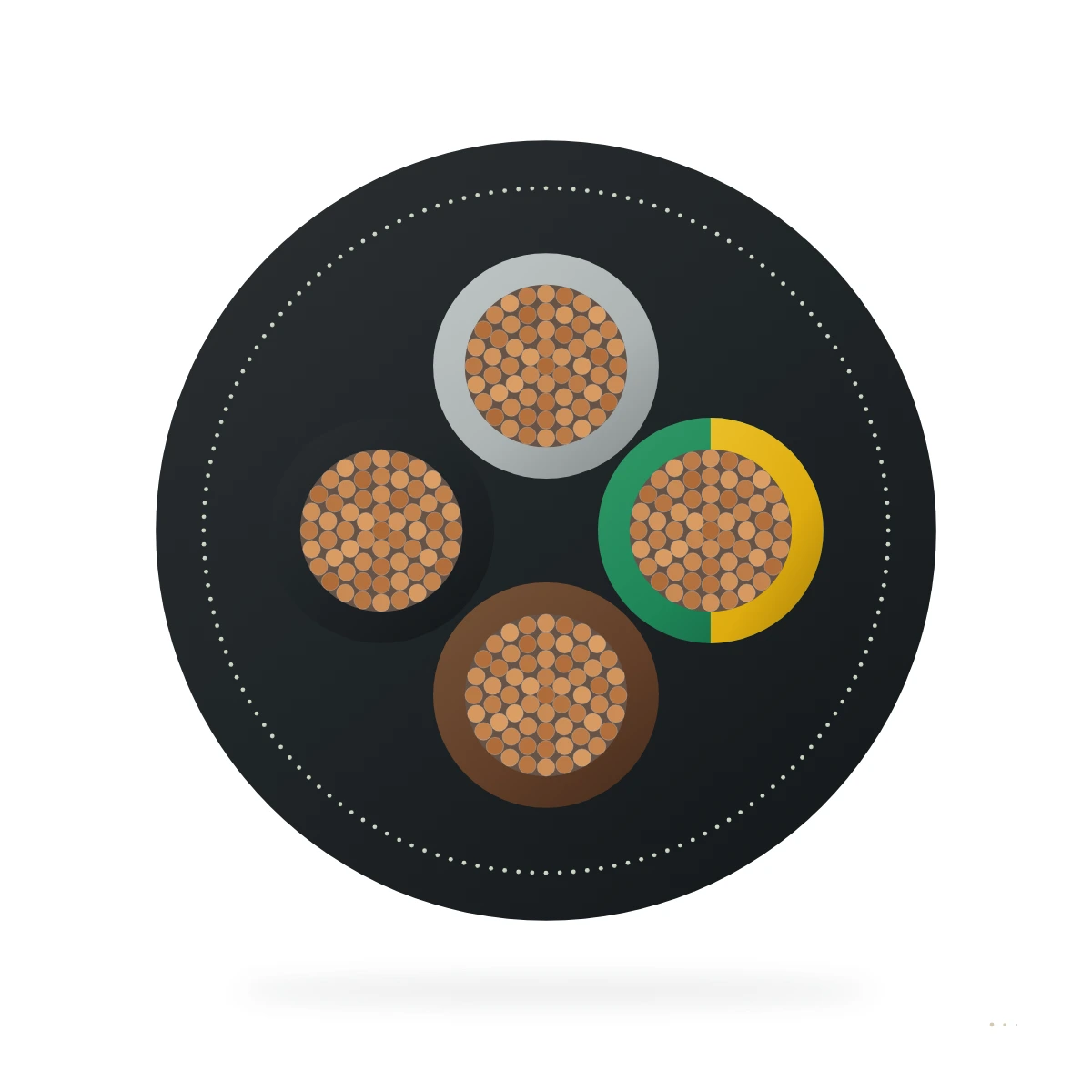
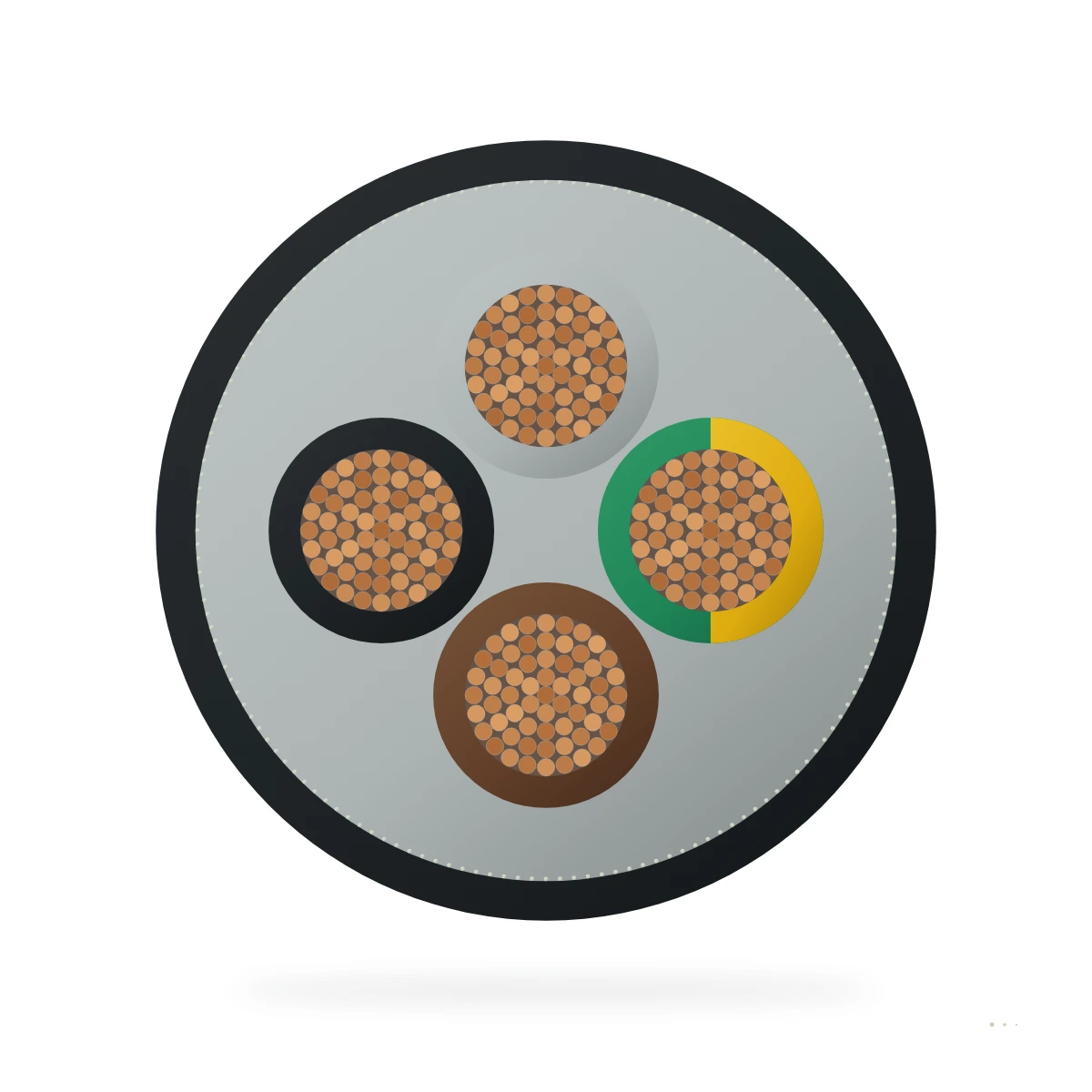
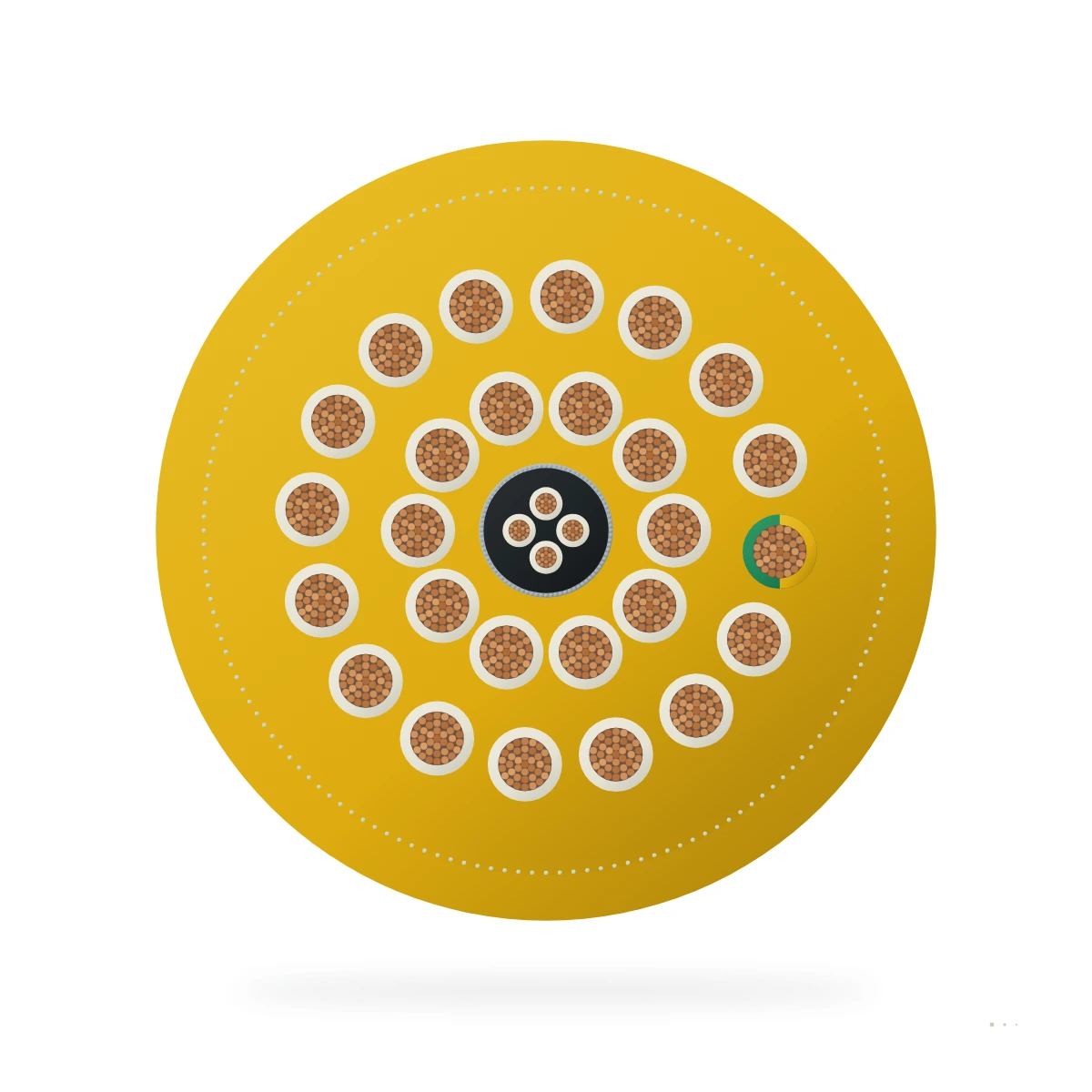
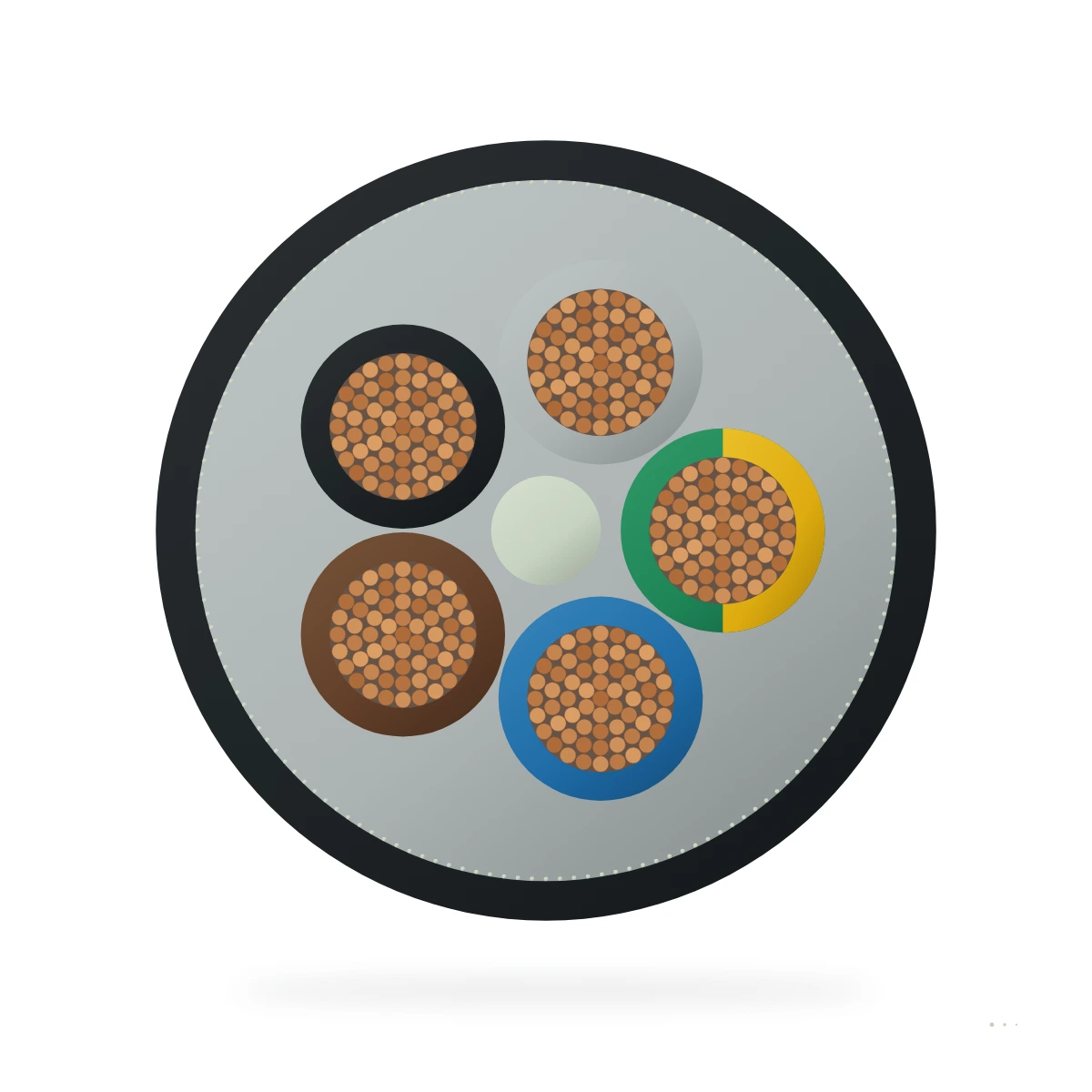
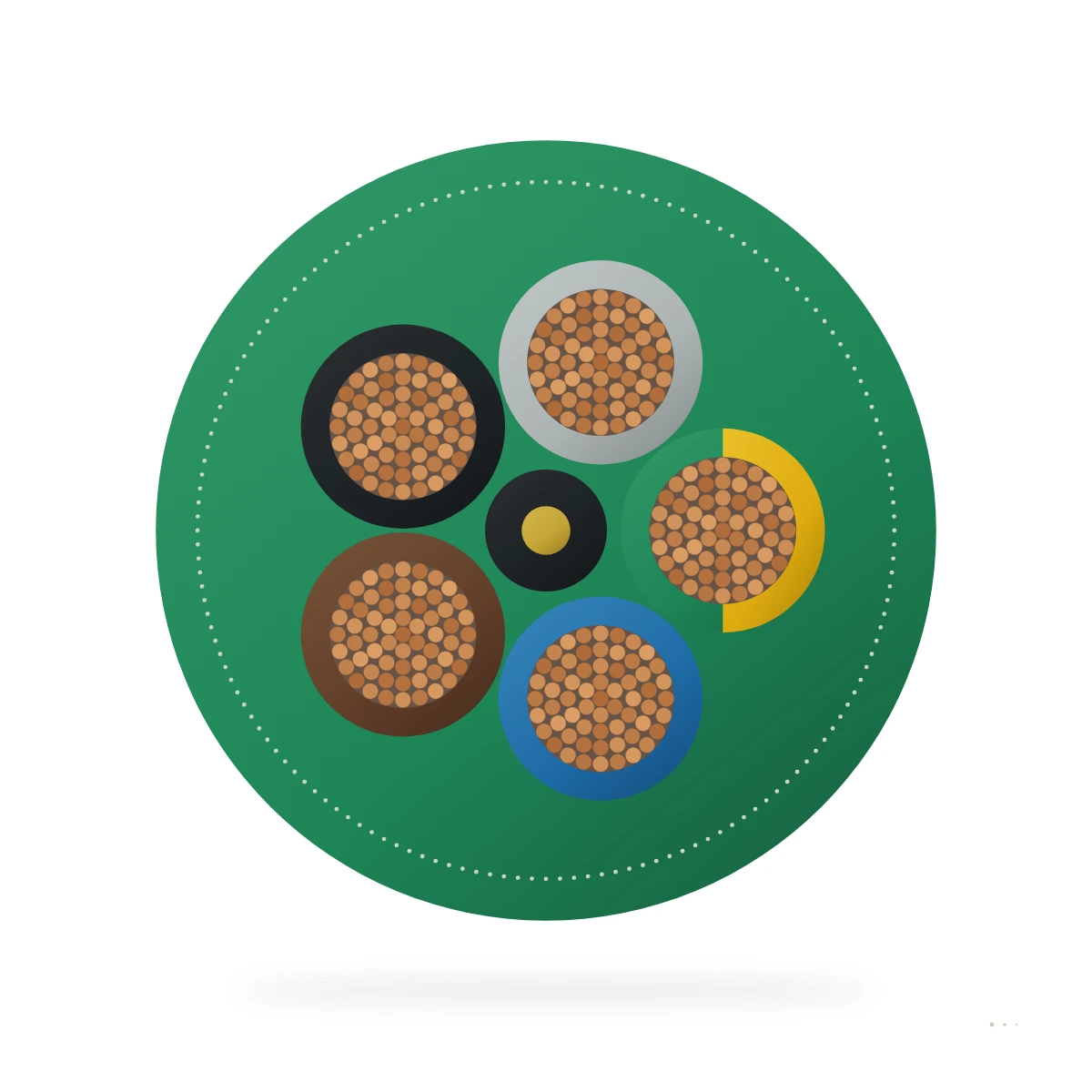
Vertical & spreader reeling
With a support element for vertical and spreader reels, hanging loads and high acceleration.
4 cables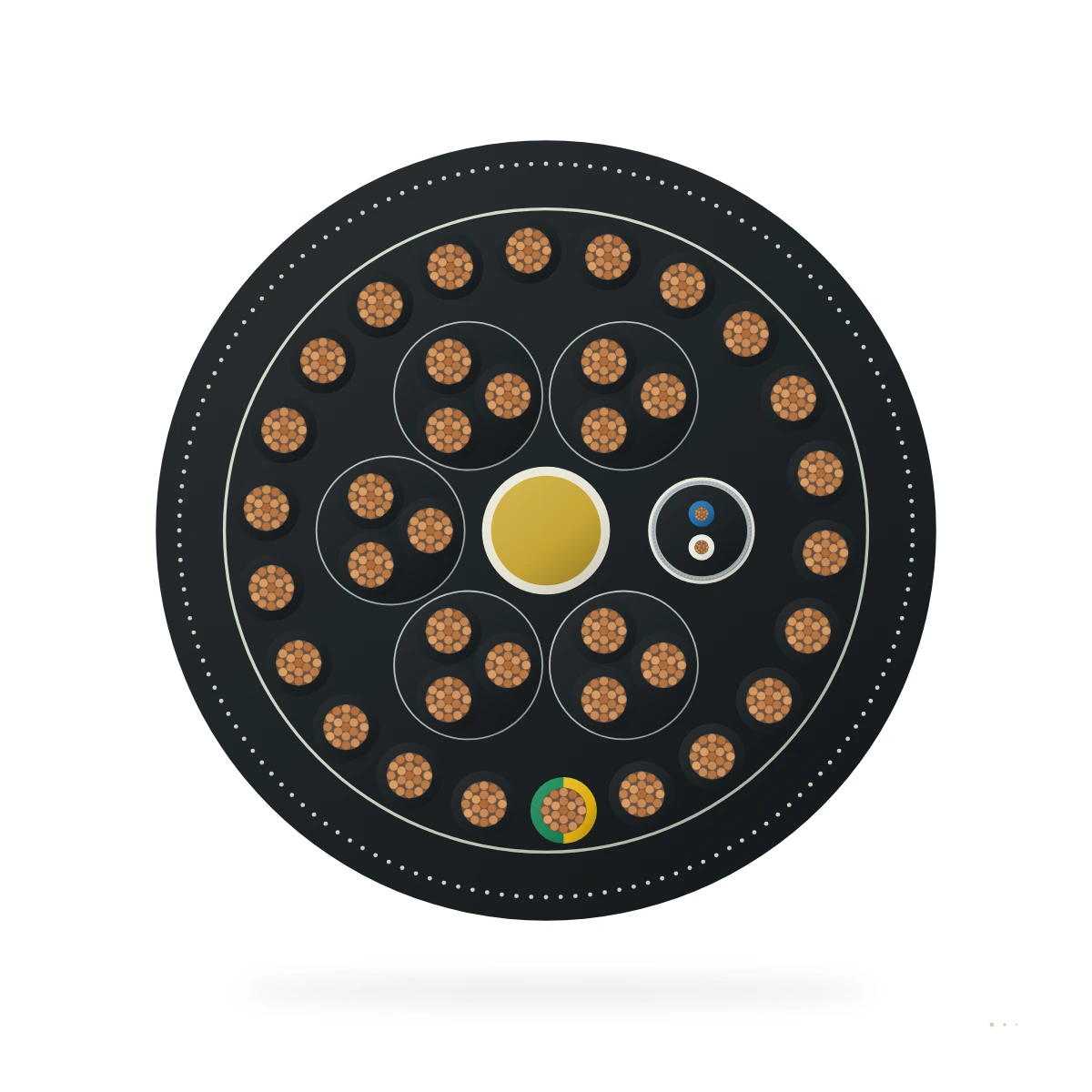

Medium-voltage reeling
Screened cables from 1.8/3 to 12/20 kV for motorised reels on container cranes and stackers.
6 cables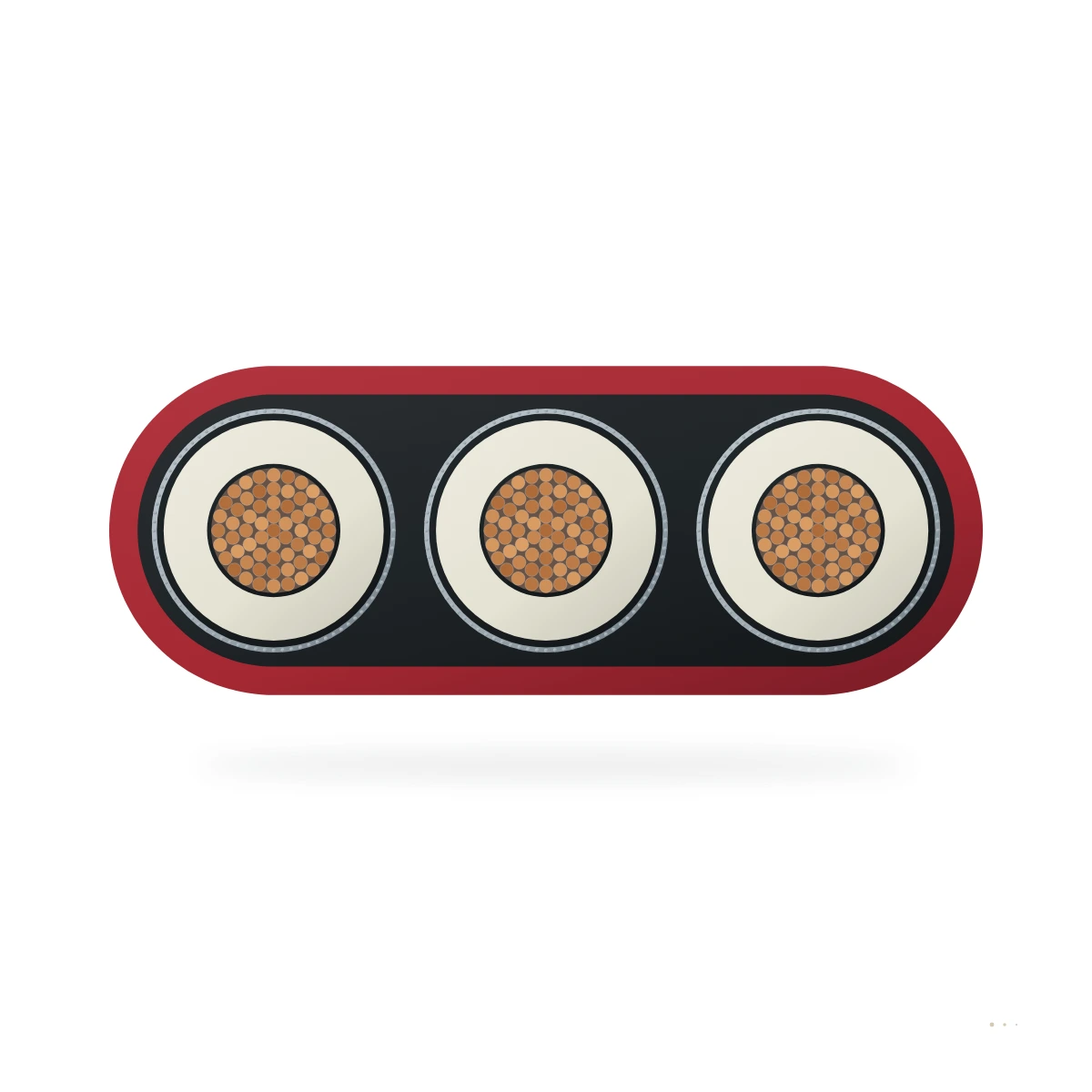
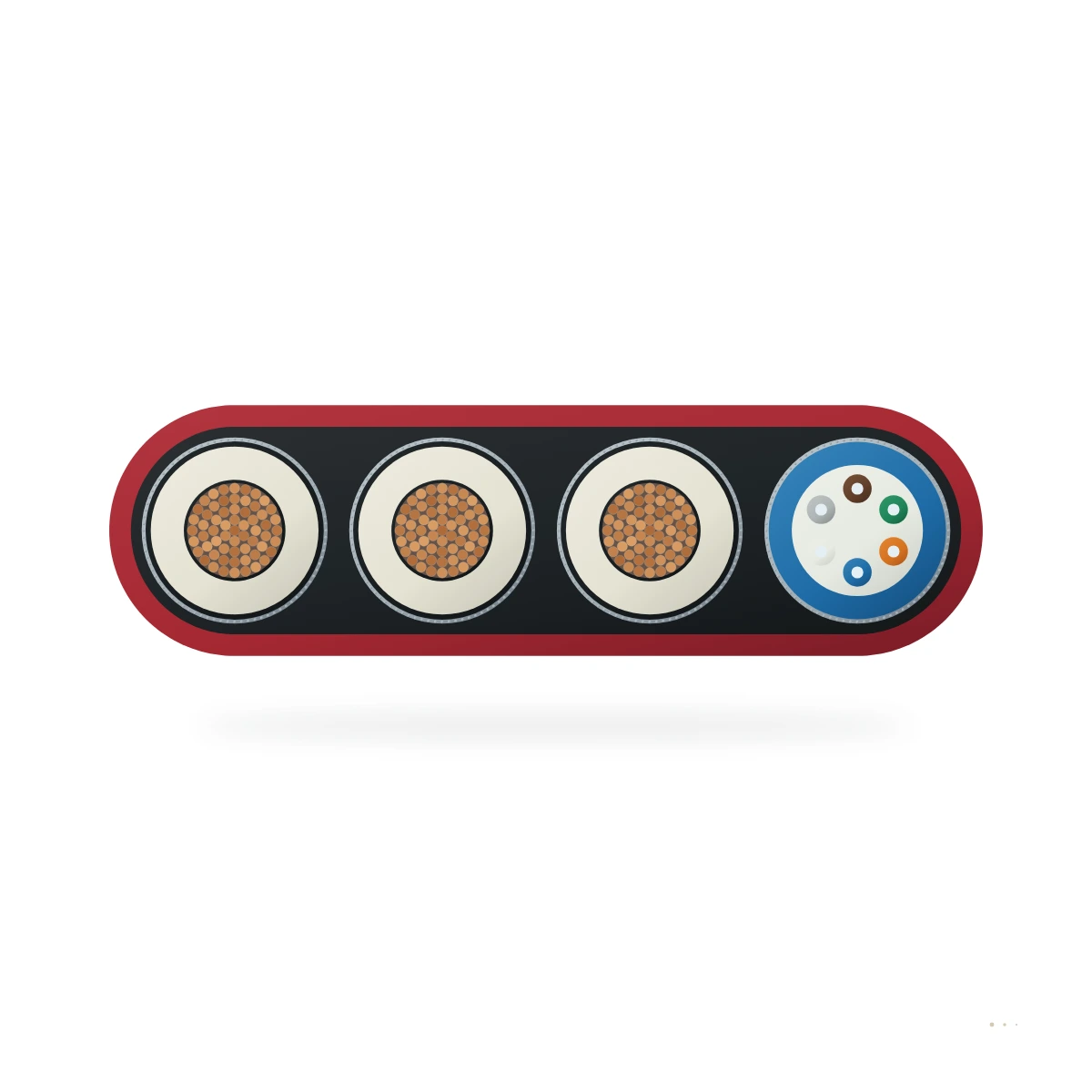
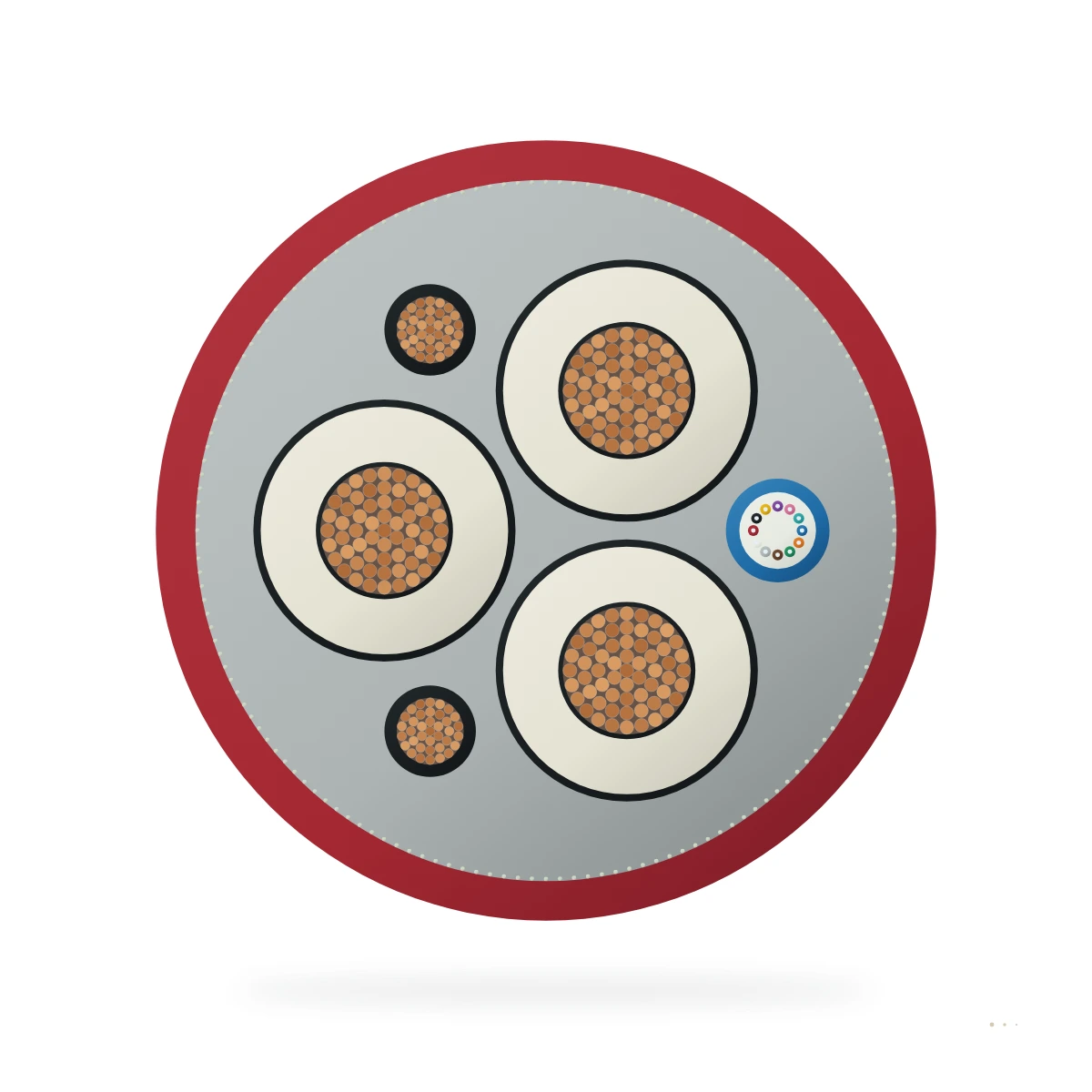

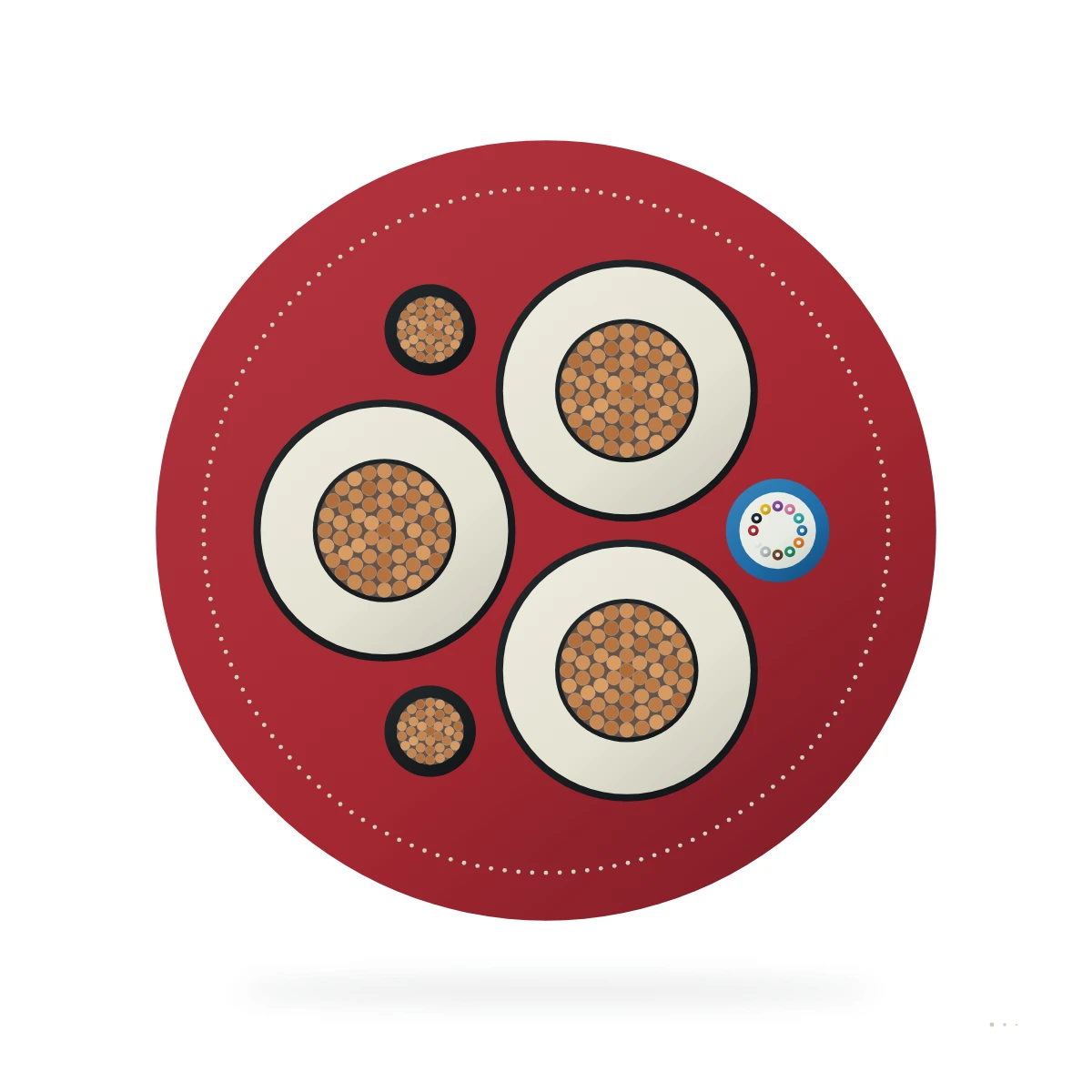
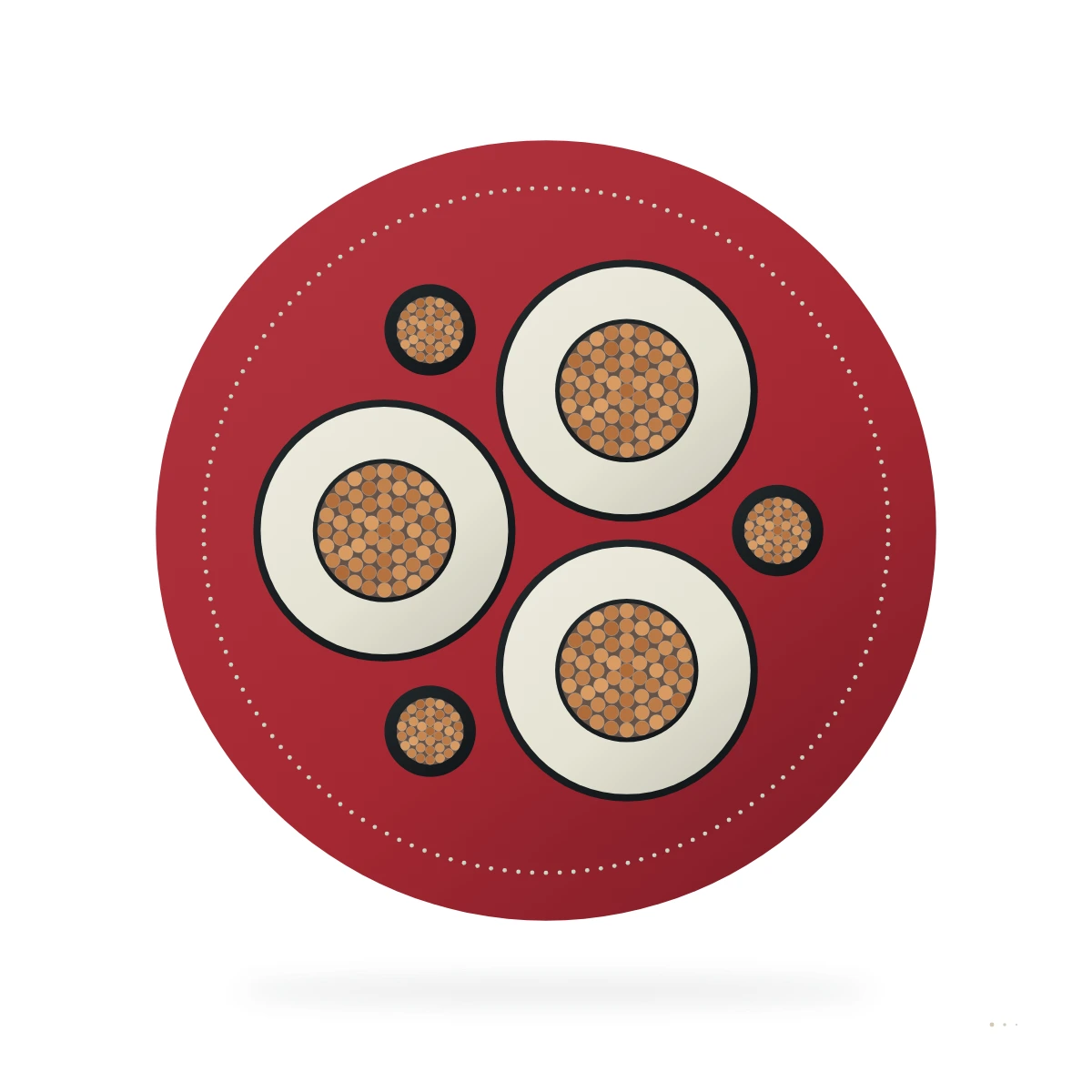
Mining reeling & trailing
AS/NZS, SANS and DIN VDE mining cables for reeling and trailing duty.
7 cables
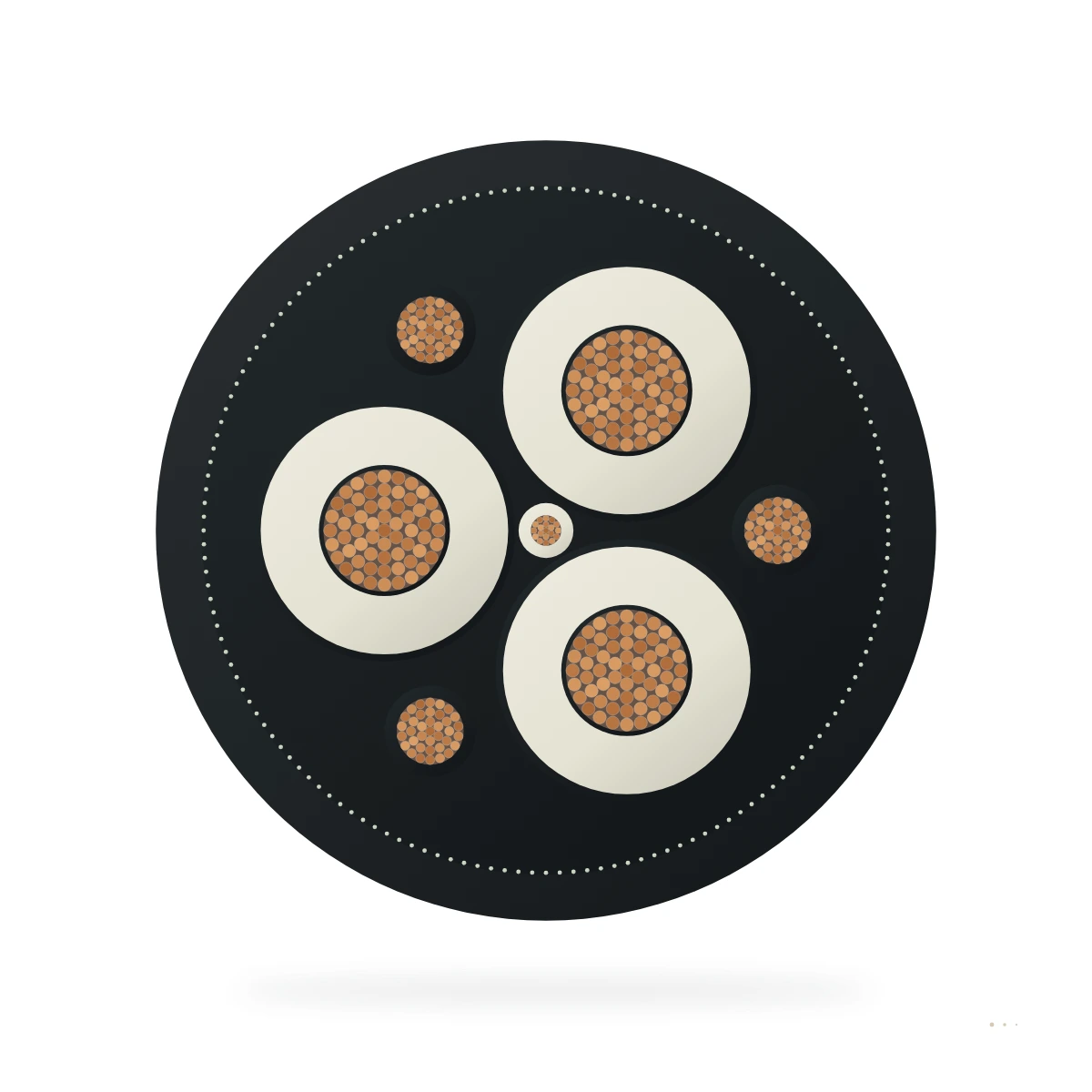
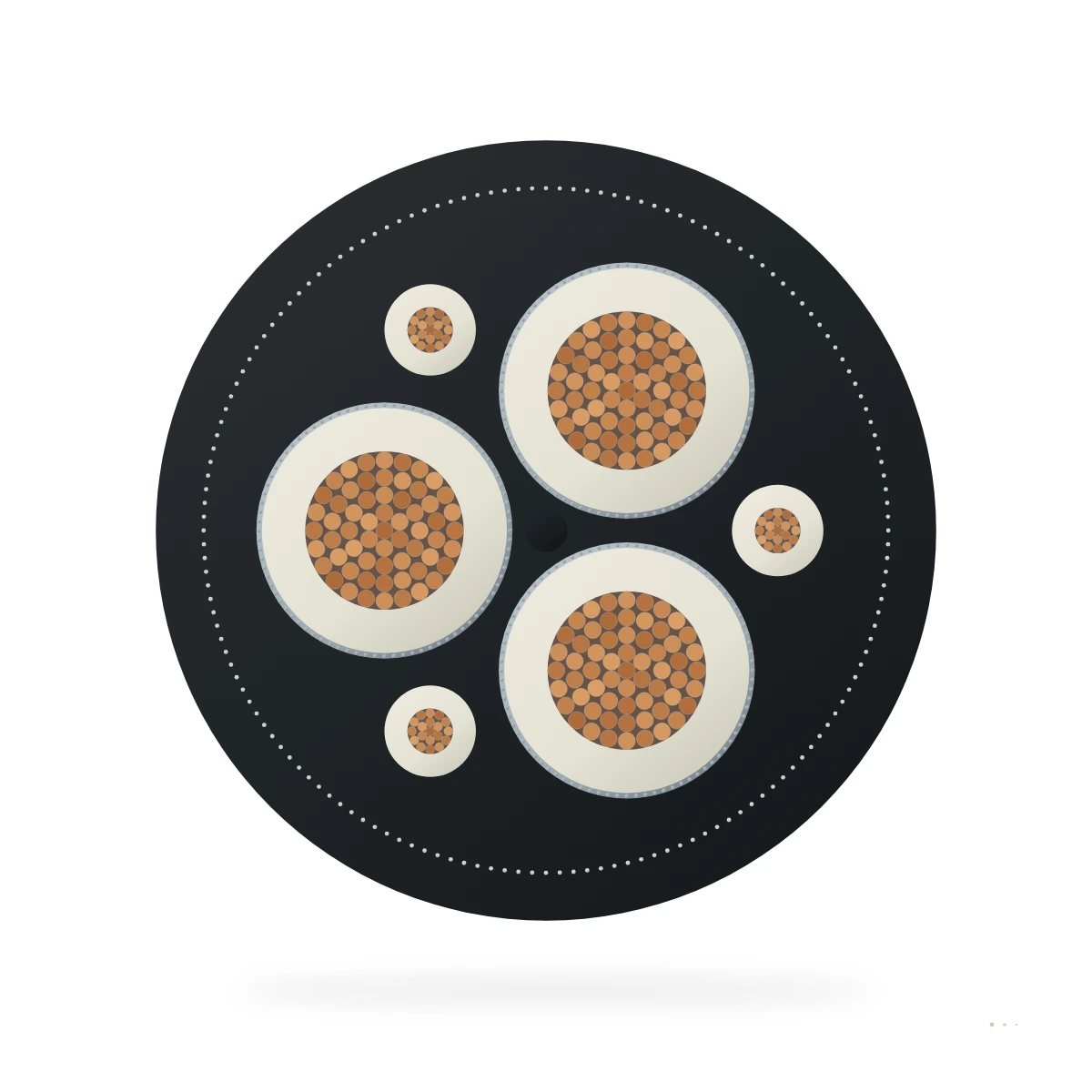

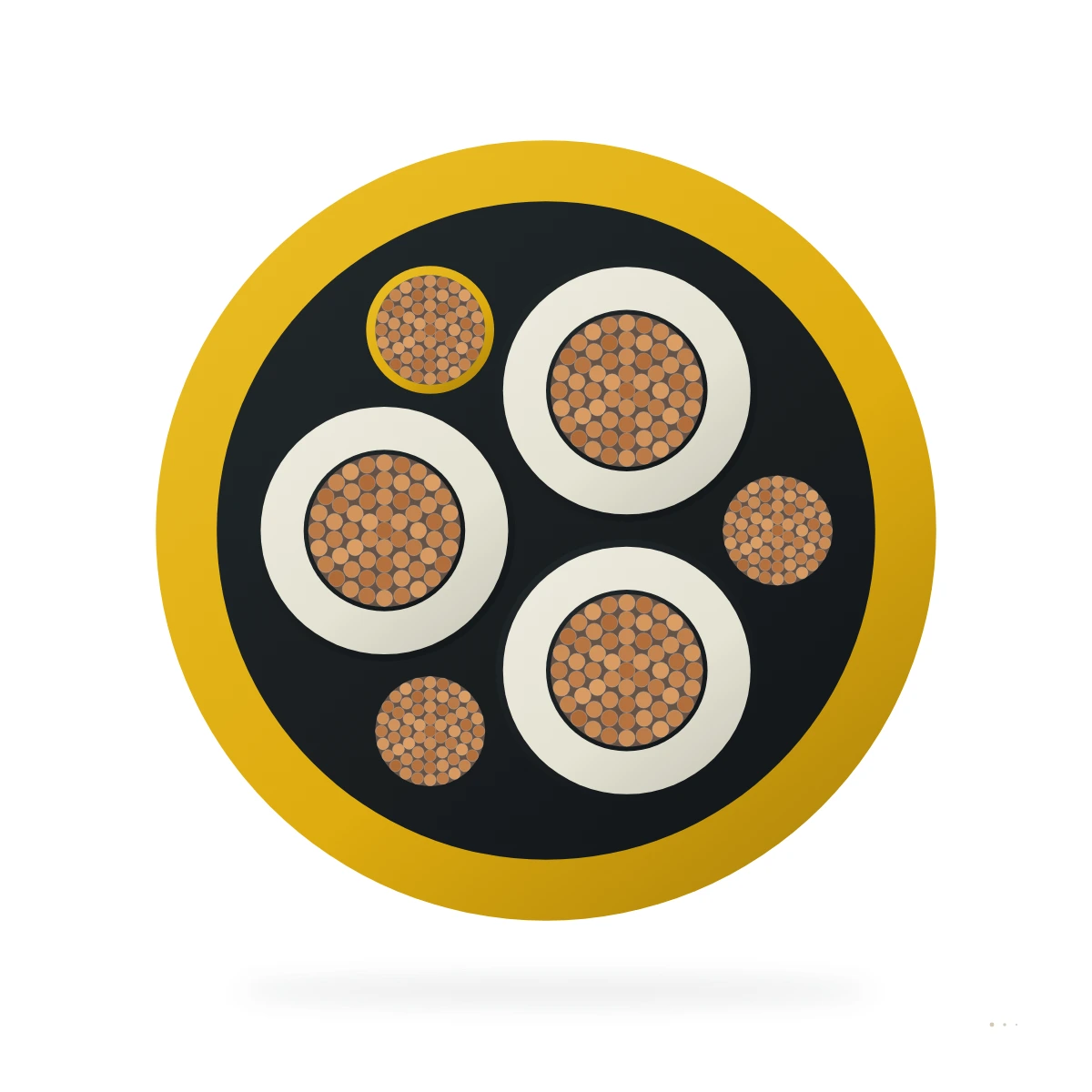
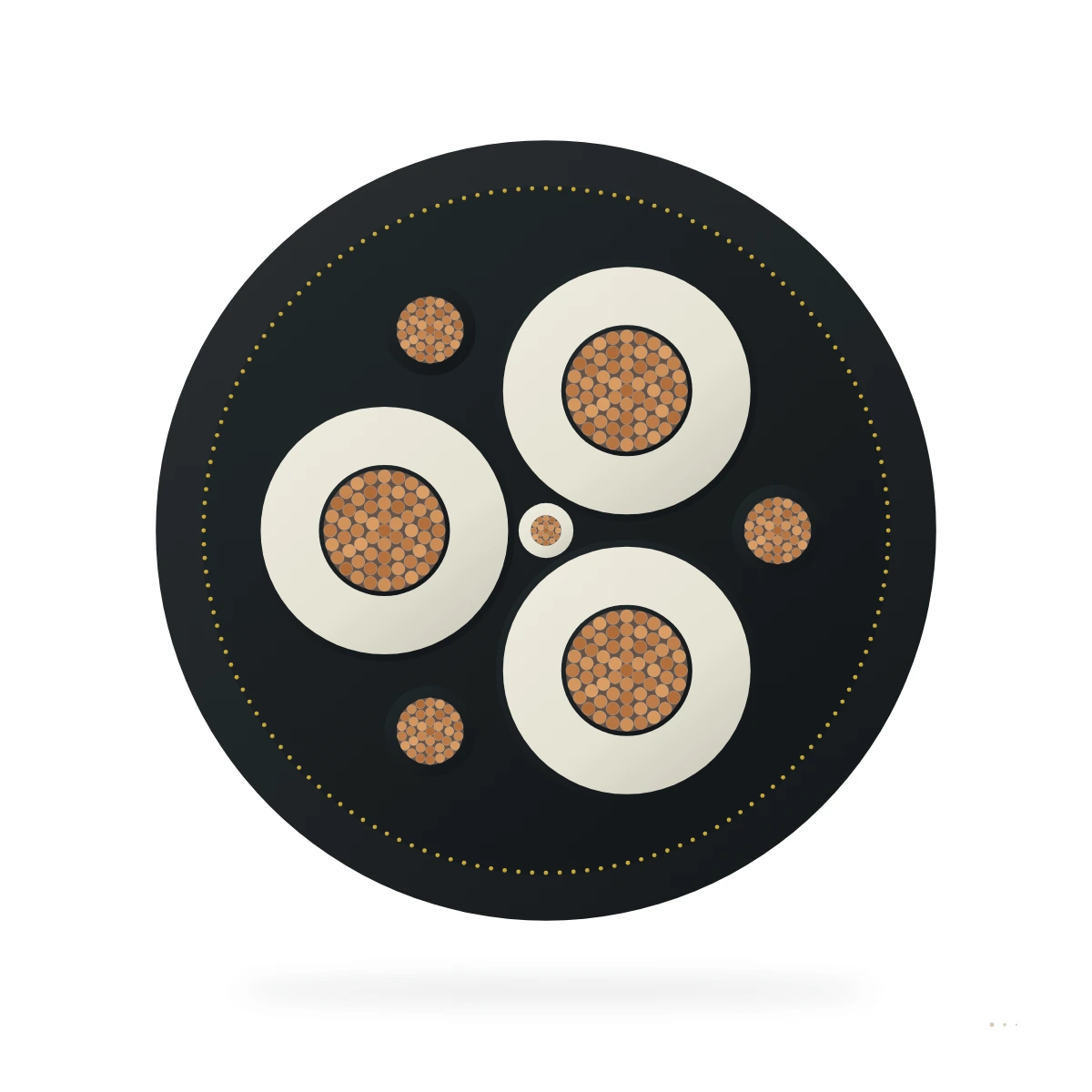

Special duty
Tunnel boring machines, shore power and fibre-optic reeling.
9 cables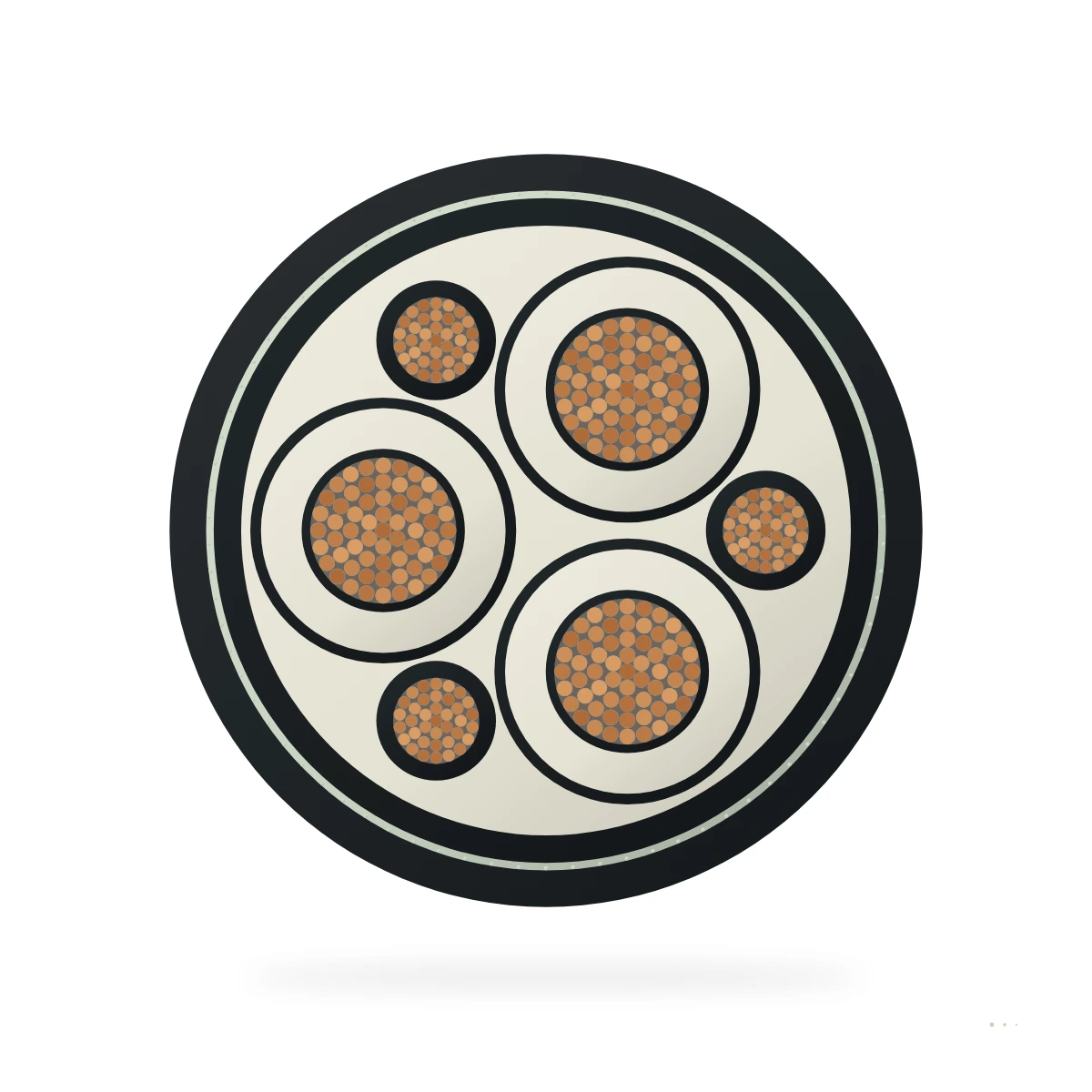

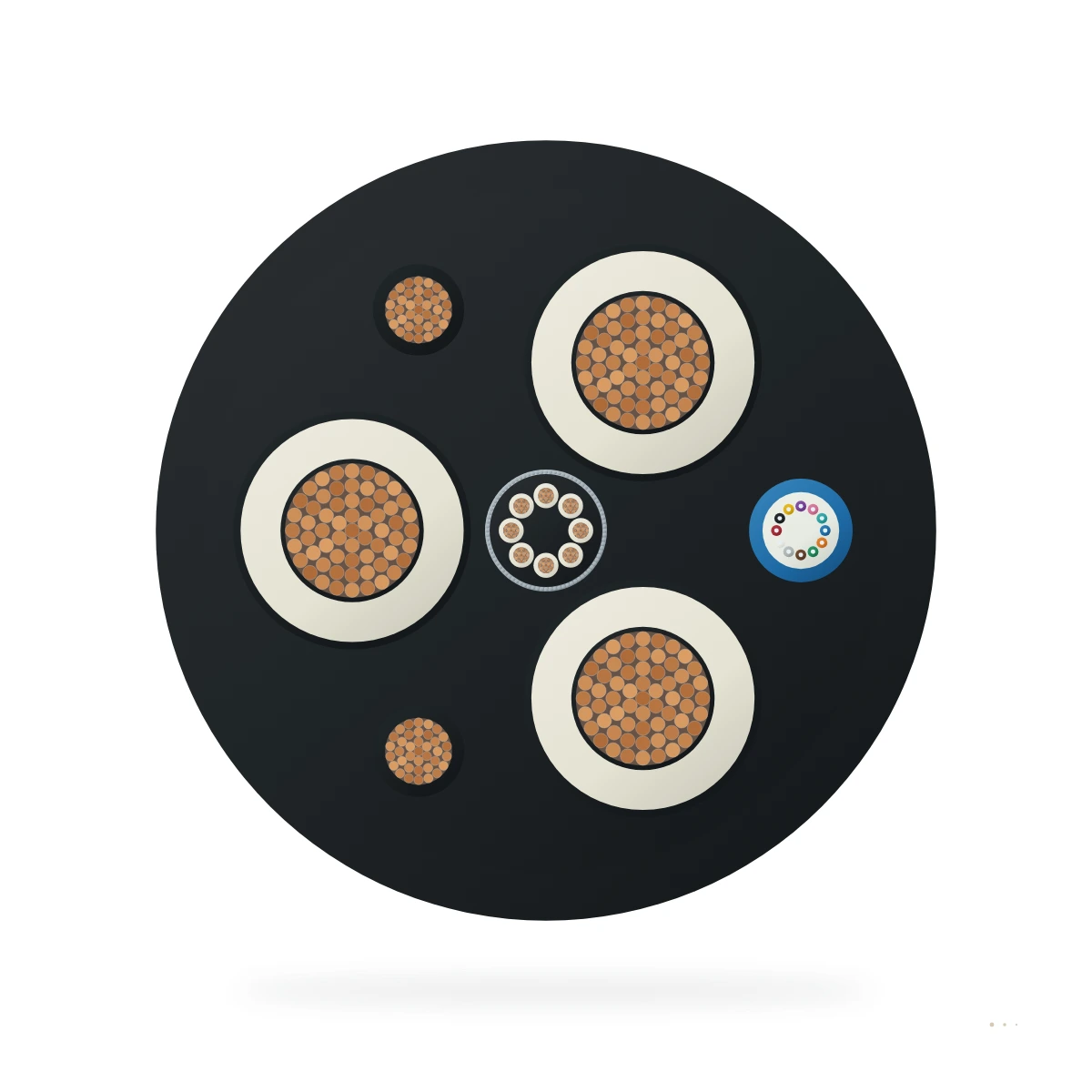
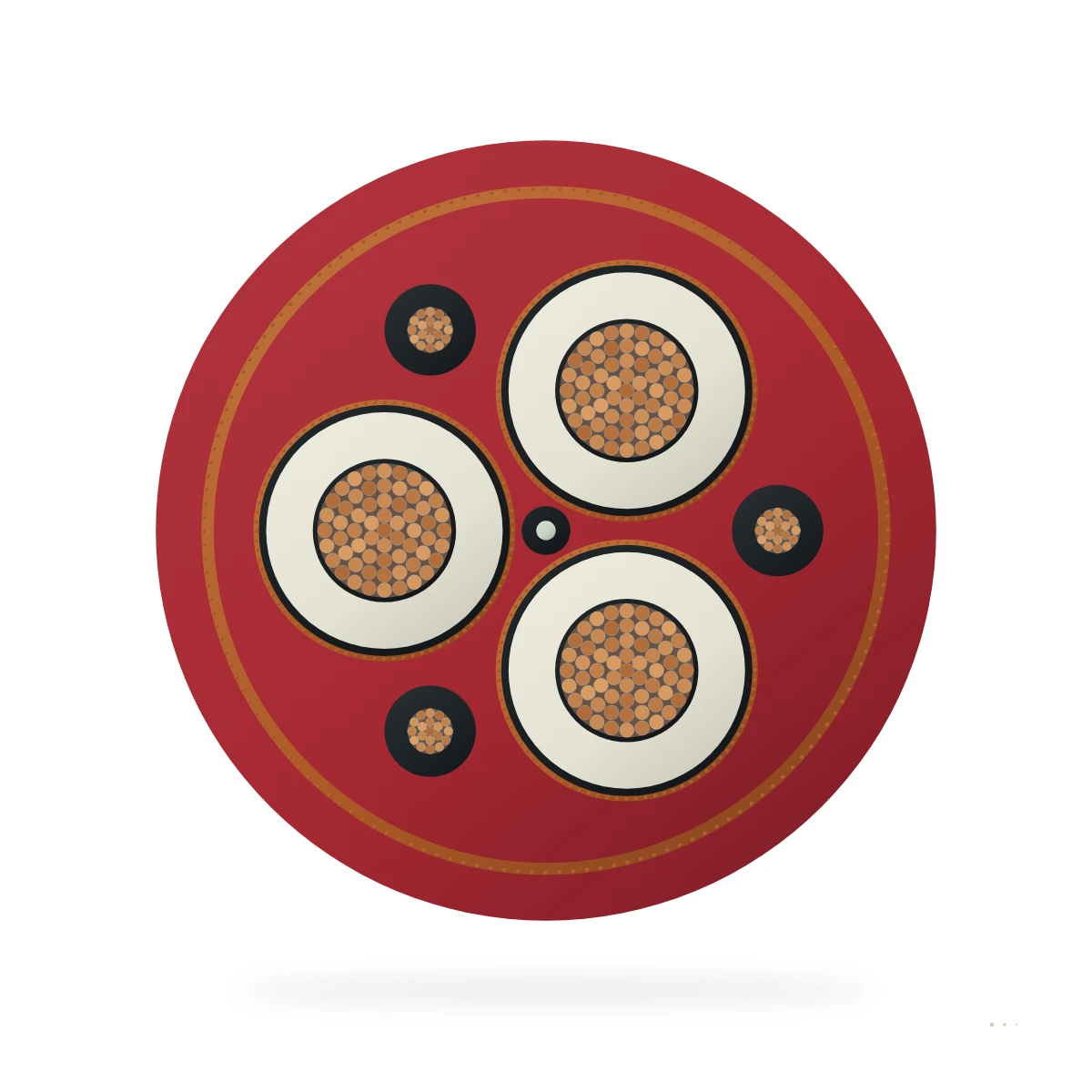
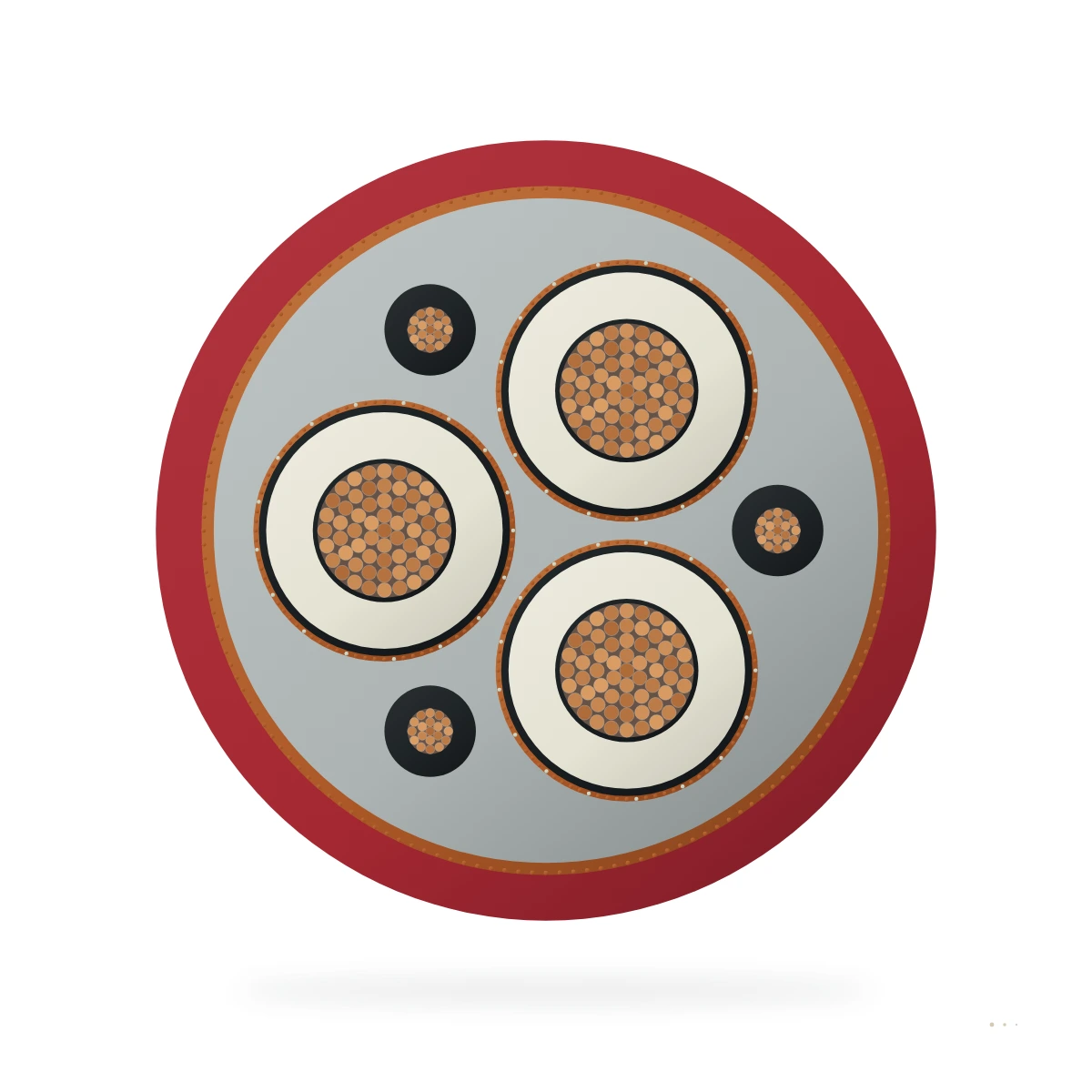
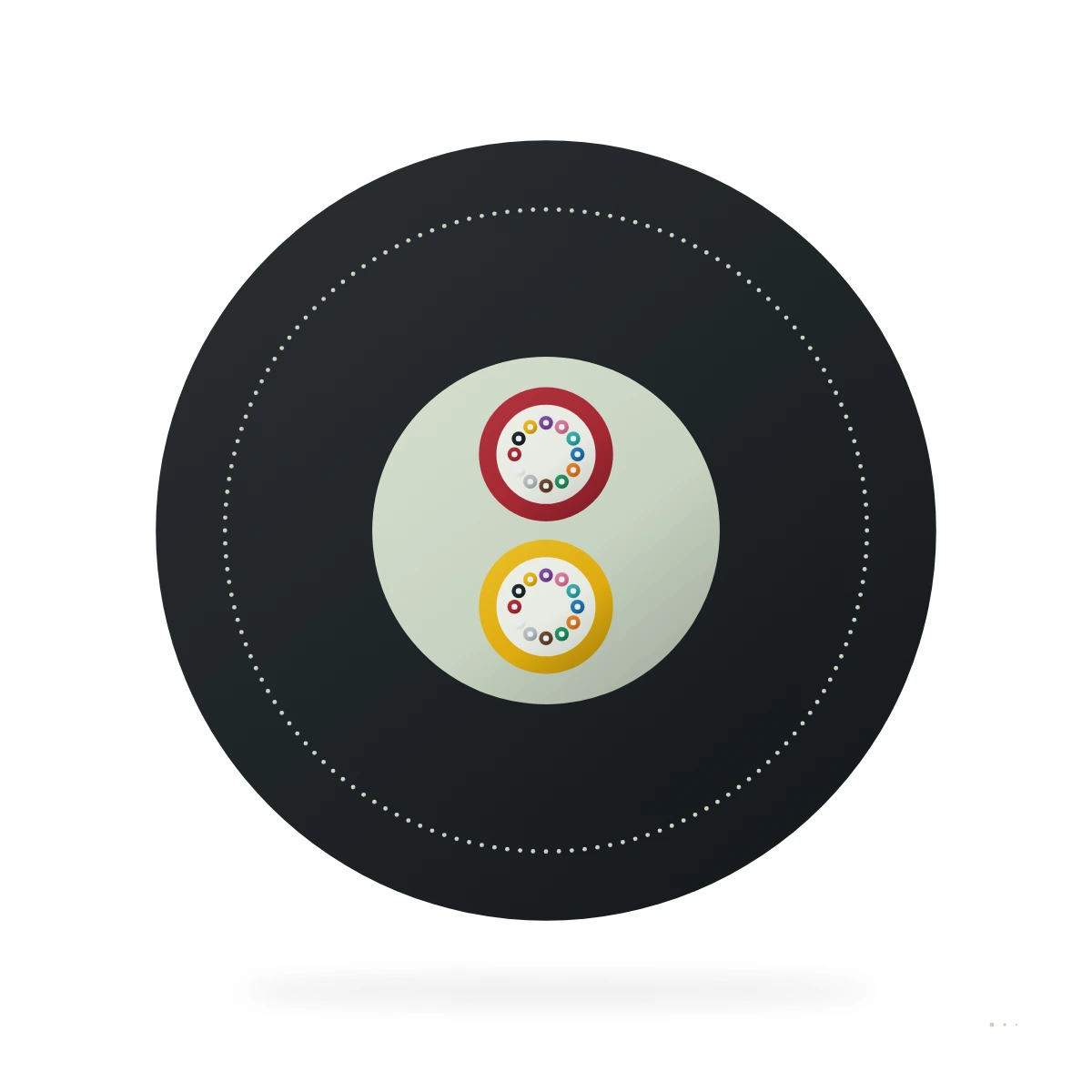
Choosing reeling cables
Four things decide most selections. Our engineers check the rest against your application.
Reel and motion
- Monospiral, level-wind or random-wind: the reel type sets how the cable bends.
- Vertical and spreader reels need a support element for the hanging load.
- Spring-driven reels suit light, short travel; motorised reels suit long and fast travel.
Voltage and screening
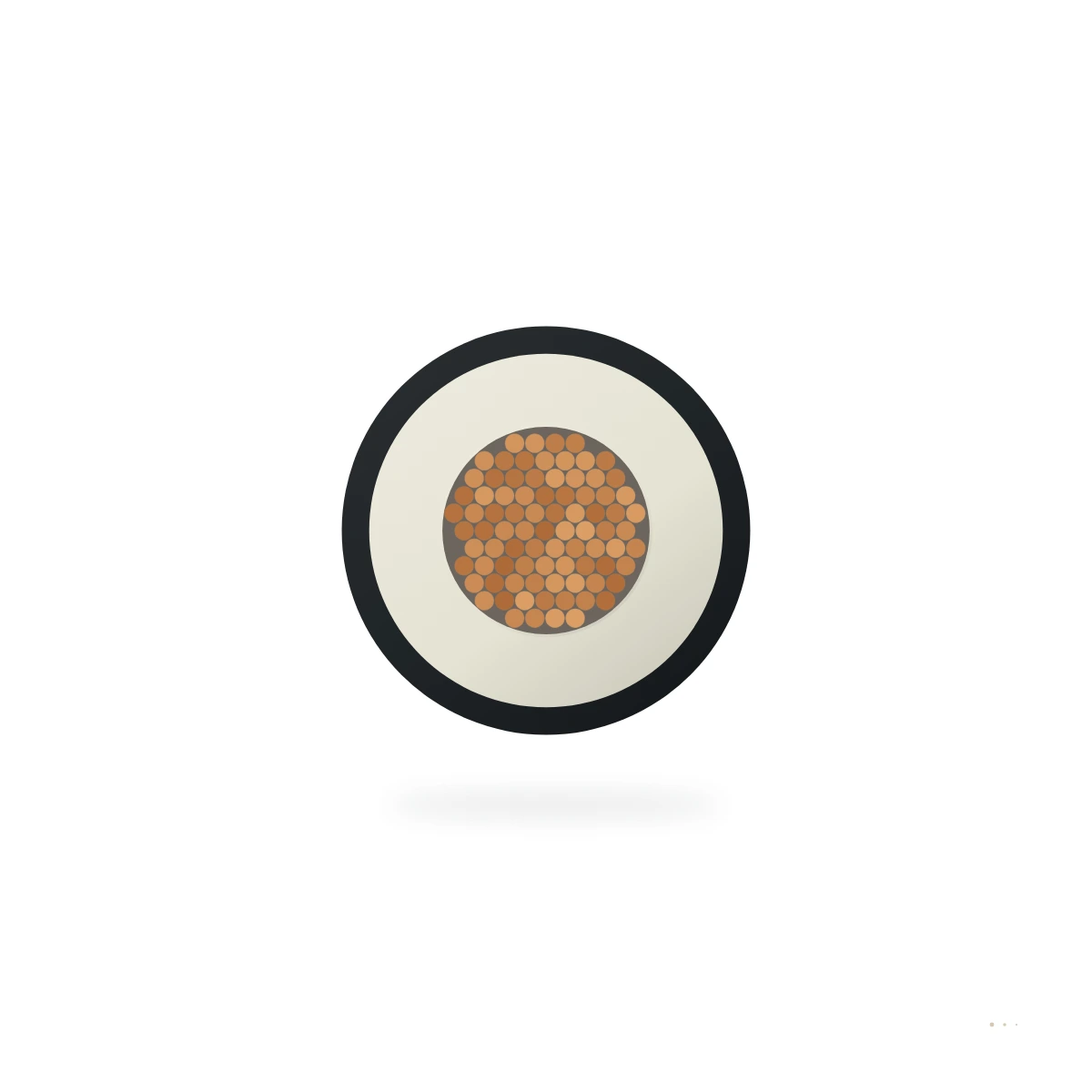
- Up to 0.6/1 kV, unscreened power and control cores are usual.
- From 3.6/6 kV, semiconductive layers and copper screens control the electric field.
- Mining types add earth and pilot cores for earth-continuity monitoring.
Speed, tensile and bending
- Compare travel speed and acceleration with the cable's rating.
- The drum core diameter should be at least twice the cable's minimum bending radius in motion.
- The permissible tensile load limits suspended length and acceleration.
Environment and standard
- UV, ozone, oil and low temperature decide the sheath compound.
- Specify the standard your site requires: DIN VDE, AS/NZS or SANS.
- Ask for data or fibre-optic elements early, because they change the construction.
Questions buyers ask
Not covered here? Send your drawing and an engineer replies within 2 business hours.
Ask on WhatsAppWhat is the difference between reeling, festoon and trailing cables?
A reeling cable winds on and off a drum, so it must handle repeated bending, tension and torsion on the reel. A festoon cable hangs in loops from trolleys and bends in one plane. A trailing cable is dragged along the ground behind a machine and needs a tough, abrasion-resistant sheath. Some designs cover more than one duty; the duty column in the list shows which.
Rubber, PUR or PVC: which sheath should I choose?
Rubber sheaths (PCP or CPE) are the robust choice for heavy-duty and medium-voltage reels, with good resistance to heat, oil and weather. PUR is lighter and very resistant to abrasion and cuts, which suits fast low-voltage reels. PVC is an economical option for light-duty spring-driven reels in sheltered conditions.
When do I need a cable with a support element?
When the cable carries its own weight or a hanging load: vertical and spreader reels, long free-hanging lengths and high acceleration. The support element takes the tensile load so the conductors do not stretch. Horizontal reels normally do not need one, unless the suspended length is long.
Which voltage class should I specify?
Match the cable's rated voltage U0/U to your supply system: 0.6/1 kV for low-voltage machines, and 3.6/6, 6/10, 8.7/15, 12/20 or 18/30 kV for medium-voltage supplies. From 3.6/6 kV the cores are screened. Tell us the system voltage and earthing arrangement and we confirm the class.
Can reeling cables carry data or fibre optics?
Yes. Several types combine power cores with data pairs or fibre-optic elements, and there are dedicated fibre-optic reeling cables. Ask for them at the enquiry stage, because the elements change the cable's construction and outer diameter. Tell us the fibre type and count, or the bus system, that the machine uses.
Engineering reference
Background on how reeling cables are built, rated and specified.
Read the full reference
Reeling cable is a flexible power or control cable engineered to wind onto and off a cable drum while equipment travels. It is used where a moving machine must remain electrically connected through repeated payout and recovery, often under simultaneous bending, tensile load and torsion. This operating mechanism distinguishes a true drum reeling cable from a general flexible cable. Powered reeling, multi-layer winding, high travel speed and operation over guide rollers each require a construction rated for that duty.
Common applications include container and gantry cranes, ship loaders, stacker-reclaimers, excavators, draglines, shuttle or mining machines, tunnel boring machines, conveyors and other reel-fed mobile plant. In each case the cable interacts with a complete reeling system: drum diameter and width, winding pattern, guide rollers, fleet angle, cable entry position, tension control, travel direction and the moving equipment itself. A cable can be electrically correct yet fail early if the drum geometry, bend radius or pulling force does not suit its construction.
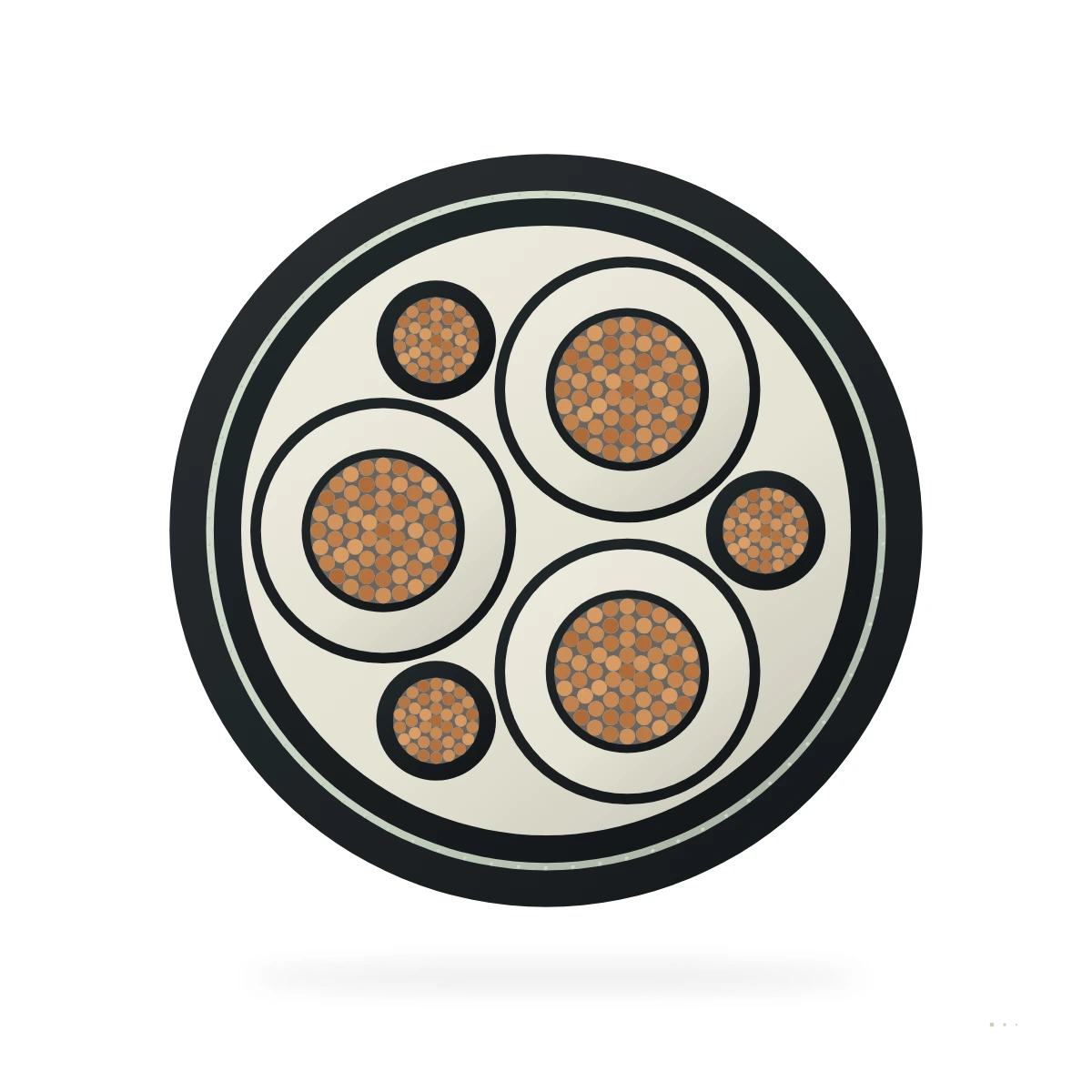
TEBAOFLEX's reeling cable range includes several product families. The low-voltage NSHTOU 0.6/1 kV family is designed for frequent winding and unwinding on cranes, hoists, conveyors and material-handling systems. Medium-voltage options include NTSCGEWOU, the individually screened (N)TSCGECEWOU family, and TBM-focused (N)TSCGECECWOU and (N)TSCGECWOU-TBM constructions. The range also includes, for example, the medium-voltage (N)TMCGETMPU portable trailing/reeling design, AS/NZS 1802 and AS/NZS 2802 mining families, plus SANS Type 63, Type 611 and Type 622 products. This is a mixed portfolio: voltage class, phase screens, earth conductors, pilots, monitoring functions and intended machinery vary by designation.
Selection begins with the reeling duty. Identify whether the drum is spring-driven, motor-driven or counterweighted; horizontal or vertical; mono-spiral or multi-layer; and whether the cable is supported, freely suspended or pulled along the ground before winding. State travel length, retrieval speed, acceleration, cycles per hour and operating hours. The minimum working bend radius must be compared with the drum core, deflection rollers and entry guides. Dynamic bend radius is the relevant value during operation; a static installation figure should not be substituted.
Tensile and torsional control are equally important. The cable should not carry loads beyond the selected construction's published or agreed limits. Excess tension can stretch conductors and internal elements, while low or unstable tension can allow loose winding, crushing and crossovers on the drum. Misaligned guides, changing fleet angle or repeated reversal can introduce torsion. Anti-torsion braid, reinforcement and a stable core lay-up are common features in reeling families, but they do not compensate for an unsuitable reel system. For vertical reeling, provide suspended length and the weight carried by the cable.
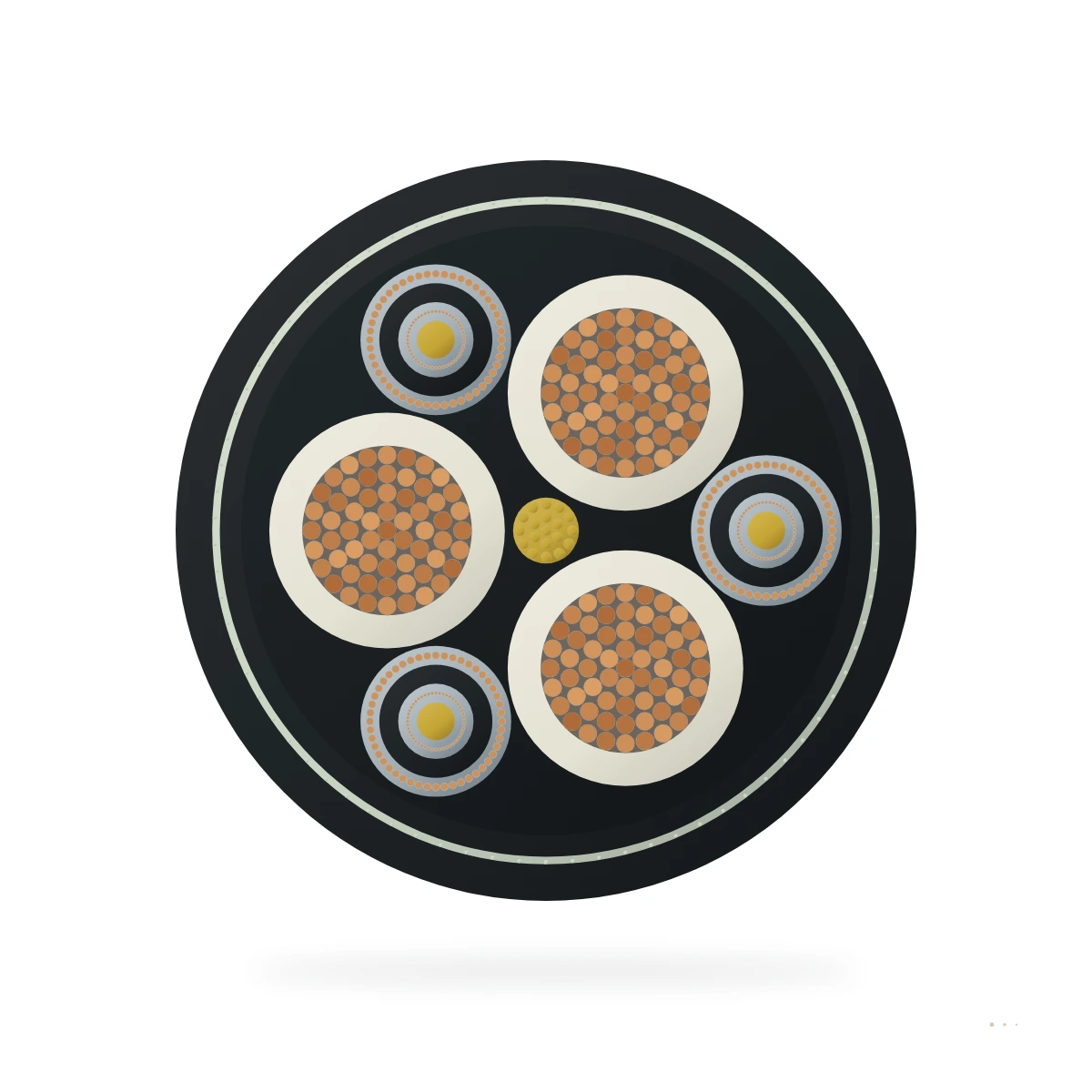
Electrical specification should cover rated voltage, system grounding, current, conductor size, voltage drop, number of power cores and any protective-earth, pilot, control or monitoring circuits. The TEBAOFLEX low-voltage NSHTOU family includes multicore power or control arrangements by model. Medium-voltage products use different electrical field-control and grounding systems: NTSCGEWOU has three field-controlled phase cores with split protective-earth sections, while TBM products may combine phase screens, protective-earth screens, control conductors and a monitoring layer. These constructions should be matched to the equipment protection and connector scheme, not selected only by voltage.
The environment determines the sheath and additional protection. Discuss abrasion at guides, oil and grease, water or mud, sunlight, ozone, temperature, sharp rock, metal debris and cleaning chemicals. Several products use EPR/rubber insulation and heavy-duty chloroprene-type or related elastomeric sheaths; (N)TMCGETMPU uses an extra-heavy-duty TPU jacket for severe abrasion and tearing. Material and resistance claims remain model-specific, particularly where water immersion or special chemical exposure is involved.
Standards help narrow the product family, but reel data still determines suitability. The range includes designs associated with DIN VDE 0250 families, AS/NZS mining standards and SANS mining cable types. State the exact designation, voltage class and approval or document scope required for the project. Certification requirements should identify the selected size, destination market, mine and reel duty, with the required marking and supporting documents included in the quotation.
For a useful RFQ, provide equipment and reel-system drawings where possible. Include machine type, cable function, voltage and current, conductor and auxiliary-core arrangement, required standard, moving and total cable length, drum type, drum core and flange dimensions, number of layers, guide and sheave diameters, cable entry position, travel speed, acceleration, cycles, maximum pull, vertical lift, ambient range, exposure conditions, required drum lengths and destination. Existing cable markings and failure photographs are valuable when replacing a cable.
For replacement projects, record where the previous cable failed (drum entry, guide, fixed end or machine end) and include photographs with the RFQ. That evidence can reveal a reel-system or routing problem that a different cable construction alone will not solve.
The products in this range represent distinct reeling solutions rather than equivalent alternatives. Selection should align the electrical system, movement profile, drum mechanics and environment with the quoted construction.