
Trailing cables
Heavy-duty flexible power and ground-check cables dragged behind mobile mining machines, excavators, drills, shuttle cars and tunnel equipment from 0.6/1 kV to 25 kV.
How does the cable move?
Pick one or more duties — the list below updates.
38 trailing cables
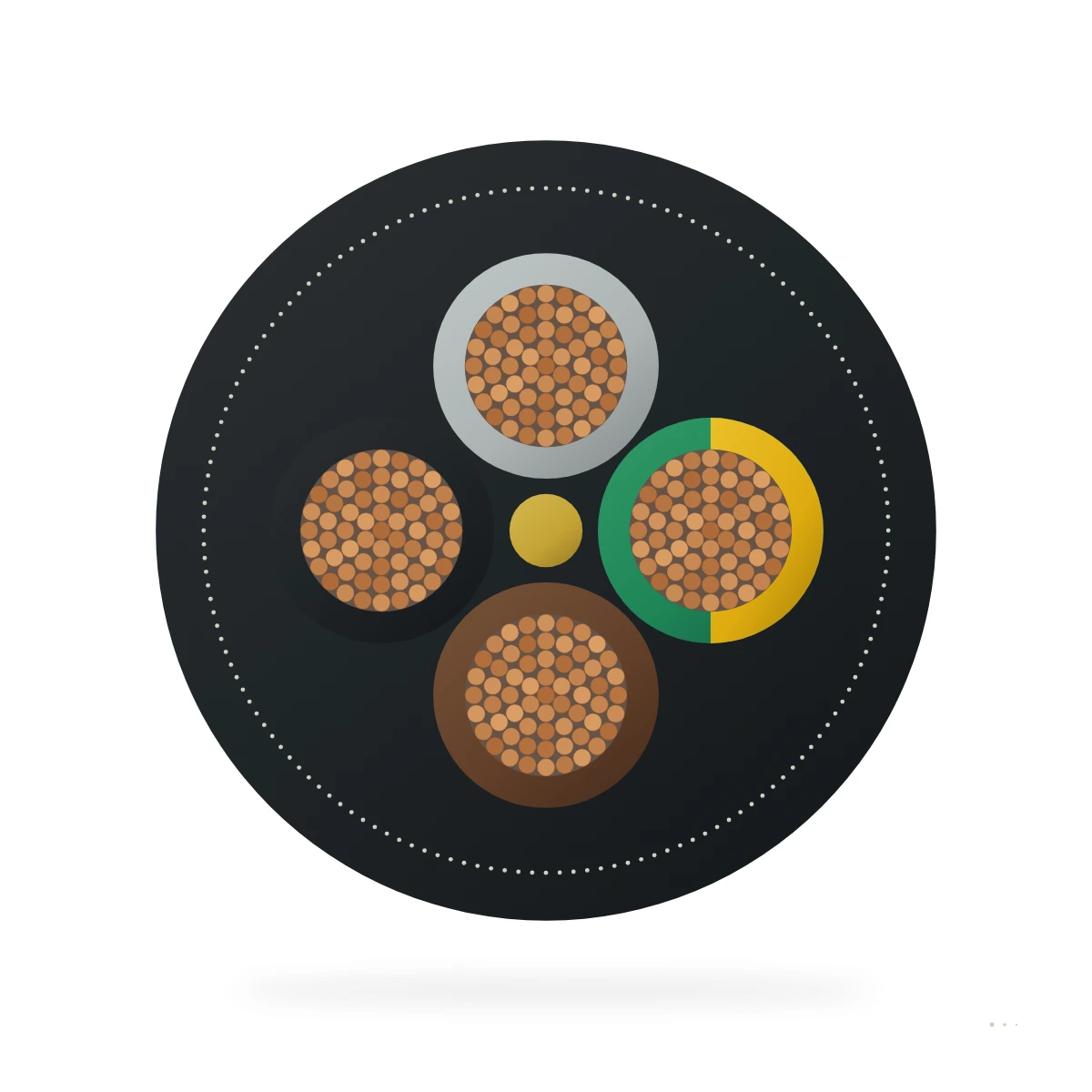
Low-voltage range
Up to 0.6/1 kV for industrial power, control and mobile equipment.
3 cables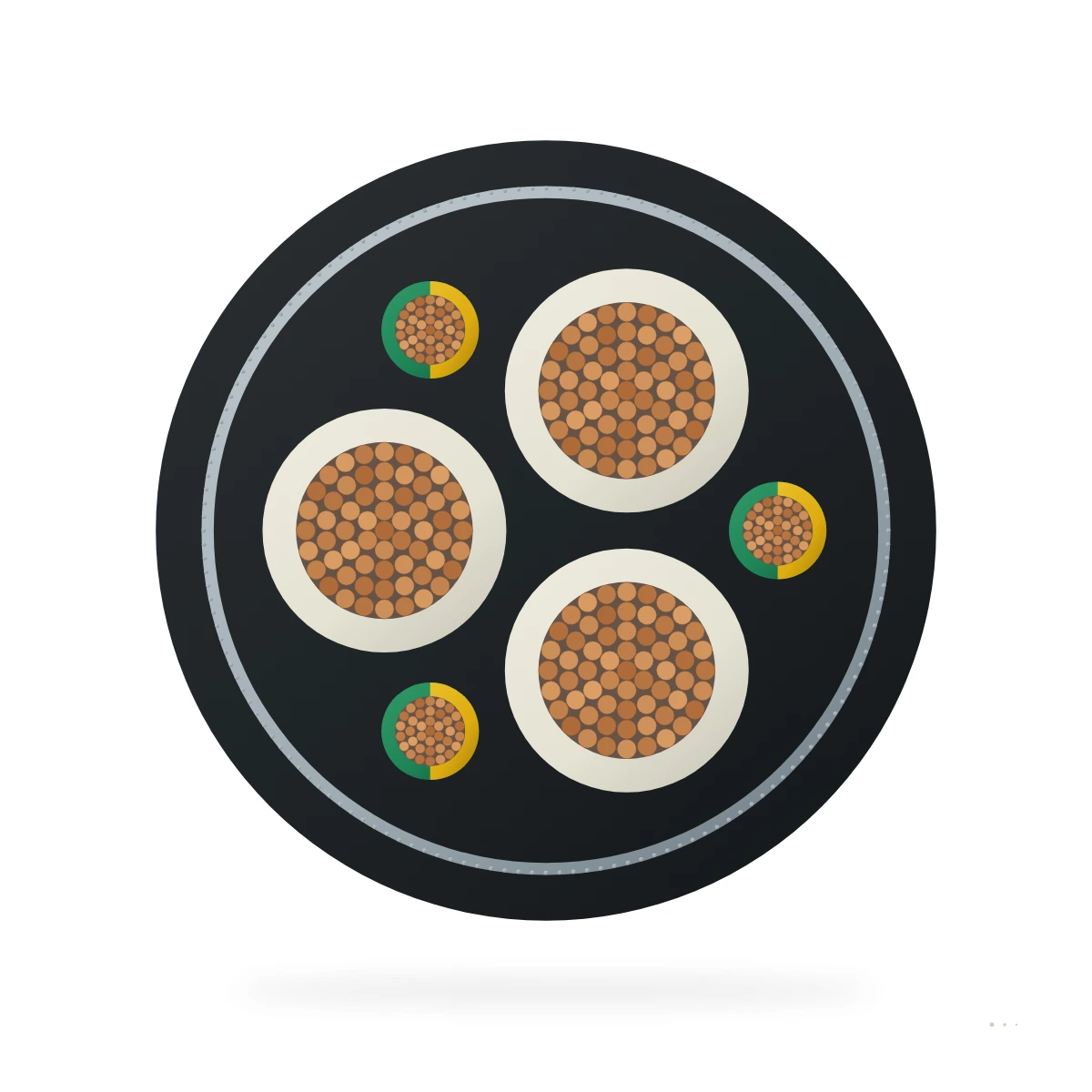
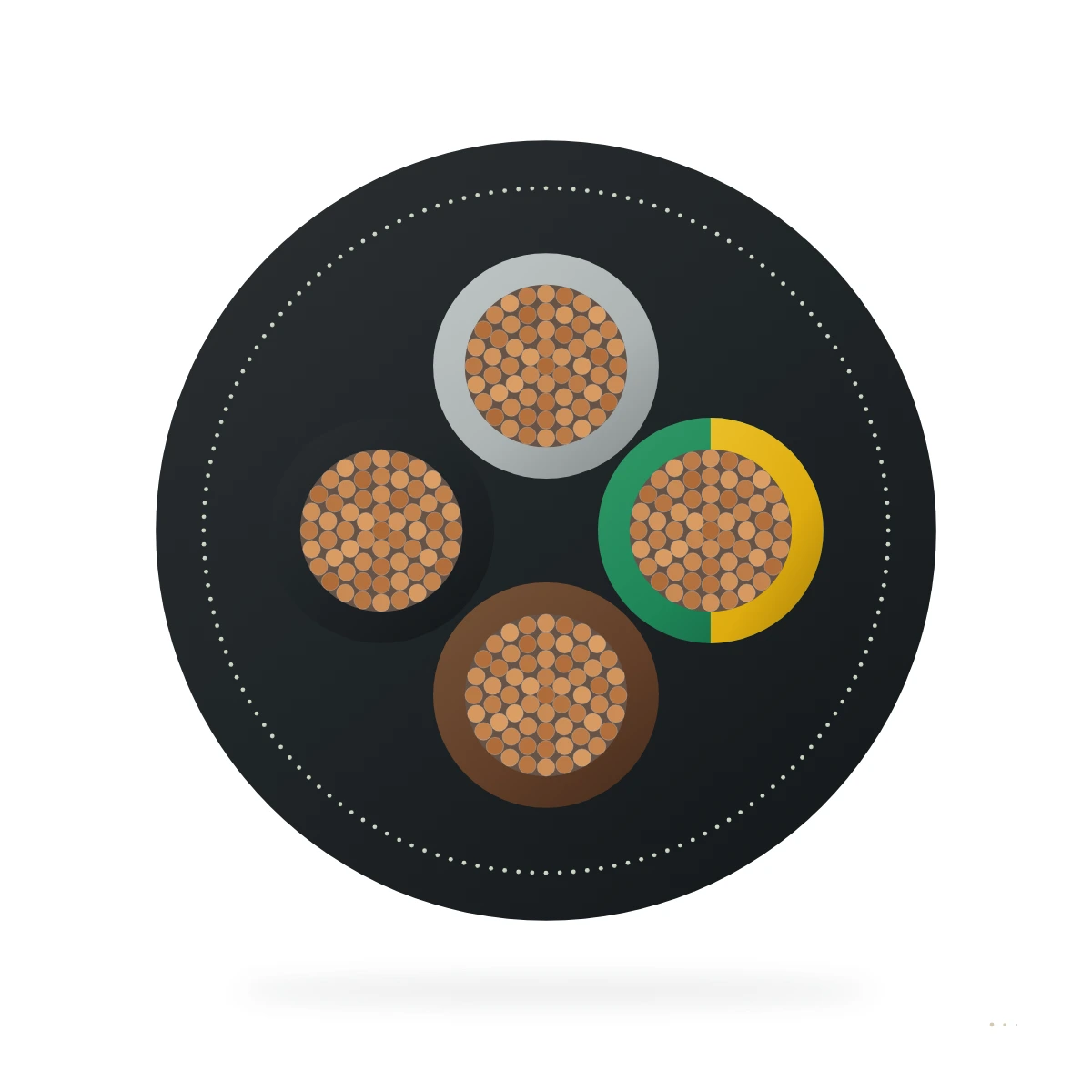
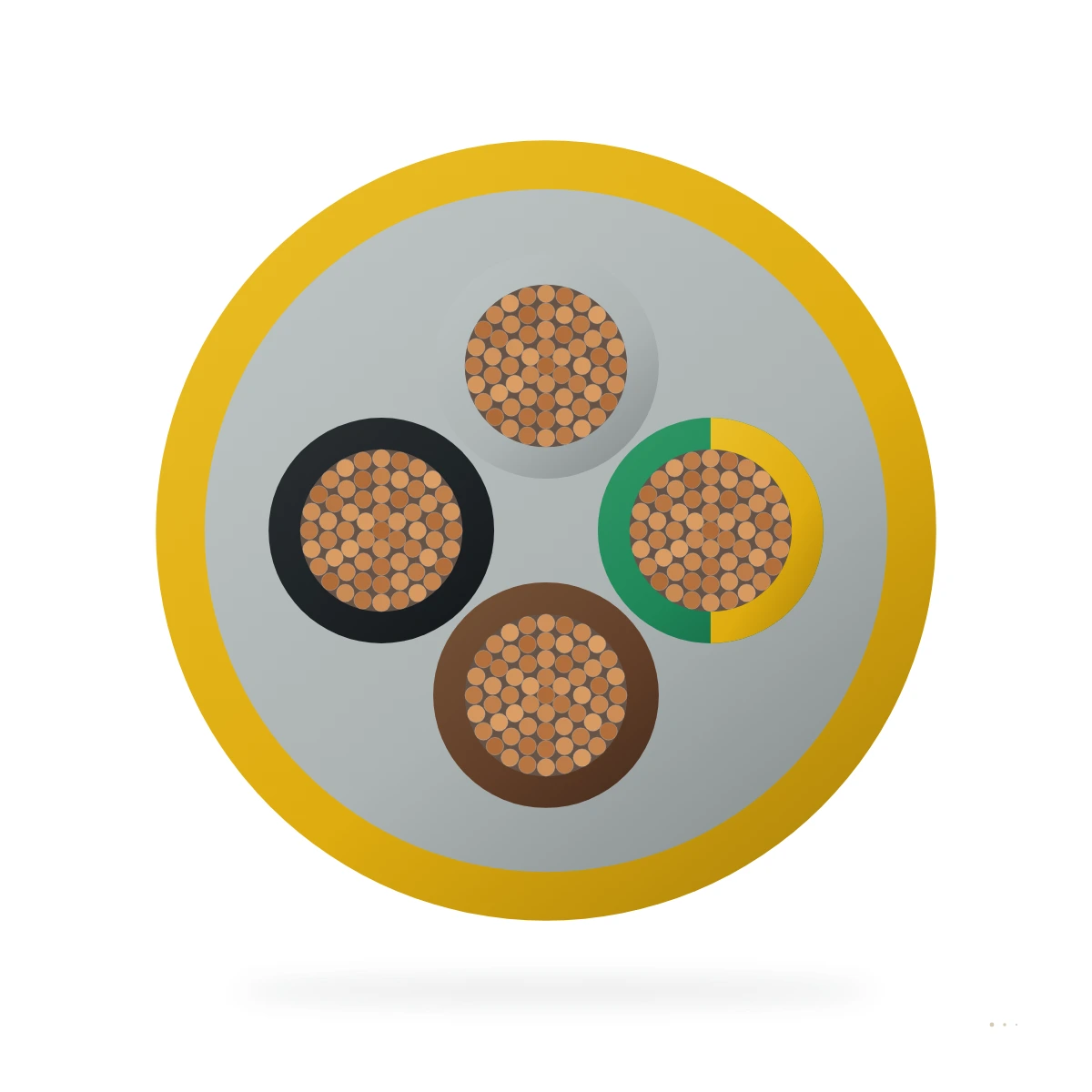
Dynamic & guided motion
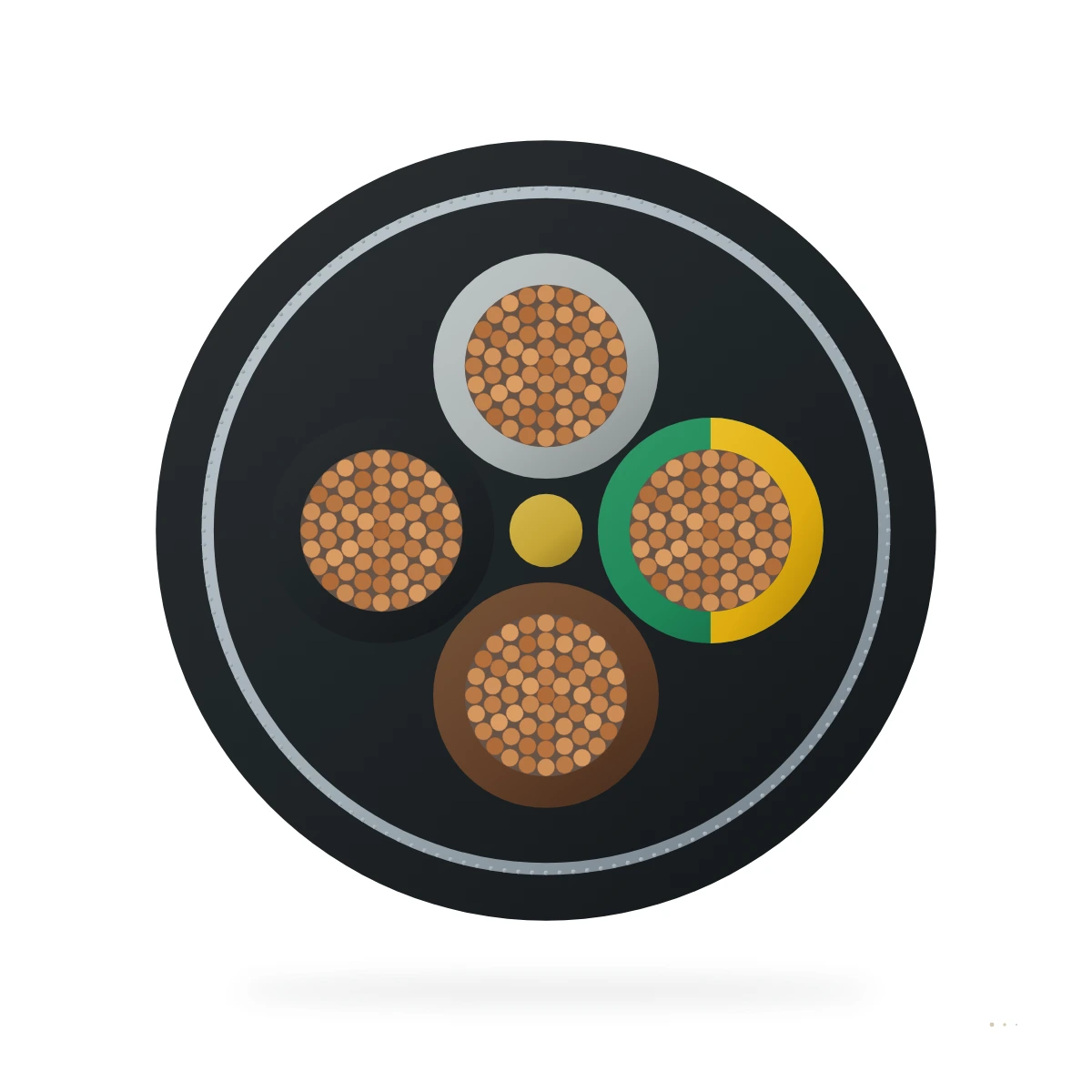
Reinforced constructions for festoon trolleys, energy chains and vertical suspension.
3 cables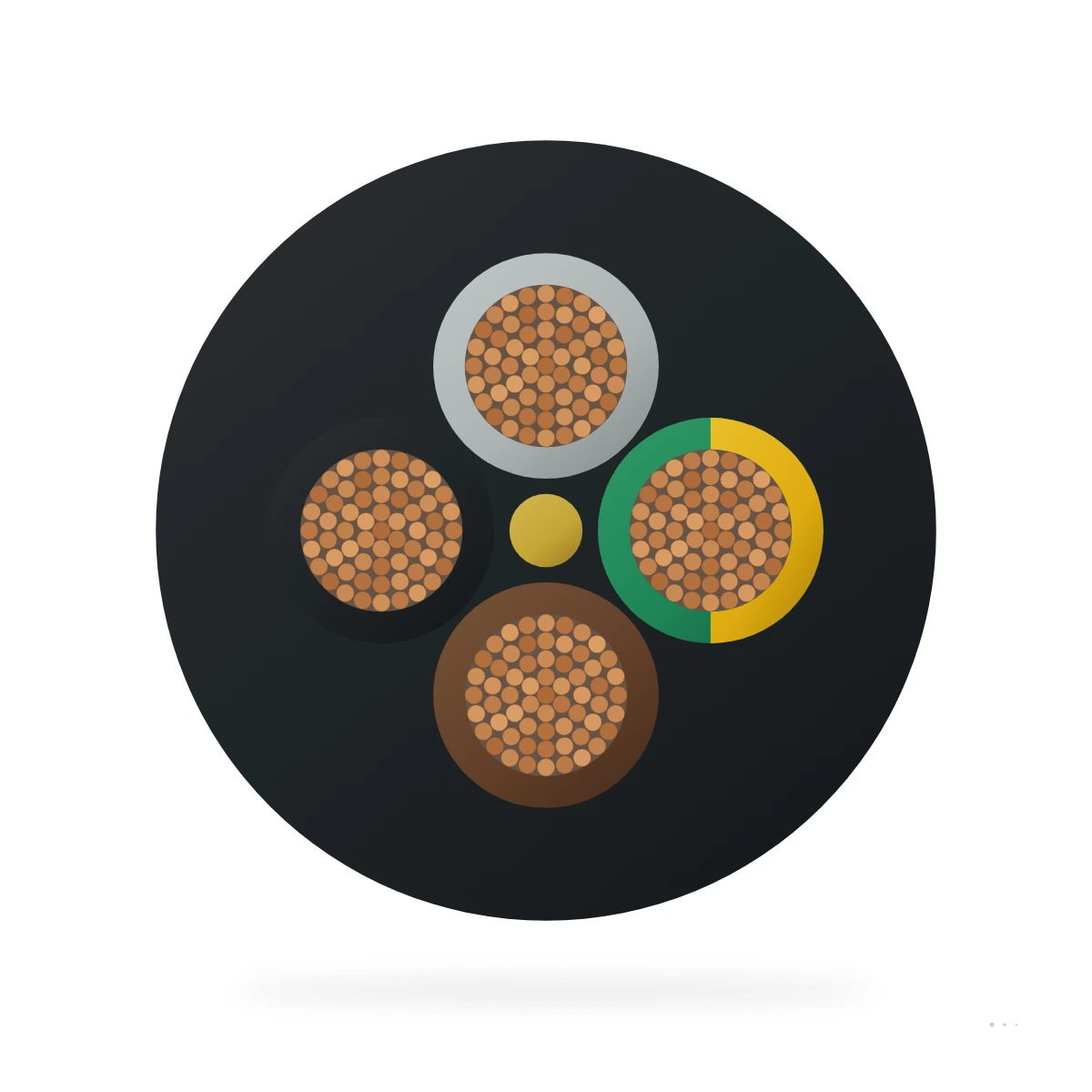
Medium-voltage range
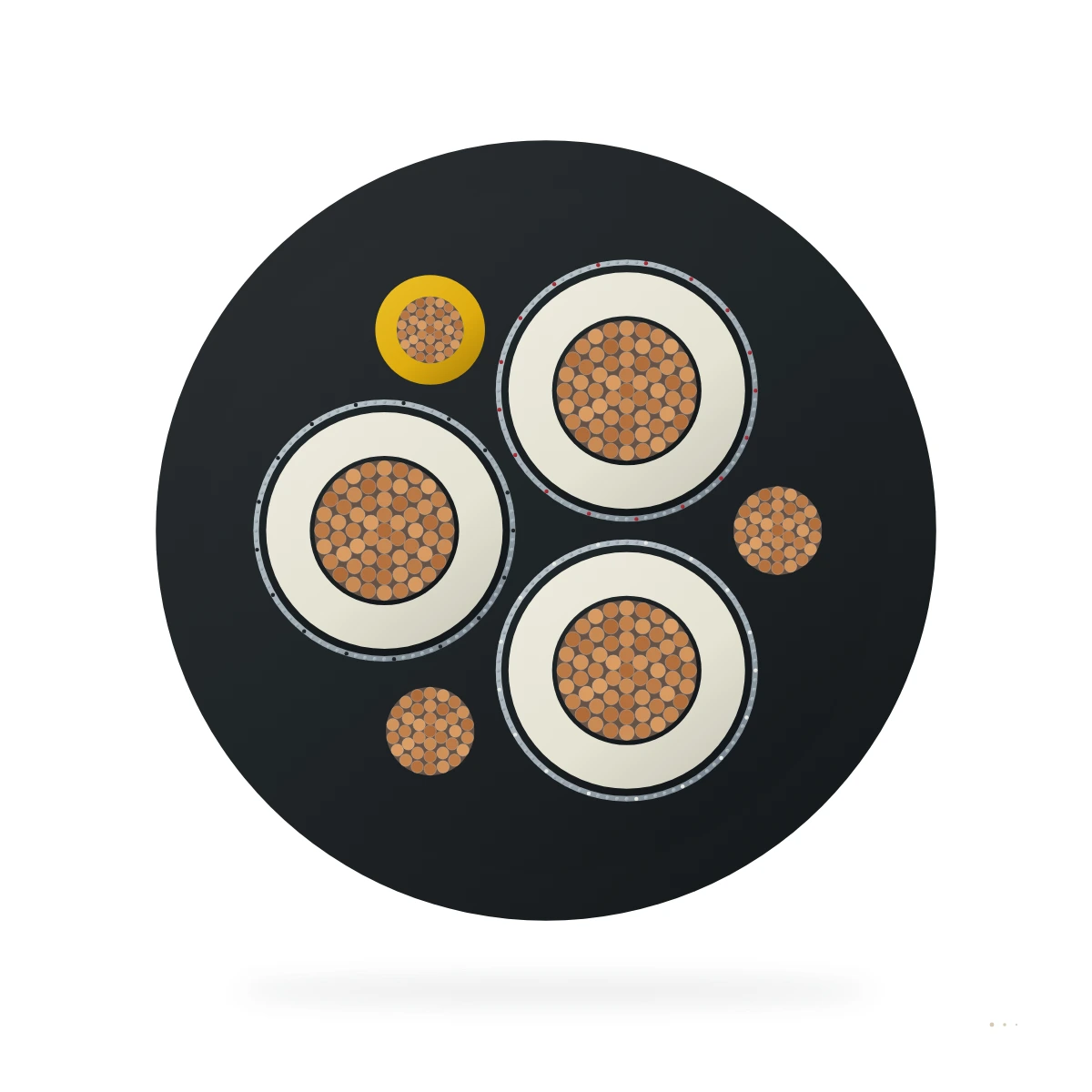
Screened cables from 1.8/3 kV to 35 kV with semiconductive field control.
2 cables

Mining & tunnelling
Heavy-duty trailing, reeling and roadway feeder cables to DIN VDE, ICEA, BS and SANS.
30 cables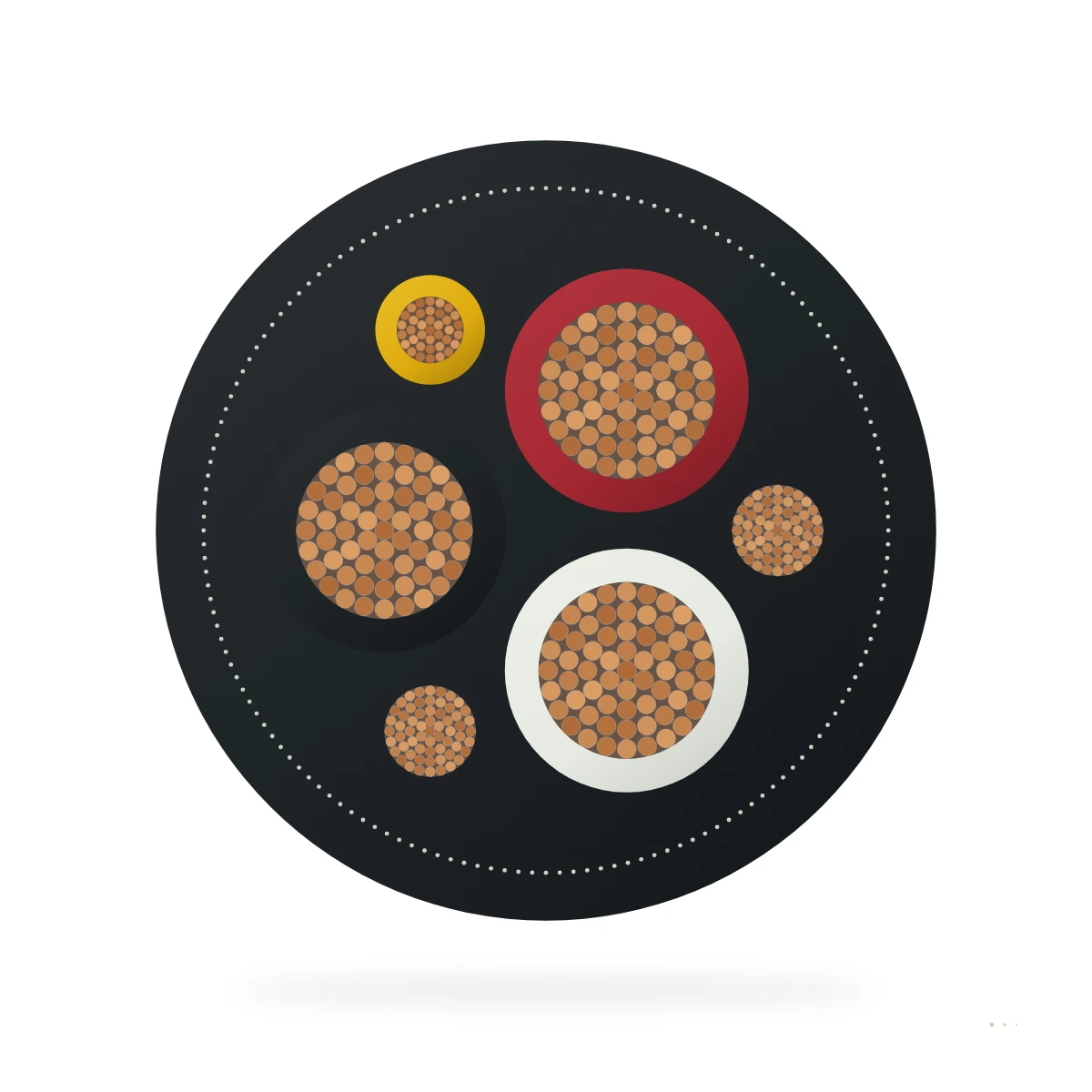


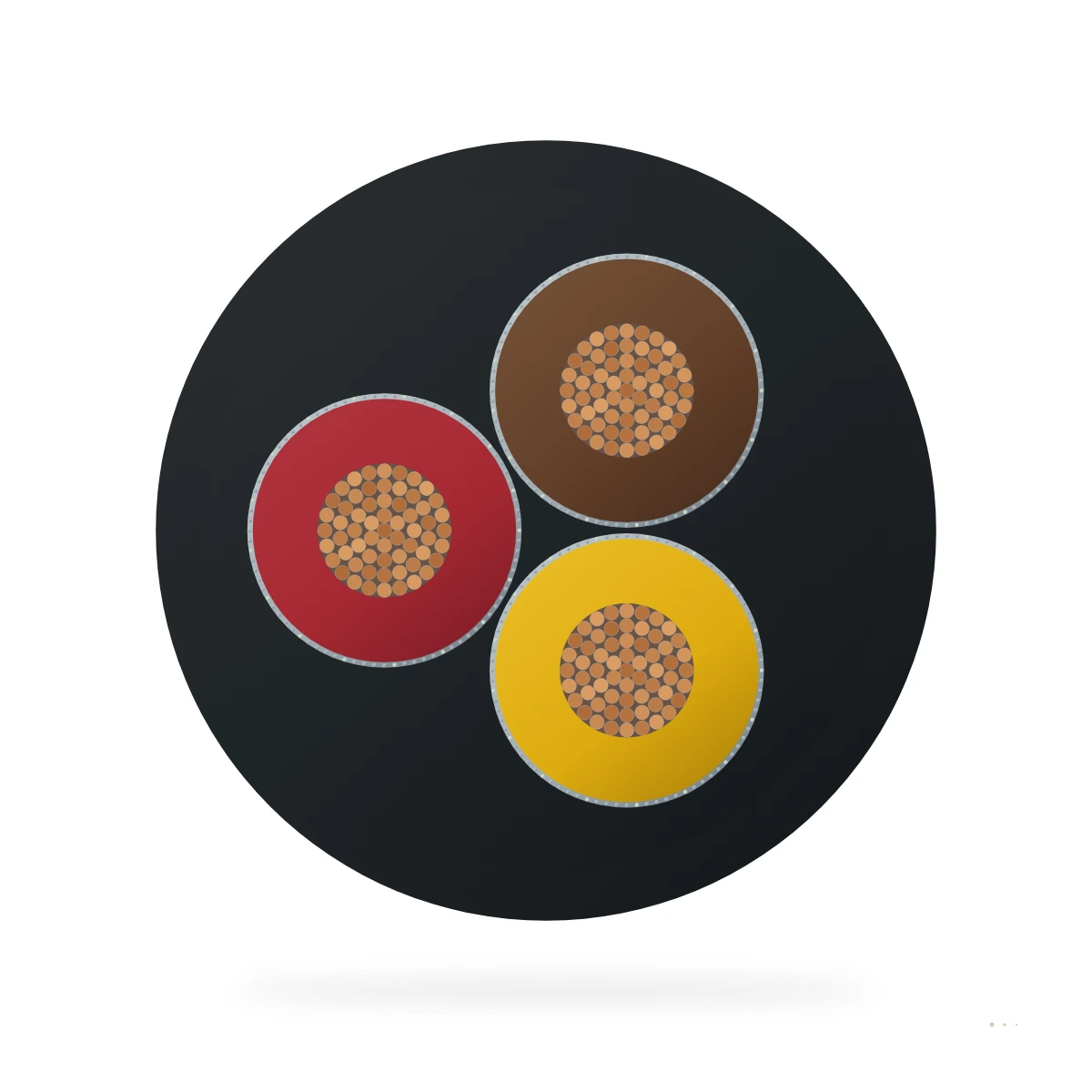
Choosing trailing cables
Four things decide most selections. Our engineers check the rest against your application.
Application and movement duty
- Define whether the cable runs in a fixed tray, energy chain, festoon loop, reel or trailing route.
- Match travel speed, bend radius and tensile load to the mechanical construction.
- Select a support element or armour when the cable carries suspended weight or external crush loads.
Voltage class and core layout
- Match the rated voltage U0/U to the supply system and earthing arrangement.
- Specify phase cross-sections, protective earth, pilot cores or control pairs required by the machine.
- Include copper braid, tape or semiconductive screens where EMC or electric-field control is needed.
Operating environment and sheath
- Choose rubber, PUR, LSZH, PVC, fluoropolymer or silicone sheaths for the thermal and chemical exposure.
- Verify oil, UV, water immersion, cold-flex or circuit-integrity ratings against site conditions.
- Check outer diameter and gland compatibility at both terminations.
Standard and documentation
- Confirm the governing standard family required by the project specification.
- Verify conductor class, colour code or core numbering for the destination region.
- Include operating duty and cable length in your enquiry so we can confirm the build.
Questions buyers ask
Not covered here? Send your drawing and an engineer replies within 2 business hours.
Ask on WhatsAppHow do I select the right trailing cable from this range?
Start by filtering the list by movement duty, voltage band and sheath material. Compare how each trailing cable is constructed—conductor flexibility, insulation compound, screening and outer jacket—against your machine's bending radius, travel speed and ambient temperature. Open the product page or datasheet to check core counts, cross-sections and outer diameters before sending your enquiry.
When should trailing cables include metallic screening or armour?
Specify a copper braid or foil screen when trailing cables run near variable-frequency drives, carry analogue or fieldbus signals, or require medium-voltage electric-field control. Choose steel wire braid or armour when the installation faces rock fall, crushing loads or high pulling tension in roadways, decks or subsea routes.
Which outer sheath compound suits harsh industrial environments?
Heavy-duty rubber (PCP or CPE) provides balanced mechanical toughness, weather resistance and thermal stability. Polyurethane (PUR) resists cuts, abrasion and mineral oils on fast-moving chains, reels and trolleys. Halogen-free LSZH compounds reduce smoke and acid gas in tunnels, ships and enclosed buildings, while fluoropolymers and silicone handle extreme heat.
What details should I include in an RFQ for trailing cables?
Include the model designation or governing standard, rated voltage, number of cores and conductor cross-sections, along with the installation method, minimum bend radius, ambient temperature range and required delivery lengths. If you are replacing an existing cable on a machine, share the sheath marking so we can match the specification.
Engineering reference
Background on how trailing cables are built, rated and specified.
Read the full reference
Trailing cable supplies movable equipment while part of the cable travels behind, beside or with the machine rather than remaining in a fixed route. Depending on the system, it may be dragged on the ground, guided through a cable handler, carried by the equipment or taken up on a reel. The cable must tolerate repeated flexing and handling together with abrasion, impact, pulling and possible torsion. A heavy jacket is only one element of a suitable design; the conductor system, core geometry, grounding, screening and movement rating also matter.
Mining is a major trailing-cable application, with continuous miners, longwall machines, shuttle cars, drills, loaders, shovels, draglines, pumps, conveyors and relocatable power equipment. Similar duty occurs on quarries, dredges, large cranes and other mobile industrial plant. The selection question is not simply "Which cable is flexible?" It is whether the exact construction supports the machine's voltage, grounding and monitoring scheme while surviving the route, cable-handling method and mechanical load.
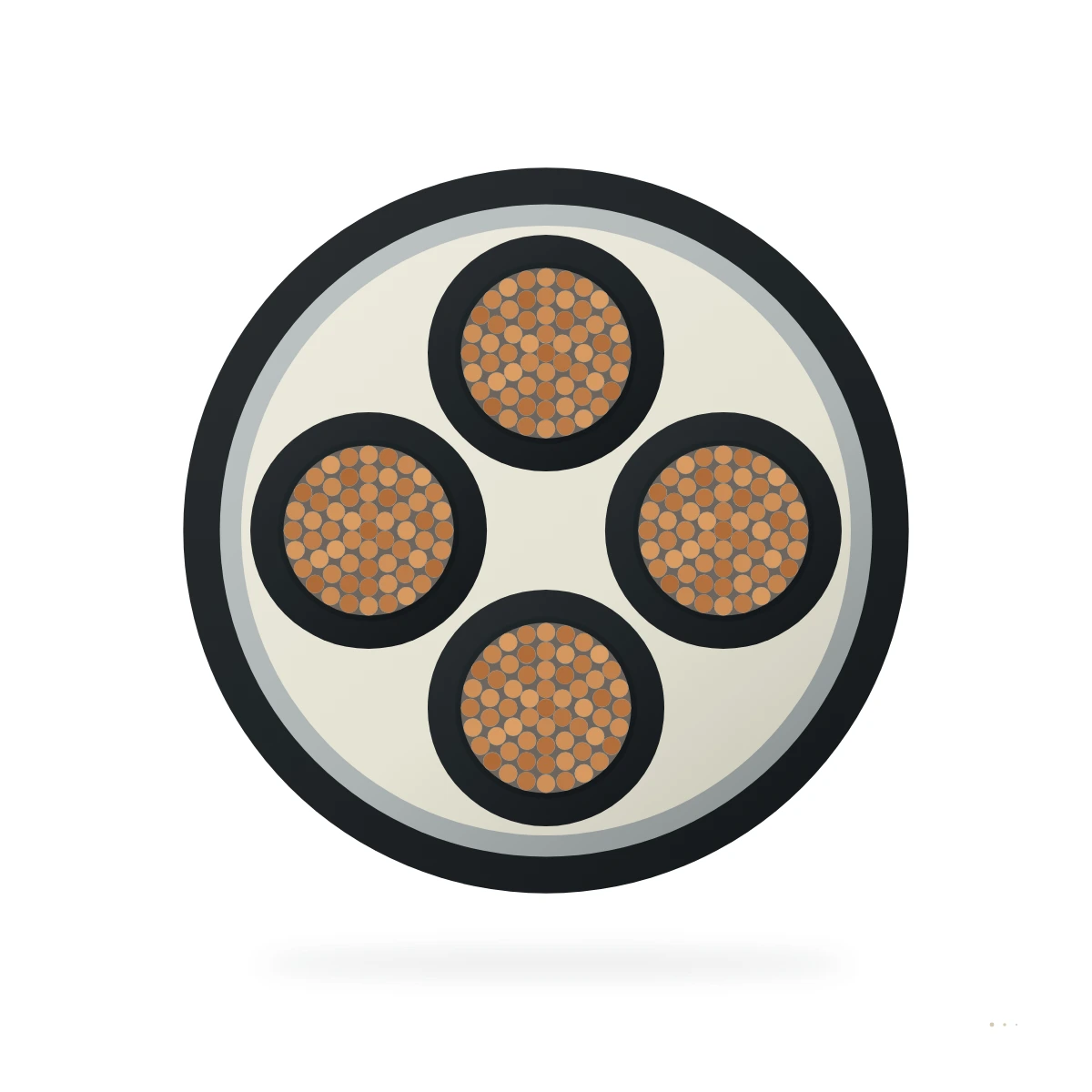
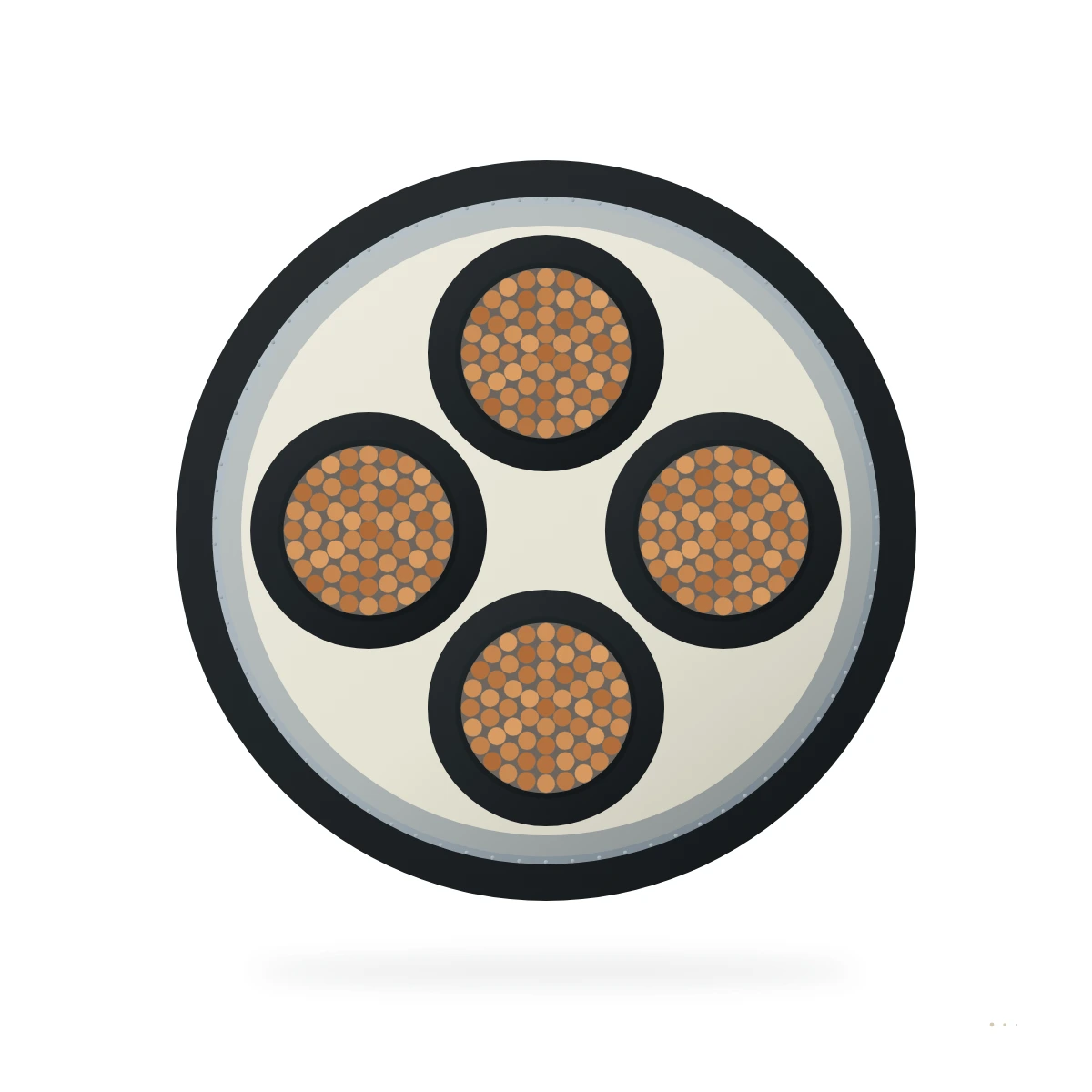
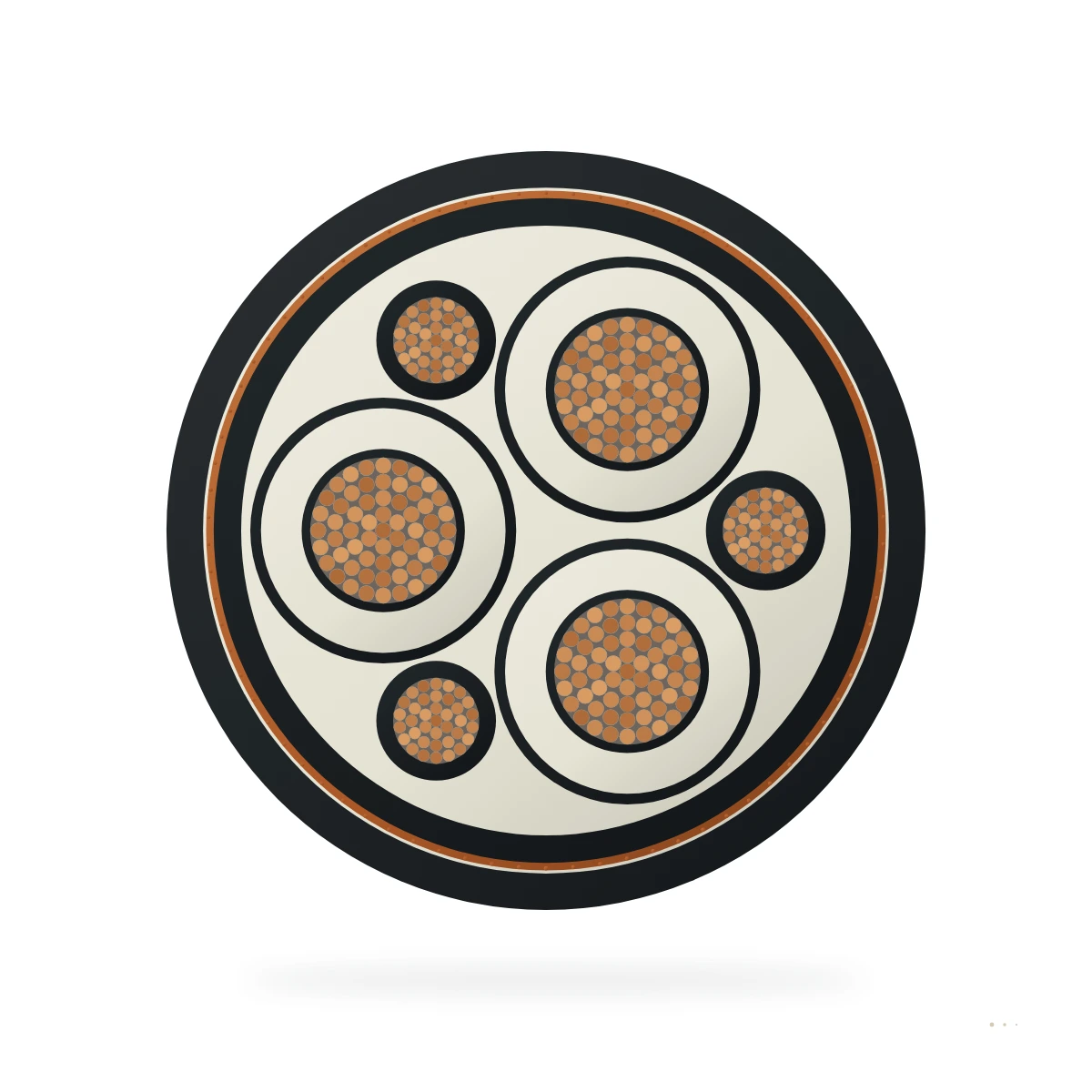
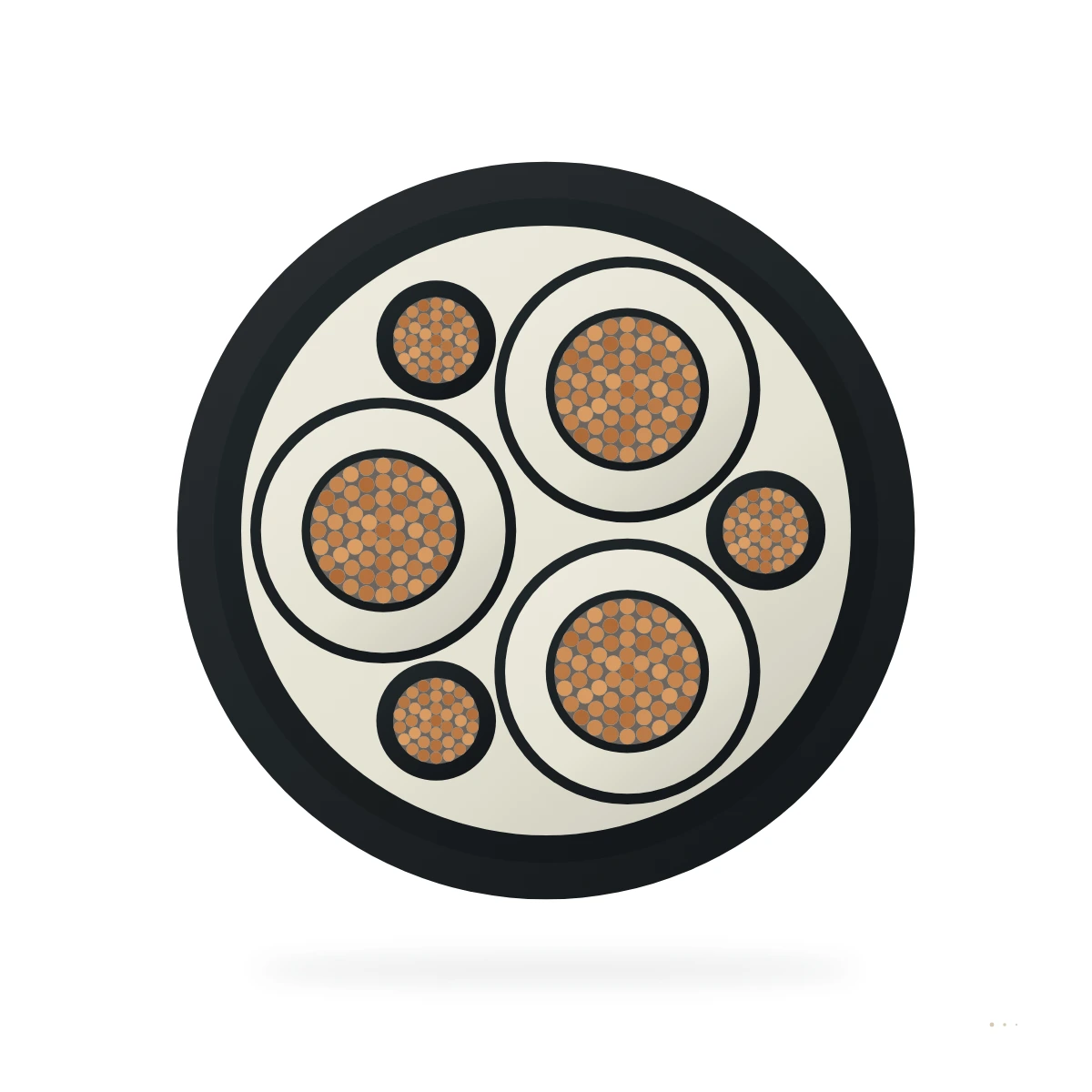
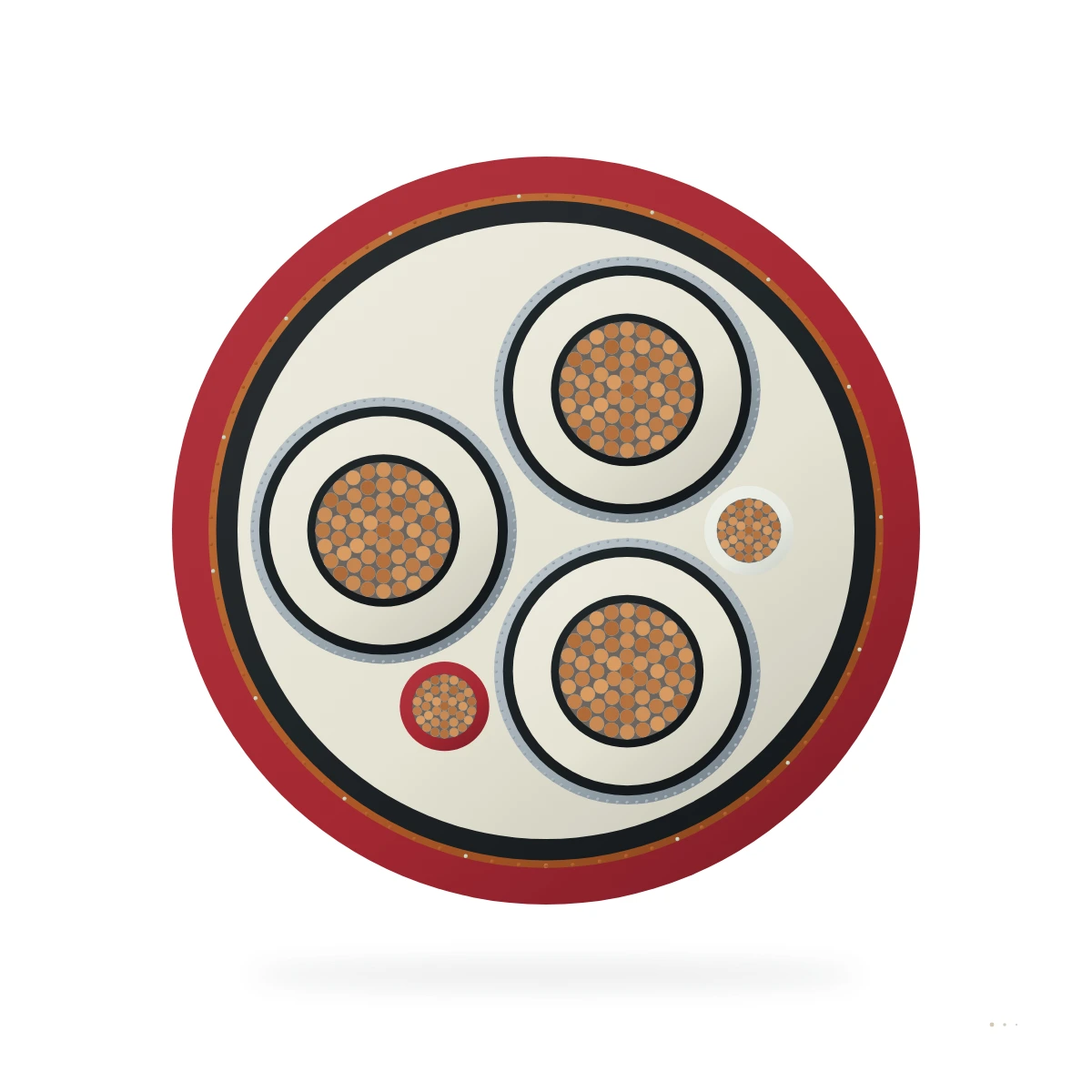
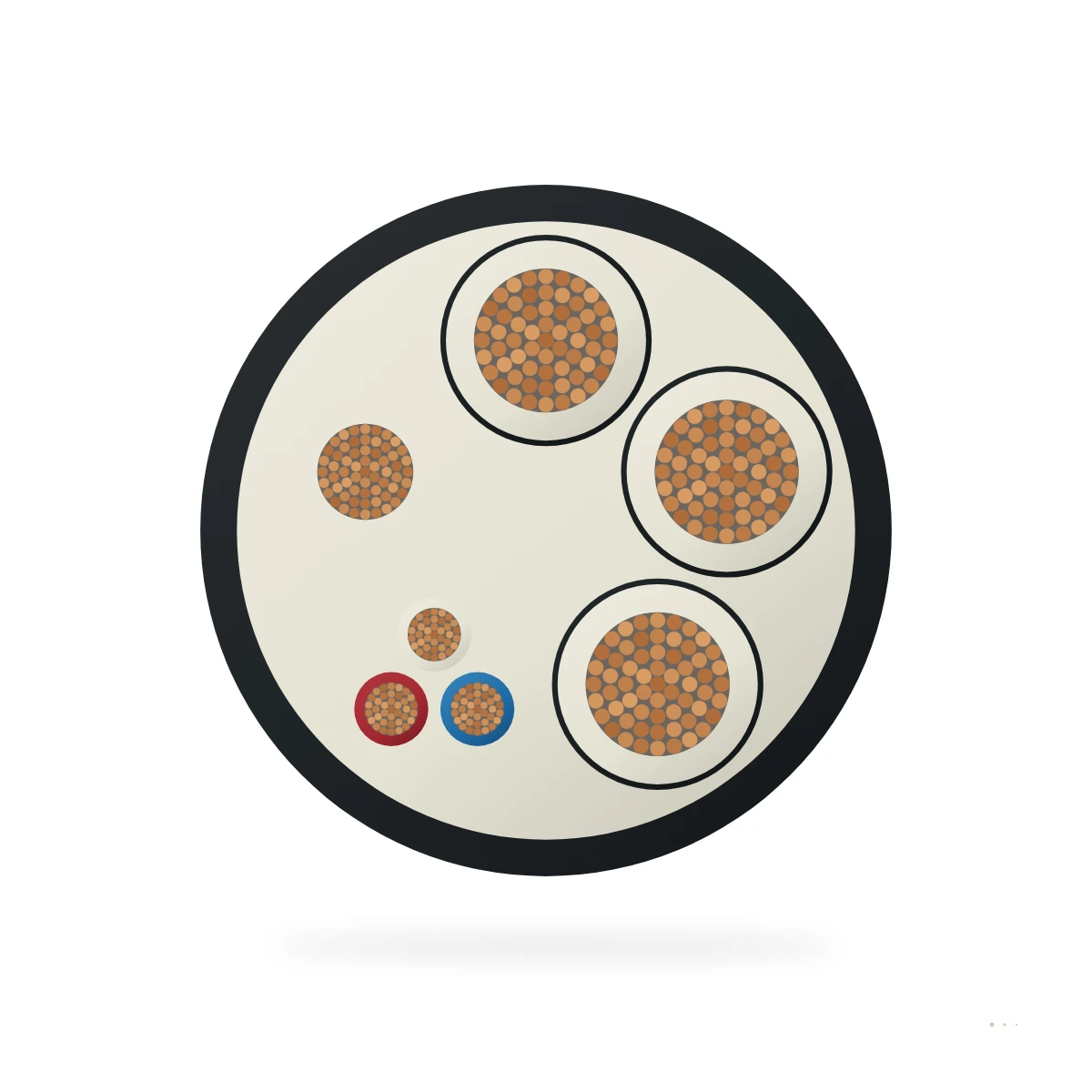
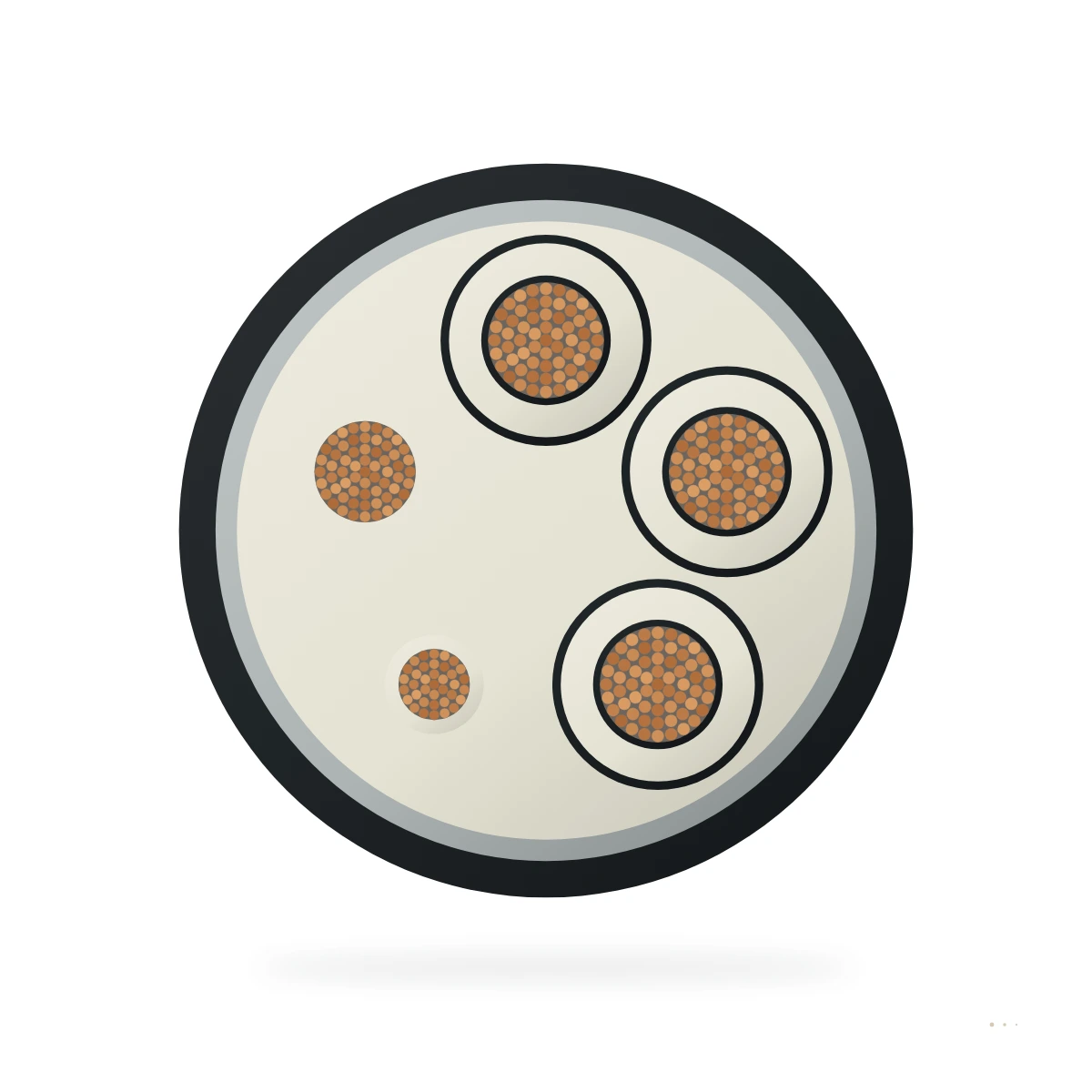
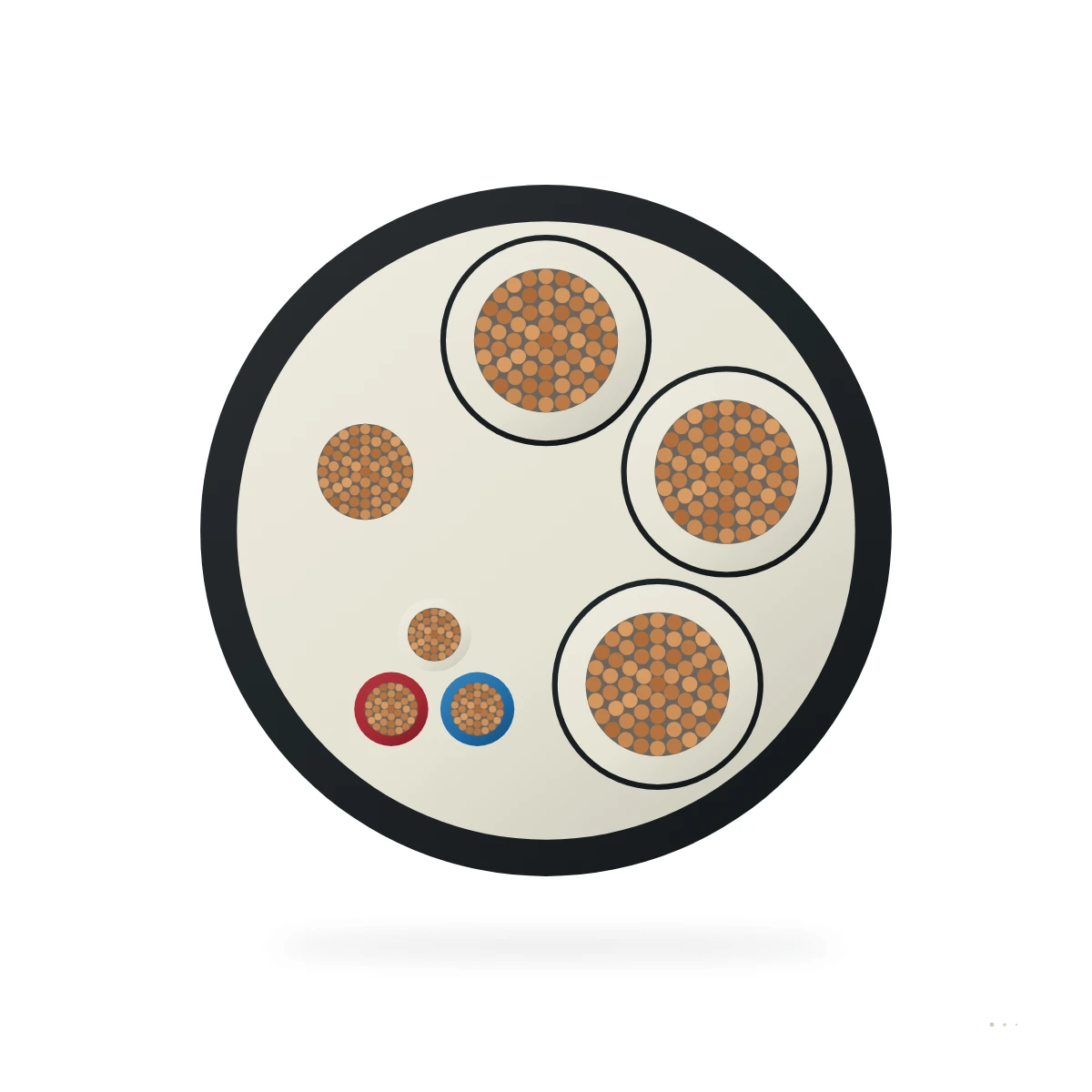
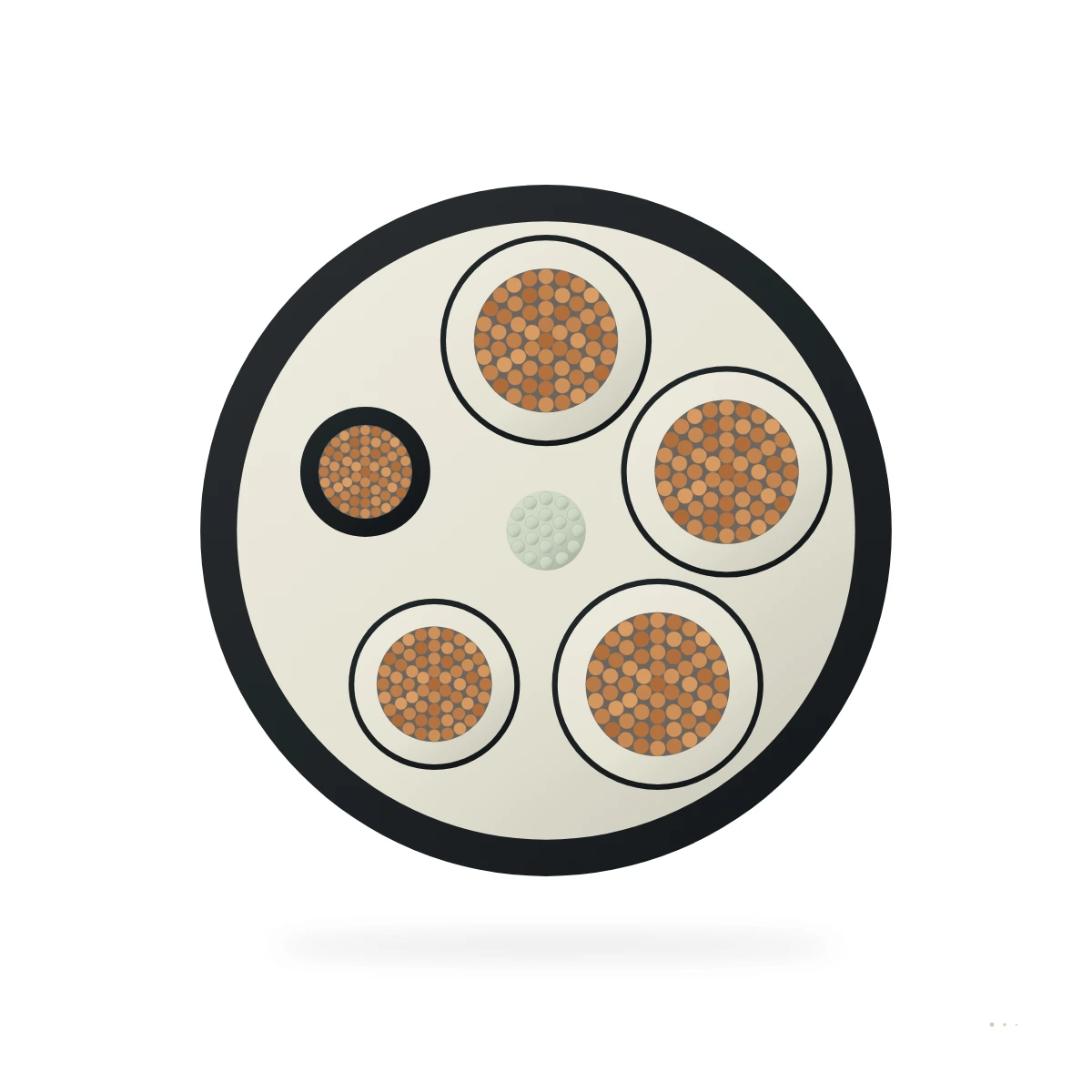
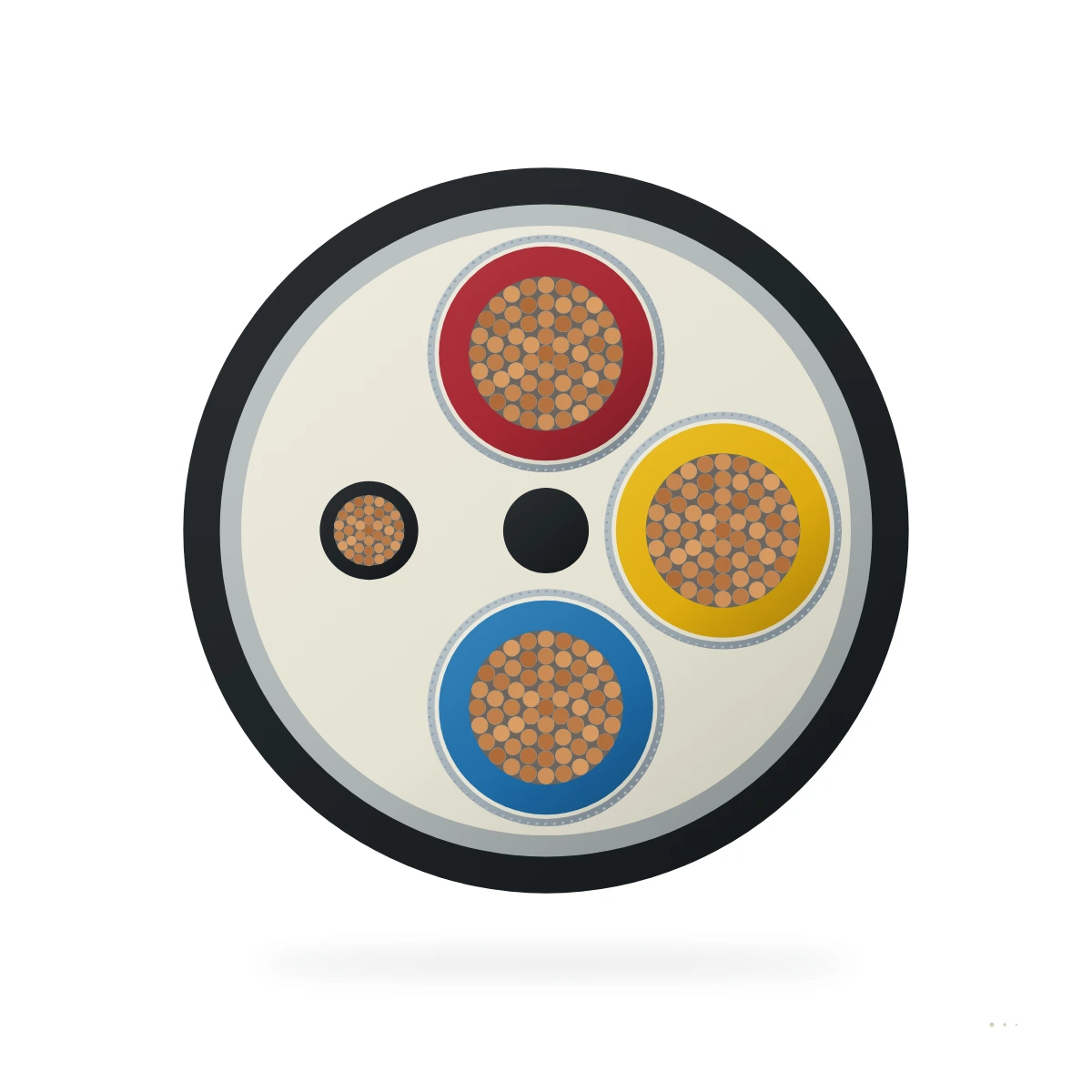
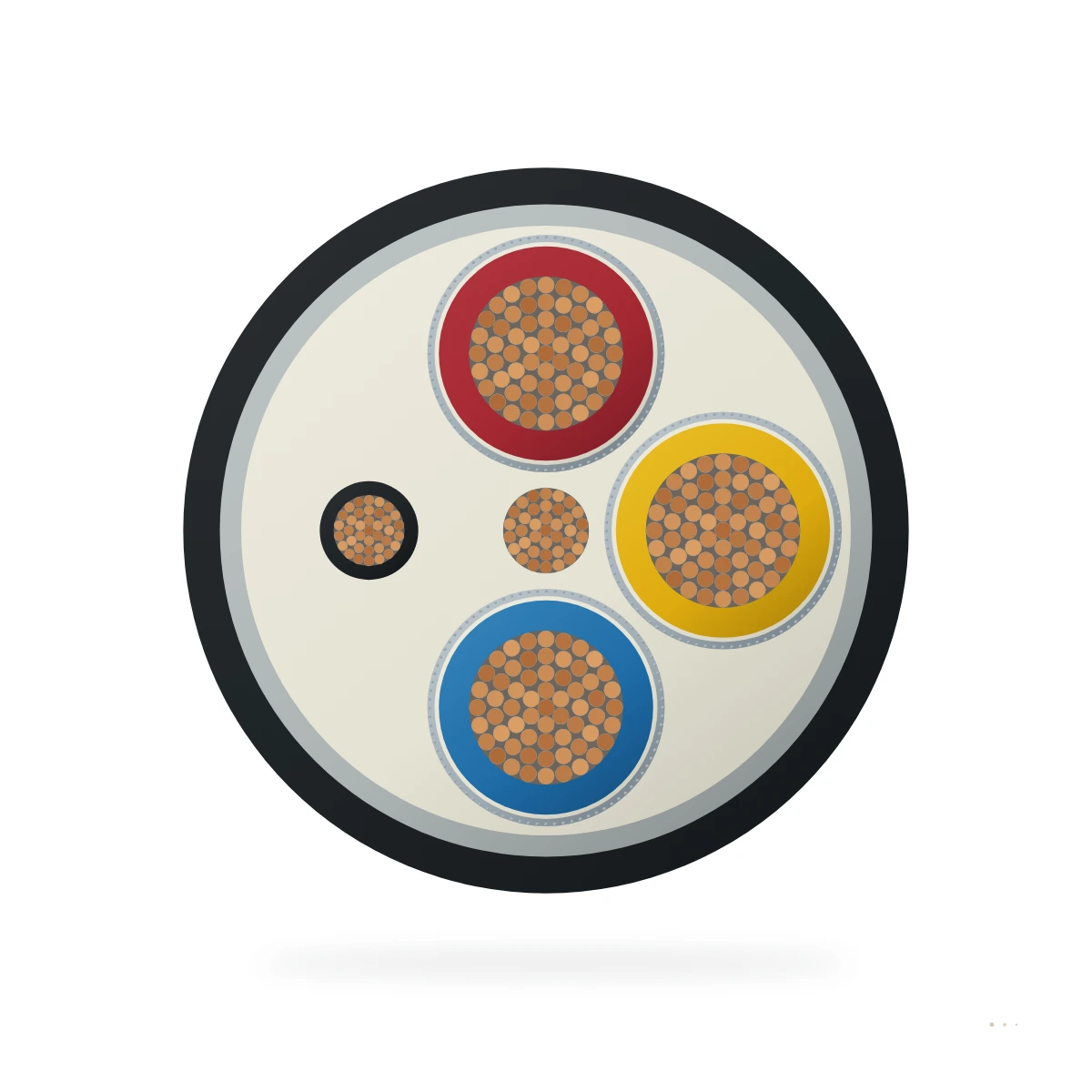
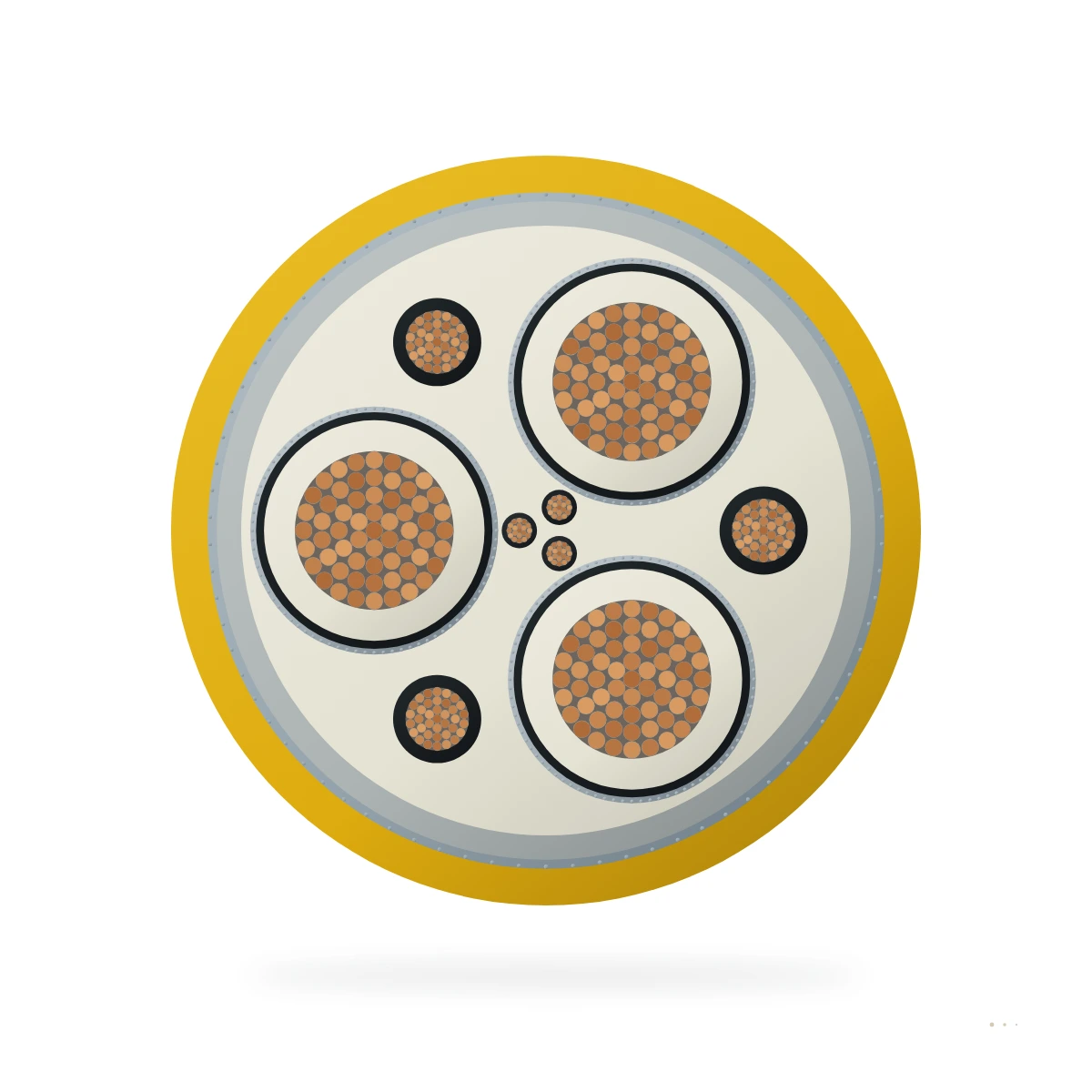
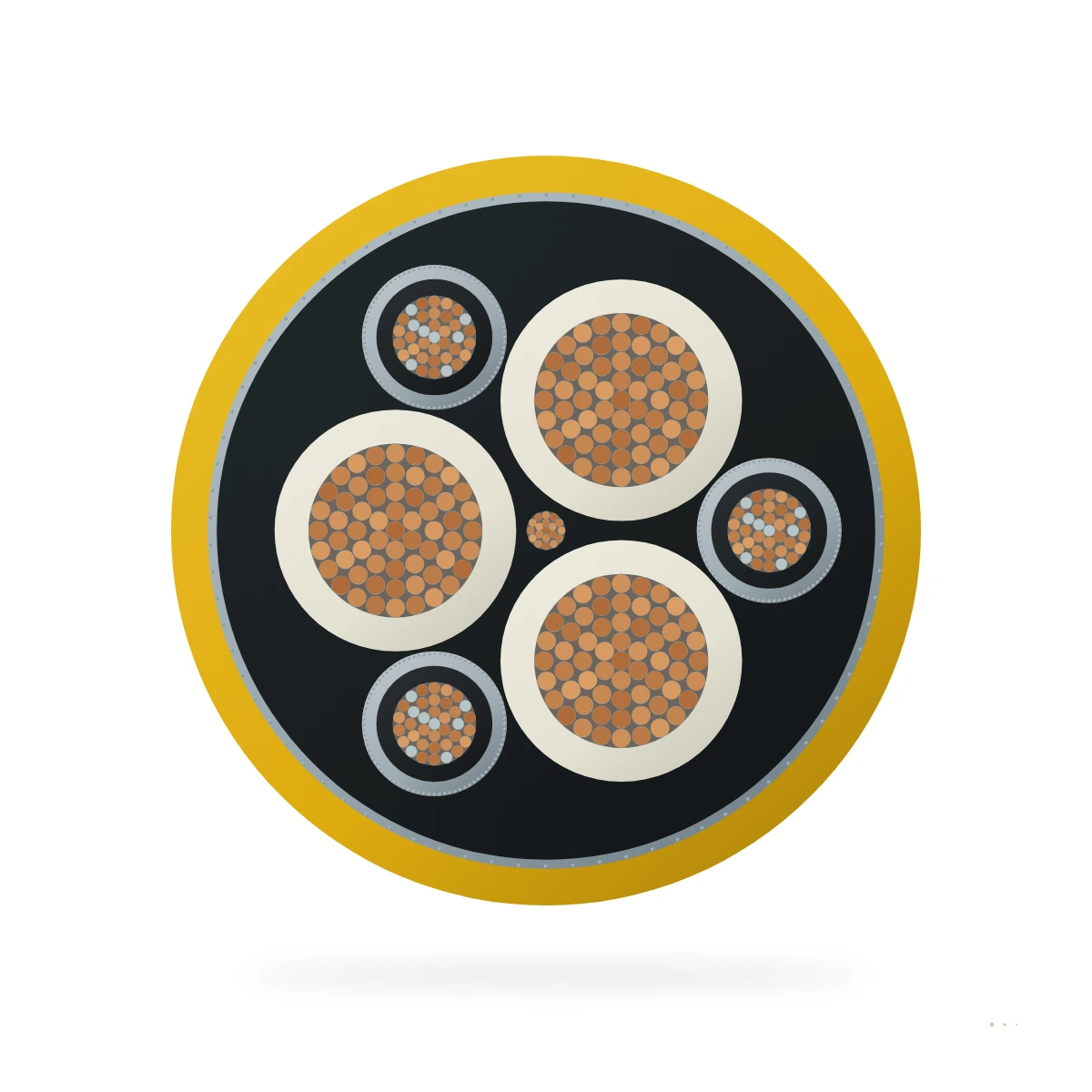
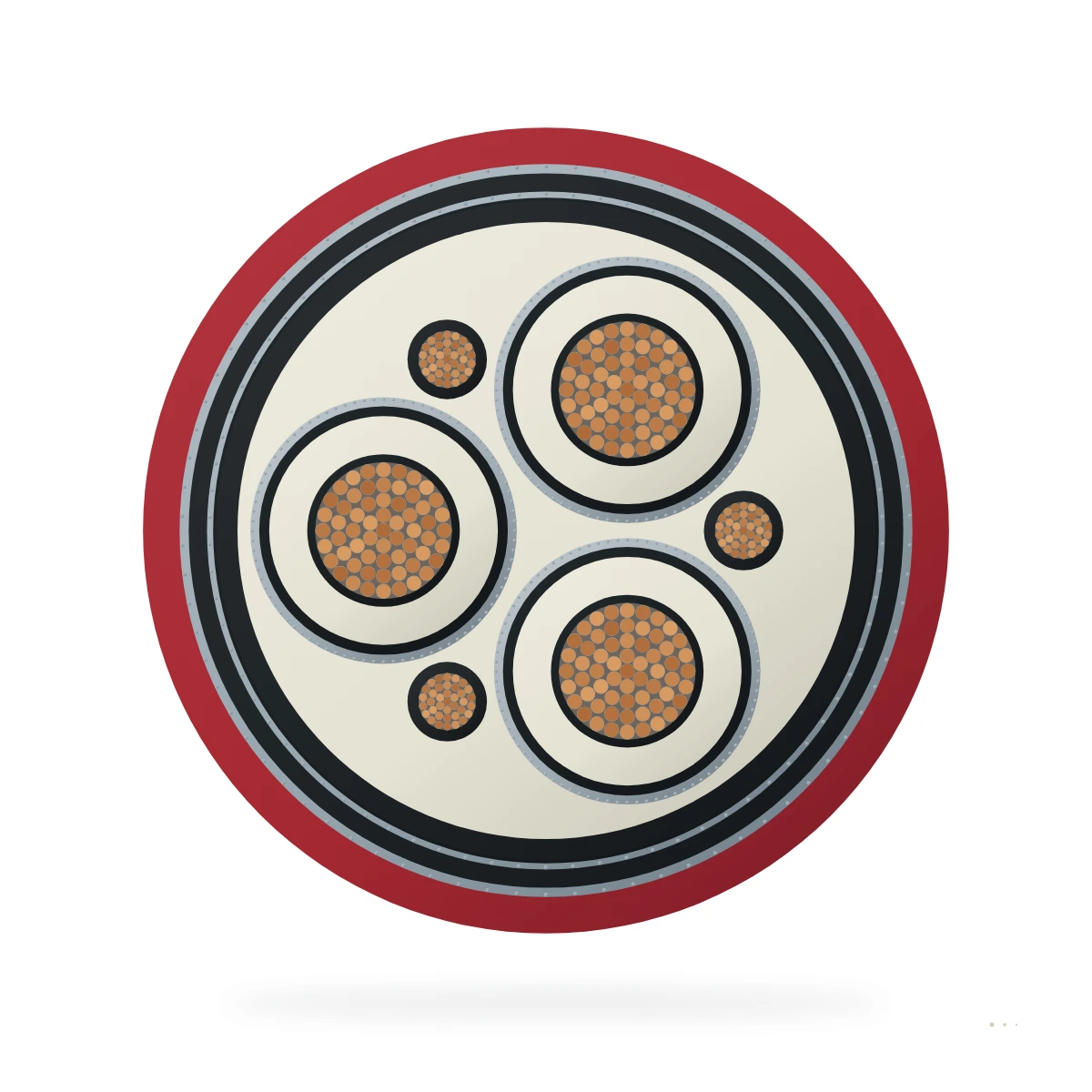
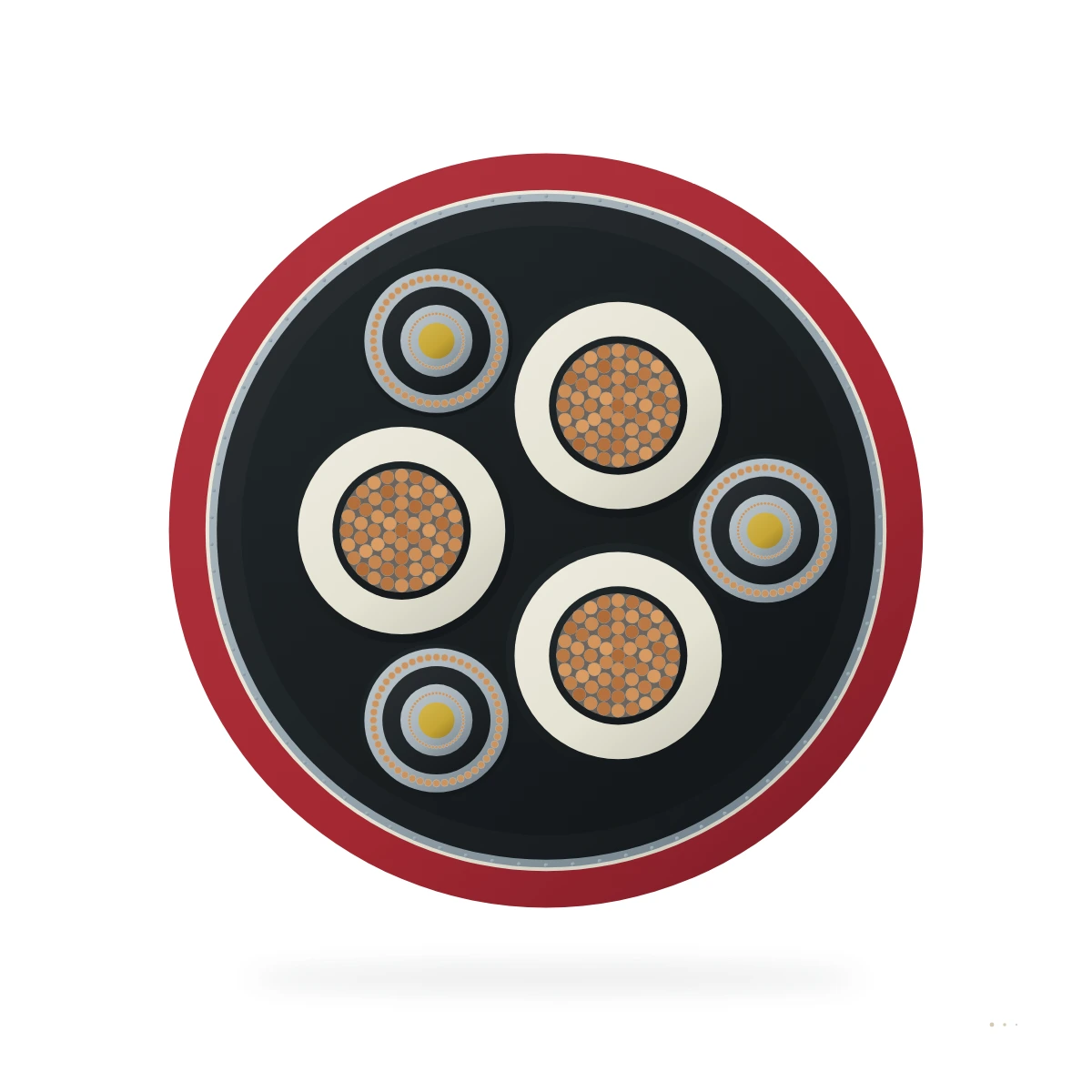
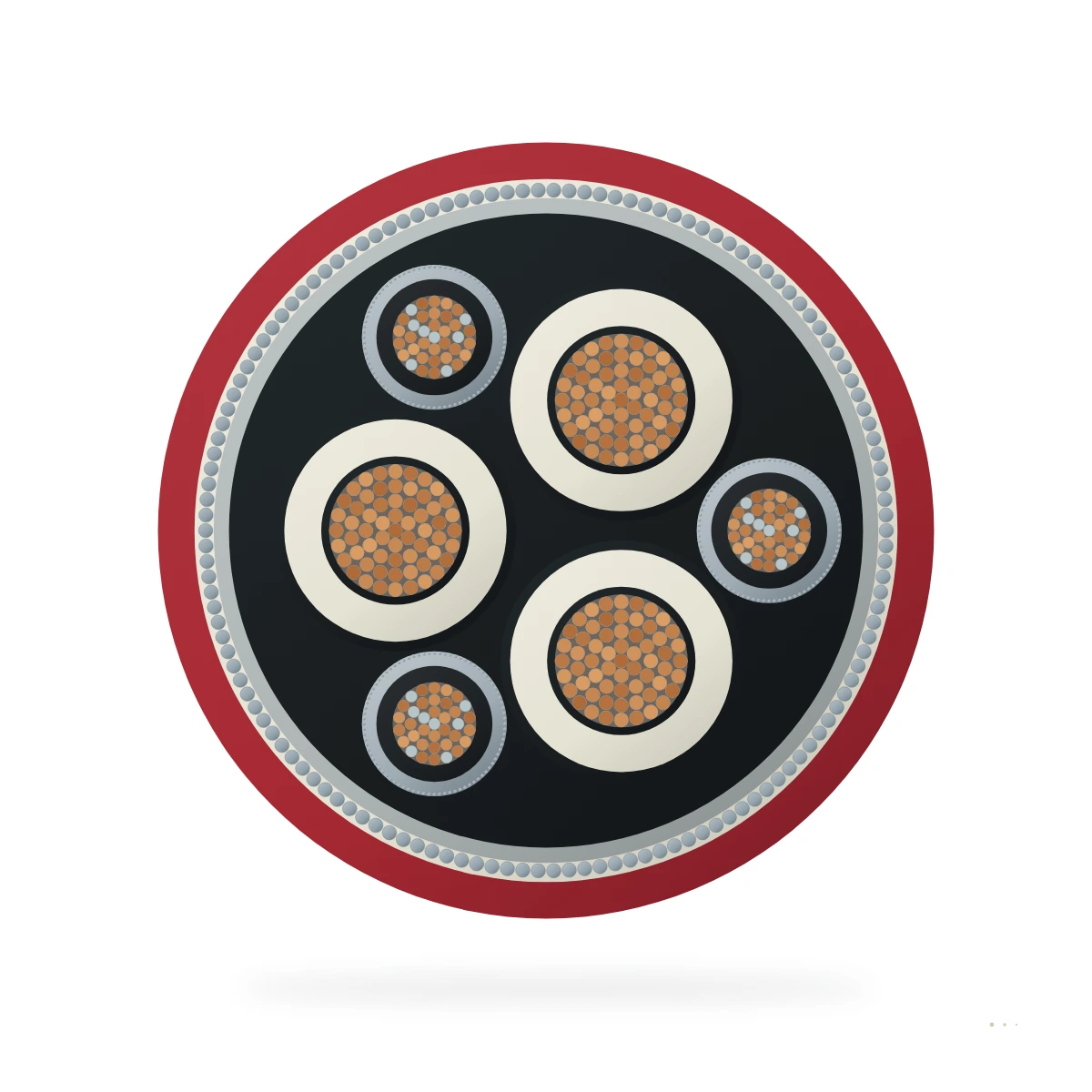
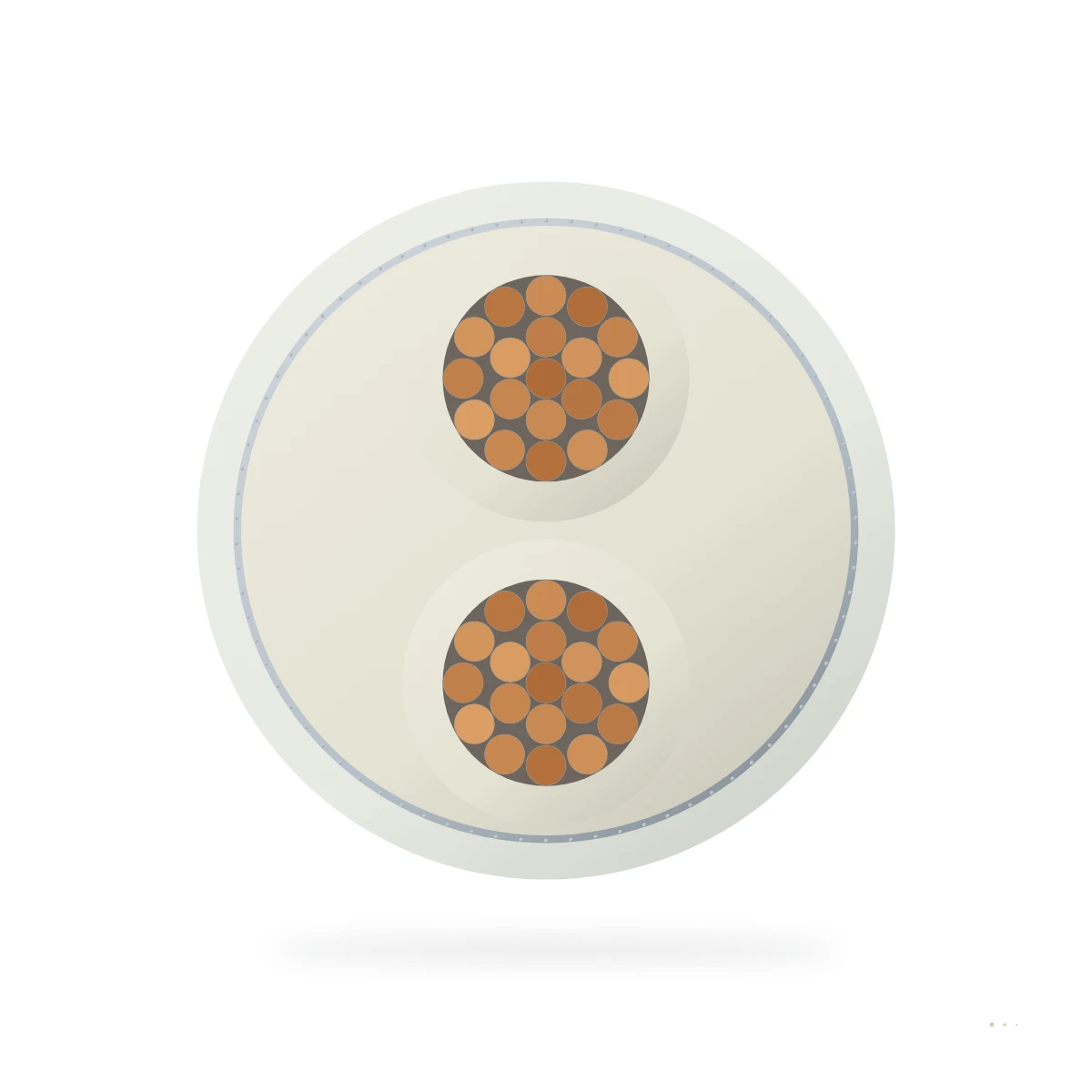
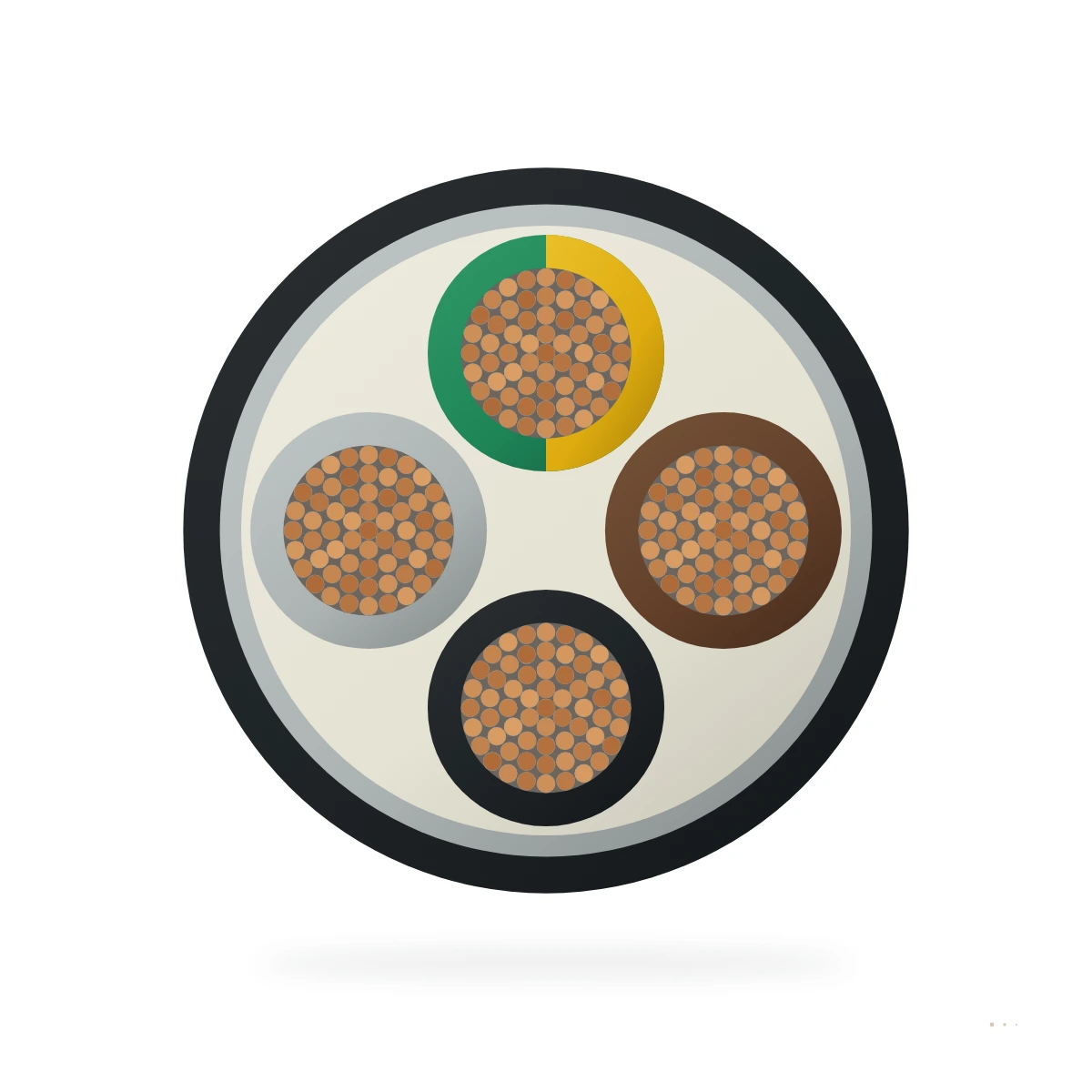
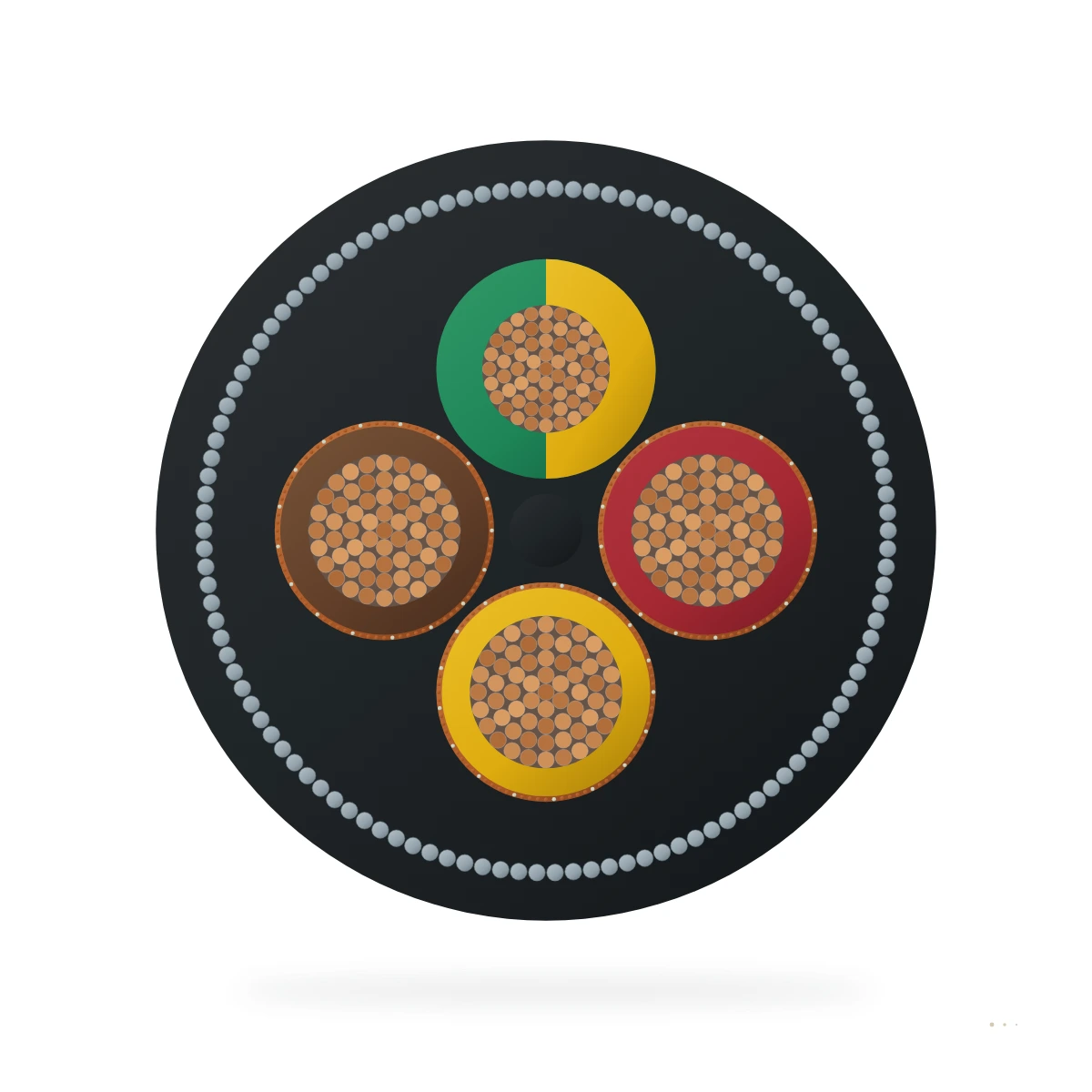
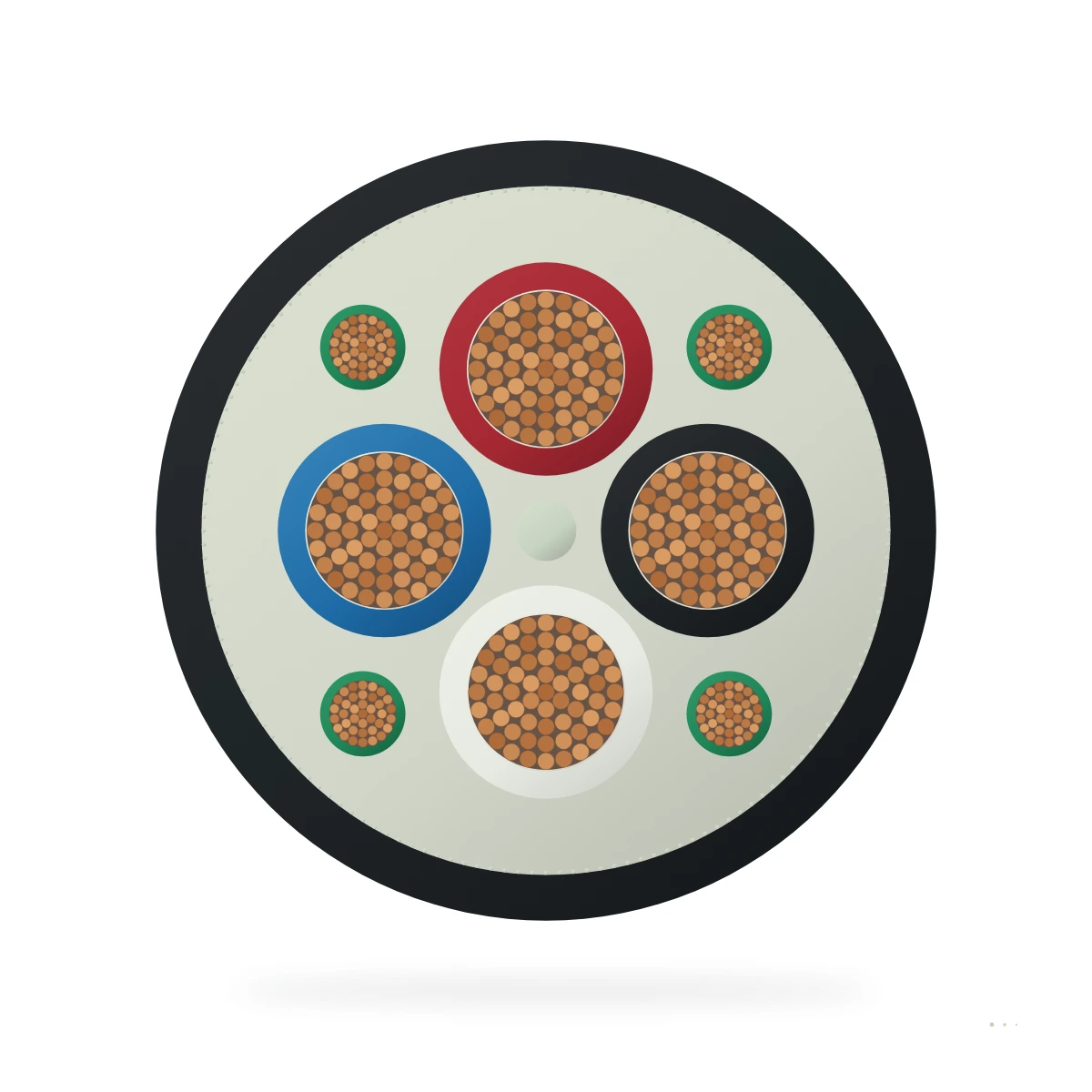
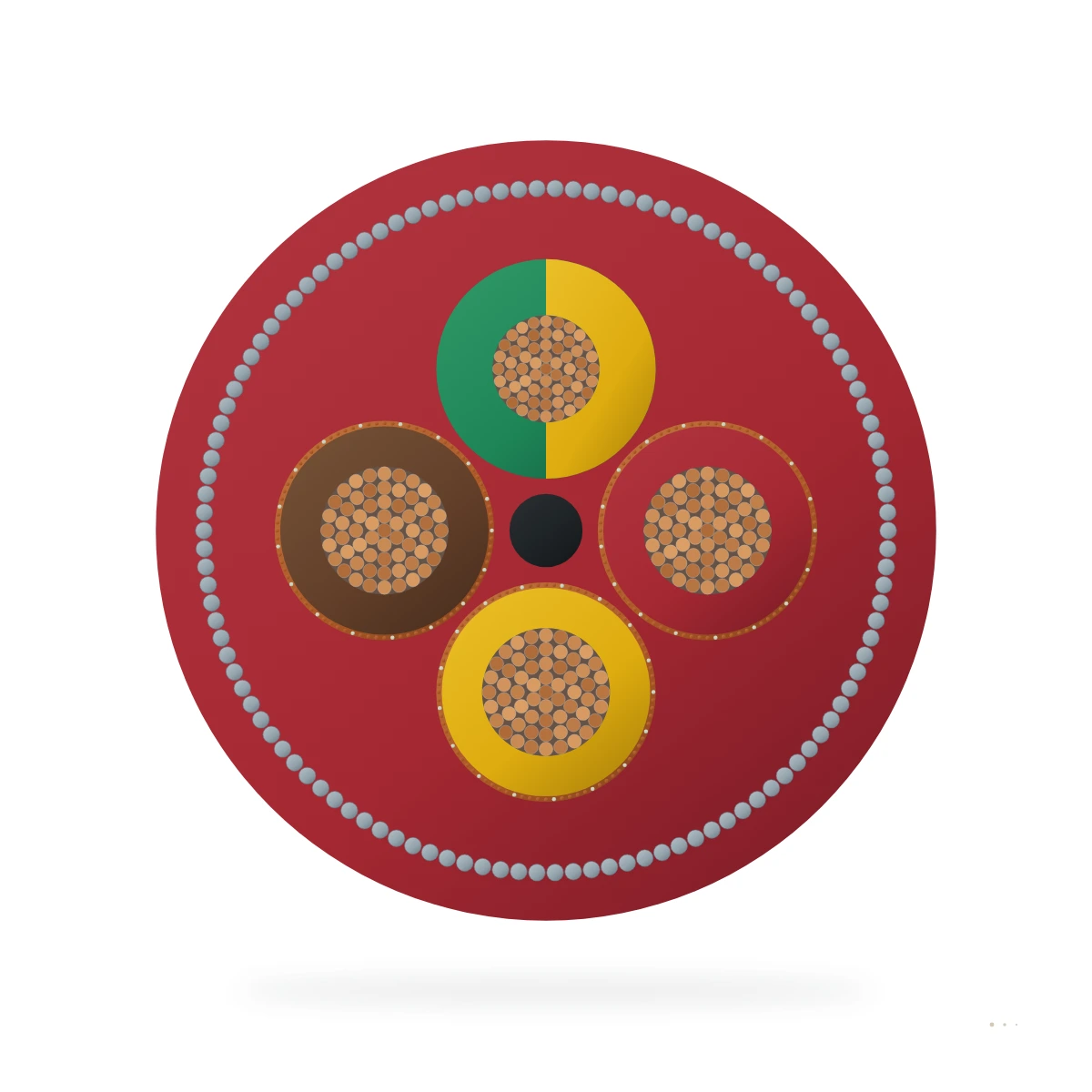
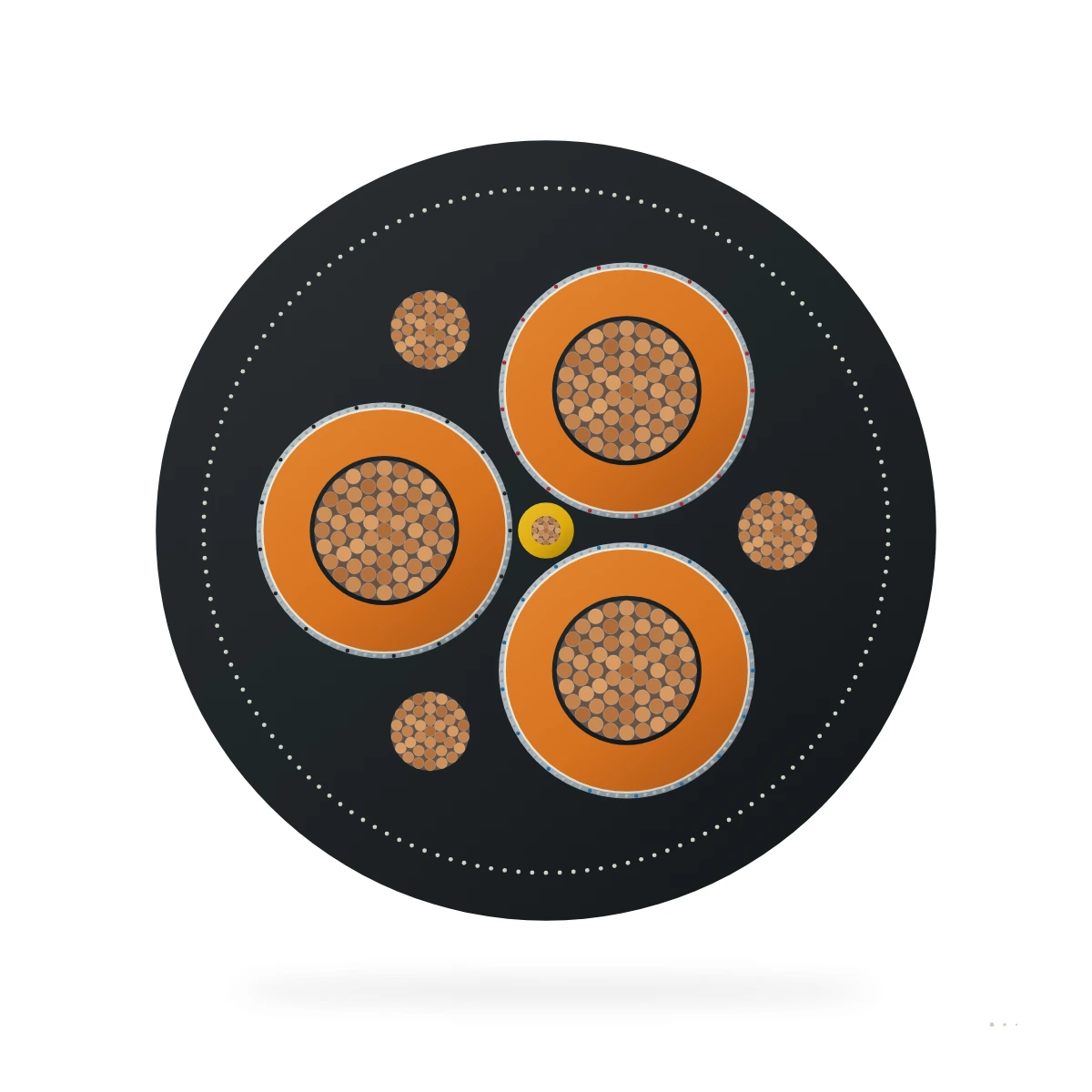
TEBAOFLEX's trailing cable range includes several products. Type W is a normally non-shielded 2 kV portable power family with one to five conductors by model. Type G-GC is a normally non-shielded 2 kV mining construction that typically combines three power conductors, two grounding conductors and an insulated ground-check conductor. Type SHD-GC adds individual phase shielding and is available across a family of voltage options, subject to the selected model. The range also includes, for example, NSSHOU 0.6/1 kV heavy-duty rubber cable, NSHTOU 0.6/1 kV reinforced reeling/power/control cable, NTSCGEWOU medium-voltage reeling and trailing cable, and the individually screened (N)TSCGECEWOU medium-voltage family. These are different electrical and mechanical systems, not size variations of one generic cable.
First establish how the cable moves. State whether it is free trailing, handled by a Bretby or other cable handler, reeled, routed over rollers, attached to a boom or exposed to vehicle traffic. Provide travel distance, moving cable length, speed, cycles, bend points, maximum pull, sidewall pressure, torsion and the smallest dynamic bend radius. Describe the floor or ground surface and whether the cable can be crushed, run over, scraped over rock or caught at the machine. Cable handling and route control often determine whether a product intended for heavy service can achieve acceptable life.
Electrical selection starts with rated system voltage, continuous and starting current, conductor size and voltage drop. For mining equipment, define the grounding and protection circuit explicitly. A ground-check conductor supports continuous monitoring only when it is part of the correct system design. Shielded medium-voltage constructions may use semiconductive conductor and insulation screens, metallic phase screens and protective-earth conductors for electric-field control and system grounding. Type W, G-GC and SHD-GC therefore serve different needs even when their voltage and conductor size appear similar.
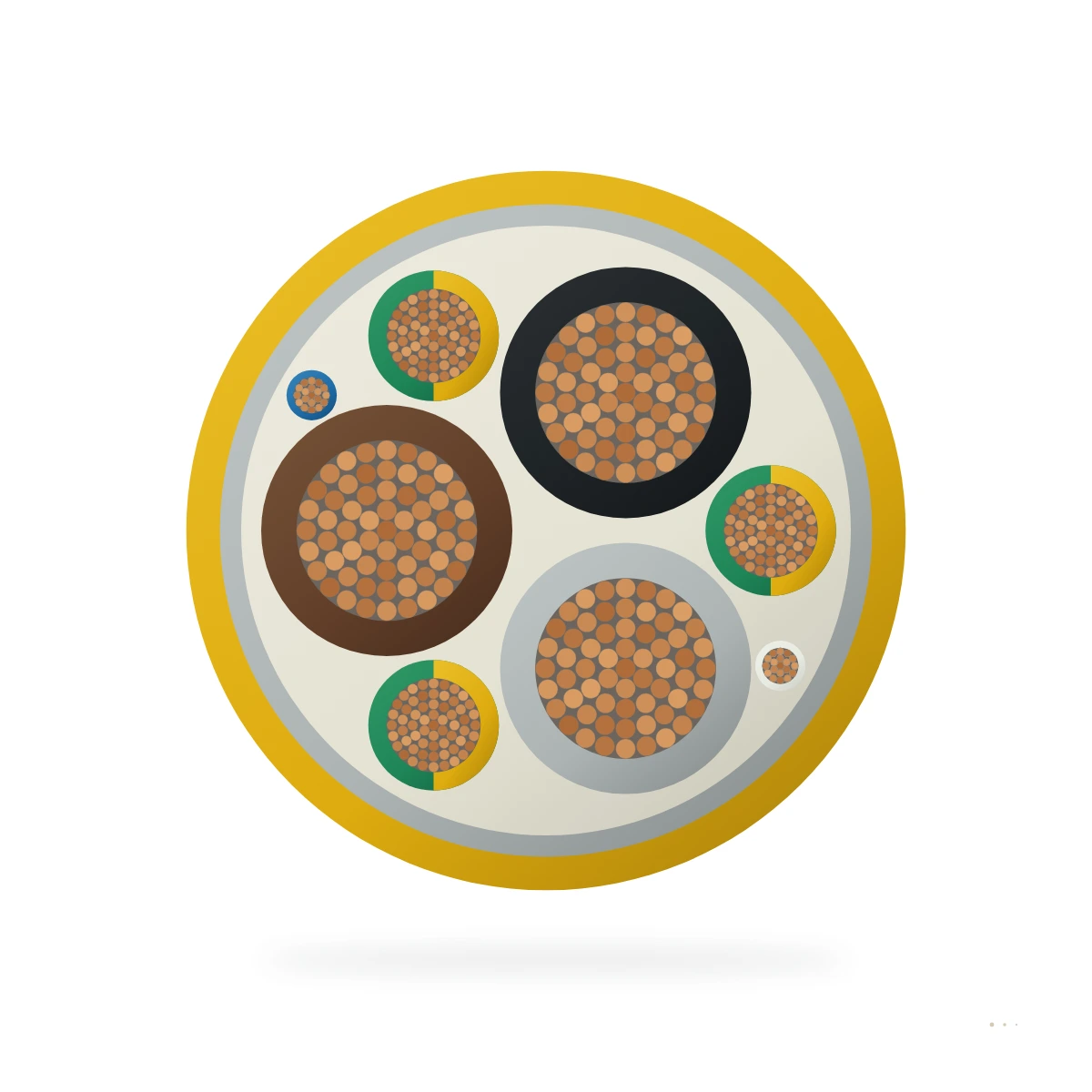
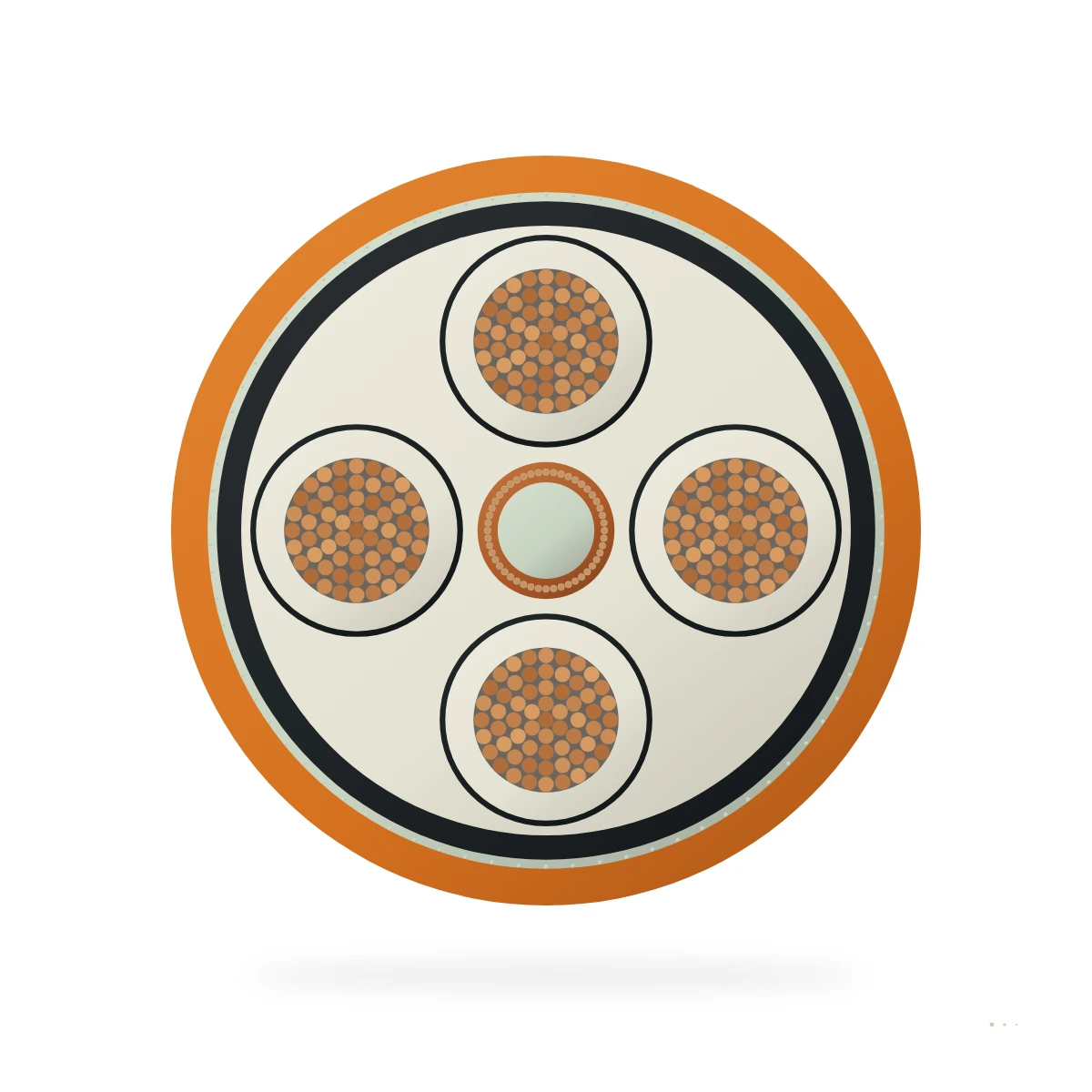
Mechanical construction should be compared at the exact model and size. Across these constructions, common designs use flexible copper or tinned-copper conductors, EPR or related elastomeric insulation, fillers or supported cores, reinforcement and heavy-duty CPE- or rubber-family jackets. NSHTOU includes anti-torsion reinforcement in common constructions. NTSCGEWOU is designed around repeated winding and deflection, while NSSHOU is a robust general heavy-duty cable rather than an automatic continuous-reeling choice. Match the construction to the stated trailing or reeling mode.
Environmental requirements include wet or dry operation, oils and hydraulic fluids, sunlight, ozone, temperature, mud, coal dust, sharp rock and flame-performance rules for the site. State the required sheath compound, operating and installation temperature, water rating, flame test and repair or splice practice for the selected cable. Terminations, couplers and restraint devices must match its diameter, shield and grounding construction.
Several constructions reference ICEA, MSHA approval, UL or DIN VDE categories. Those references are construction-specific: an MSHA-regulated project needs the cable marking and approval evidence for the selected build, not only a family name. The same distinction applies to voltage variants, shielded versus non-shielded builds and destination-market documentation.
An RFQ should identify equipment, industry and duty; system voltage and frequency; full-load and starting current; conductor size; number of phases; grounding, ground-check, pilot and shielding requirements; trailing length and total length; cable handler or reel details; dynamic bend radius; maximum tension and torsion; travel speed and cycle rate; route and surface; ambient and exposure conditions; required standard or approval; coupler/termination details; destination and drum lengths. Include the existing cable designation and photographs if the request is for replacement.
For replacement projects, identify whether damage occurred at the machine end, coupler, handler, bend point or ground-contact section and include that evidence with the RFQ. The failure location can separate an incorrect cable duty from a routing or handling fault.
The products below let buyers compare low-voltage portable, ground-check, individually shielded and medium-voltage trailing constructions. Match the selected model's electrical data, movement duty, dimensions, environmental ratings and documentary scope to the actual project.