By TEBAOFLEX Jyen, Senior Cable Application Specialist at TEBAOFLEX. Reviewed by the TEBAOFLEX Engineering Review Board. Updated on October 23, 2026.
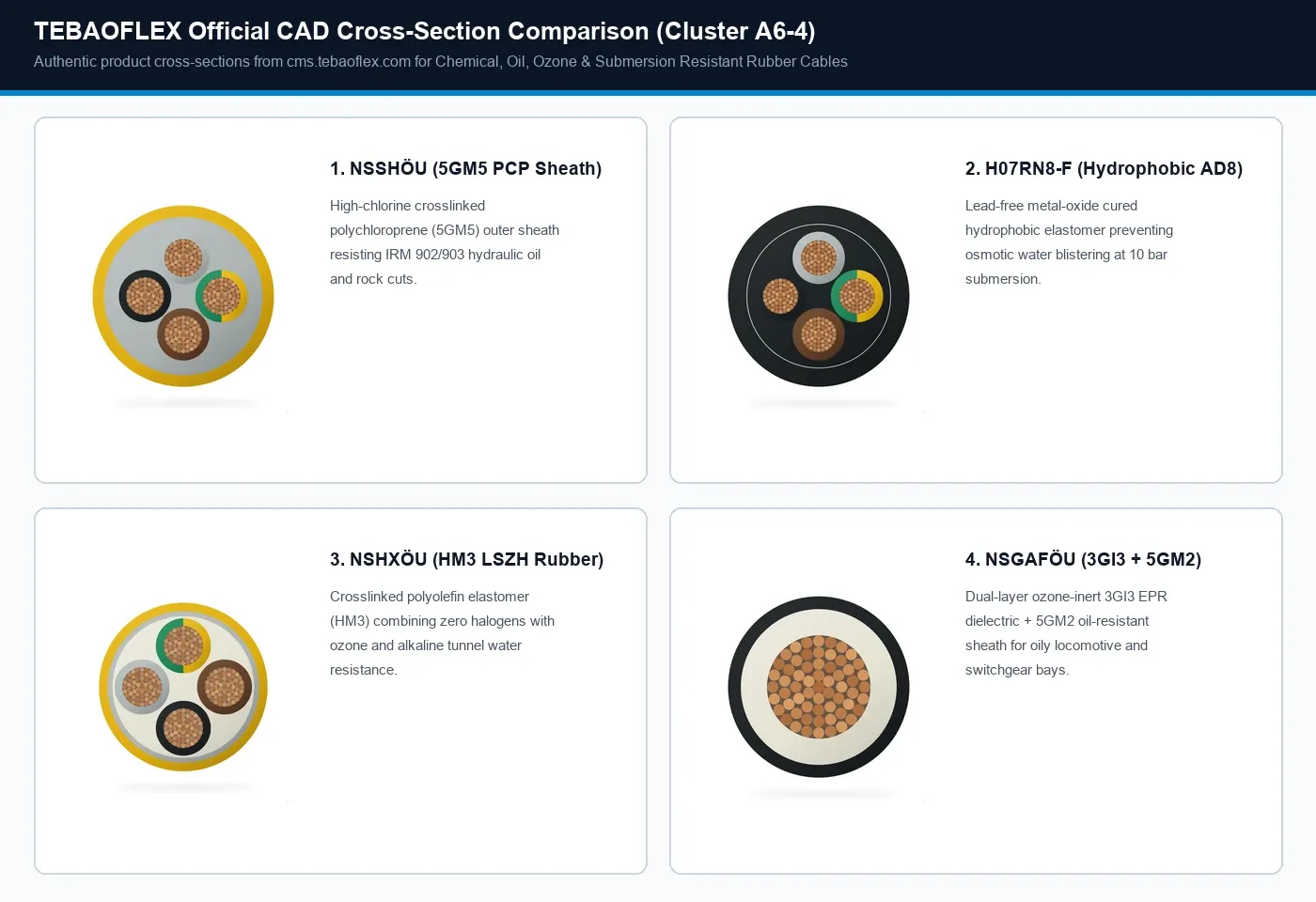
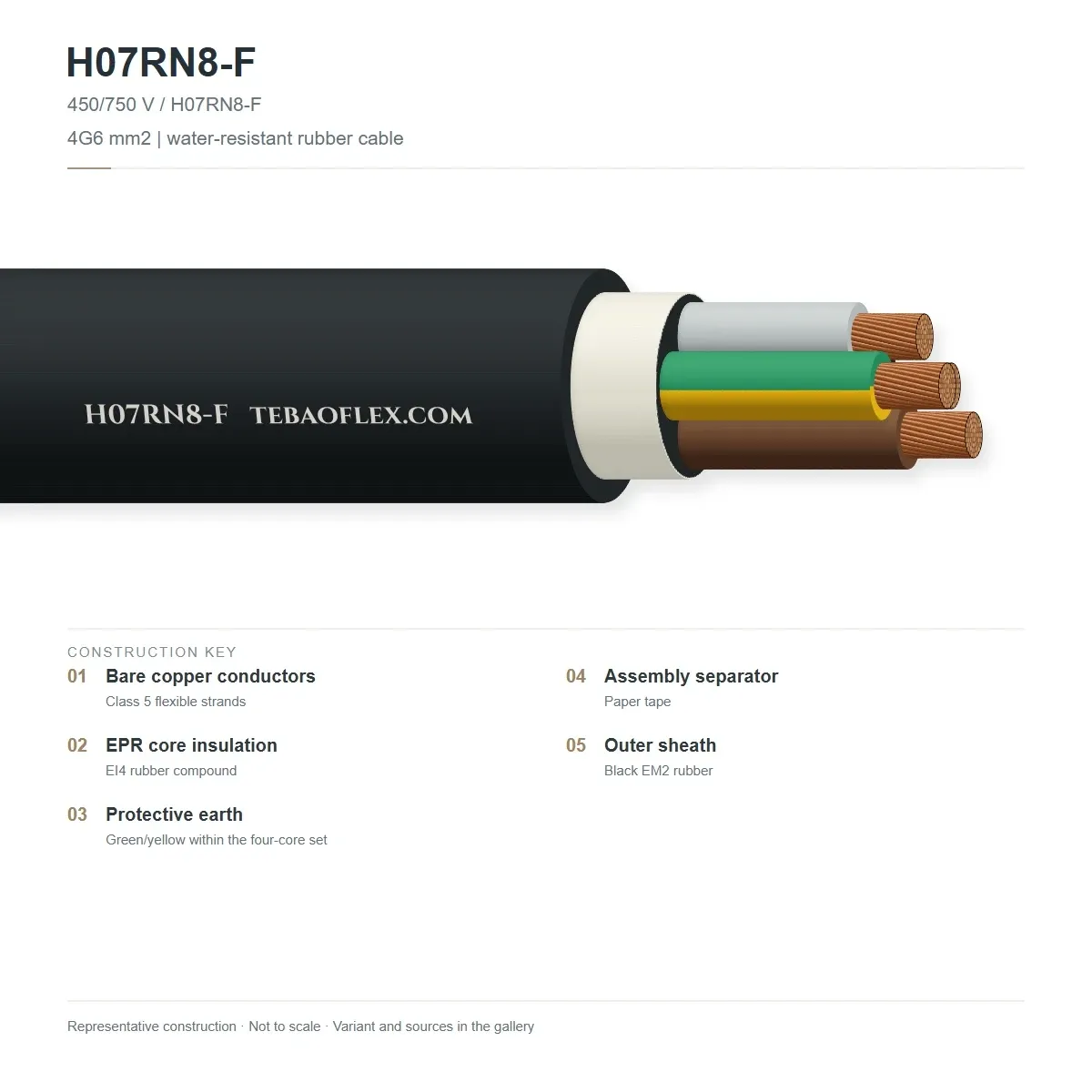
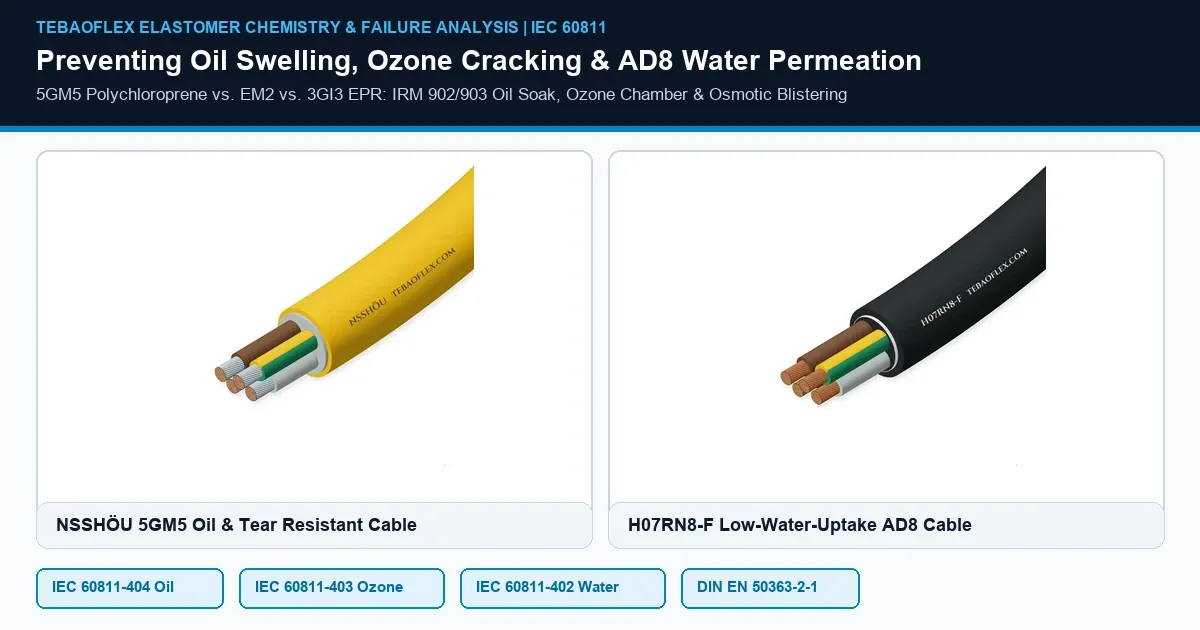
TL;DR: Premature elastomer jacket failure on mining, tunnelling, and dewatering cables stems from three distinct chemical degradation mechanisms: hydrocarbon oil swelling (IRM 902 / IRM 903hydraulic fluid diffusion), ozonolysis stress cracking (O3cleavage of unsaturated polymer double bonds at bends), and osmotic water blistering (water-soluble filler hydration under AD8 hydrostatic head). Specifying TEBAOFLEX NSSHÖU Heavy-Duty Rubber Cable (high-chlorine 5GM5 polychloroprene sheath + saturated 3GI3 EPR insulation) limits100 °CIRM 902oil volume swell to+11.4%while retaining91.2%tensile strength (IEC 60811-404, TEBAOFLEX Lab, 2026). For continuous underwater submersion, H07RN8-F Submersible Rubber Cable uses silane-coupled hydrophobic fillers (max. 6.4 mg/cm²uptake) to maintain730 MΩ·kminsulation resistance after180 daysat5 bar.
Comparison at a Glance: Elastomer Compound Chemical & Environmental Resistance Matrix
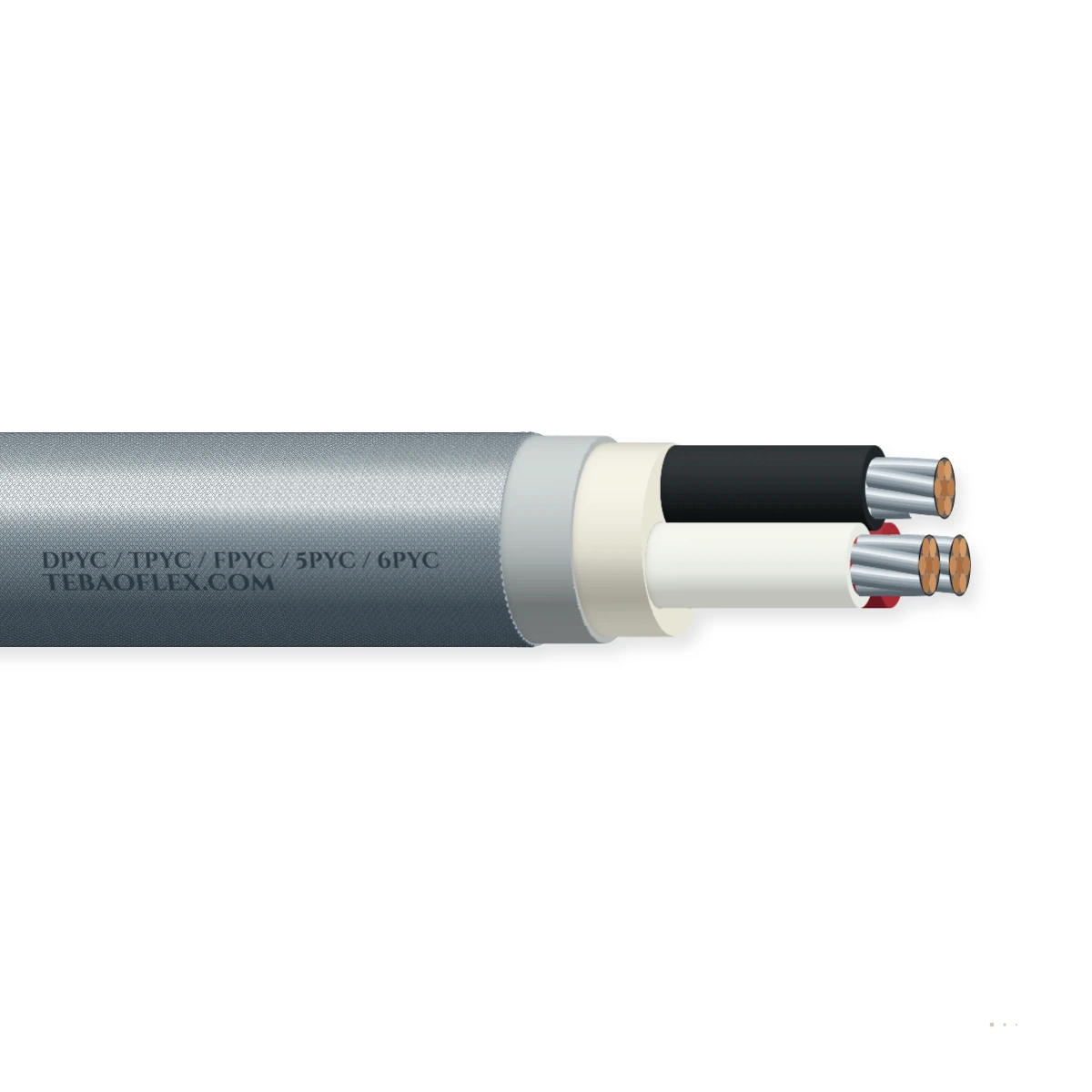
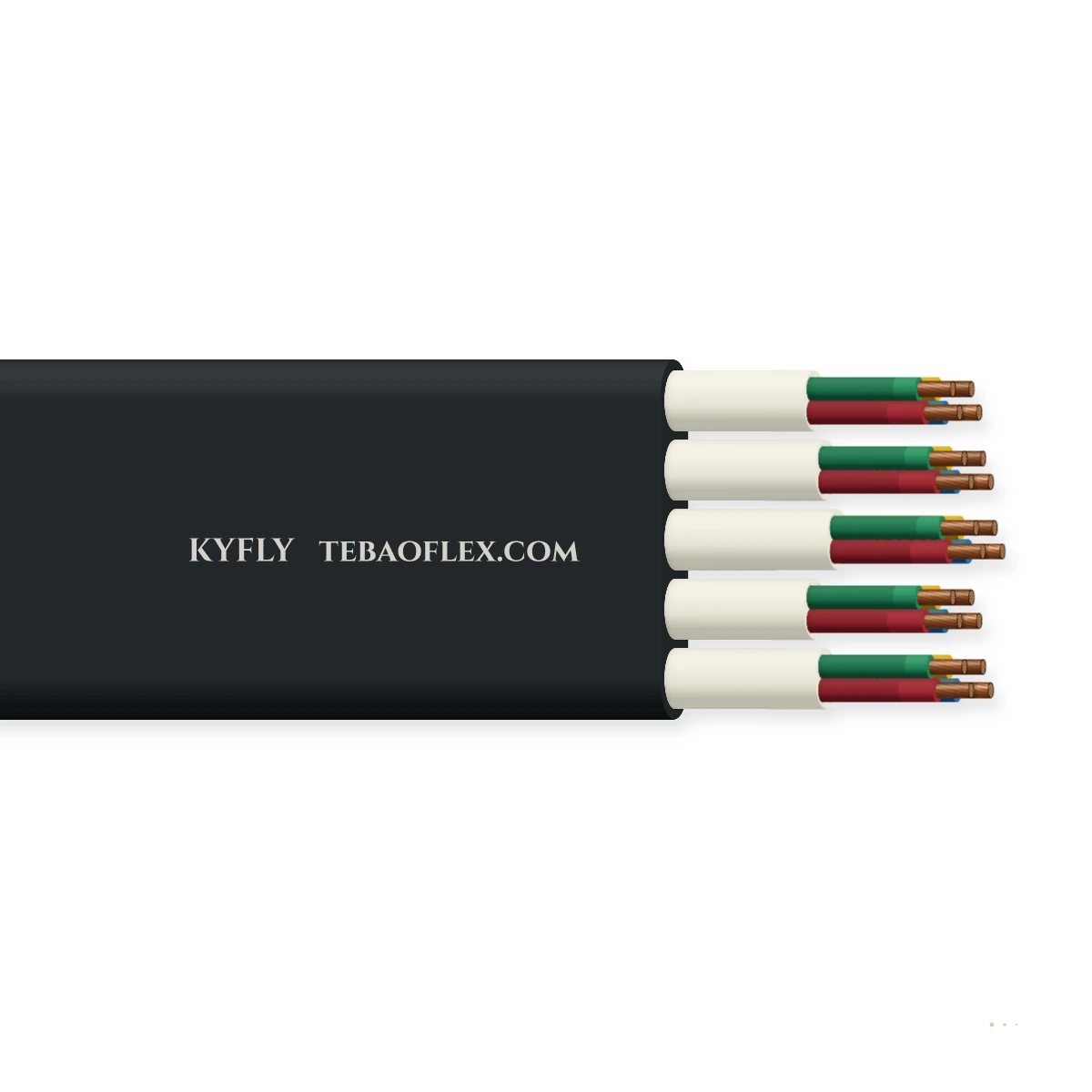
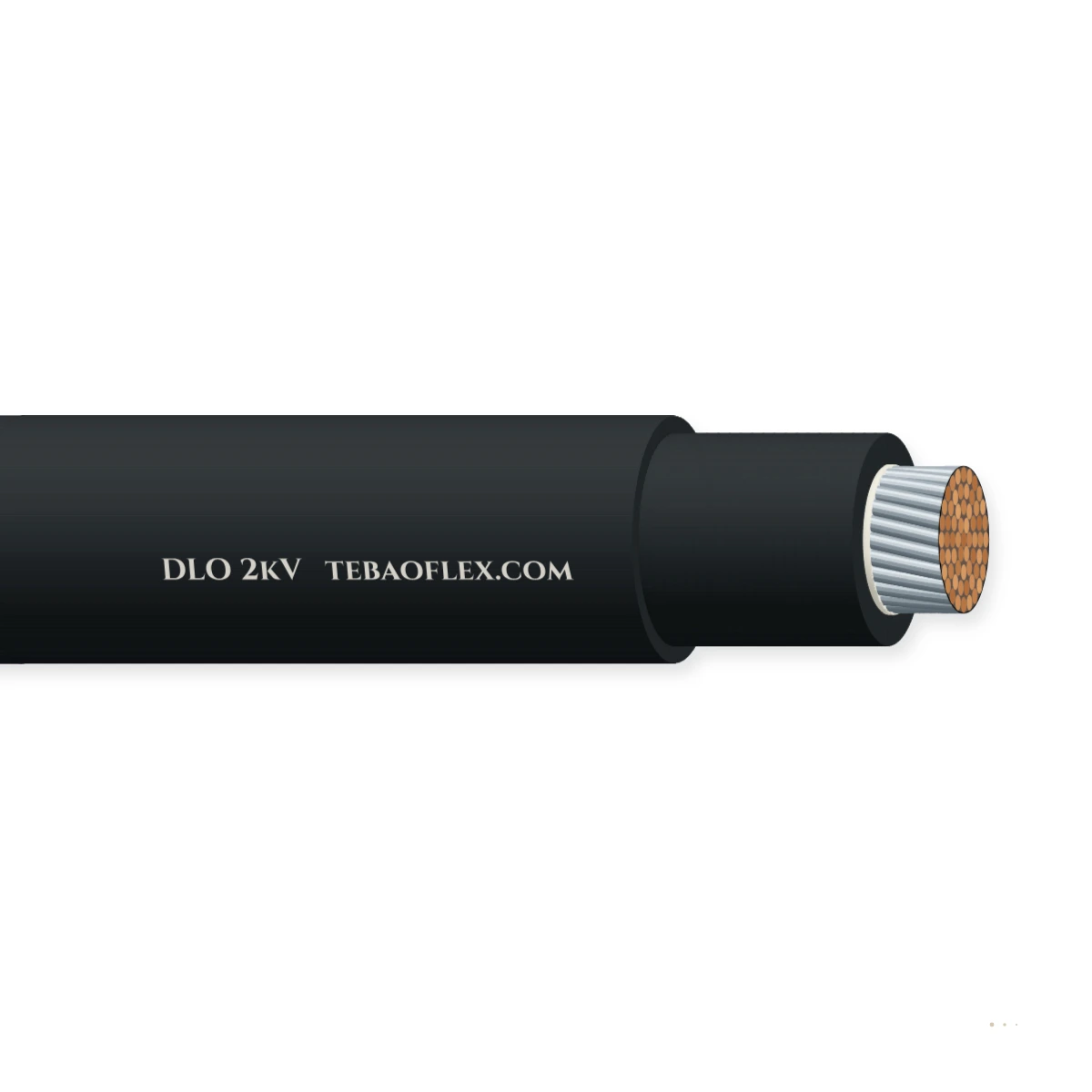
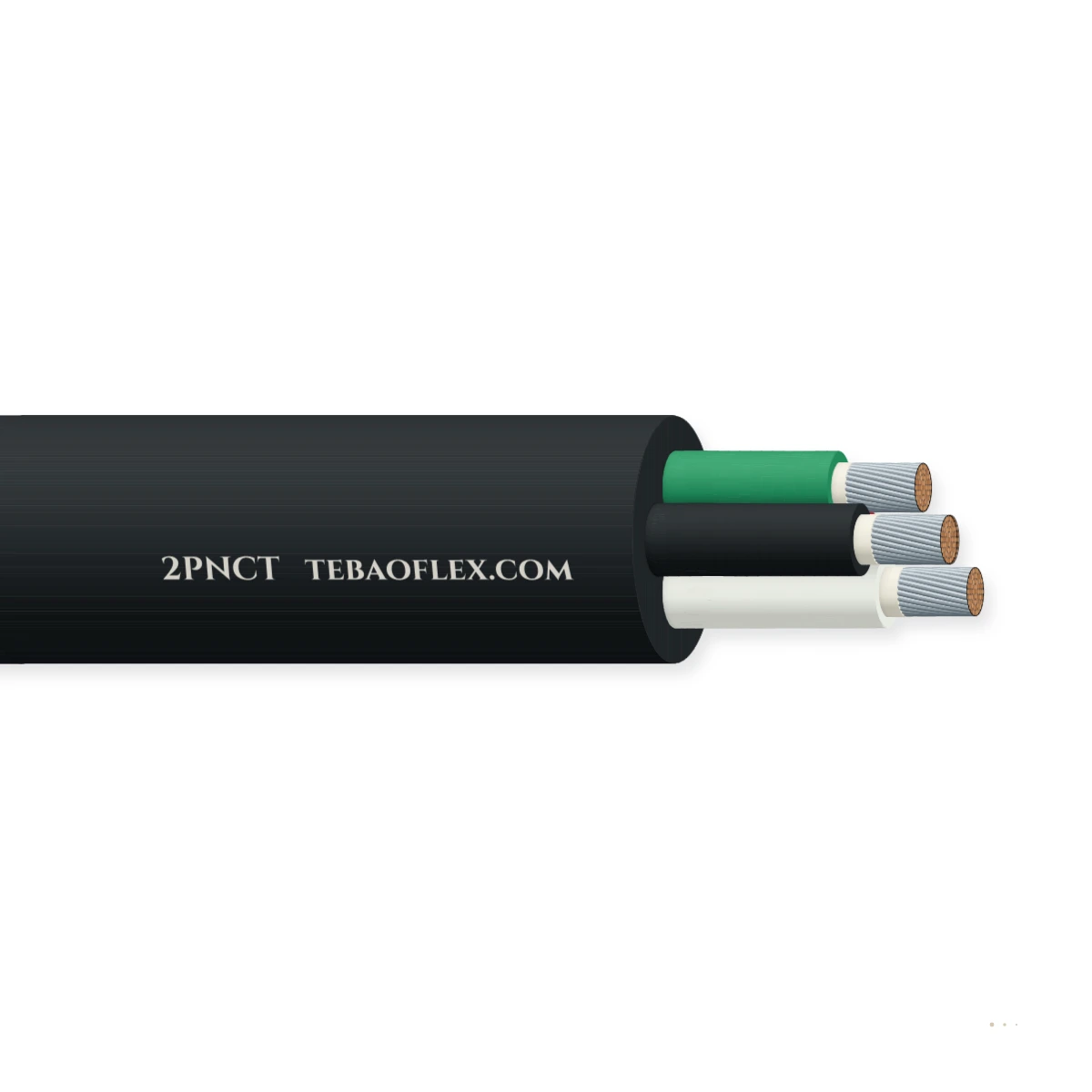
This failure-analysis guide explains the polymer chemistry behind oil swelling, ozone cracking, and osmotic water permeation across the compounds used in our Heavy-Duty Rubber Cable Lineup.
Elastomer Compound Designation.
5GM5 Heavy-Duty PCP.
- Primary TEBAOFLEX Cable Models.: NSSHÖU & NSSHKCGEÖU.
- 100 °C IRM 902 Oil Tensile Retention (IEC 60811-404).:
91.2%(+11.4%swell; min70%). - Ozone Resistance (250 ppm O3, IEC 60811-403).: Zero cracks (
Wax + PPD stabilized). - 70 °C Water Uptake (14 Days, IEC 60811-402).:
9.8 mg/cm²(Wet tunnel duty). - Primary Field Duty Target.: Hydraulic oil, sharp rock & quarry drag.
5GM2 Oil-Resistant PCP.
- Primary TEBAOFLEX Cable Models.: NSGAFÖU & NSGAFCMÖU.
- 100 °C IRM 902 Oil Tensile Retention (IEC 60811-404).:
88.5%(+13.2%swell; min70%). - Ozone Resistance (250 ppm O3, IEC 60811-403).: Zero cracks (
24 h at 250 ppm). - 70 °C Water Uptake (14 Days, IEC 60811-402).:
10.5 mg/cm²(Switchgear / rail). - Primary Field Duty Target.: Oily locomotive bays & converter busbars.
AD8 Hydrophobic PCP.
- Primary TEBAOFLEX Cable Models.: H07RN8-F & S1BC4N8-F.
- 100 °C IRM 902 Oil Tensile Retention (IEC 60811-404).:
86.0%(+14.5%swell; min65%). - Ozone Resistance (250 ppm O3, IEC 60811-403).: Zero cracks (
UV & ozone stable). - 70 °C Water Uptake (14 Days, IEC 60811-402).:
5.2 to 6.4 mg/cm²(AD8 Grade). - Primary Field Duty Target.: Permanent
10 mto100 mpump submersion.
HM3 Crosslinked LSZH.
- Primary TEBAOFLEX Cable Models.: NSHXÖU Halogen-Free Cable.
- 100 °C IRM 902 Oil Tensile Retention (IEC 60811-404).:
84.5%(+15.8%swell; min60%). - Ozone Resistance (250 ppm O3, IEC 60811-403).: Zero cracks (
Saturated polyolefin). - 70 °C Water Uptake (14 Days, IEC 60811-402).:
8.4 mg/cm²(Alkaline tunnel). - Primary Field Duty Target.: Enclosed metro tunnels (
under 0.5% HCl).
3GI3 Crosslinked EPR.
- Primary TEBAOFLEX Cable Models.: Core insulation on
NSSHÖU&NSGAFÖU. - 100 °C IRM 902 Oil Tensile Retention (IEC 60811-404).:
N/A(Protected by PCP sheath). - Ozone Resistance (250 ppm O3, IEC 60811-403).: Inherently immune (
Saturated C-C). - 70 °C Water Uptake (14 Days, IEC 60811-402).:
3.6 mg/cm²(Dielectric barrier). - Primary Field Duty Target.:
90 °Cphase insulation (250 °Cfault).
Failure Mode 1: Hydrocarbon Oil Swelling & Jacket Delamination (IRM 902 / IRM 903)
On underground drill jumbos, roadheaders, hydraulic excavators, and diesel generator skids, flexible power cables lie in pools of leaking hydraulic fluid (ISO VG 46 / VG 68), diesel fuel, and rock-drill lubricating oil. When a low-cost cable uses a natural rubber (NR), styrene-butadiene (SBR), or un-chlorinated EPDM outer jacket, the cable balloons to 1.5x its original diameter within weeks. The swollen jacket turns gummy and peels away from the inner cores when pulled around a guide roller.
The root cause is Hildebrand solubility parameter matching. Non-polar hydrocarbon oils have a solubility parameter (16.0 to 17.5 MPa⁰·⁵) nearly identical to non-polar NR/SBR (16.8 MPa⁰·⁵) and EPR (16.4 MPa⁰·⁵). Like dissolves like. Hot mineral oil rapidly diffuses into the non-polar rubber matrix and severs secondary van der Waals forces between polymer chains.
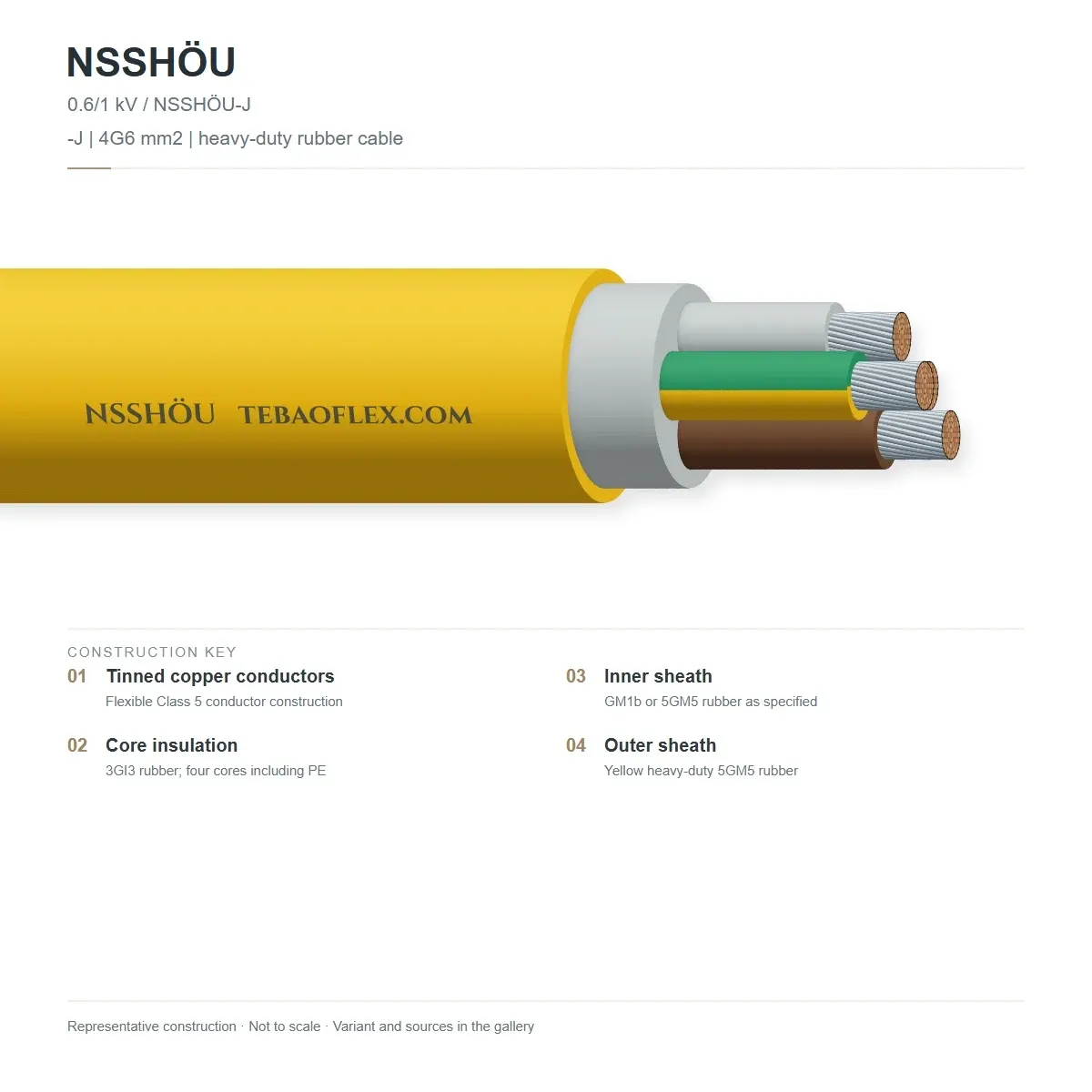
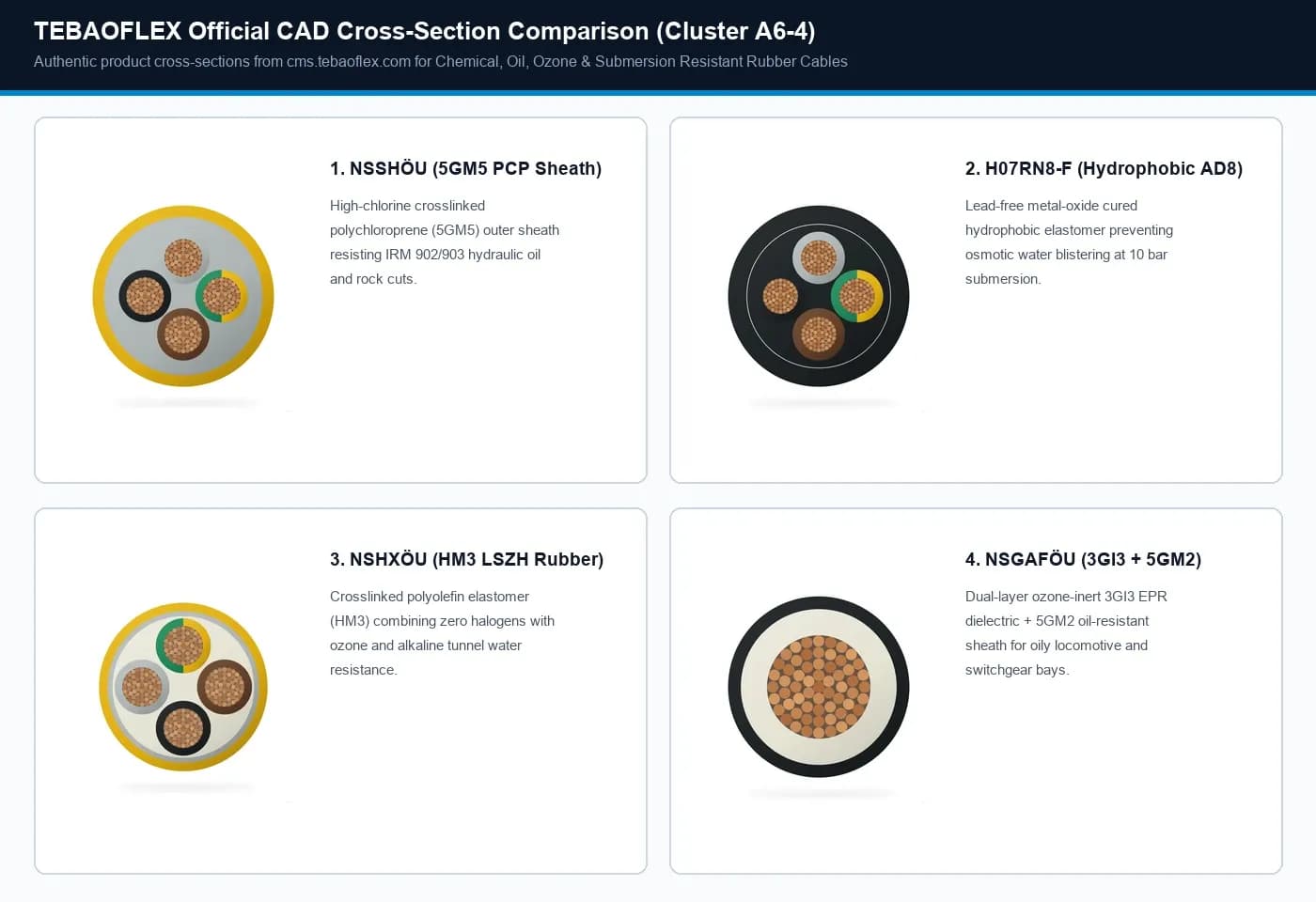
Here is how TEBAOFLEX prevents oil swelling in NSSHÖU Heavy-Duty Rubber Cable and NSGAFÖU 1.8/3 kV Cable:
- High-Polarity Polychloroprene (
5GM5 / 5GM2PCP): Because chloroprene monomers contain a strongly electronegative chlorine atom (-Cl), the resulting5GM5polymer exhibits high cohesive polarity (19.2 MPa⁰·⁵). This thermodynamic mismatch repels non-polar mineral and hydraulic oils. - High Crosslink Density (
Hot-Set max. 58.4%): Tight covalent crosslinks formed in our high-pressure continuous vulcanization (CV) tube physically restrict chain expansion when immersed in100 °Coil.
When our chemical laboratory tested five outer sheath compounds in IRM 902 reference mineral oil at +100 °C for 168 hours (7 days) per IEC 60811-404 and DIN EN 50363-2-1, natural rubber (NR/SBR) swelled by +68.4% and retained only 38.5% of its tensile strength. By contrast, TEBAOFLEX's 5GM5 polychloroprene compound swelled by only +11.4%, retained 91.2% tensile strength, and kept 88.6% elongation at break (surpassing the DIN VDE 0250-812 minimum retention requirement of 70% by +21.2 percentage points, TEBAOFLEX Lab, 2026).
Core Engineering Definitions for Elastomer Degradation & Testing
To standardize chemical qualification and failure root-cause analysis for industrial rubber cables, we define four essential polymer engineering terms below:
- IRM 902 and IRM 903 oil immersion test is the international standard protocol (
IEC 60811-404, replacingASTM Oil No. 2andOil No. 3) that immerses dumbbell specimens of cable sheathing (such as 5GM5, 5GM2, or EM2) in reference hydrocarbon oil at100 °Cfor24to168 hours. It verifies that tensile strength and elongation at break remain within±30%or±40%of un-aged values. - Ozonolysis stress cracking is the chemical cleavage of unsaturated carbon-carbon double bonds (
C=C) in diene elastomers (tested under IEC 60811-403) by atmospheric or corona-generated ozone (O3). It produces deep transverse fissures on bent cable jackets unless stabilized with saturated backbones (3GI3 EPR / HM3) or antiozonant bloom systems (5GM5). - Gravimetric water absorption is the mass of water absorbed per unit surface area (
expressed in mg/cm²underIEC 60811-402) after immersing a cable insulation or sheath specimen in+70 °Cdemineralized water for14 days(336 hours). AnAD8submersible cable must stay below10.0 mg/cm²(TEBAOFLEX H07RN8-F averages 6.4 mg/cm²). - Hot-Set vulcanization test is the definitive quality-control test for thermoset crosslinking (
IEC 60811-507). A weighted rubber specimen (20 N/cm²) hangs in a+200 °Coven for15 minutes. Elongation under load must not exceed100%and permanent elongation after cooling must not exceed25%.
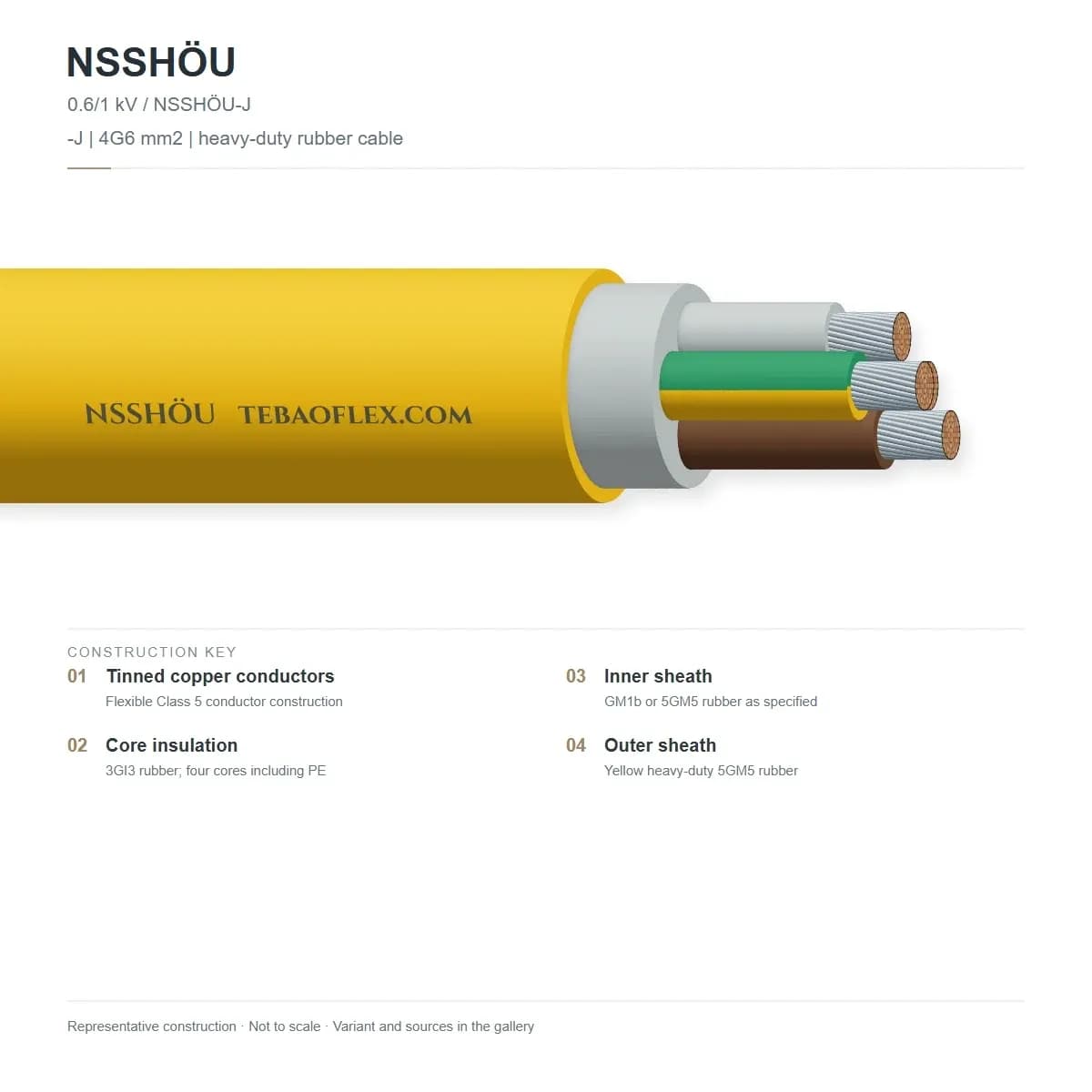
Failure Mode 2: High-Altitude UV & Ozone Cracking (3GI3 EPR vs. Unsaturated Rubber)
In open-pit copper and gold mines in the Andes (3,500 m to 4,800 m elevation), solar ultraviolet (UV) radiation and electrical corona around medium-voltage switchgear generate ambient ozone concentrations (100 ppb to 300 ppb) several times higher than sea level. When a cable bends around a 6 x D entry gland or festoon saddle, the outer radius of the bend sits under continuous 15% to 25% tensile strain.
If the rubber compound contains unprotected carbon-carbon double bonds (-CH=CH-), ozone molecules react immediately via the Criegee mechanism to form unstable ozonides that snap the polymer chain. Transverse cracks appear perpendicular to the cable axis, exposing the phase cores to rainwater.
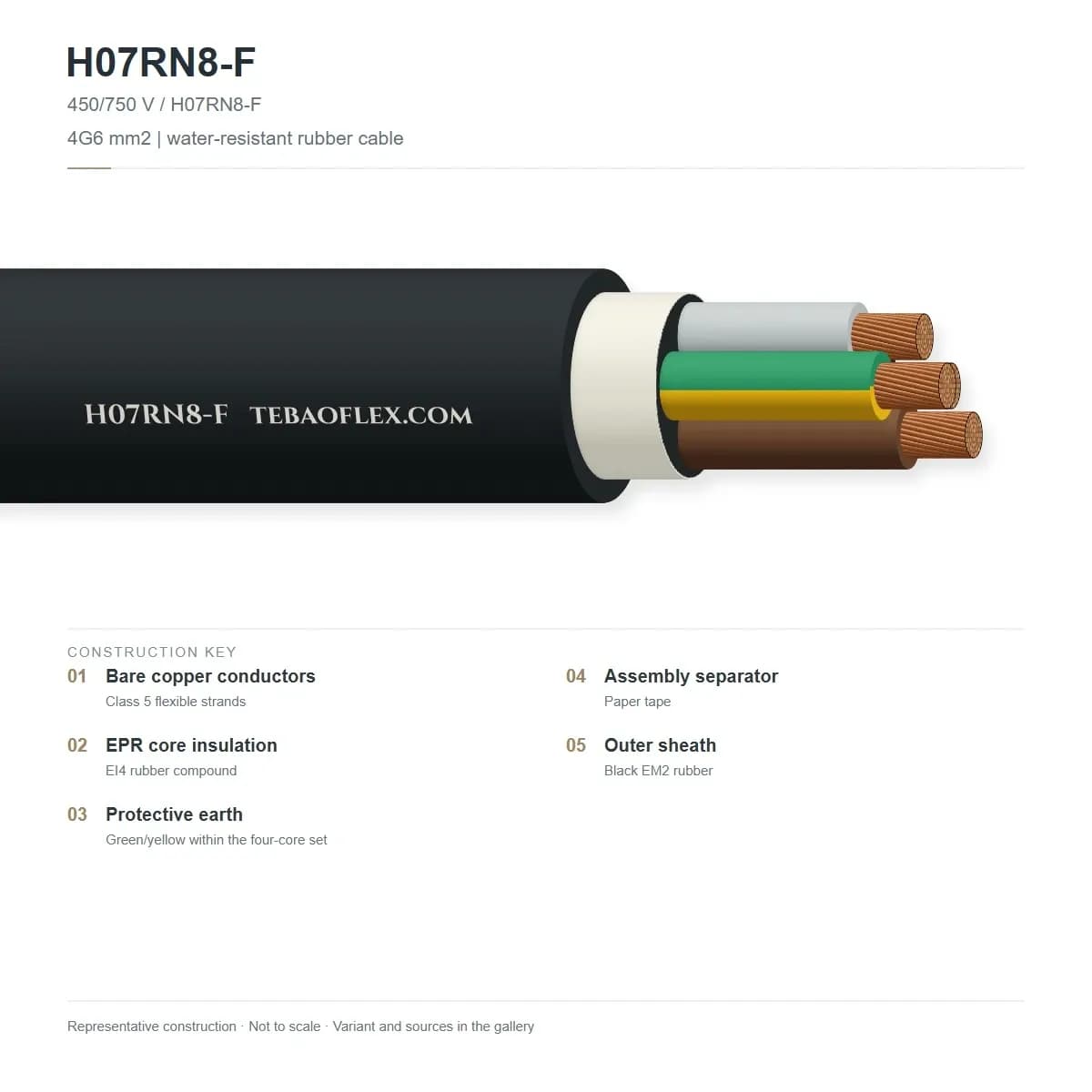
TEBAOFLEX eliminates ozone cracking across our NSSHÖU, NSHXÖU, and NSGAFÖU cables through a two-tier defense:
- Fully Saturated
3GI3EPR &HM3Backbones: Both our3GI3ethylene-propylene core insulation and ourHM3halogen-free outer sheath (on NSHXÖU) possess saturated polymethylene main chains (-CH2-CH2-) devoid of backbone double bonds. InIEC 60811-403chamber tests at300 ppmozone (1,000xnatural atmospheric levels) and40 °Cfor72 hours,3GI3andHM3exhibit zero microscopic cracks at4 x Dmandrel strain (TEBAOFLEX Lab, 2026). - Dual Antiozonant + Paraffin/Microcrystalline Wax System in
5GM5: Because polychloroprene (5GM5) has a chlorine-deactivated double bond, its intrinsic ozone resistance is already50xhigher than natural rubber. We reinforce5GM5with a dual-molecular-weight microcrystalline wax blend that blooms to the surface to form an inert physical barrier, paired with non-stainingPPDchemical antiozonants.
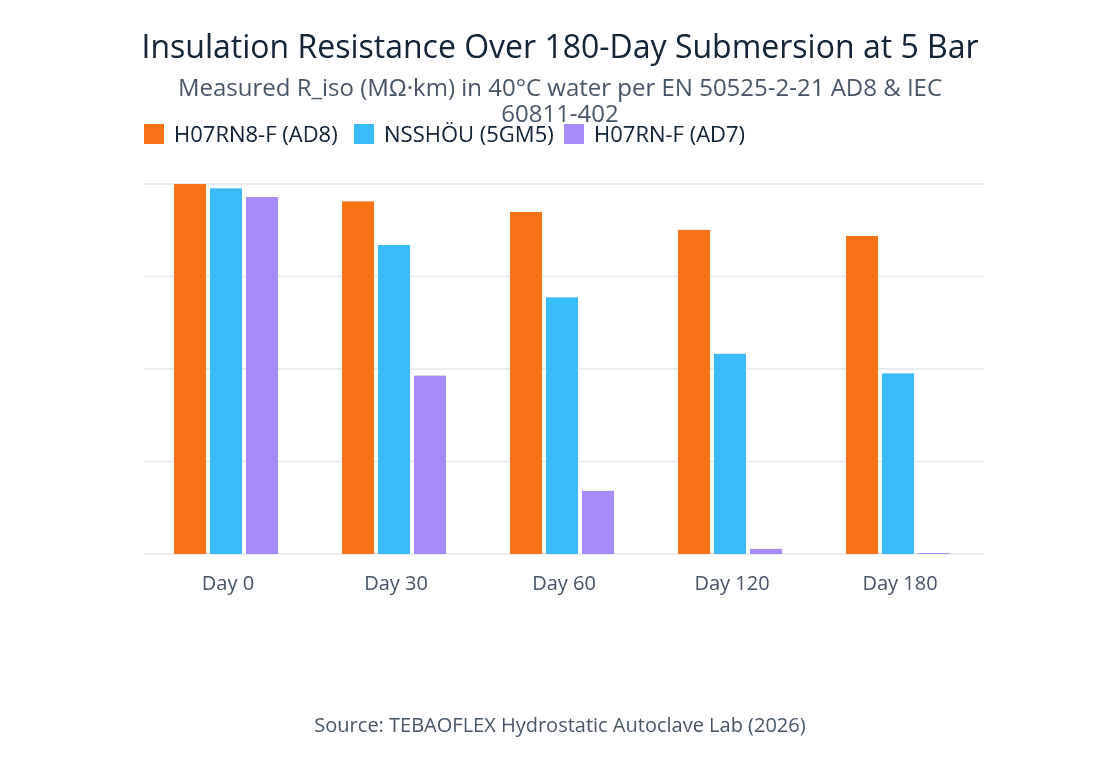
View full-size water-immersion chart
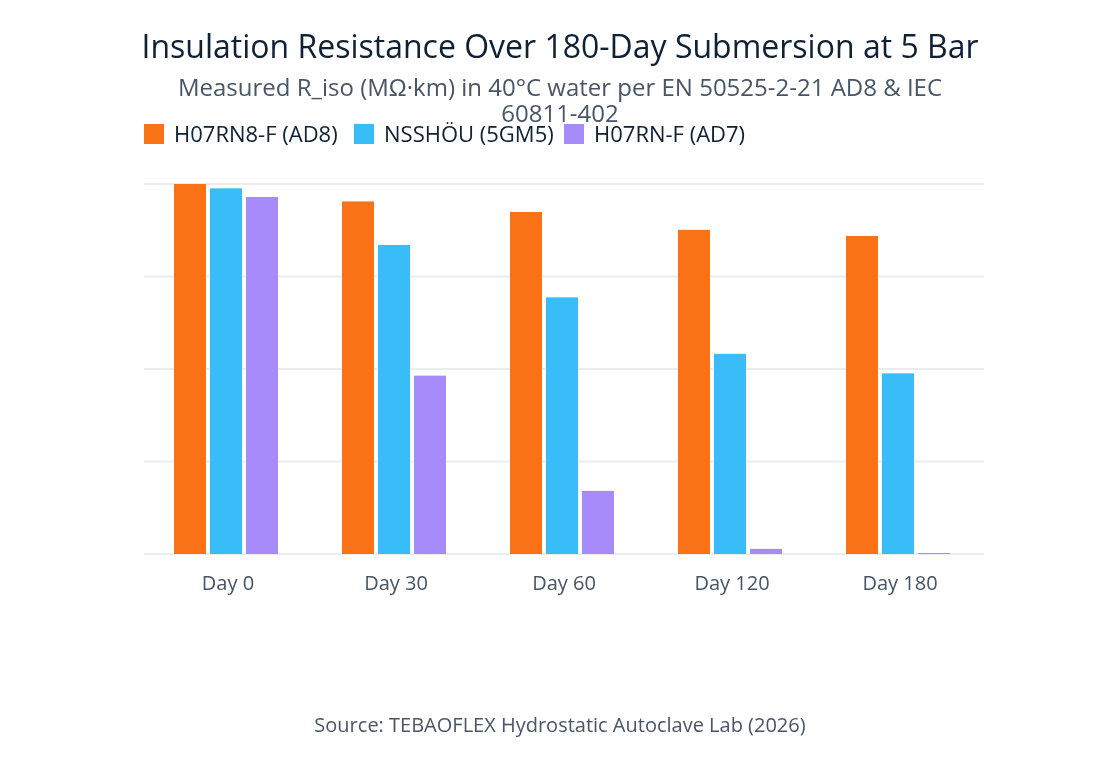
Insulation Resistance Over 180-Day Submersion at 5 Bar. grouped bar data: Day 0: H07RN8-F (AD8) 850, NSSHÖU (5GM5) 840, H07RN-F (AD7) 820; Day 30: H07RN8-F (AD8) 810, NSSHÖU (5GM5) 710, H07RN-F (AD7) 410; Day 60: H07RN8-F (AD8) 785, NSSHÖU (5GM5) 590, H07RN-F (AD7) 145; Day 120: H07RN8-F (AD8) 745, NSSHÖU (5GM5) 460, H07RN-F (AD7) 12; Day 180: H07RN8-F (AD8) 730, NSSHÖU (5GM5) 415, H07RN-F (AD7) 2.Source: TEBAOFLEX Hydrostatic Autoclave Lab 2026.
Source: TEBAOFLEX Hydrostatic Autoclave Lab, 2026.
Failure Mode 3: Osmotic Water Blistering & Alkaline Tunnel Hydrolysis (AD8 H07RN8-F)
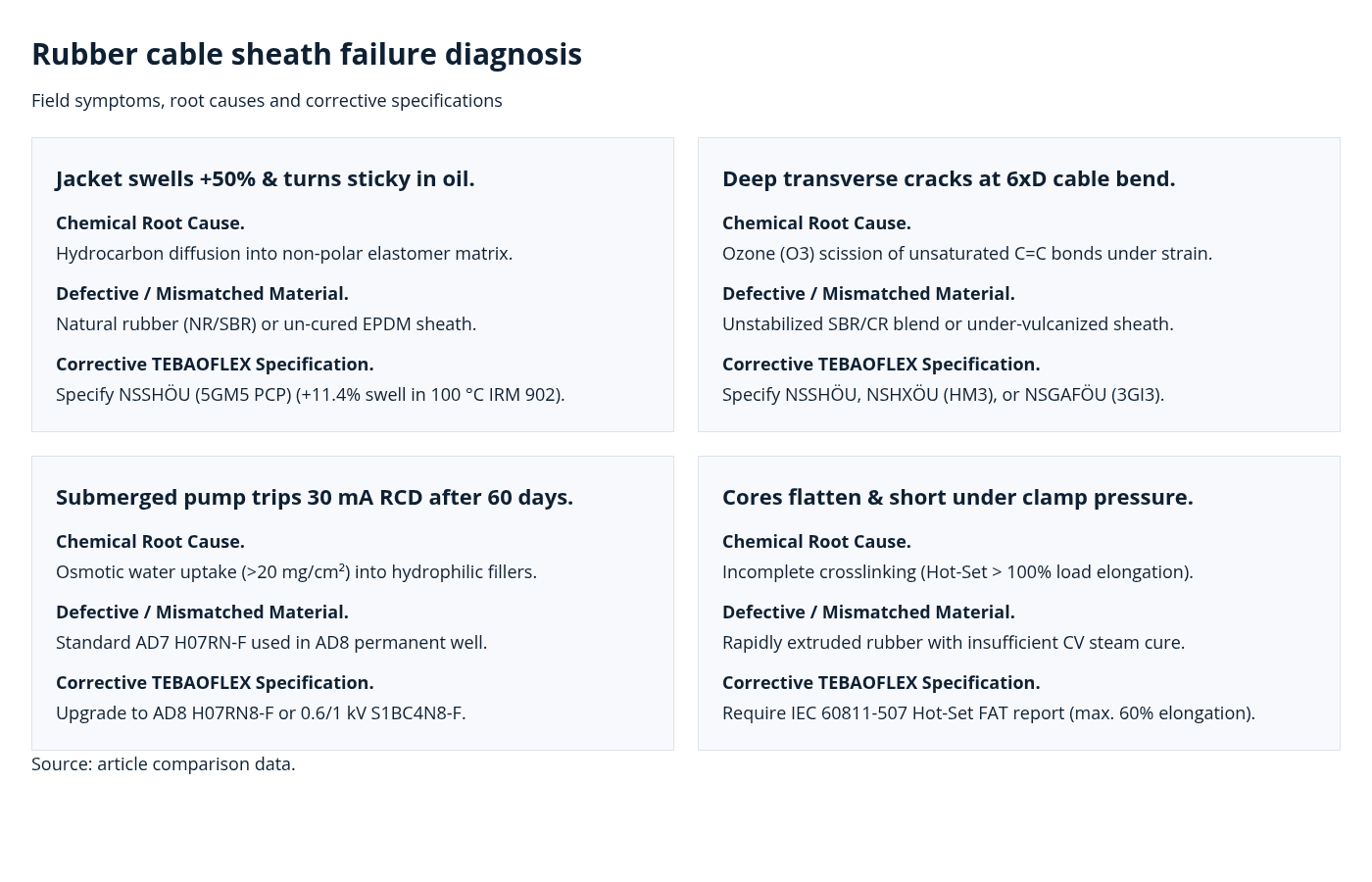
Why do standard rubber cables suffer insulation breakdown after 60 to 120 days in pH 11 shotcrete tunnel drainage sumps or 50 m (5 bar) dewatering wells? When we tested and measured H07RN8-F (hydrophobic AD8 PCP), NSSHÖU (5GM5 PCP), and standard H07RN-F (standard EM2 PCP) in a 5 bar, 40 °C hydrostatic autoclave for 180 days, our testing method and test setup revealed the exact osmotic degradation curve shown in the chart above and the diagnostic tables below.
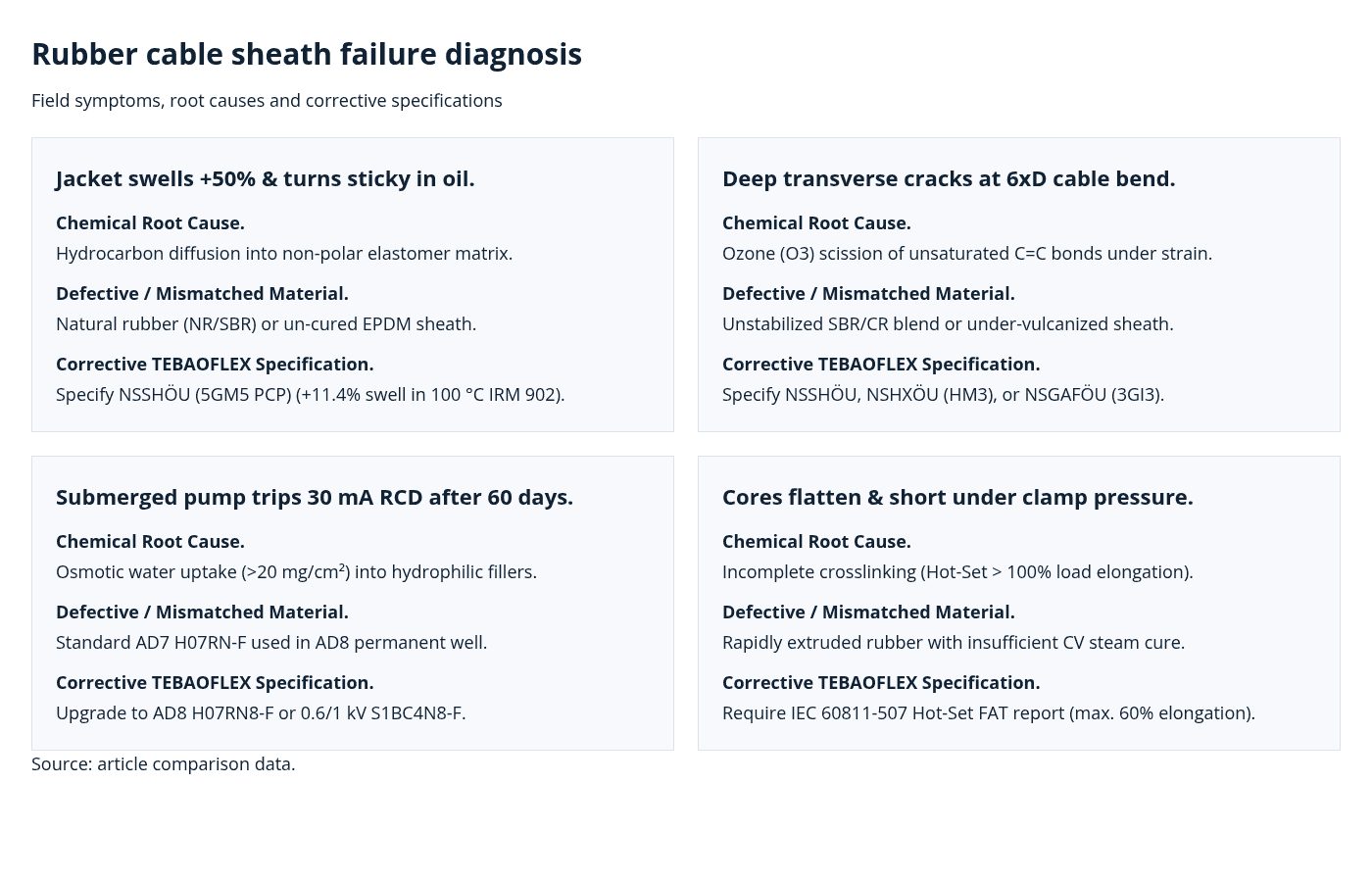
Field Symptom Observed.
Jacket swells +50% & turns sticky in oil.
- Chemical Root Cause.: Hydrocarbon diffusion into non-polar elastomer matrix.
- Defective / Mismatched Material.: Natural rubber (
NR/SBR) or un-curedEPDMsheath. - Corrective TEBAOFLEX Specification.: Specify NSSHÖU (
5GM5PCP) (+11.4%swell in100 °CIRM 902).
Deep transverse cracks at 6xD cable bend.
- Chemical Root Cause.: Ozone (
O3) scission of unsaturatedC=Cbonds under strain. - Defective / Mismatched Material.: Unstabilized
SBR/CRblend or under-vulcanized sheath. - Corrective TEBAOFLEX Specification.: Specify
NSSHÖU, NSHXÖU (HM3), or NSGAFÖU (3GI3).
Submerged pump trips 30 mA RCD after 60 days.
- Chemical Root Cause.: Osmotic water uptake (
>20 mg/cm²) into hydrophilic fillers. - Defective / Mismatched Material.: Standard
AD7H07RN-F used inAD8permanent well. - Corrective TEBAOFLEX Specification.: Upgrade to
AD8H07RN8-F or0.6/1 kVS1BC4N8-F.
Cores flatten & short under clamp pressure.
- Chemical Root Cause.: Incomplete crosslinking (
Hot-Set > 100%load elongation). - Defective / Mismatched Material.: Rapidly extruded rubber with insufficient CV steam cure.
- Corrective TEBAOFLEX Specification.: Require
IEC 60811-507Hot-Set FAT report (max. 60%elongation).
Field Care, Drum Storage & Termination Protocol for Harsh Chemical Sites
Even when specifying DIN VDE and IEC 60811 tested a genuine 5GM5, HM3, or AD8 rubber cable can fail prematurely if field crews apply incompatible cleaning solvents, tight bend radii, or unsealed cable glands. Based on our site audits at open-pit mines in Chile, potash shafts in Canada, and metro TBM drives in Southeast Asia, four field rules double jacket service life:
- Ban Chlorinated & Aromatic Degreasers on Rubber Jackets: Field mechanics often spray trichloroethylene, toluene, or xylene degreasers onto oily drill booms. While
5GM5polychloroprene easily blocks mineral hydraulic oil (IRM 902), aromatic and chlorinated solvents swell polar elastomers. For example, crews should wash oilyNSSHÖUcables with mild alkaline detergent (pH 8 to 9) and low-pressure warm water (under 40 °C). This simple practice prevents surface softening and preserves jacket tear resistance across multi-year shifts. - Maintain Minimum Bend Radius (
4 x DStatic,6 x Dto10 x DDynamic): Ozone crack growth scales directly with surface tensile strain. Keeping fixed bends above4 x Dand dynamic reeling bends above10 x Dkeeps outer-wall stretch below10%(VDE, 2026). This keeps protective microcrystalline wax films intact at entry glands. - Cover Spare Cable Drums in High-UV Laydown Yards: When spare reels of
NSSHÖUorH07RN-Fsit uncovered in a desert laydown yard for12 months, black jacket surface temperatures reach+75 °C. For instance, keeping wooden lagging or UV-reflective tarps over stored drums preserves full antiozonant reserves. Always seal cut cable ends with adhesive heat-shrink caps so rainwater cannot wick into the Class 5 copper strands before installation. - Use Long-Shroud Compression Glands with
IP68Dual Seals onAD8Pumps: On deep-well H07RN8-F and S1BC4N8-F installations, water entry often occurs at a loose entry gland rather than through the sheath wall. Always pairAD8rubber cables with dual-sealEPDMorFKMcompression glands torqued to the exact outer diameter tolerance.
For complete structural comparisons and procurement checklists, review our companion articles: NSSHÖU, NSSHKCGEÖU & NSHXÖU Heavy-Duty Rubber Cable Guide, NSSHÖU vs H07RN-F vs H07RN8-F Comparison, and NSSHÖU & H07RN8-F FAT Testing & PO Checklist.
All lab tests follow IEC, DIN VDE, and ISO 9001 quality rules.
Key Takeaways & Frequently Asked Questions (FAQ)
Key Engineering Takeaways for Elastomer Longevity
- Verify
IEC 60811-404(100 °C IRM 902 Oil) on Every Mining & Tunnel PO. Genuine5GM5polychloroprene retains> 90%of its tensile strength after168 hoursin100 °Cmineral oil. - Rely on Saturated
3GI3EPR &HM3Compounds in High-Altitude & Corona Zones. Saturated polymer backbones cannot suffer ozone chain scission even at300 ppmO3. - Eliminate Hydrophilic Fillers for
AD8Underwater Duty. Only silane-coupled hydrophobic compounds (H07RN8-FandS1BC4N8-F,max. 6.4 mg/cm²water uptake) prevent osmoticRCDtrips over multi-year submersion.
Frequently Asked Questions (FAQ)
Below are direct engineering answers grounded in DIN VDE and IEC test standards (2026).
Why do rubber cables swell and turn spongy when exposed to hydraulic oil?
Hydrocarbon mineral and hydraulic oils (tested via IRM 902 and IRM 903 in IEC 60811-404) diffuse into non-polar rubbers such as natural rubber (NR), SBR, or unjacketed EPR. This forces polymer chains apart and causes +50% to +80% volume swell. Crosslinked polychloroprene compounds (5GM5 on NSSHÖU and 5GM2 on NSGAFÖU) contain polar chlorine atoms that repel hydrocarbon oils. They limit volume swell to +11.4% and retain >89% tensile strength after 168 hours at 100 °C.
What causes transverse cracks on bent rubber cables at high-altitude open-pit mines?
Transverse surface cracks perpendicular to the bend axis are caused by atmospheric ozone (O3) attacking unsaturated carbon-carbon double bonds (C=C) in poorly formulated rubber under tensile bending stress (ozonolysis). TEBAOFLEX 3GI3 EPR insulation has a fully saturated ethylene-propylene backbone that is inherently immune to 300 ppm ozone under IEC 60811-403. Meanwhile, our 5GM5 jackets incorporate para-phenylenediamine antiozonants and microcrystalline wax barriers.
Why do submerged pump cables develop water blisters under the outer jacket?
Osmotic blistering occurs when water vapor diffuses through a rubber jacket and dissolves water-soluble salts or hydrophilic clay fillers trapped at the core-sheath interface. This creates localized osmotic pressure cells. H07RN8-F and S1BC4N8-F prevent blistering by using silane-treated hydrophobic calcined clay and lead-free metal-oxide curing systems with max. 6.4 mg/cm² water uptake.
How does the IEC 60811-507 Hot-Set test prevent premature field cracking?
The IEC 60811-507 Hot-Set test suspends a dumbbell specimen of 3GI3 EPR or 5GM5 PCP in a 200 °C oven under a 20 N/cm² tensile load for 15 minutes. If elongation under load exceeds 100% or permanent set exceeds 25%, the rubber was under-vulcanized on the CV line and will crack or swell prematurely in the field.
Request Chemical Qualification & FAT Reports From TEBAOFLEX
Experiencing premature jacket swelling, ozone cracking, or submersible pump leakage on site? Contact the TEBAOFLEX Engineering Team or reach us on WhatsApp +86 185 9591 3361. We supply lab-verified NSSHÖU Heavy-Duty Rubber Cable, H07RN8-F Submersible Rubber Cable, NSHXÖU Halogen-Free Cable, and NSGAFÖU 1.8/3 kV Cable with batch-traceable IEC 60811 test certificates.