Choosing a replacement flat crane cable requires checking three geometric rules before production. Engineers must confirm single-row versus stacked core layout, protective-earth core inclusion, and maximum outer width and thickness for the reel guides.
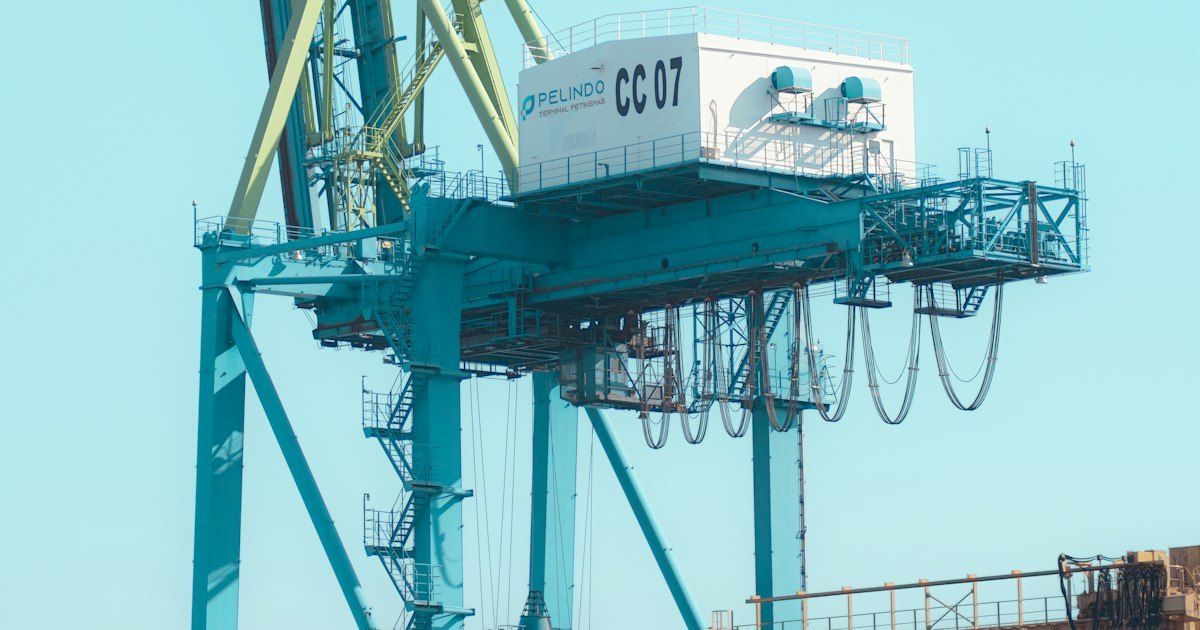
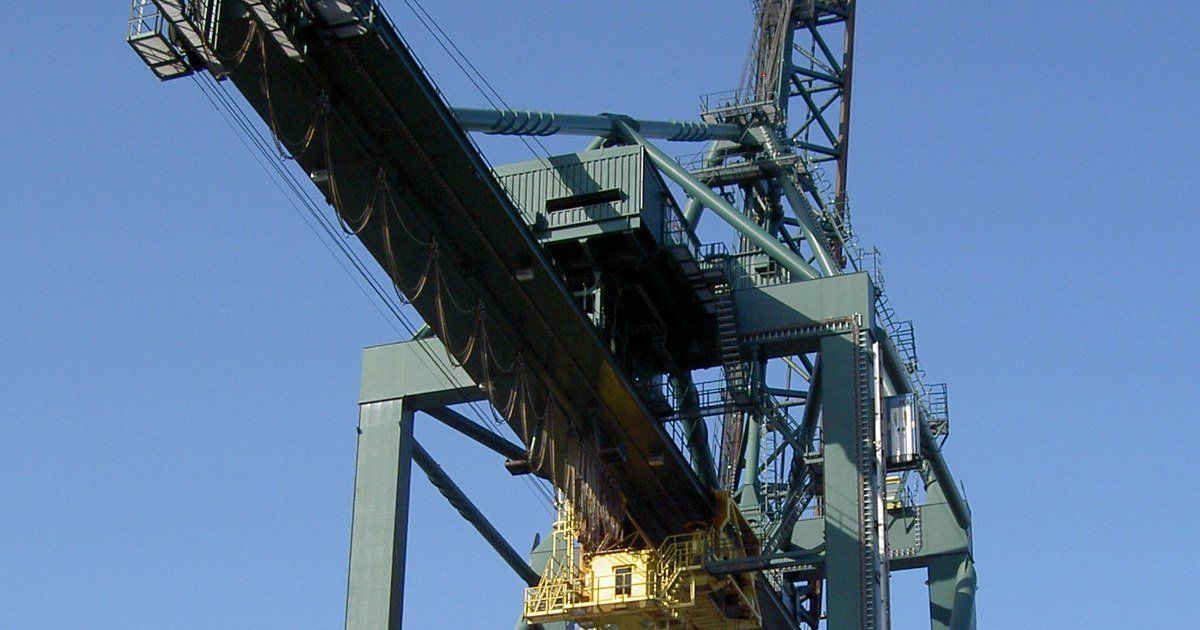
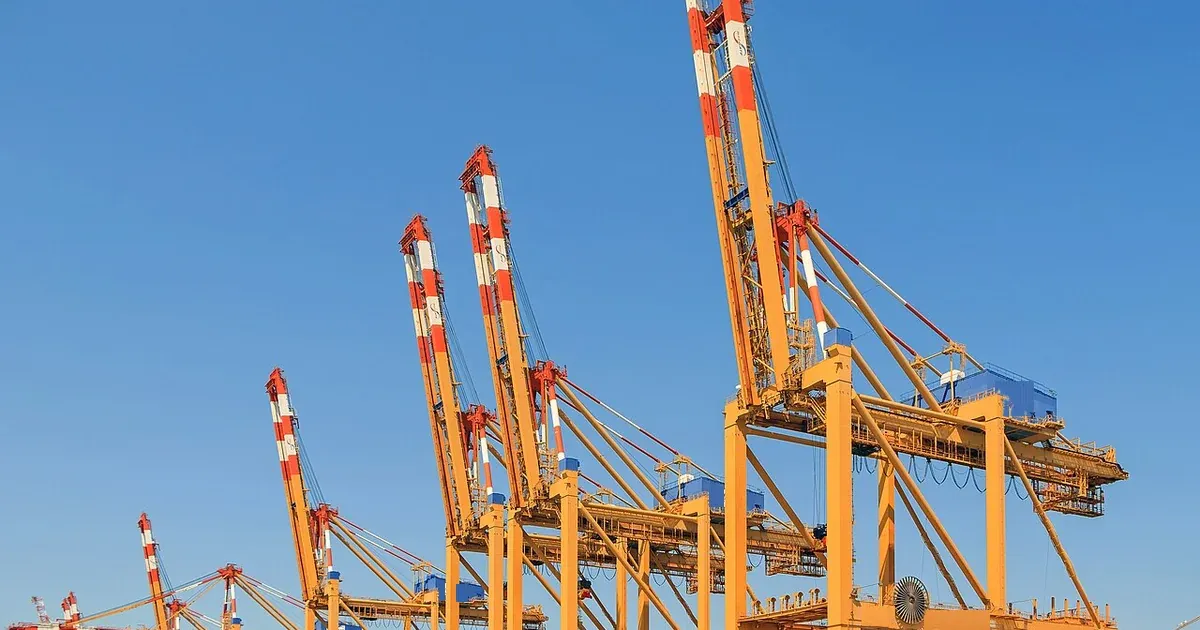
Port maintenance teams and shipyard crane suppliers in Southeast Asia regularly replace damaged cables on portal cranes, gantry cranes, and hoists in humid coastal yards. Even when voltage and conductor size match, an oversize flat crane cable jams against monospiral reel flanges and abrades its edges within weeks.
Comparing 2PNCT Flat and NGFLGOEU Flat Crane Cable Types
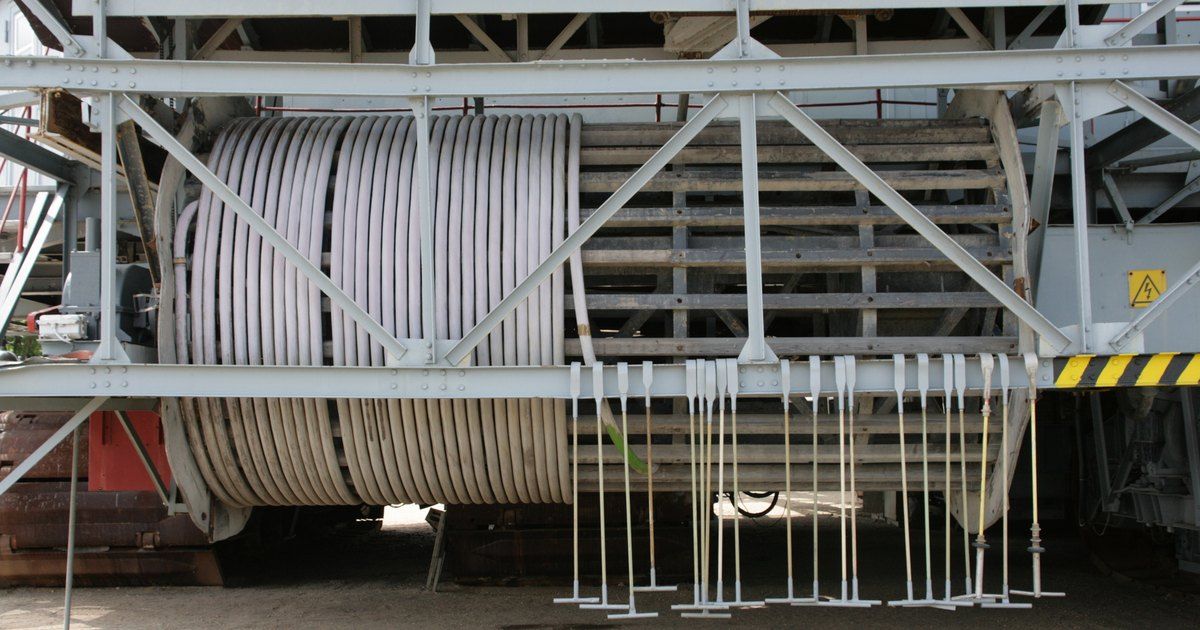
A flat crane cable is a parallel-core flexible elastomer power or control cable. It bends repeatedly in one plane across festoon saddles or monospiral crane reels without axial twisting. Two rubber standards dominate port and industrial crane replacements: Japanese JIS C 3327 cabtyre series and German DIN VDE 0250-809 flat festoon series.
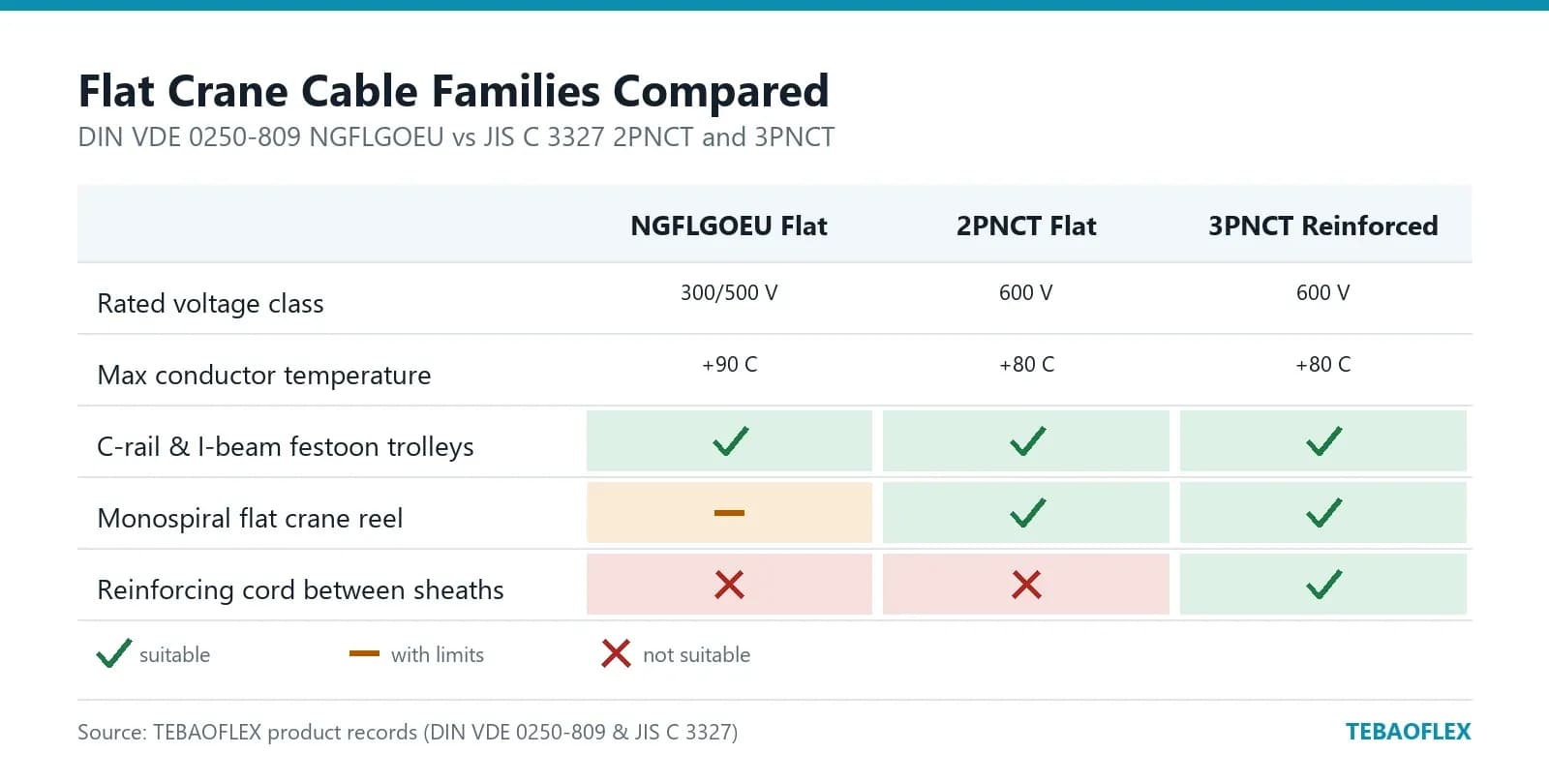
Structural and mechanical differences across NGFLGOEU flat festoon cable, 2PNCT flat cable and cord-reinforced 3PNCT.
Comparison matrix — text version
For each criterion below, values are listed in this order: NGFLGOEU Flat; 2PNCT Flat; 3PNCT Reinforced.
- Rated voltage class: 300/500 V; 600 V; 600 V.
- Max conductor temperature: +90 °C; +80 °C; +80 °C.
- C-rail & I-beam festoon trolleys: suitable; suitable; suitable.
- Monospiral flat crane reel: suitable with limits; suitable; suitable.
- Reinforcing cord between sheaths: not suitable; not suitable; suitable.
Understanding how crane cable types divide duty avoids cross-specification errors on tenders:
- JIS C 3327 2PNCT and 3PNCT rubber cabtyre cable: Rated 600 V AC (3,000 V AC 1-minute test) with tinned copper conductors, +80 °C EP rubber insulation, and a black chloroprene sheath. Flat 2PNCT and travelling 2PNCT-F serve festoons and monospiral reels. Reinforced 3PNCT adds synthetic cord braiding between sheaths for heavier pull. Read our 2PNCT vs 3PNCT JIS C 3327 specification guide for full JIS core tables.
- DIN VDE 0250-809 NGFLGÖU flat rubber cable: Rated 300/500 V (up to 0.6/1 kV on heavy crane builds, 2.5 kV AC 5-minute test). It uses IEC 60228 Class 6 stranding up to 25 mm² and Class 5 from 35 mm² upward. It pairs +90 °C 3GI3 EPR insulation with a 5GM3 polychloroprene sheath tested to IEC 60332-1-2 for overhead crane flat cable festoons up to 180 m/min. Compare PVC alternatives in our H07VVH6-F vs NGFLGÖU flat festoon guide.
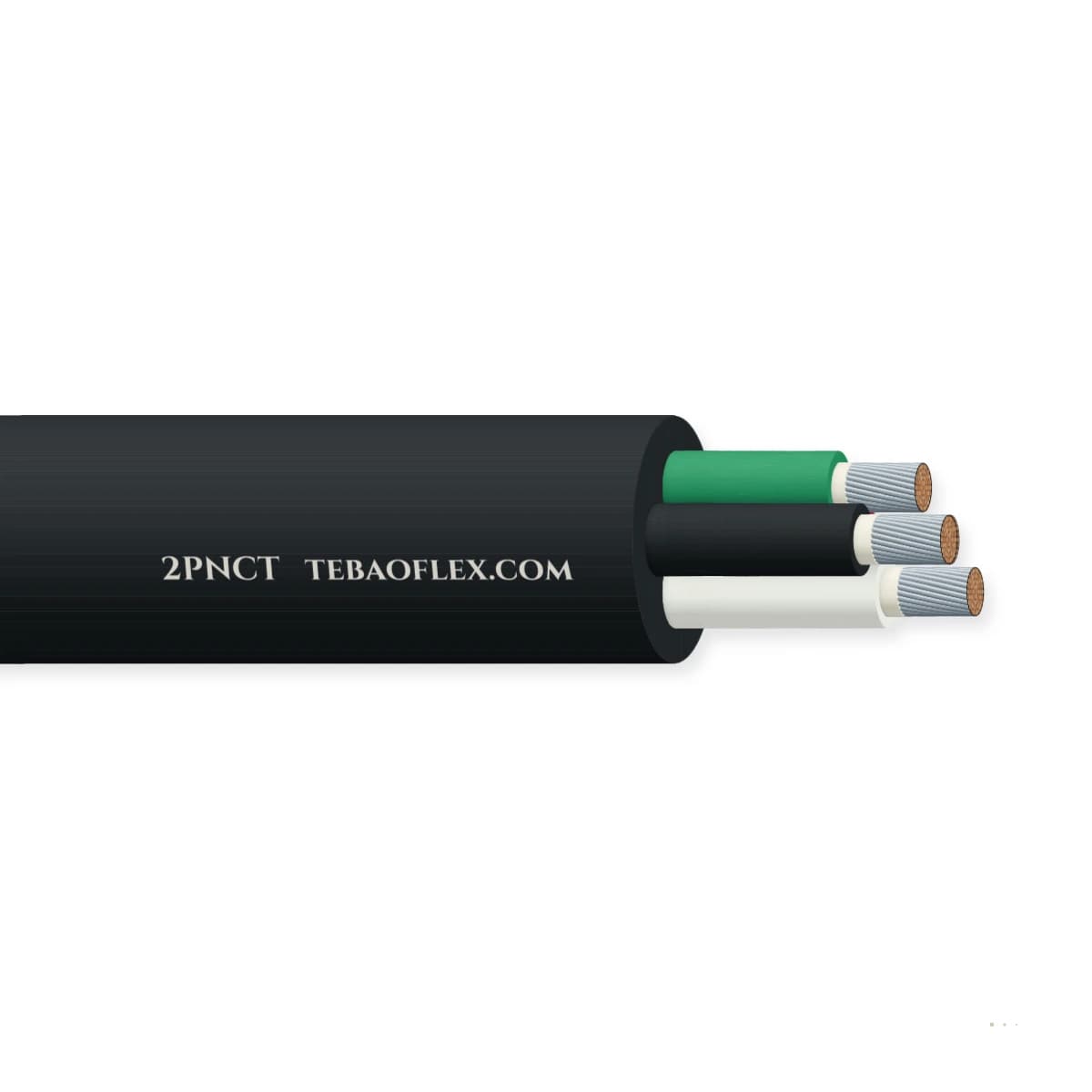
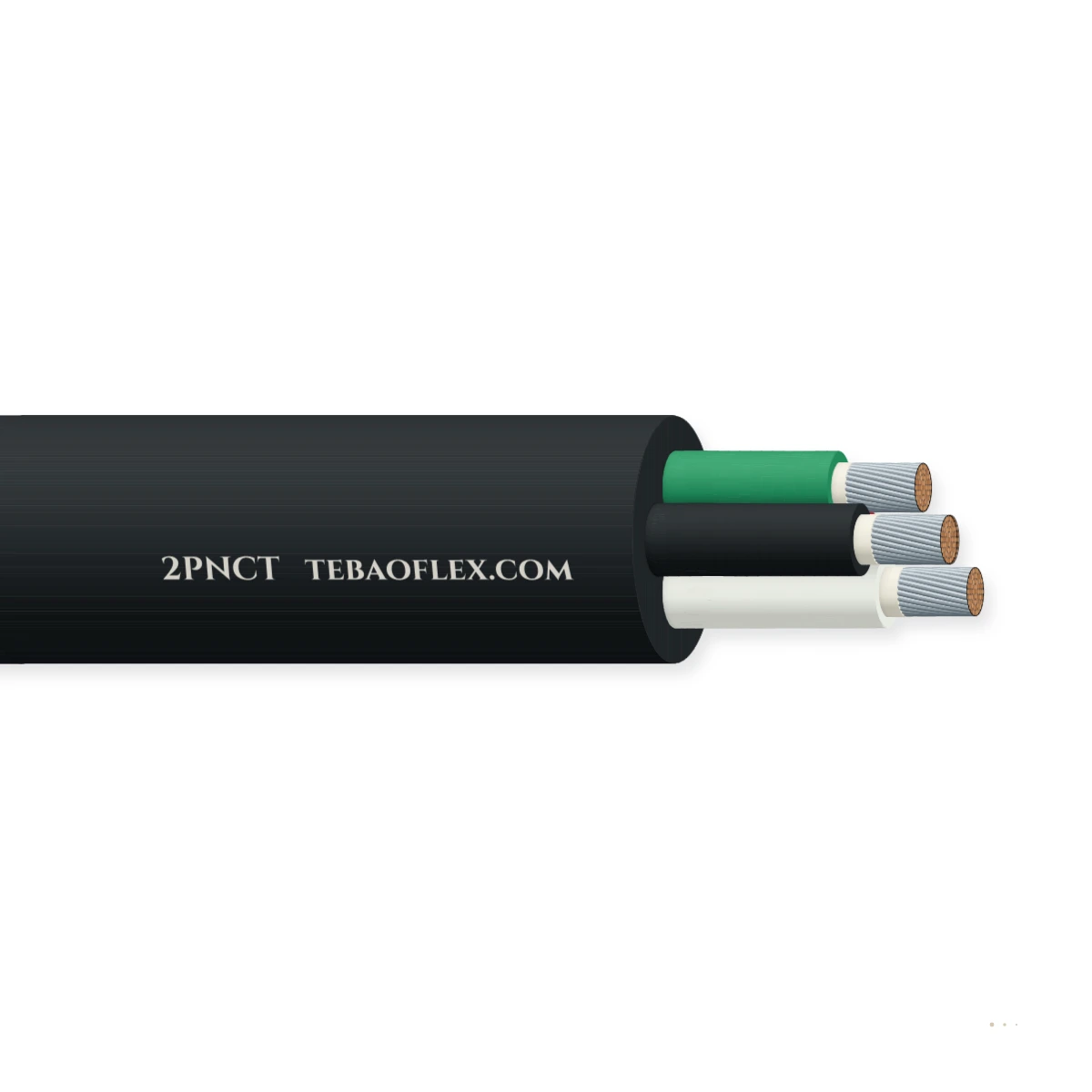
Annealed tinned copper stranding, +80 °C EP rubber insulation, and oil-resistant chloroprene outer sheath in JIS C 3327 2PNCT.
Core Arrangement (1+1+1+1 vs 2+2) and Earth Core Notation
Single-row parallel core layup (1+1+1+1) is a flat cable geometry where all insulated conductors sit side by side along one neutral bending axis. Every core experiences identical strain over a drum or trolley saddle. Legacy four-core drawings sometimes stack cores in a 2+2 profile, whereas modern crane builds place all four cores in one 1+1+1+1 row.
Single-row 1+1+1+1 spacing sheds heat evenly and prevents upper cores from buckling against lower cores during tight bending (3 to 5 times height H). Before approving a drawing, verify how the protective earth appears in the inquiry:
- Three-core vs four-core earth notation: Shipyard inquiries write 3C for three phase cores alone, or 3C + E when a fourth earth core sits inside the jacket. Always check the cross-section drawing rather than catalogue photos so three-wire and four-wire builds are never confused.
- DIN VDE -J vs -O suffix: On NGFLGÖU-J (such as 4G1.5 at 6.2 x 15.8 mm or 5G1.5 at 6.0 x 20.1 mm), -J includes a green-yellow earth core. The -O suffix omits the green-yellow core.
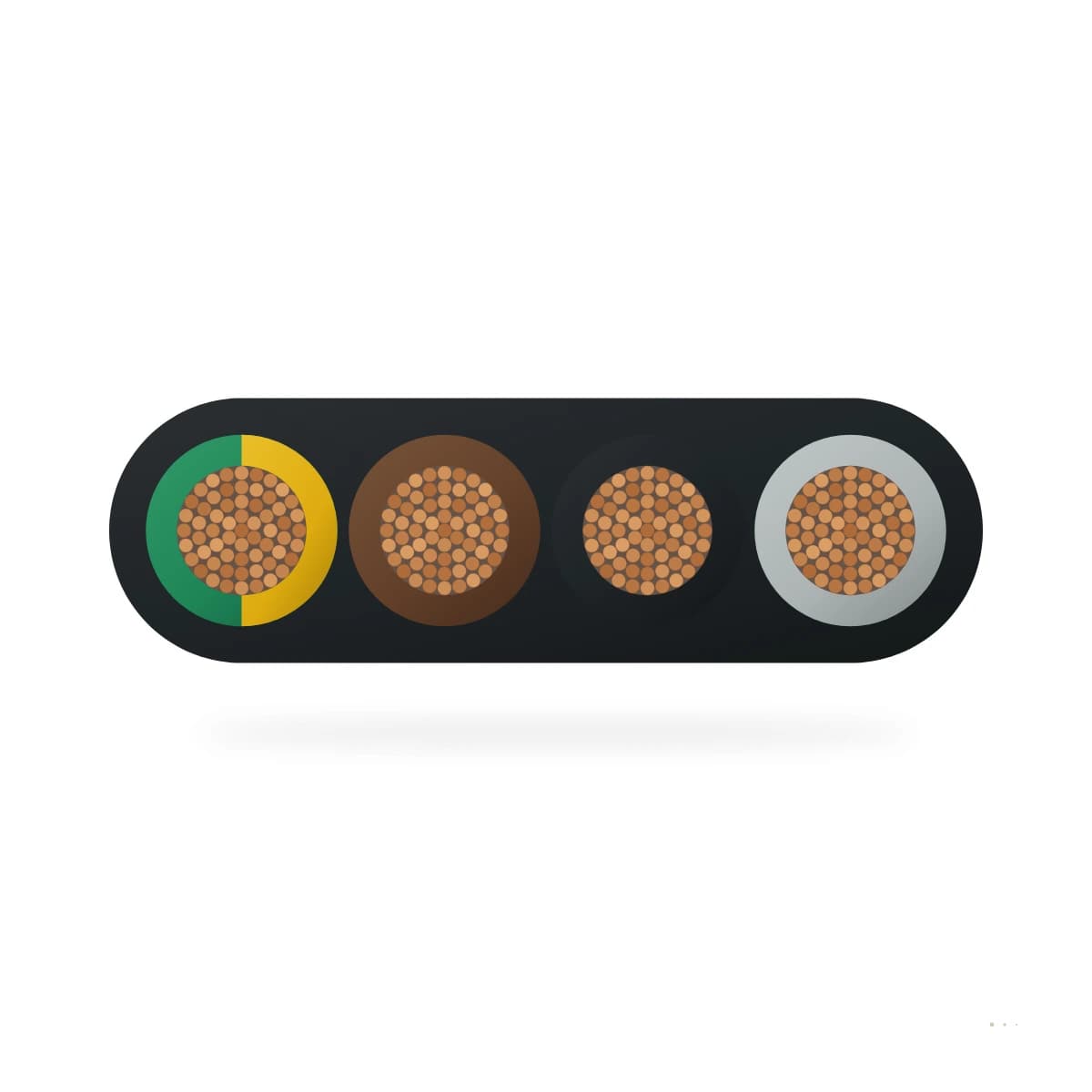
Parallel four-core single-row profile in NGFLGOEU allowing uniform single-plane flexing on crane saddles.
Why Flat Cable Width and Thickness Tolerances Must Match the Reel
Extruding a thicker outer rubber wall increases cut and abrasion resistance on rough crane girders. Cable engineers therefore sometimes suggest a slightly wider profile on heavy reeling orders. However, monospiral crane drums and roller guide cages have fixed channel widths.
If an eot crane flat cable exceeds the inner flange width of a monospiral reel, the jacket edges ride up the flanges and split. Furthermore, supervised public port or shipyard contracts lock exact width and thickness in tender documents. Unapproved dimensional changes can trigger inspection rejection at handover.
Separate overall cable thickness (height H) from insulation or sheath wall thickness on every flat crane cable datasheet:
- Overall height (H): Sets minimum bending radius on pulleys and determines layer build-up diameter on the drum.
- Overall width (W): Must stay below the clear inside width between monospiral reel flanges and guide rollers, including positive extrusion tolerance.
- Lateral fleet limits: When crane travel introduces lateral fleet angles, evaluate round reeling alternatives in our flat vs round festoon and reeling cable comparison.
Tropical Ampacity and Ambient Temperature Derating on Crane Reels
Reel and ambient ampacity derating is the current reduction applied when a crane cable runs above 30 °C ambient or winds in multiple layers on a drum. Both JIS (JCS 0168) and German (DIN VDE 0298-4) tables publish free-air current ratings at 30 °C ambient.
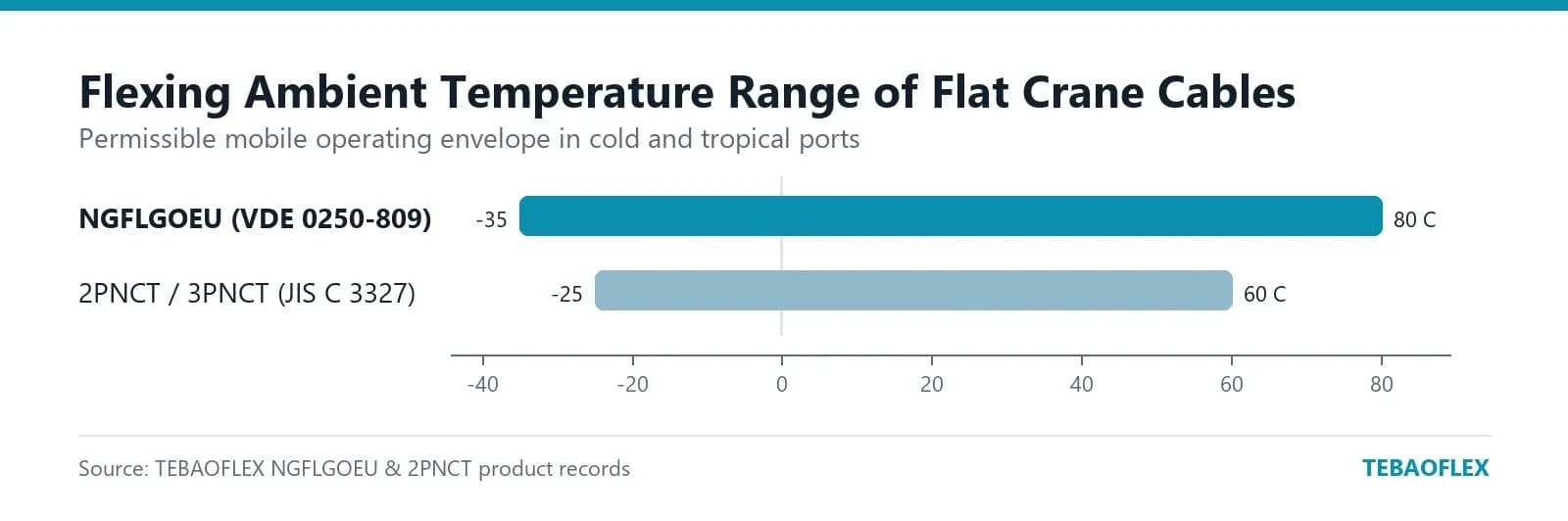
Mobile flexing ambient temperature limits per DIN VDE 0250-809 (NGFLGOEU) and JIS C 3327 (2PNCT / 3PNCT).
Temperature range chart — text version
- NGFLGOEU (VDE 0250-809): -35 °C to +80 °C.
- 2PNCT / 3PNCT (JIS C 3327): -25 °C to +60 °C.
In the thermal chart above, NGFLGÖU supports mobile flexing from -35 to 80 °C (+90 °C maximum conductor temperature). JIS C 3327 2PNCT and 3PNCT support mobile flexing from -25 to 60 °C (+80 °C maximum conductor temperature). In tropical ports where daytime air stays between 30 °C and 40 °C:
- Apply ambient correction factors whenever site air exceeds 30 °C, especially on large 2PNCT-F power sizes feeding main hoist drives.
- Apply drum layer derating factors whenever two or more flat layers accumulate on a crane reel, since stacked rubber traps heat.
- Specify tinned copper conductors in humid coastal air to prevent salt-mist and sulphide corrosion under the insulation.
What to Send for a Cable Recommendation
To receive a matched cross-section drawing and dimensional tolerance sheet for your portal, gantry, or overhead crane, send our engineering team:
- Target standard or existing sheath legend (JIS C 3327 2PNCT / 2PNCT-F / 3PNCT or DIN VDE 0250-809 NGFLGÖU-J).
- Exact core count and cross-section, clearly stating whether the protective-earth core is full-size, reduced-size, or omitted.
- Hard maximum finished width (W) and overall thickness (H) permitted by your crane reel flanges, festoon clamps, or tender contract.
- Full-load motor current, ambient temperature range, duty cycle, and whether the cable runs on festoon trolleys or a motorized drum.
Reach our crane cable engineers on WhatsApp at +86 185 9591 3361 or email info@tebaoflex.com with your existing drawing or tender specification.
Frequently Asked Questions
How do core arrangement, earth core configuration, and overall thickness affect 2PNCT flat crane reel cables?
Laying cores in a single 1+1+1+1 horizontal row keeps every conductor on the same bending plane and improves heat dissipation compared with stacked 2+2 layouts. Buyers must confirm whether a 3C inquiry requires a fourth earth core (3C + E) and check both overall cable thickness (H) and total width (W) against reel flange clearance.
How does flat festoon or reeling cable width tolerance affect crane reel and guide clearance?
Monospiral crane reels and roller guides have fixed internal slot widths. While increasing sheath wall thickness boosts mechanical strength, pushing finished cable width past the contract limit or flange clearance causes edge pinching and premature jacket splitting. Always confirm maximum width including positive extrusion tolerance before manufacturing starts.
How is current-carrying capacity determined for large-cross-section 2PNCT flat rubber cables on crane reels?
Baseline ampacity for 2PNCT and 2PNCT-F flat cables is calculated per JCS 0168 for one cable in free air at 30 °C ambient up to an +80 °C maximum conductor temperature. When operating in 35 °C to 40 °C tropical port air or winding multiple layers onto a crane reel, multiply the free-air figure by ambient and drum-layer derating factors.
When should you specify NGFLGOEU instead of JIS 2PNCT for an overhead or port crane?
Choose DIN VDE 0250-809 NGFLGÖU for European C-rail or I-beam festoon trolleys up to 180 m/min. It also suits wider -35 °C to +80 °C flexing ambients (+90 °C conductor rating). Choose JIS C 3327 2PNCT, 2PNCT-F, or cord-reinforced 3PNCT when replacing cables on Japanese-built port and shipyard cranes sized in JIS cross-sections.