Selecting an underground trackless mining cable between SANS 1520-1 Type 61A and AS/NZS 1802 Type 241.1 depends on gate-end earth-fault protection. Type 61A uses composite tinned-copper/nylon braid phase screens with an interstitial pilot. Type 241.1 uses semiconductive elastomer phase screens, three interstitial earths, and a central extensible pilot.
Mining cable distributors and underground engineering teams in Africa and Oceania often supply mines operating both SANS 1520-1 and AS/NZS 1802 machines. Because the two families are not drop-in electrical substitutes at the gate-end box, buyers inspect cut cross-section samples closely. They verify concentric layup, screen braid coverage, and inter-sheath reinforcement before approving bulk contracts.
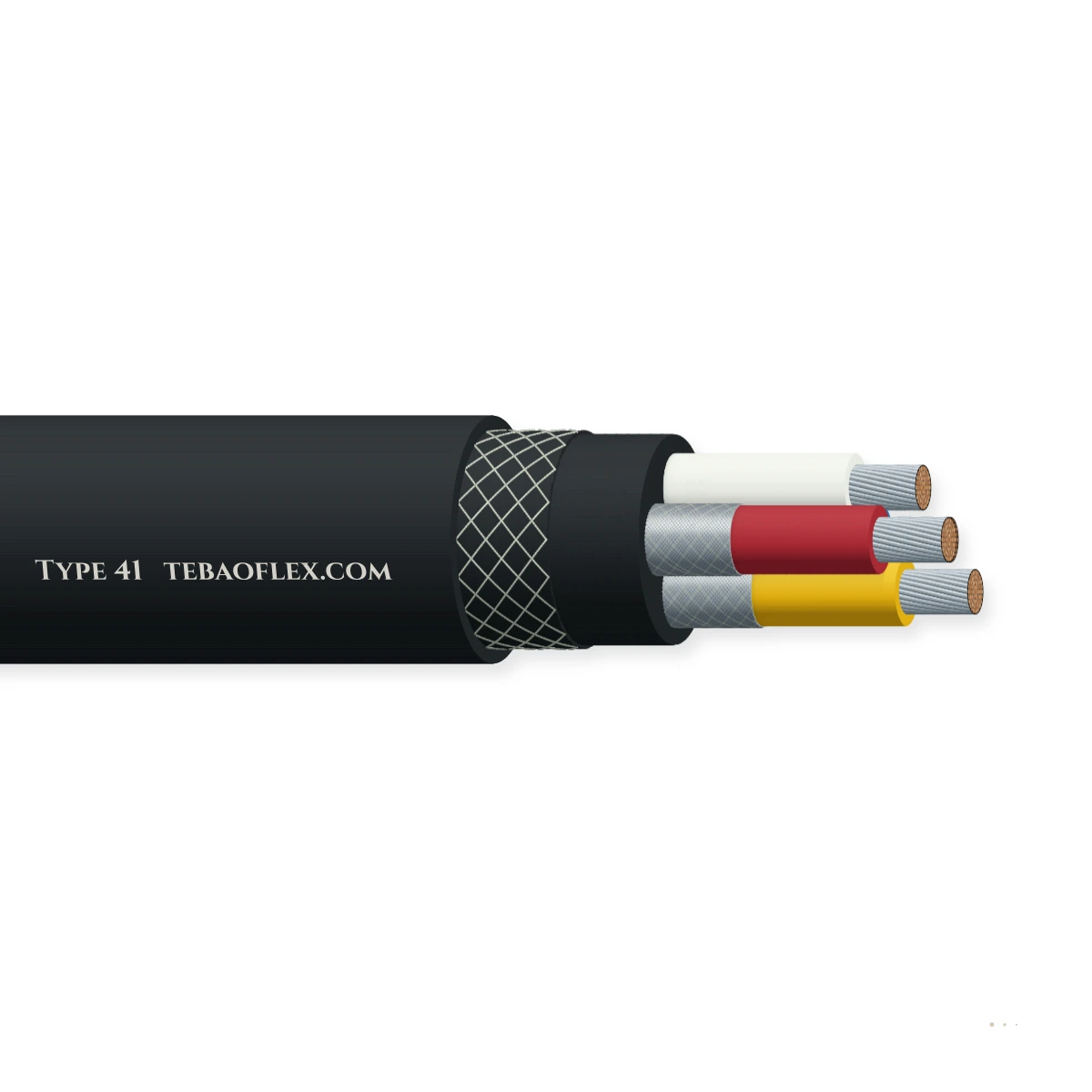
SANS 1520-1 Type 61A and Type 41 vs AS/NZS 1802 Type 241.1
A trackless mining cable is a flexible, flame-retardant, individually screened trailing or reeling power cable for rubber-tyred or crawler-mounted underground machines. Both 640/1,100 V SANS 1520-1 cables and 1.1/1.1 kV AS/NZS 1802 cables run at +90 °C continuous (+250 °C short-circuit). However, their internal earth-fault paths differ fundamentally.

Core layout, screening, pilot position and outer jacket differences between SANS 1520-1 and AS/NZS 1802 underground cables.
Comparison matrix — text version
For each criterion below, values are listed in this order: SANS Type 61A; SANS Type 41; AS/NZS Type 241.1.
- Low-voltage class: 640/1,100 V; 640/1,100 V; 1.1/1.1 kV.
- Phase screen architecture: Cu/nylon braid; Cu/nylon braid; Semicon elastomer.
- Dedicated interstitial earths: not suitable; not suitable; suitable.
- Central extensible pilot core: not suitable; not suitable; suitable.
- High-tear TPU jacket standard: suitable; not suitable; suitable with limits.
Comparing the three most requested low-voltage mining cable types clarifies where each belongs:
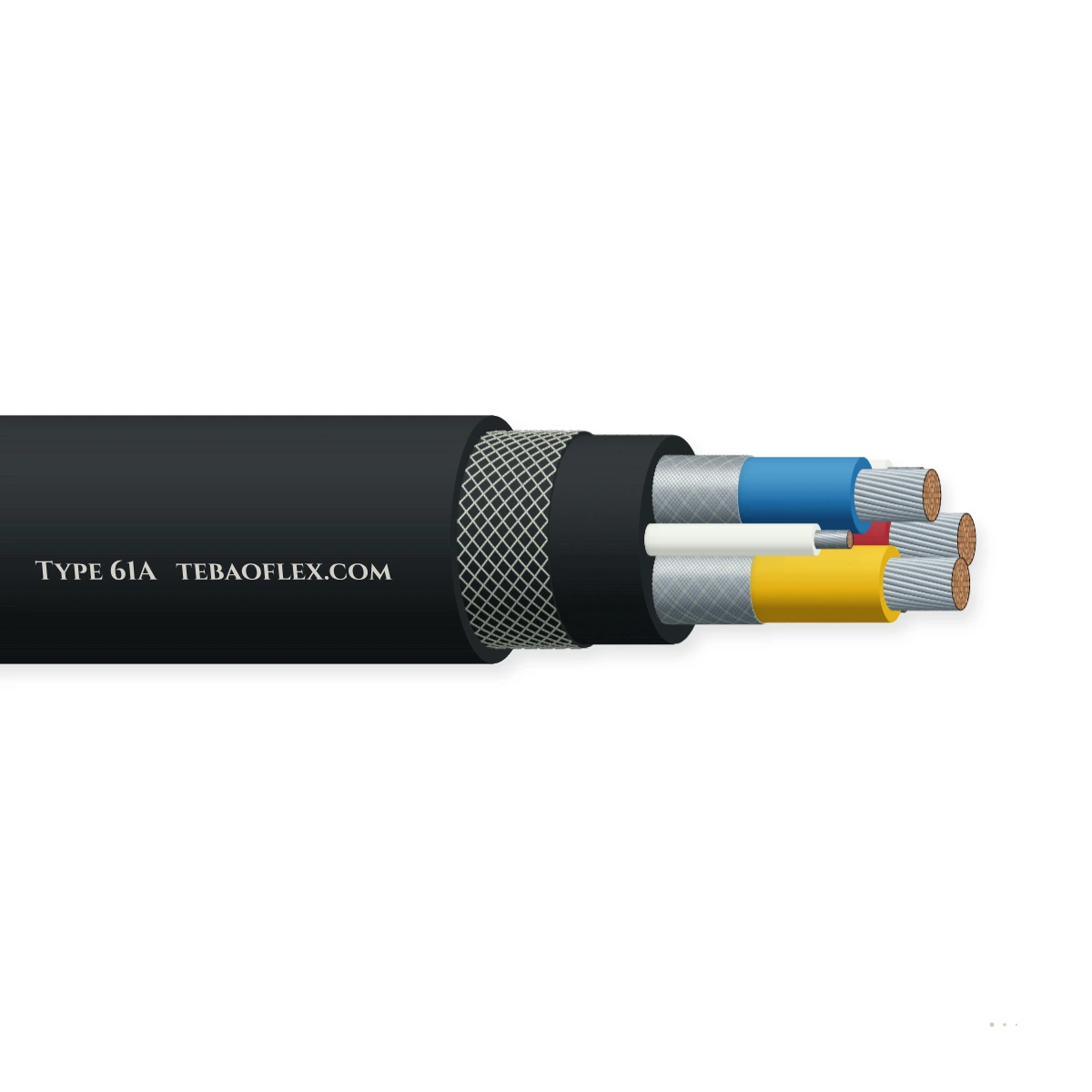
- SANS 1520-1 Type 61A (640/1,100 V, 25 to 150 mm²): Uses three IEC 60228 Class 5 tinned-copper EPR power cores wrapped in composite tinned-copper and nylon braid screens. It adds unscreened pilot/earth-continuity elements, a CR inner sheath, open-weave reinforcement, and a tear-resistant TPU or heavy-duty outer sheath. See our SANS 1520 mining cable types guide for all Parts 1 to 3 designations.
- SANS 1520-1 Type 41 (640/1,100 V, 2.5 to 25 mm²): Shares the three composite-screened EPR power cores and unscreened pilot core for portable face drills, fans, and pumps. Twin polychloroprene (CR) sheaths with an internal 16-string nylon braid protect the assembly.
- AS/NZS 1802 Type 241.1 (1.1/1.1 kV, 1.5 to 300 mm²): Uses R-EP-90 EPR phase cores screened by semiconductive elastomer layers touching three interstitial tinned-copper earth cores. Those cores sit symmetrically around one central extensible pilot under an open-weave reinforced HD-85-PCP sheath. For high-speed shuttle-car reeling, compare AS/NZS 1802 Type 275 trailing mining cable and our AS/NZS 1802 vs 2802 mining cable guide.

Stepped cutaway of SANS 1520-1 Type 61A showing composite copper/nylon phase screens and reinforced twin-sheath protection.
Composite Copper-Nylon Screens and Earth Continuity Balance
A composite tinned-copper and nylon phase screen is a hybrid metallic-and-textile braid woven over each EPR-insulated power core. Copper strands carry earth-fault current while elastic nylon filaments absorb repeated bending without wire fatigue. Underground engineers often ask why trackless phase screens target at least 85% coverage instead of 100% solid metal.
A 100% dense metallic braid locks wires together during tight 6 x OD reeling bends, stiffening the cable and snapping copper strands. Weaving 0.31 mm tinned copper wires with nylon yarns at 85% or higher coverage preserves limpness over 1 to 2 metre loops. It still intercepts rock crush or roof-bolt penetration before phase-to-phase arcing develops, matching underground protection rules in 30 CFR Part 75.
On boom-jumbo and loader variants built with two interstitial earth cores plus one pilot core, electricians bond the earth cores in parallel with the three copper phase braids. That combined termination lowers earth-loop impedance while keeping each core flexible.
Concentric Core Layup and Kevlar Aramid vs Yarn Reinforcement
Concentric core layup is the symmetrical helical assembly of screened phase cores and interstitial earths around a central cradle or extensible pilot inside an inner bedding sheath. When workshop engineers cut a sample of a type 241 trailing cable, concentricity is the first quality marker they inspect.

Symmetrical AS/NZS 1802 cross-section keeping phase cores uniform and recessed away from the outer HD-85-PCP wall.
True concentric layup plus a uniform inner elastomer sheath keeps every live phase core at maximum radial distance from the outer surface. If a loose rock or machine tyre pinches the outer jacket underground, the thicker concentric buffer reduces phase spiking risk and ensures any penetrating object contacts an earthed screen or interstitial earth core first.

Step-by-step engineering selection between SANS 1520-1 and AS/NZS 1802 underground trailing and reeling cables.
Selection flowchart — text version
- Does the mine protection scheme follow AS/NZS 1802 with 3 interstitial earths + central pilot? If yes: Specify AS/NZS 1802 Type 241.1 or reeling Type 275.
- Is the machine a small portable drill, fan or pump (2.5 to 25 mm²)? If yes: Specify SANS 1520-1 Type 41 twin-CR trailing cable.
- Does shuttle-car or LHD reeling impose severe dynamic pull and torsion? If yes: Specify Type 61A with aramid anti-torsion braid & TPU jacket.
Otherwise: Specify standard SANS 1520-1 Type 61A with 16-string nylon braid.
Between the inner and outer sheaths, buyers must also choose between standard textile yarn and high-modulus aramid (Kevlar) open-weave braiding:
- Standard 16-string open nylon or polyester yarn braid: Sufficient for non-reeling drag duty on continuous miners, feeder-breakers, and stationary face panels where cost control on warehouse stock is critical.
- Aramid (Kevlar) anti-torsion reinforcement braid: Recommended for bi-directional monospiral and cylindrical reels on shuttle cars, LHDs, and drill jumbos (covered in our underground LHD and jumbo cable guide). Aramid fibres resist elongation under high dynamic pull and prevent core corkscrewing without adding weight.
What to Send for a Cable Recommendation
When sourcing SANS 1520-1 or AS/NZS 1802 underground cables for mine supply contracts or equipment fleets, provide these technical details:
- Governing standard and type code (such as SANS 1520-1 Type 61A or Type 41, or AS/NZS 1802 Type 241.1, Type 210, or Type 275).
- Exact core schedule: phase cross-section (mm²), pilot count and cross-section, and any dedicated interstitial earth-continuity (ECC) cores.
- Phase core identification rule (for example black EPR cores with coloured nylon tracer threads vs numbered cores) and outer sheath colour or material (yellow/black PCP, CR, or reflective TPU).
- Machine duty (floor trailing, Bretby handler, or motorized shuttle-car reel) and whether open nylon yarn or aramid anti-torsion reinforcement is required.
Contact our mining cable engineering team via WhatsApp at +86 185 9591 3361 or email info@tebaoflex.com for a custom drawing, datasheet, and cut cross-section sample evaluation.
Frequently Asked Questions
How do SANS 1520 Type 61A yellow trackless mining cables differ from AS/NZS 1802 Type 241.1 reeling and trailing cables?
SANS 1520-1 Type 61A (640/1,100 V) wraps each EPR phase core in a composite tinned-copper and nylon braid screen and places an unscreened pilot core in the interstice under a CR/TPU twin sheath. AS/NZS 1802 Type 241.1 (1.1/1.1 kV) uses semiconductive elastomer phase screens, three interstitial tinned-copper earth cores, and one central extensible pilot under an HD-85-PCP sheath.
When does an underground trackless mining cable need a Kevlar aramid anti-torsion braid instead of standard textile yarn reinforcement?
Standard open-weave nylon or polyester yarn reinforcement handles floor-dragged trailing feeders on continuous miners, bolters, and pumps at lower material cost. Specify a Kevlar aramid open-weave braid between the inner and outer sheaths whenever the cable spools under dynamic tension and torsion on shuttle-car, LHD, or boom-jumbo reels.
How does an 85% tinned-copper-and-nylon composite core screen balance earth-fault conductance with bending flexibility in trackless mining cables?
A 100% solid metal braid stiffens the core and fatigues copper strands during tight 6 x OD drum flexing. Combining fine tinned-copper wires with elastic nylon strands at 85% or higher optical coverage maintains reliable earth-fault interception. Bonding those screens in parallel with interstitial earth cores delivers low earth-loop resistance on every type 241 cable or Type 61A build.
How does concentric core layup and inner sheath geometry reduce underground spiking risk in Type 241.1 mining cables?
Laying the three phase cores and three interstitial earth cores symmetrically around the central extensible pilot inside an extruded inner bedding keeps every live conductor recessed uniformly away from the outer jacket. Under rock fall or tyre pinch, mechanical stress distributes evenly and earthed elements intercept intrusions before phase insulation fails.