A mobile high voltage test cable for cable test vans requires three core features. It must combine void-free semiconductive stress layers for partial-discharge-free measurement, a limp silicone or elastomeric dielectric for compact vehicle reel hubs, and an abrasion-resistant outer jacket. Standard medium-voltage substation power cables cannot meet those daily reeling demands.
Utility commissioning crews and diagnostic suppliers in Europe regularly equip mobile test vans for AC withstand, damped AC (DAC), VLF, and DC campaigns under IEC 60060-3. Operators pull each high voltage test cable out four to six times daily across gravel yards and rewind it onto narrow van drums. Choosing a power jumper instead of a purpose-built measurement lead causes background partial-discharge noise or stiff winter coiling.
Why 18/30 kV NTMCGCWOEU Cannot Replace a 60 kV AC Test Van Lead
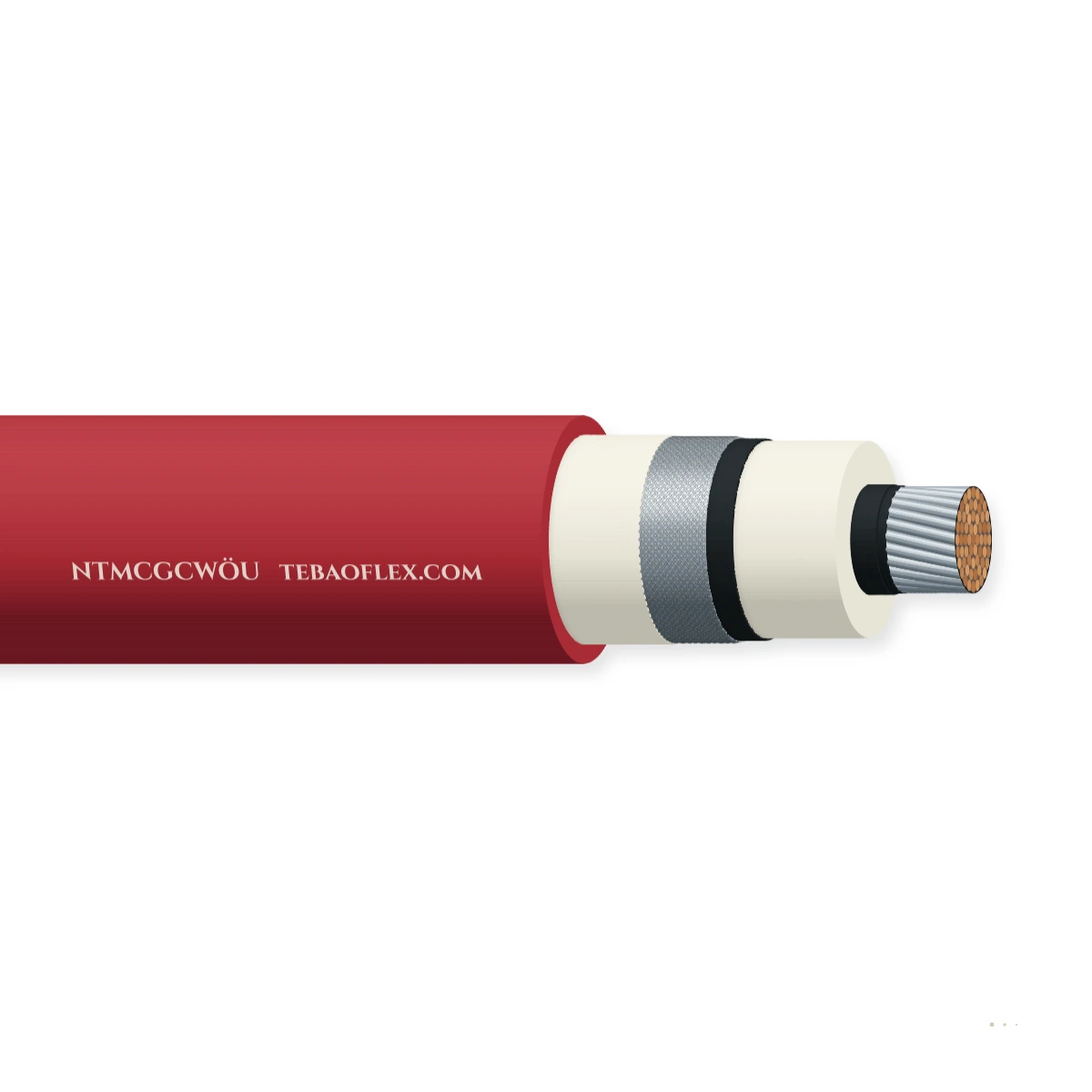
An 18/30 kV NTMCGCWÖU cable is a DIN VDE 0250-813 flexible single-core medium-voltage power cable. It is built for continuous 50/60 Hz load up to 20.8/36 kV AC maximum operating voltage, not elevated diagnostic overvoltage injection. Buyers sometimes ask whether an 18/30 kV NTMCGCWÖU single-core rubber cable can run 60 kV AC test sequences on a test-van drum.

Suitability comparison across PD-free silicone HV diagnostic leads, triple-screened 75 kVDC EPR cables and DIN VDE 0250-813 NTMCGCWOEU.
Comparison matrix — text version
For each criterion below, values are listed in this order: PD-Free Silicone HV Lead; Quadraxial 75 kVDC EPR; NTMCGCWOEU 18/30 kV.
- Daily test-van compact reel winding: suitable; not suitable; suitable with limits.
- 60 kV AC / 80 kV DAC PD diagnostics: suitable; suitable with limits; not suitable.
- Sub-zero outdoor handling (-40 °C): suitable; suitable; not suitable.
- Guarded triple-screen pulse return: not suitable; suitable; not suitable.
- Continuous MV substation power: not suitable; not suitable; suitable.
Checking the DIN VDE 0250-813 dielectric schedule shows why power and test cables diverge:
- Routine AC test ceiling: Even on the 18/30 kV grade of ntmcgcwoeu cable, the factory routine AC test voltage is 43 kV AC. Repeating 60 kV AC field tests overstresses the 3GI3 dielectric and accelerates electrical treeing.
- Large conductor and bend radius: Power cables carry hundreds of amperes, requiring 16 mm² to 240 mm² copper cores and a 10 x OD flexing bend radius. A diagnostic high voltage test lead cable carries milliamperes to a few amperes of charging current. That allows a compact 6 mm² or 10 mm² fine-stranded core inside thicker high-dielectric silicone or EPR insulation.
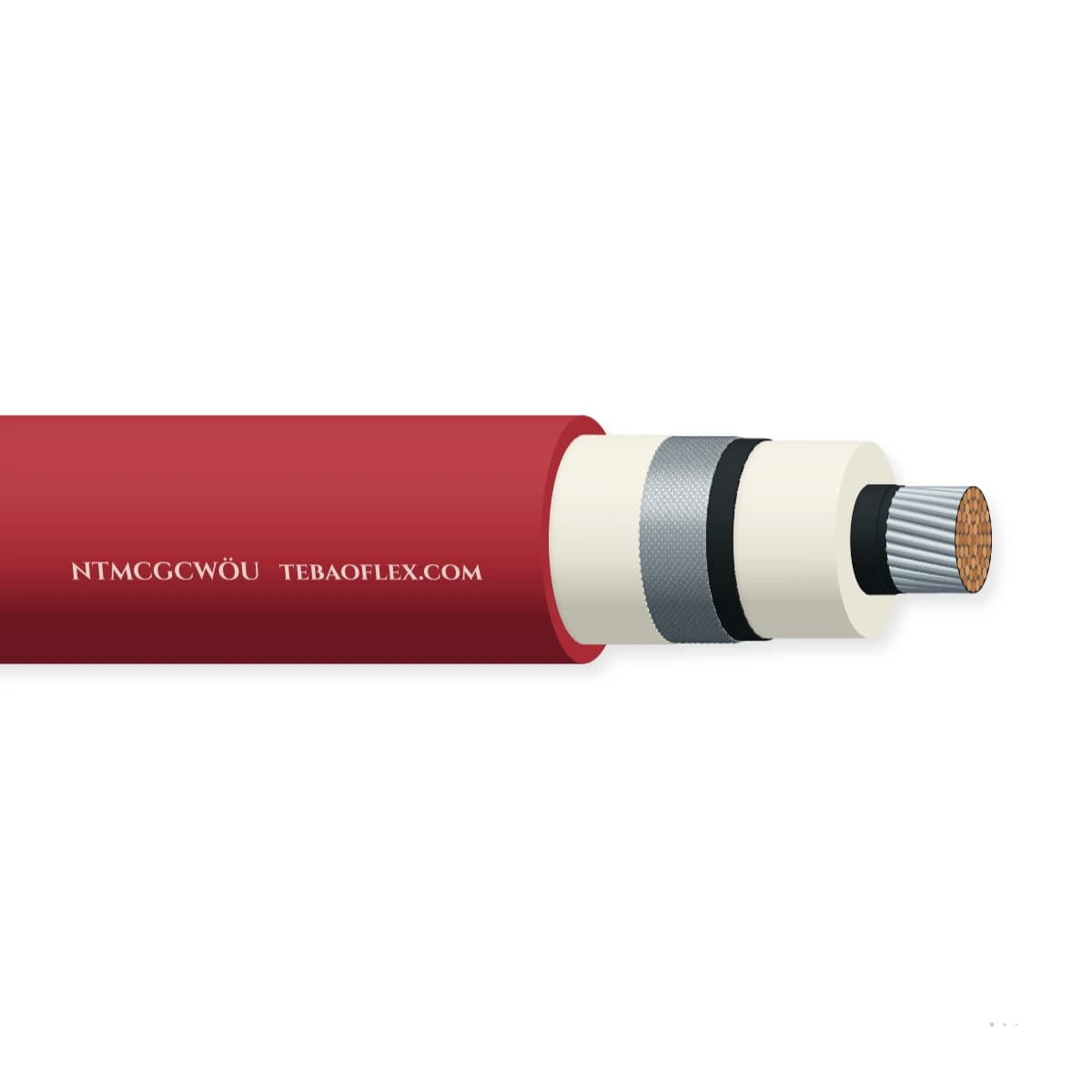
Stepped cutaway of DIN VDE 0250-813 NTMCGCWOEU built for switchgear and mobile substation power jumpers up to 18/30 kV.
What Makes a High Voltage Test Cable Partial-Discharge-Free
A partial-discharge-free (PD-free) measurement cable is a coaxial or multi-screened high voltage test cable co-extruded with smooth inner and outer semiconductive elastomer layers. Its internal apparent charge stays below the sensitivity floor of IEC 60885-3 and DAC diagnostic sets. During an on-site medium voltage cable test, the lead sits directly in series with the buried feeder.
If the van's connection lead generates internal corona at 40 kV AC or 80 kV DAC, the reflectometer cannot isolate buried splice defects. Achieving PD-free performance requires three manufacturing controls:
- Co-extruded semiconductive stress control: Bonded inner and outer semiconductive layers eliminate air gaps between the copper core, primary dielectric, and metallic return braid. Read our mining cable partial-discharge testing guide for PDIV, PDEV, and pC rules.
- High-voltage silicone elastomer flexibility: Unlike stiff thermoplastics that harden in winter, cross-linked silicone rubber keeps low modulus and high dielectric strength across wide temperatures.
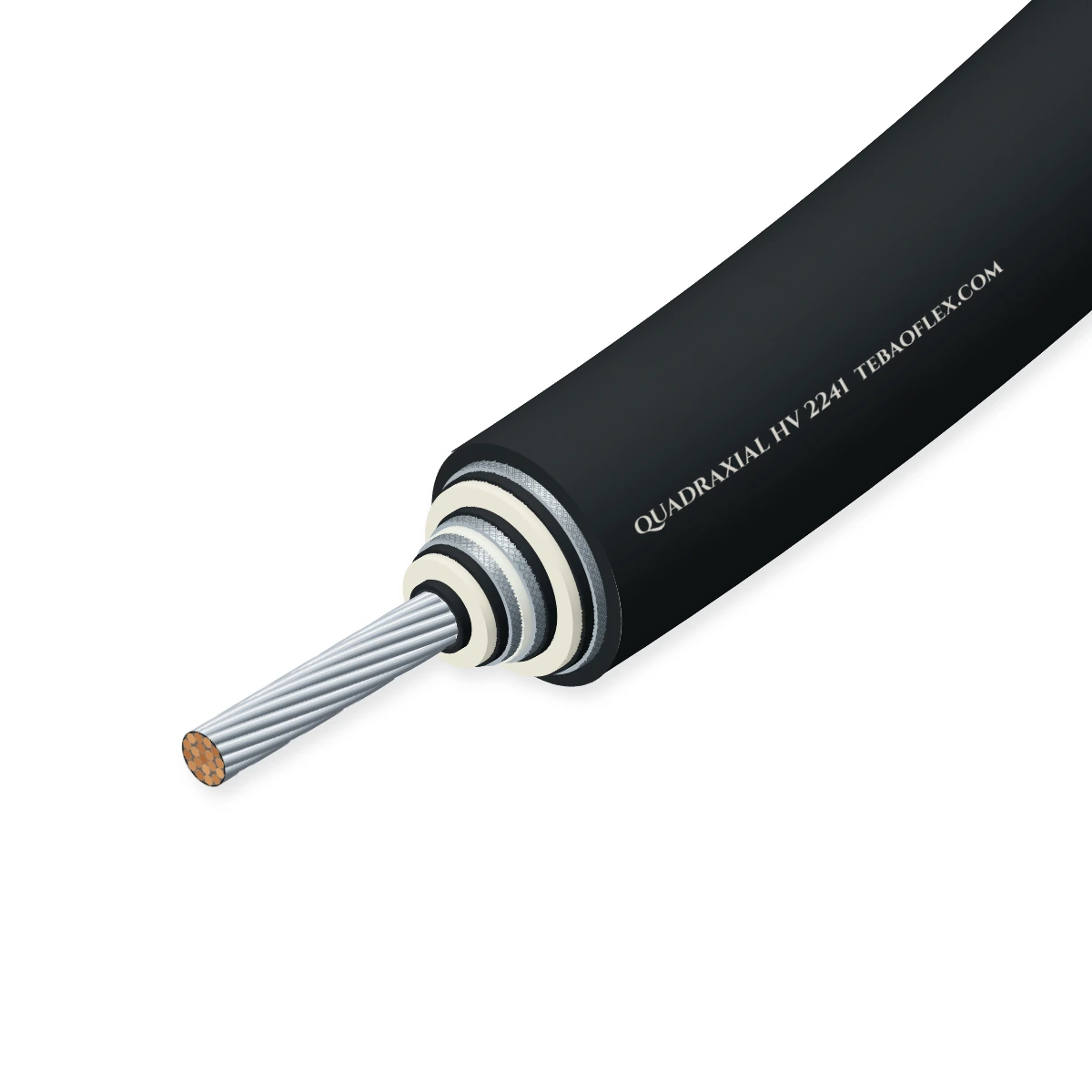
- Multi-screen guarded return options: Where laboratory or pulse setups need isolated guard shields, builds like our Quadraxial HV 2241 75 kVDC triple-screen EPR cable divide stress across dual EPR barriers and three tinned-copper braids.

Concentric triple-screened high-voltage elastomer cross-section engineered to suppress corona and partial discharge.
Compact Van Reel Hub Diameter and Cold-Weather Handling
Minimum naked-drum hub diameter equals twice the cable's minimum dynamic bending radius (D_hub = 2 x R_min). It sets the smallest inner barrel on which the first cable layer can wind without buckling its semiconductive screens. Compact rear reels inside mobile test vans typically use barrel diameters between 20 cm and 25 cm.
Before mounting a replacement high voltage test cable onto an existing van drum, verify D_hub = 2 x R_min against finished cable outside diameter:
- For a 16 mm to 20 mm flexible silicone test lead rated at a 5 x OD dynamic bend radius (D_hub = 10 x OD), the minimum barrel diameter is 16 cm to 20 cm. Compact 20 cm to 25 cm vehicle reel hubs therefore provide safe mechanical margin.
- Conversely, cables rated at a 10 x OD to 12 x OD bend radius (D_hub = 20 x OD to 24 x OD) cannot spool onto narrow van reels. For example, our 19.3 mm Quadraxial HV 2241 requires a 38.6 cm to 46.3 cm hub; over-bending shears semiconductive screens and creates partial-discharge sites.

Continuous operating temperature limits comparing silicone elastomer (-60 to +180 °C, 300/500 V SiFCuSi reference), 75 kVDC EPR (-40 to +120 °C) and mobile NTMCGCWOEU (-25 to +60 °C).
Temperature range chart — text version
- Silicone (300/500 V SiFCuSi): -60 °C to +180 °C.
- Quadraxial 75 kVDC EPR: -40 °C to +120 °C.
- NTMCGCWOEU (Mobile Duty): -25 °C to +60 °C.
Thermal flexibility also separates silicone from standard rubber. Low-voltage 300/500 V SiFCuSi copper-braid screened silicone cable illustrates how cross-linked silicone elastomer stays flexible from -60 to 180 °C, and custom HV silicone test leads pair that low-modulus compound with co-extruded semiconductive stress layers. By comparison, Quadraxial 75 kVDC EPR runs from -40 to 120 °C and mobile NTMCGCWÖU runs from -25 to 60 °C. In sub-zero substation yards, silicone leads pay out smoothly by hand.
Metallic Braid Screening vs Ground-Drag Jacket Protection
Diagnostic crews dragging 80 kV DAC or 120 kV DC leads across concrete trenches and asphalt roads must balance flexible coiling against cut protection:
- Concentric tinned-copper braid screen: Carries capacitive return current, contains the radial electric field, and trips the test set if punctured. Compare screen designs in our shielded cable EMC vs earth screens guide.
- Tear-resistant outer sheath vs braid armouring: Unarmoured laboratory silicone is very limp, but sharp stones cut it easily. Field test-van cables pair a high-coverage copper braid screen beneath a tear-resistant PUR or modified elastomer outer jacket so daily ground dragging stays safe.
What to Send for a Cable Recommendation
When ordering a replacement connection lead for a cable test van, VLF/DAC diagnostic unit, or mobile HV test drum, send our engineering team:
- Maximum AC rms, DAC peak, VLF, and DC test voltages applied through the cable, plus whether PD-free qualification (and target pC ceiling) is required.
- Required continuous length per reel and the naked inner barrel diameter and flange width of your existing van cable drum.
- Daily deployment duty (fixed laboratory jumper vs field test van pulled across ground several times daily) and minimum winter ambient temperature.
- Required screen construction (single coaxial copper return screen, dual isolated measurement/safety braids, or mechanical braid protection).
Reach TEBAOFLEX via WhatsApp at +86 185 9591 3361 or email info@tebaoflex.com for a verified drawing, minimum drum diameter check, and sample bend video.
Frequently Asked Questions
What makes a high-voltage measurement cable partial-discharge-free and flexible enough for daily reeling in a cable test van?
A PD-free test-van cable uses smooth co-extruded inner and outer semiconductive stress layers bonded to a flexible high-voltage silicone or elastomer dielectric so no air voids ionize during AC or DAC testing. Pairing a compact fine-stranded copper core with low-modulus silicone allows repeated hand payout and rewinding onto 20 cm to 25 cm vehicle reel hubs, even in sub-zero weather.
Can an 18/30 kV NTMCGCWOEU single-core rubber cable withstand 60 kV AC testing on a mobile drum?
No. Under DIN VDE 0250-813, an 18/30 kV NTMCGCWÖU cable has a maximum AC operating voltage of 20.8/36 kV and a factory routine test voltage of 43 kV AC. Repeatedly injecting 60 kV AC exceeds its insulation design stress and requires a dedicated high-voltage dielectric test cable rated for the full AC/DC test envelope.
When does a 120 kV DC diagnostic test cable require metallic braid armouring versus an unarmoured flexible jacket?
Unarmoured smooth-sheath leads suit clean indoor high-voltage bays and suspended laboratory connections where zero ground dragging occurs. When crews pull a 120 kV DC or DAC cable across substation gravel several times daily, specify a high-coverage metallic screen under a tear-resistant outer elastomer or PUR sheath. That reinforced jacket prevents sharp rock cuts from reaching the primary dielectric.