- Location
- Singapore
- Application
- Offshore marine pontoon spare work-class ROV launch and recovery systems
- Cable type
- 670 kN MBL / 190 kN SWL double contra-helical Galfan steel-armored electro-optical ROV lift umbilical →
- Evidence
- 4 images
TL;DR: An offshore contractor in Singapore needed a 300 m spare steel-armored ROV umbilical for a marine pontoon project to replace a legacy European specification. Before approving an alternative factory, their engineers audited seven strict technical gates. TEBAOFLEX verified exact double contra-helical 36 × 2.6 mm + 46 × 2.4 mm Galfan steel wire armor (399.23 mm² steel area). That armor delivers 670 kN breaking strength and 190 kN safe working load (3.53 safety factor). We resolved the 20 × OD bend-radius versus 1,200 mm bend-diameter conflict, validated 0.35 mm² screened quad equivalency, and explained PUR versus TPEE inner sheath design before FOB Shanghai export.
- Project Location & Route: Singapore offshore pontoon ROV project (Exported FOB Shanghai to Singapore)
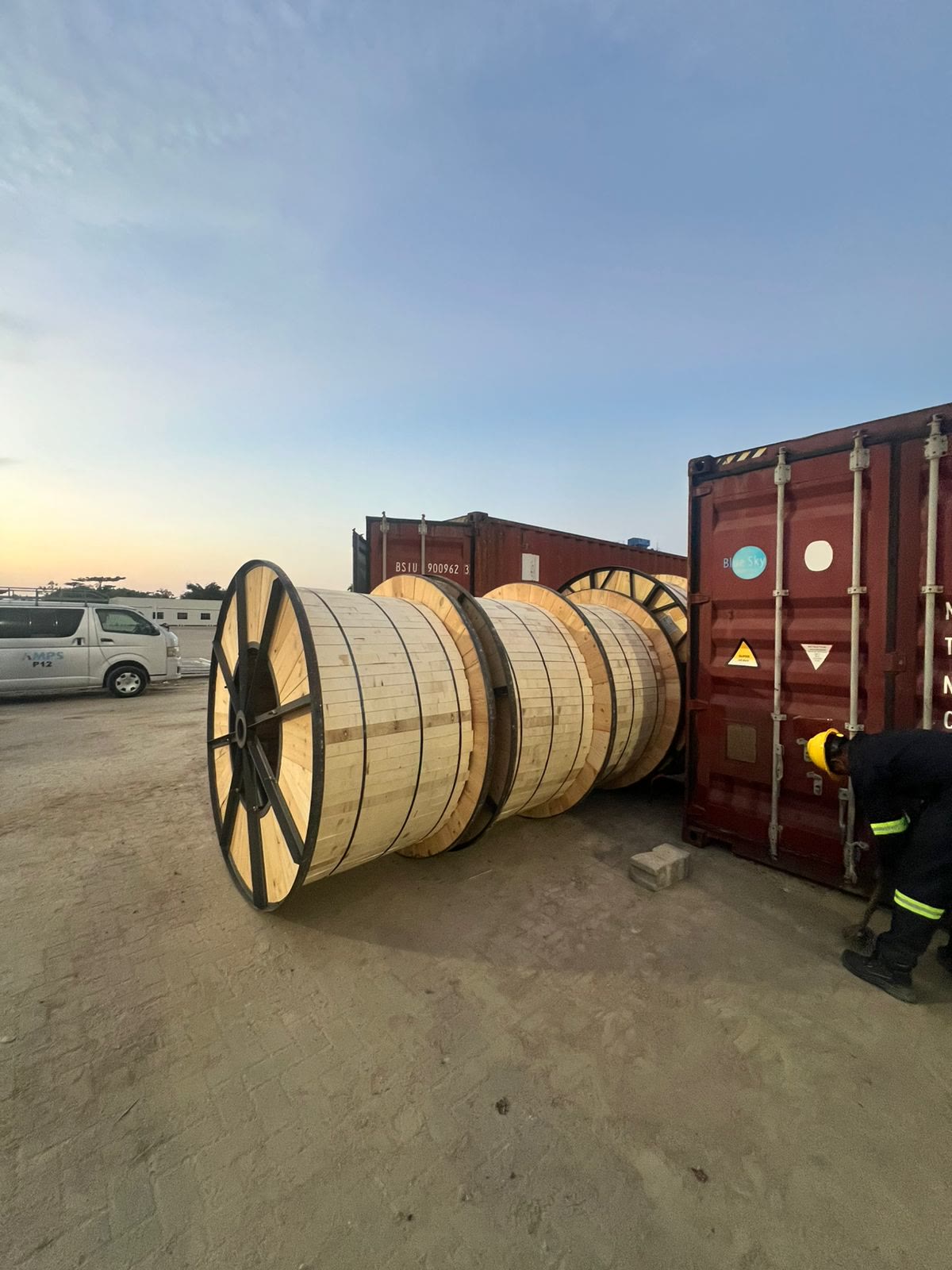
- Order Length & Scope: 300 m spare electro-optical steel-armored ROV umbilical assembly
- Armor Construction: Double contra-helical Galfan (Zn-5Al) steel wire: 36 × 2.6 mm inner + 46 × 2.4 mm outer (399.23 mm²)
- Tensile Strength & SWL: 670 kN minimum breaking load (MBL); 190 kN safe working load (SWL); 3.53 safety factor
- Sheave Bending Limit: 1,200 mm minimum dynamic bending diameter (600 mm radius; ≤ 15 × OD radius at 40 mm OD)
- Signal Core Equivalency: 0.35 mm² metric screened quad versus 0.34 mm² (22 AWG) legacy design (-2.9% loop resistance)
- Inner Bedding Sheath: Hydrolysis-resistant polyurethane (PUR) versus thermoplastic polyester (TPEE) trade-off audit
- Verification Package: Cross-sectional CAD drawing, tensile math, dynamic fatigue verification, and ROV reference dossier
Singapore Offshore Pontoon Spare Umbilical Equivalency Brief
Steel-armored ROV lift umbilical is a torque-balanced electro-optical marine cable that carries power, control signals, optical fibers, and full mechanical launch weight between an offshore deck winch and a subsea vehicle. In Singapore, a regional marine engineering partner approached TEBAOFLEX for a 300 m spare umbilical assigned to an offshore pontoon project within our underwater and ocean exploration cable solutions. Their end user had relied on a legacy European armored umbilical design and wanted a qualified factory alternative with exact overall diameter and core compatibility.
Replacing an incumbent offshore umbilical takes far more than a lower quote. Existing deck winches, level-wind grooves, A-frame sheaves, and potted mechanical bullet terminations are already machined to millimeter tolerances. If a spare cable shifts outer diameter, torque balance, or bending stiffness, the crew cannot load it onto the existing pontoon winch without costly steel rework.
After reviewing TEBAOFLEX's baseline proposal, the Singapore engineering team issued a seven-point equivalency audit before granting operator sign-off:
- Exact Galfan armor wire match: Confirm whether the double steel armor matches 36 × 2.6 mm inner and 46 × 2.4 mm outer Galfan-coated steel wires.
- Tensile load math: Supply the engineering calculation backing 670 kN minimum breaking load and 190 kN safe working load.
- Bending radius versus diameter clarity: Clarify whether 20 × OD denotes bend radius or bend diameter against the legacy 1,200 mm minimum dynamic bending diameter.
- Screened quad sizing: Confirm whether a 0.35 mm² screened quad can replace 0.34 mm² without changing core fit or telemetry performance.
- Inner sheath polymer rationale: Explain the engineering basis for using a polyurethane (PUR) inner sheath instead of thermoplastic polyester (TPEE).
- Drawing and bend-fatigue proof: Provide an actual cross-sectional drawing alongside available dynamic bend-over-sheave fatigue documentation.
- Track record and channel support: Verify prior supply of comparable ROV umbilicals and coordinate commercial support for operator presentation.
For wider calculation templates across deepwater lift systems, read our deepwater ROV umbilical SWL and breaking strength guide.
Double Galfan Steel Armor Tension and 1200 mm Sheave Bending
Galfan steel armor wire is an extra-high-tensile steel wire hot-dip coated with a 95% zinc and 5% aluminum eutectic alloy (Zn-5Al). It resists seawater pitting longer than pure zinc and bends smoothly over tight sheaves. Torque-balanced contra-helical armor is a dual steel wire layer wound in opposing helix directions so axial lifting load produces near-zero net twist, stopping kinking and hockling when deck heave drops tension suddenly.
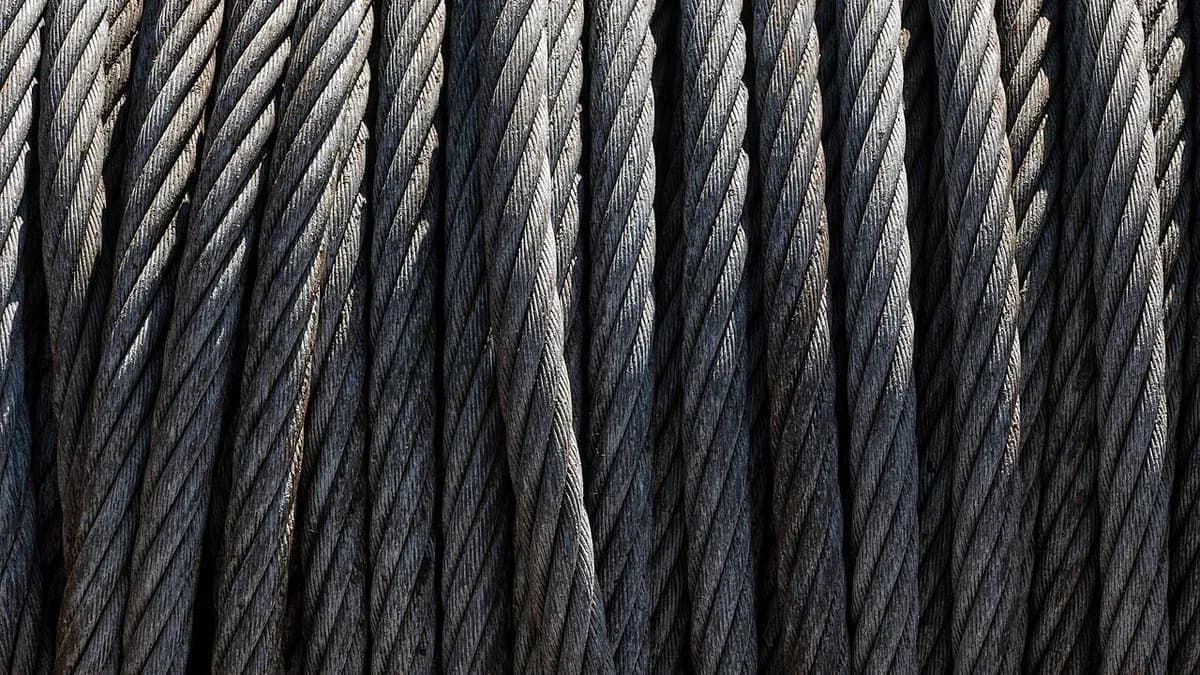
Two worked calculations settle Points 1, 2, and 3 of the Singapore audit directly from wire geometry and offshore winch physics under DNV offshore standards.
Galfan Wire Area, Steel Grade, and 670 kN Breaking Load Math
For example, compute the metallic cross-section and required wire tensile grade for the 36 × 2.6 mm plus 46 × 2.4 mm Galfan armor stack (TEBAOFLEX mechanical calculation, 2026):
- Inner armor layer (36 × 2.6 mm): A_1 = 36 × pi × (1.3 mm)² = 191.13 mm² (47.9% of total steel cross-section).
- Outer armor layer (46 × 2.4 mm): A_2 = 46 × pi × (1.2 mm)² = 208.10 mm² (52.1% of total steel cross-section).
- Combined steel armor area: A_total = 191.13 + 208.10 = 399.23 mm². Counter-winding the 47.9% inner layer against the 52.1% outer layer at matched opposite lay angles balances torsional moments across the full load range.
- Required individual wire tensile grade: Nominal axial stress at 670 kN is 670,000 N / 399.23 mm² = 1,678.2 MPa. At an 18-degree helical lay angle (cos(18 deg) = 0.9511) and 95% termination efficiency (net factor 0.9035), minimum wire tensile strength equals 670,000 / (399.23 × 0.9035) = 1,857.5 MPa.
- Why standard steel wire fails: Common 1,570 MPa galvanized plow steel yields only 399.23 × 0.9035 × 1,570 = 566.3 kN. That falls 15.5% short of 670 kN. Reaching 670 kN cleanly requires 1,860 MPa to 1,960 MPa extra-high-tensile Galfan steel wire.
- Working-load safety margin: SF = 670 kN / 190 kN = 3.53. Operating at 28.4% of MBL clears offshore dynamic launch safety ratios cleanly.
- Wire Count & Diameter — Inner Layer (Layer 1): 36 × 2.6 mm; Outer Layer (Layer 2): 46 × 2.4 mm; Combined Double-Armor Stack: 82 Galfan (Zn-5Al) steel wires.
- Metallic Area (mm²) — Inner Layer (Layer 1): 191.13 mm² (47.9%); Outer Layer (Layer 2): 208.10 mm² (52.1%); Combined Double-Armor Stack: 399.23 mm² total load-bearing steel.
- Helix Direction — Inner Layer (Layer 1): Left-hand (or right-hand); Outer Layer (Layer 2): Opposite contra-helical lay; Combined Double-Armor Stack: Near-zero net torque at 190 kN SWL.
- Minimum Wire Grade — Inner Layer (Layer 1): 1,860 to 1,960 MPa; Outer Layer (Layer 2): 1,860 to 1,960 MPa; Combined Double-Armor Stack: Delivers ≥ 670 kN MBL (3.53 SF).
To prevent armor bird-caging and optical fiber darkening during sudden heave slack, review our technical breakdown of ROV umbilical bird-caging, hockling, and FIMT protection.
Resolving the 20 × OD Radius vs 1200 mm Bending Diameter Conflict
Next, audit Question 3 directly. Mixing up bending radius and bending diameter creates a dangerous 2 × error on offshore winch sheaves (TEBAOFLEX geometry verification, 2026):
- Minimum geometric armored OD: At an 18-degree lay angle (cos = 0.9511), 36 × 2.6 mm inner wires require a pitch diameter of at least 31.33 mm (33.93 mm over Layer 1). Wrapping 46 × 2.4 mm outer wires requires a 36.95 mm pitch diameter and at least 39.35 mm finished OD (typically 40 mm to 42 mm with wire clearance).
- Existing pontoon sheave ratio (OD = 40 mm): A 1,200 mm minimum dynamic bending diameter equals a 600 mm bending radius. For a 40 mm OD umbilical, that sheave runs at 30.0 × OD diameter, or 15.0 × OD radius.
- Case A (20 × OD means bending diameter): Minimum allowed diameter is 20 × 40 mm = 800 mm (400 mm radius). The existing 1,200 mm sheave provides a 1.50 × geometric safety margin.
- Case B (20 × OD means bending radius): Minimum allowed radius jumps to 20 × 40 mm = 800 mm, forcing a 1,600 mm sheave diameter (2 × 800 mm). That exceeds the pontoon's 1,200 mm sheave by 33.3%, over-bending steel wires and optical tubes on every cycle.
Always state both units explicitly on an ROV datasheet (≤ 15 × OD dynamic bending radius, equal to ≤ 30 × OD dynamic bending diameter, or ≤ 1,200 mm minimum dynamic bending diameter requiring a ≥ 1,200 mm sheave at 40 mm OD). Leaving an unlabeled "20 × OD" line risks rejecting a valid cable or crushing a stiff one on deck.
Inner Sheath Polymer Trade-Offs and Screened Quad Equivalency
Inner bedding sheath is the extruded thermoplastic or elastomer barrier separating the internal copper and optical bundle from the inner layer of high-tensile steel armor wires. Under 190 kN axial pull over a 1,200 mm sheave, radial bearing pressure squeezes the steel wires inward against the core. If the inner sheath softens or creeps, steel wires indent into power insulation and trigger micro-bending loss in single-mode fibers built to ITU-T G.657.
Screened telemetry quad is a four-conductor twisted star-quad element wrapped in an electrostatic foil or copper braid screen to carry noise-free RS-485, sonar, or ROV control signals beside high-voltage propulsion cores.
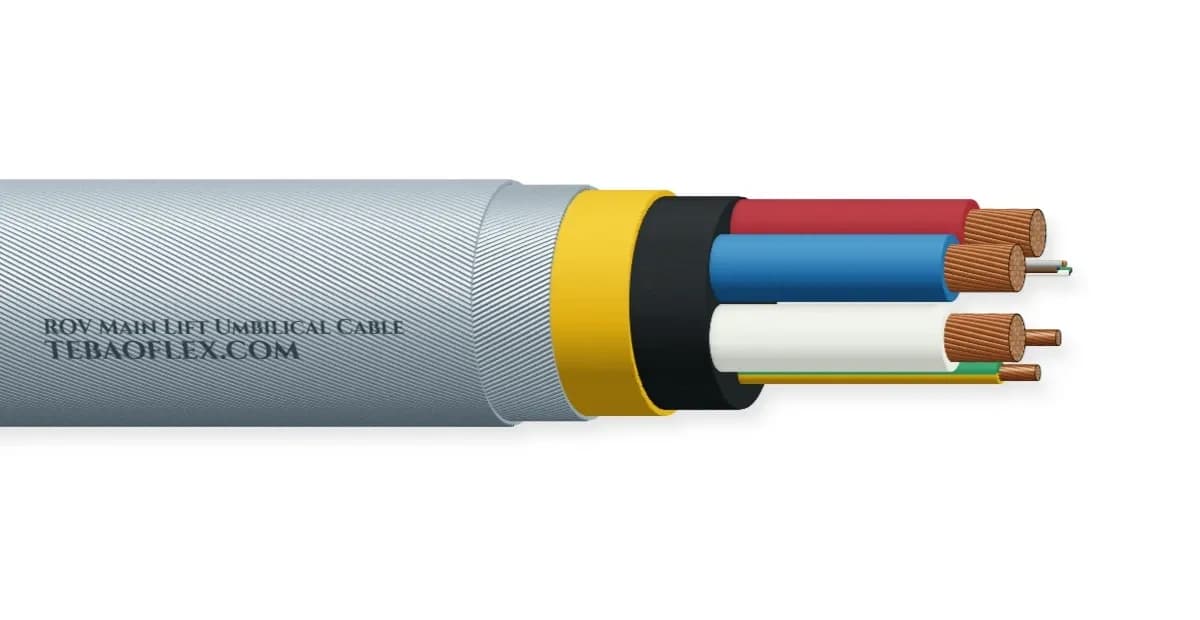
Polyurethane (PUR) vs Thermoplastic Polyester (TPEE) Inner Sheath
Question 5 asked why a proposal might specify polyurethane (PUR) instead of thermoplastic polyester elastomer (TPEE). Both polymers serve offshore umbilicals across our marine and offshore cable portfolio, verified for mechanical tests per IEC 60811-501:2012 and wall thickness checks per IEC 60811-202:2012+AMD1:2017+AMD2:2023, yet each excels in a distinct mechanical regime:
- Hardness & Crush Modulus — Thermoplastic Polyester (TPEE): Very high (55D to 72D Shore D); ultra-low compression creep; Polyether Polyurethane (PUR): High (85A to 95A Shore A or 55D rigid grades); resilient recovery; Engineering Selection Rule: Choose TPEE for extreme deepwater radial pinch (> 200 kN).
- Flex Fatigue & Cold Bend — Thermoplastic Polyester (TPEE): Stiffer on tight sheaves; verified per IEC 60811-504:2012; Polyether Polyurethane (PUR): Superior cut/tear strength and supple bending over 1,200 mm sheaves; Engineering Selection Rule: Choose polyether PUR for frequent shallow-to-midwater pontoon cycling.
- Hydrolysis & Seawater Life — Thermoplastic Polyester (TPEE): Very low moisture uptake; inert to hydraulic oils; Polyether Polyurethane (PUR): Must specify polyether hydrolysis-stabilized grade (never polyester PUR); Engineering Selection Rule: Audit compound certificate for seawater immersion stability.
- Core Bedding & Grip — Thermoplastic Polyester (TPEE): Smooth, low-friction slip layer under Galfan wires; Polyether Polyurethane (PUR): Higher coefficient of friction reduces core slippage inside armor; Engineering Selection Rule: Specify TPEE or high-durometer PUR based on termination pull-out test.
For a 300 m spare pontoon umbilical operating at 190 kN SWL, high-durometer hydrolysis-stabilized polyether PUR delivers higher tear strength, tighter core grip against axial slip, and faster extrusion lead times. When an end user requires exact material parity with a legacy TPEE specification for extreme radial crush loads, TEBAOFLEX also extrudes TPEE inner bedding sheaths on request.
Screened Quad Equivalency: 0.35 mm² vs 0.34 mm² Over 300 m
To check signal continuity for Question 4, compare a metric 0.35 mm² screened quad against a legacy 0.34 mm² (22 AWG) quad across 300 m. This audit uses annealed copper resistivity (0.017241 Ω·mm²/m at 20 °C) per IEC 60228:2023 with a 1.071 stranding and quad layup factor:
- Copper area and diameter delta: Stepping from 0.34 mm² to 0.35 mm² adds 2.94% copper area ((0.35 - 0.34) / 0.34). Bare wire diameter grows by only 1.46% (~0.01 mm), so it fits identical crimp pins, connector inserts, and cable OD.
- Legacy 0.34 mm² loop resistance: (0.017241 / 0.34) × 1.071 × 1,000 = 54.3 Ω/km. Over a 300 m round-trip loop (0.600 km), DC loop resistance equals 32.6 Ω.
- Metric 0.35 mm² loop resistance: (0.017241 / 0.35) × 1.071 × 1,000 = 52.8 Ω/km. Over the same 300 m loop, DC resistance drops to 31.7 Ω, cutting voltage drop by 2.9% with zero loss of impedance match.
How Do You Select Between Armored ROV Umbilicals and Tethers?
Marine pontoons, deepwater work-class ROV vessels, survey tow sleds, and seismic spreads demand completely different armor and buoyancy architectures. Putting a neutrally buoyant aramid tether onto a 190 kN main deck winch destroys the core, while trailing a 670 kN steel-armored lift cable straight behind a free-swimming ROV weighs down its thrusters.
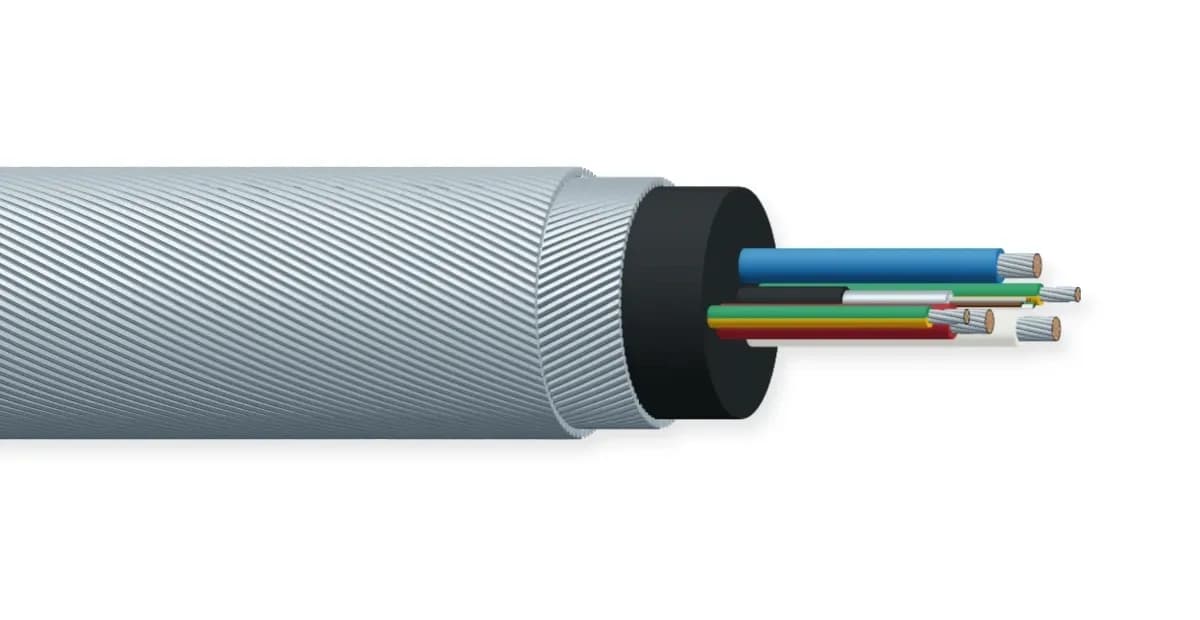
Use the verified TEBAOFLEX subsea umbilical and tow cable catalog below to match breaking load, voltage grade, and minimum bend radius to each offshore duty:
- ROV Main Lift Umbilical Cable — Rated Voltage & Standards: 1.0 to 4.5 kV 3-phase HV (6,000 m / 60 MPa); Armor & Optical Architecture: 2- or 3-layer GIPS (Galfan custom) contra-helical armor (180 to 850 kN MBL) + 6 to 24 SM/MM 316L FIMT; Temperature & Bend Radius: -30 °C to +75 °C deck (-20 °C to +60 °C seawater); 15 × OD dynamic / 10 × OD storage; Primary Offshore Application: Heavy work-class ROV main lift, 670 kN pontoon spare umbilicals, TMS winches.
- RM0049 Deepwater Work ROV Lift Umbilical — Rated Voltage & Standards: 3.3/4.5 kV (DNV-ST-E402 / ISO 13628-5); Armor & Optical Architecture: Double torque-balanced galvanized steel armor + hermetic stainless optical unit; Temperature & Bend Radius: -40 °C to +80 °C; 12 × OD winch sheave & TMS routing; Primary Offshore Application: Standardized deepwater work-class ROV launch and recovery systems.
- Custom Engineered ROV Umbilical — Rated Voltage & Standards: 3.0/3.3 kV (DNV-ST-E402 / ISO 13628-5); Armor & Optical Architecture: Custom contra-helical double steel armor + bespoke power, quad, and SM/MM fiber layup; Temperature & Bend Radius: -40 °C to +80 °C; 12 × OD winch & subsea routing; Primary Offshore Application: Drop-in OEM replacement builds matching exact legacy OD and core sheets.
- 1SSA13 Heavy-Duty Armoured Coax Tow Cable — Rated Voltage & Standards: 1,000 V (DNV-ST-E402 / ISO 13628-5); Armor & Optical Architecture: Double torque-balanced steel wire armor over central RF/sonar coaxial core; Temperature & Bend Radius: -40 °C to +80 °C; 12 × OD tow sheave & winch routing; Primary Offshore Application: Side-scan sonar, geophysical tow bodies, and subsea instrumentation sleds.
- Subsea Buoyant Hybrid & STFOC Tether — Rated Voltage & Standards: 600/1,000 V (ITU-T G.657 / DNV-ST-E402); Armor & Optical Architecture: Synthetic strength member + optical unit + black cellular foamed PUR jacket; Temperature & Bend Radius: -40 °C to +80 °C; 6 × OD TMS excursion routing; Primary Offshore Application: Neutral-buoyancy ROV excursion tethers between TMS cage and vehicle.
- Seismic Airgun Umbilical — Rated Voltage & Standards: 600/1,000 V firing + 2,000 to 3,000 psi air; Armor & Optical Architecture: 10 to 48 solenoid pairs + polyaramid or GIPS armor (80 to 350 kN MBL) + heavy PUR; Temperature & Bend Radius: -5 °C to +50 °C seawater (-30 °C to +75 °C deck); 10 × OD dynamic / 8 × OD static; Primary Offshore Application: Towed marine seismic airgun arrays and stern-chock survey spreads.
A clear operational divide separates the top three contra-helical ROV main lift umbilicals from the three specialized tow, buoyant tether, and seismic families below them. Whenever an umbilical lifts heavy deck loads over a steel sheave, contra-helical steel armor matched to electrical testing per IEC 60502-2:2014/AMD1:2024 and 12 to 15 × OD dynamic radius rules is essential. For synthetic aramid versus steel armor trade-offs on excursion tethers, see our ROV umbilical Kevlar versus contra-helical armor guide.
Dynamic Fatigue Verification, FOB Shanghai Logistics, and RFQ Checklist
Winning operator approval for a 300 m spare pontoon umbilical in Singapore requires transparent engineering proof and clean export execution. TEBAOFLEX backs every special customized cable build with scaled CAD cross-sections, armor tension math, and factory acceptance test (FAT) protocols aligned with IEC 60794-1-21:2015. We also issue direct FOB Shanghai export packing lists for smooth Singapore clearance. Review our subsea factory workflow on the TEBAOFLEX manufacturing overview page and explore our subsea umbilical hydrostatic and FAT testing protocol.
Pre-Shipment FAT and Export Packing Protocol
Confirm these four milestones before releasing a 300 m armored spare umbilical for sea freight from Shanghai to Singapore:
- Approve the scaled cross-section drawing: Sign off on final OD tolerance (± 1.0 mm) and 36 × 2.6 mm + 46 × 2.4 mm Galfan lay angles before stranding. Lock inner sheath polymer (PUR or TPEE) and core colors in the same revision.
- Verify armor wire mill certificates: Inspect Galfan (Zn-5Al) coating weight, tensile strength (1,860 to 1,960 MPa), and torsion test records from the wire mill alongside theoretical 670 kN MBL math.
- Run full electrical and optical FAT on the drum: Record AC high-voltage withstand, DC insulation resistance, 0.35 mm² quad loop resistance, and bidirectional 1310/1550 nm OTDR attenuation on every optical fiber.
- Lock drum packing list and FOB Shanghai logistics: Issue estimated gross weight, steel shipping drum dimensions, and seafreight lashing details early so the Singapore receiver can book crane lift capacity and port clearance without delay.
Seven-Point Armored ROV Umbilical RFQ Checklist
Include these seven details when submitting a spare umbilical inquiry or legacy equivalency sheet to the TEBAOFLEX subsea engineering desk:
- Exact Length & Spare Allowance: State finished length (such as 300 m) plus extra termination test tails required for mechanical bullet potting.
- Target OD & Winch Groove Tolerance: Provide existing drum groove pitch and maximum allowable finished OD so level-winding stays smooth.
- Armor Wire Spec & Load Targets: Specify Galfan or GIPS wire grade, required MBL (670 kN), dynamic SWL (190 kN), and zero-torque balance criteria.
- Sheave Diameter in Clear Units: List existing A-frame and traction winch diameter (1,200 mm bending diameter = 600 mm radius) instead of an unlabeled OD multiple.
- Electrical, Quad & Optical Core Map: Detail power voltages, 0.35 mm² versus 0.34 mm² screened quad tolerances, and single-mode/multi-mode fiber counts.
- Inner Sheath Compound Preference: State whether high-durometer polyether PUR or high-modulus TPEE is mandatory for your deck load and termination clamp.
- FAT Reports & Trade Terms: Confirm required FAT certificates, sample bend/fatigue dossier, steel drum export packing list, and shipping terms (FOB Shanghai or CIF Singapore).
Frequently Asked Questions
How does 36 × 2.6 mm plus 46 × 2.4 mm Galfan armor reach 670 kN breaking strength?
The 36 × 2.6 mm inner layer supplies 191.13 mm² and the 46 × 2.4 mm outer layer supplies 208.10 mm², totaling 399.23 mm² of steel. With an 18-degree lay angle and 95% termination efficiency (0.9035 net factor), 1,860 to 1,960 MPa Galfan (Zn-5Al) wire reaches ≥ 670 kN MBL. That provides a 3.53 safety factor at 190 kN SWL.
Does 20 × OD on an ROV umbilical datasheet mean bending radius or bending diameter?
Neither assumption is safe without explicit wording, because confusing radius and diameter creates a 2 × error. For a 40 mm armored umbilical over a 1,200 mm winch sheave (600 mm radius), the sheave runs at 30.0 × OD diameter (15.0 × OD radius). If 20 × OD meant radius (800 mm), the cable would demand a 1,600 mm sheave, which is 33.3% larger than 1,200 mm.
Why do offshore umbilicals use Galfan steel wire instead of standard galvanized armor?
Galfan wires carry a 95% zinc and 5% aluminum eutectic alloy coating (Zn-5Al) rather than pure zinc. In warm tropical seawater around Singapore, Galfan slows cathodic corrosion and resists coating cracking during tight sheave bending, extending umbilical storage and working life.
Can a 0.35 mm² screened quad safely replace a 0.34 mm² quad in a 300 m umbilical?
Yes. Stepping from 0.34 mm² (22 AWG) to 0.35 mm² increases copper cross-section by 2.94% and bare conductor diameter by only 1.46% (~0.01 mm), keeping connector pins and outer umbilical diameter unchanged. Over a 300 m round-trip loop (600 m), DC loop resistance improves from 32.6 Ω to 31.7 Ω, cutting voltage drop by 2.9%.
When should engineers pick a PUR inner sheath versus a TPEE inner sheath under steel armor?
Choose thermoplastic polyester (TPEE) when ultra-deep lifting loads (> 200 kN) create severe radial armor pinch that requires maximum compression modulus and near-zero creep. Choose hydrolysis-stabilized polyether polyurethane (PUR) when crews prioritize tear strength, core-to-armor anti-slip grip, dynamic flex recovery over 1,200 mm sheaves, and shorter production lead times.
What documents should accompany a 300 m spare ROV umbilical shipped FOB Shanghai to Singapore?
A complete offshore handover pack includes the signed cross-sectional CAD drawing, Galfan mill tensile certificates, and the 670 kN MBL math sheet. It also includes drum electrical and 1310/1550 nm OTDR optical FAT logs, bending qualification references, and a steel-drum export packing list for FOB Shanghai loading.
Author & technical review: Authored by Jyen (Operations & Subsea Cable Engineering Desk) and technically reviewed by the TEBAOFLEX Cable Engineering Team. View our factory overview and quality and compliance records.
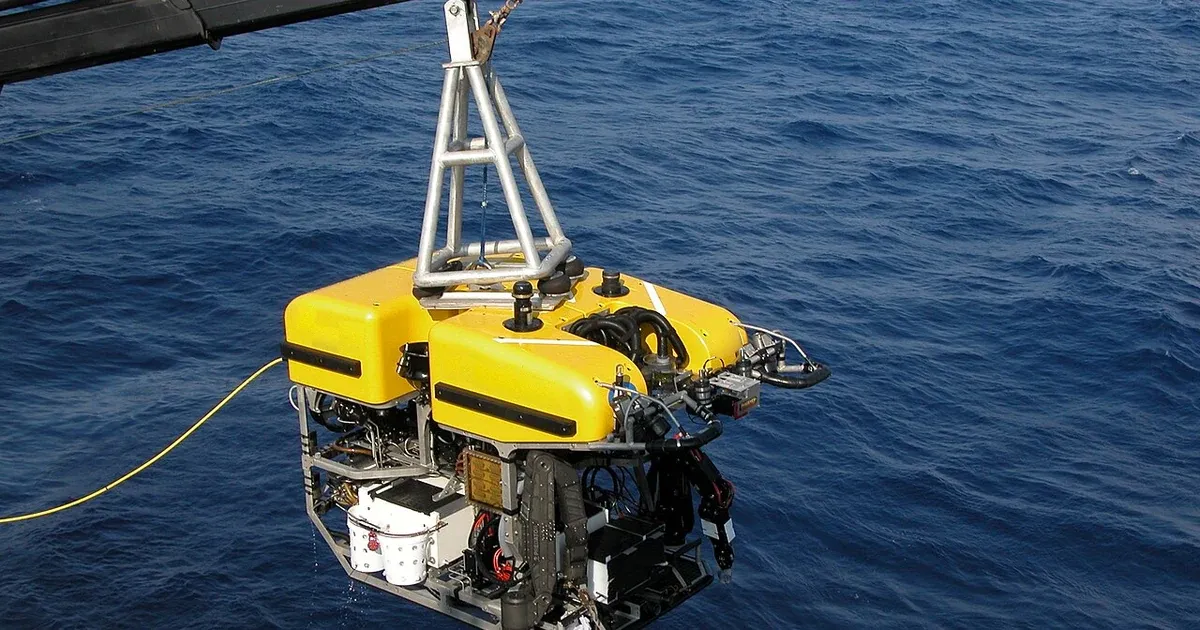
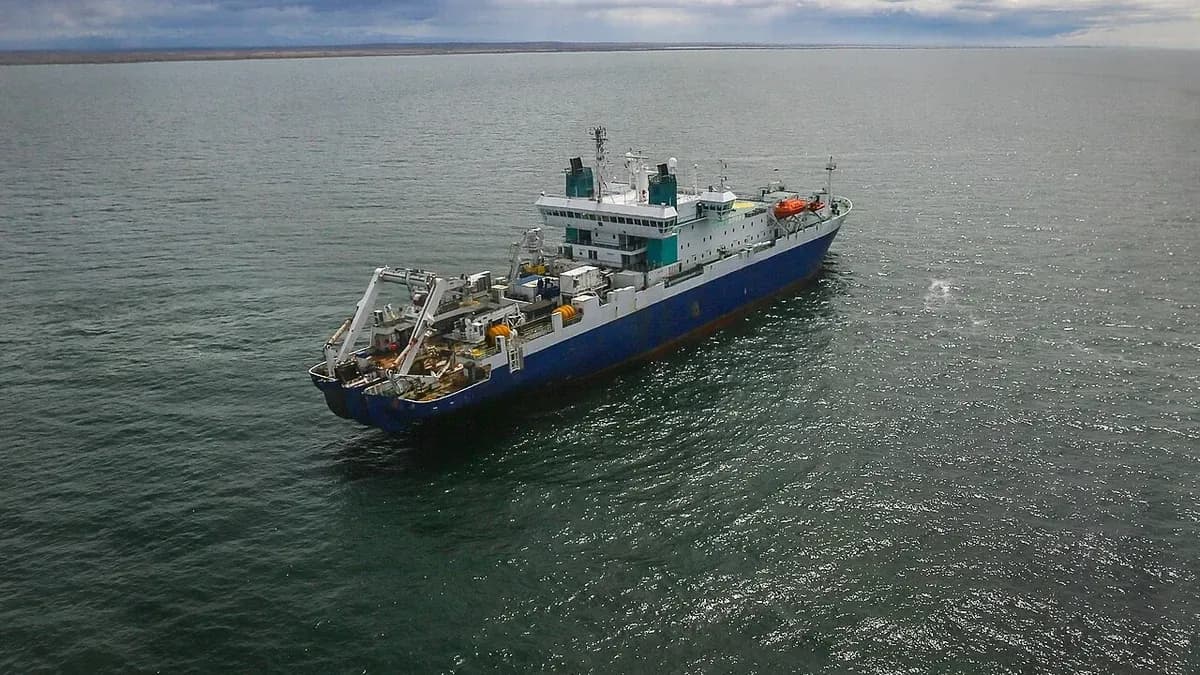
Image credits: Deepwater ROV crane deployment cover photo by Brennanphillips at English Wikipedia (Wikimedia Commons, Public domain); offshore subsea cable vessel aerial photo by Minsvyaz.ru (Wikimedia Commons, CC BY 3.0); steel wire rope on winch drum photo by W.carter (Wikimedia Commons, CC0); ROV Main Lift Umbilical Cable and RM0049 Deepwater Work ROV Lift Umbilical horizontal cutaways by TEBAOFLEX Engineering.