

Special cables are power, control and data cables built for a specific mechanical, environmental or electrical duty, most often on machines that move. Also sold as specialty cables, they differ from building wire in their finely stranded conductors, duty-specific sheath and insulation compounds, and the approvals they carry.
You find them on crane reels, festoon systems, drag chains, mining machines and robot arms, where a cable bends, twists or drags on every cycle and an ordinary fixed-installation cable would fail early. The International Federation of Robotics (IFR) reports that more than 600,000 industrial robots were installed in 2025, up 11% on the previous year.
Key Takeaways
- Motion type (reeling, festoon, trailing, drag chain or torsion) sets a special cable's mechanical design.
- EU Construction Products Regulation (CPR) fire classes apply to cables in buildings, not to circuits inside machinery.
- Drive cables work best symmetrical, well earthed and short; long runs need filters or reactors.
- When a crane's cable reel can take only one cable, a single composite cable can carry power, earth, control and optical fibre.
What Are Special Cables?
Special cables are engineered for a duty that general-purpose installation cable cannot meet: repeated motion, heat, oil, fire-safety limits or the electromagnetic compatibility (EMC) demands of a variable frequency drive (VFD).
Motion is the main dividing line. Fixed wiring is installed once in trays, conduits or walls, while a cable on a crane trolley, reel or drag chain bends on every cycle. US workplace rules draw the same line: under 29 CFR 1910.305(g), the Occupational Safety and Health Administration (OSHA) permits flexible cords and cables for wiring cranes and hoists and for connecting moving parts, but not as a substitute for fixed wiring.
Flexibility starts with the conductor. IEC 60228:2023, which covers conductors from 0.5 to 3,500 mm², sorts them into classes: class 1 (solid) and class 2 (stranded) for fixed installation, and class 5 (flexible) and class 6 (extra flexible) for cables that move. Class 6 sets the smaller maximum strand diameter at every size in the chart below, and finer strands tolerate tighter, more frequent bending.

Source: IEC 60228 (2004 edition tables) as reproduced by Nexans, 2021.
The flexible classes carry an electrical cost. In the 2004 IEC 60228 tables as reproduced by Nexans, a 1.5 mm² copper conductor may have a maximum resistance of 13.3 Ω/km in class 5 or 6, against 12.1 Ω/km in class 1 or 2. On long motor feeds, size for voltage drop with the flexible-class value.
Selection note: conductor class alone does not establish finished-cable dynamic life, minimum bending radius or torsion capability. Confirm the cable datasheet and the conditions of its cycle testing. Source
Cable Types by Motion
How a machine moves sets most of a special cable's mechanical design; actual limits come from the machine and cable datasheets.
- Reeling — Typical machines: Container and gantry cranes, ship loaders, stacker-reclaimers. Main stress: Winding onto a drum under tension and torsion. Points to check: Tensile and torsion rating, fit with drum and guide rollers.
- Festoon — Typical machines: Overhead and gantry cranes, hoists, transfer cars. Main stress: Bending in one plane as loops open and close. Points to check: Flat or round design, bending radius, travel speed.
- Trailing — Typical machines: Mining machines, shovels, drills, dredges. Main stress: Dragging, abrasion, impact and pulling. Points to check: Reinforced sheath, grounding and ground-check conductors, mining approvals.
- Drag chain — Typical machines: Machine tools, gantries, handling systems. Main stress: High cycle counts at a tight radius. Points to check: Rated bending radius and cycle life.
- Torsion — Typical machines: Industrial robots, wind turbine tower loops. Main stress: Twisting around the cable axis. Points to check: Stated torsion rating.
Reeling cables wind onto and off a drum under bending, tension and torsion at once. A reeling cable can be electrically correct yet fail early if the drum geometry, bend radius or pulling force does not suit its construction.

Festoon cable loops feed the moving trolley of a container crane. Photo: Alf van Beem, CC0, via Wikimedia Commons.

The MHI Overhead Alliance notes that available space usually decides between festoon, cable reel and conductor bar, and that a cable reel typically carries only one cable. A reel that must carry power, control and data therefore needs one composite cable. For a port crane in Vladivostok, the reeling cable ordered from TEBAOFLEX combines three 35 mm² power cores, earth conductors, sixteen 2.5 mm² control cores and an optical unit with 24 fibres in one 6/10 kV sheath.
Environment and Electrical Duty
Where a cable works and what it feeds decide its compounds, shielding and earth layout.
Fire safety and LSZH
In tunnels, trains and ships, smoke and corrosive gas from burning cable can harm people far from the flames. LSZH (low smoke zero halogen) cables use halogen-free compounds, but the label alone does not define voltage, flexibility, flame propagation, circuit integrity or approvals. The Guyana offshore platform case sets out a full requirement: compliant halogen-free cable has to pass flame-retardance tests on cable groups (IEC 60332), low-smoke tests (IEC 61034) and halogen acid-gas tests (IEC 60754) together.
High temperature
Near furnaces, foundries and hot process equipment, the rating depends on the insulation. Silicone single cores with a glass-fibre braid are commonly rated for +180 °C continuous. Fluoropolymer ratings vary by wire type, and flexible drive cable under UL 2277 is rated 90 or 105 °C, so check the rating of the exact designation.
Shielded and VFD cables
The cable between a VFD and its motor should be symmetrical, well earthed and as short as practical. The US Department of Energy tip sheet Minimize Adverse Motor and Adjustable Speed Drive Interactions (November 2012) recommends a cable with all three phases equally spaced around the ground conductor and a dedicated low- impedance ground wire from the motor frame to the drive.
Cable length matters because pulse-width-modulated (PWM) drives send fast-rising pulses, at carrier frequencies usually between 2 and 20 kHz, and in a longer cable the reflections reinforce the original pulse rise. With modern insulated-gate bipolar transistor (IGBT) switches, the tip sheet notes, cable runs of 50 ft (about 15 m) or more almost always need mitigation, such as load reactors at the drive end or dV/dt filters.
Drive-system note: the distance above is guidance from the cited 2012 tip sheet, not a universal installation limit. Follow the current drive, motor and cable manufacturers’ requirements for the specific system. Source
The fast switching edges also create high-frequency common-mode current and electromagnetic interference. A suitable VFD cable therefore combines an appropriate insulation system, conductor and protective-earth geometry, shielding and installation method. One design that follows this pattern uses three class 5 tinned-copper power cores, a protective-earth conductor divided into three sections and an overall tinned-copper braid.
Which Cable Standards and Approvals Matter?
The core set covers conductors (IEC 60228), fire behaviour (IEC 60332, 60754, 61034), EU buildings (CPR), machine wiring (IEC 60204-1), rail (EN 45545-2), offshore (IEC 61892-4, NEK TS 606) and North American mining and drive cables (MSHA, NEMA WC 58, UL 2277). Many regional rules reuse test methods from IEC cable standards.
IEC fire tests: flame spread, smoke and acid gas
IEC 60332-1-2, published as Edition 2.0 on 10 June 2025, tests a single vertical cable against a flame; passing it says nothing about cables installed in bundles. The IEC 60332-3 parts test bunched cables in categories defined by the litres of non-metallic material per metre of sample (l/m) and the flame application time:
- Category A — IEC 60332-3-22; non-metallic material: 7 l/m; flame application: 40 min.
- Category B — IEC 60332-3-23; non-metallic material: 3.5 l/m; flame application: 40 min.
- Category C — IEC 60332-3-24; non-metallic material: 1.5 l/m; flame application: 20 min.
- Category D — IEC 60332-3-25; non-metallic material: 0.5 l/m, cables up to 12 mm diameter; flame application: 20 min.
LSZH claims should be backed by two further reports: IEC 60754-2 for the acidity and conductivity of combustion gases, and IEC 61034 for smoke density.
EU CPR: cables in buildings, not machines
Since 1 July 2017, CE marking for fire performance has been mandatory for cables in buildings under the CPR and EN 50575:2014+A1:2016. The reaction-to-fire classes are defined in the annex to Delegated Regulation (EU) 2016/364 (UK-retained copy). Class B1ca, for example, limits flame spread to 1.75 m, total heat release to 10 MJ and peak heat release rate to 20 kW.

Source: Commission Delegated Regulation (EU) 2016/364, Annex, 2016.
Class Dca allows a peak heat release rate 20 times that of B1ca, while class Eca is set by flame height alone (425 mm or less).
Classification note: peak HRR is only one criterion, and test conditions differ between classes. The chart is not a complete fire classification or evidence of circuit integrity. Source
For machine builders, scope matters more than classes. Europacable lists "control and power circuits inside machinery, lift cables or other cables specifically designed for use in industrial processes" as excluded from the CPR. Wiring inside machines falls under machinery safety standards such as IEC 60204-1:2016, which applies to the electrical equipment of machines not portable by hand while working.
The new CPR, Regulation (EU) 2024/3110, entered into force on 7 January 2025 and has been in full application since 7 January 2026, according to the European Commission. For cables, Europacable notes, it will not apply automatically until updated harmonised standards arrive. On the machinery side, Regulation (EU) 2023/1230 replaces the Machinery Directive 2006/42/EC from 20 January 2027.
Rail: EN 45545-2
EN 45545-2:2020+A1:2023 sets fire requirements for materials in railway vehicles, with hazard levels HL1 to HL3 that depend on the vehicle's operation and design category. According to testing laboratory Measurlabs, interior cables fall under requirement set R15 and exterior cables under R16. They are tested to EN 60332-1-2, EN 60332-3-24 (category C), EN 50305 and EN 61034-2, and cables that meet EN 50264, EN 50306 or EN 50382 are deemed to comply.
Offshore: IEC 61892-4 and NEK TS 606
IEC 61892-4:2019 covers cable selection for mobile and fixed offshore units, including information on hydrocarbon (jet) fire-resistant cables. The Norwegian specification NEK TS 606:2016 covers halogen-free, low-smoke offshore cables and sets stricter resistance to oil and drilling mud, which attack ordinary sheaths, than the IEC base. Within that family, RFOU is the flame-retardant construction for power, control, lighting and instrumentation circuits, while BFOU adds a mica fire barrier for emergency circuits that must keep working through a fire.
Edition note (28 September 2026): the 2016 edition mentioned above is historical. NEK currently lists NEK TS 606:2025, replacing the 2022 edition; use the edition specified by the project. Source
Mechanical and construction standards
Fire rules say little about bending or tension. General-purpose harmonised cords such as H07RN-F follow the IEC 60245 coding system and use fine-stranded class 5 conductors. In German practice, many flexible rubber cables are specified to the DIN VDE 0250 series: the flexible 12/20 kV cable supplied for a Singapore data centre, for example, was specified against DIN VDE 0250-813 with a class 5 tinned-copper conductor. For moving duty, design against the datasheet's rated bending radius, travel speed and tensile load.
North America: MSHA, NEMA WC 58 and UL 2277
In US underground coal mines, trailing cables must be flame-resistant cable approved by the Mine Safety and Health Administration (MSHA) under 30 CFR 75.600-1. The approval test in 30 CFR 7.407 applies a flame for 60 seconds to each of three 3-ft samples; each must stop burning within 240 seconds with no more than 6 in charred. Approved cable carries its approval marking at least every 3 ft (30 CFR 7.409).
ANSI/NEMA WC 58-2017 / ICEA S-75-381, published with the Insulated Cable Engineers Association (ICEA), covers portable and power feeder cables for mining machines, dredges and shovels up to 25 kV.
Where Are Special Cables Used?
Special cables are concentrated in ports and cranes, offshore energy, factory automation, and mining and tunnelling.
Ports and cranes. Replacement projects add a geometric limit. In a tender to replace the medium-voltage reeling cable on existing reel equipment at a coastal coal-fired power plant in Vietnam, samples of two 8.7/15 kV constructions had to fall within outside-diameter windows of 56 to 59 mm and 62 to 65 mm to run on the existing drum and guide hardware. The same specification called for a minimum bending radius of 8 × D static and 12 × D dynamic and a service range of −40 °C to 90 °C. The case record puts the EPR-type insulation at roughly 90 °C continuous and about 250 °C for up to five seconds in a short circuit.
Offshore wind, oil and gas. Offshore wind added 9.3 GW of grid-connected capacity in 2025, according to the Global Wind Energy Council. Platforms, substations and vessels need cables that meet IEC 61892-4 and NEK TS 606.
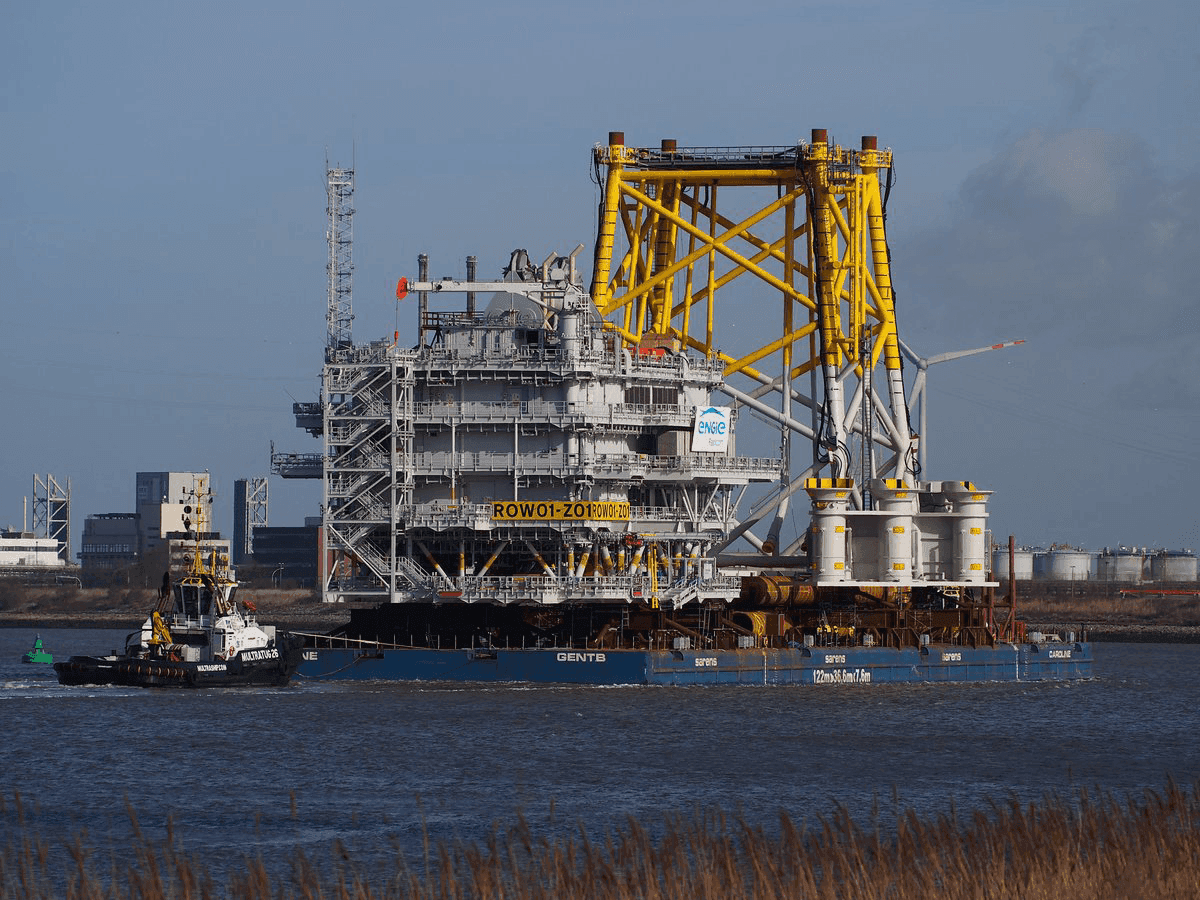
An offshore wind substation on its way to sea. Photo: Alf van Beem, CC0, via Wikimedia Commons.

Automation. Robot arms, gantries and machine tools rely on drag-chain and torsion cables, and annual robot installations reached a ten-year high in 2025.

Source: IFR (2016-2024 via Our World in Data; 2025 from IFR release), 2026.
Chart note: the 2025 plotted label of 600 thousand represents the reported lower bound of more than 600,000, not an exact total. Source
Mining and tunnelling. Trailing and reeling cables on mining machines face abrasion, water and crushing. The cable ordered for an underground jumbo drill in Venezuela was a 2 kV Type G-GC 3×2 AWG (American Wire Gauge) trailing cable. GC denotes an integral ground-check conductor that monitors the grounding path, so power can be cut if the ground connection is lost. The case record describes the cable being dragged, flexed and reeled in and out with every repositioning of the rig.
How to Choose a Special Cable: A 6-Step Checklist
- Define the motion profile. Name the motion type, then record travel distance, speed, acceleration, expected cycles and the minimum bending radius, usually given as a multiple of the cable diameter (D).
- Map the environment. List the temperature range, UV and ozone exposure, oil, drilling mud or chemicals, water and abrasion.
- Set the electrical and EMC requirements. Confirm voltage, current, core count, data elements and whether a VFD feeds the circuit; drive circuits call for a symmetrical, shielded design and a short run.
- Confirm fire rules and approvals. Establish whether the cable runs in a building (CPR), inside a machine (IEC 60204-1), in a rail vehicle (EN 45545-2), on an offshore unit (IEC 61892-4, NEK TS 606) or in a US mine (MSHA), and which approvals the end customer requires.
- Choose the conductor class and check voltage drop. Class 6 has the finer strands, so it suits the tightest radii and highest cycle counts on the datasheet; class 5 is common on heavier flexible power cables. Calculate voltage drop with the flexible-class resistance.
- Check the supplier's evidence. Ask for type-test reports, approval certificates and a sample of the cable marking, and confirm that the marking matches the approval. For retrofits, ask for outside diameters measured on finished samples.
Frequently Asked Questions
What is the difference between special cables and ordinary cables?
A special cable is rated and approved for a named duty, such as continuous motion, a harsh environment or a drive circuit. Fine strands alone do not make a cable special: general-purpose flexible cords such as H07RN-F also use class 5 conductors under IEC 60228. The difference lies in the duty rating and approvals such as MSHA flame resistance or UL 2277.
Can a trailing cable be spliced?
In US underground coal mines, yes, within MSHA rules. 30 CFR 75.604 requires permanent splices to be mechanically strong, sealed against moisture, flame-resistant and made with MSHA-accepted splice kits. 30 CFR 75.603 allows one temporary splice, usable only for the next 24 hours and not within 25 ft of the machine except on cable-reel equipment.
Are "special cables" and "specialty cables" the same thing?
Yes. Both names describe cables engineered for a particular duty, so a tender should state the motion, environment, standards and approvals rather than rely on the name.
Specifying a Special Cable for Your Machine
A reliable special cable starts from a complete duty description rather than a product name. If you are specifying cables for a crane, mining machine, offshore unit or automated line, send the motion profile, environment and required approvals to our engineering team through the contact page for a cable review. Include data on the current cable, such as its designation and outside diameter.
About the Author
Jyen is a technical and operations engineer at TEBAOFLEX, responsible for the company's online platforms. This guide draws on the standards and regulations cited above and on project records published in the TEBAOFLEX case library.
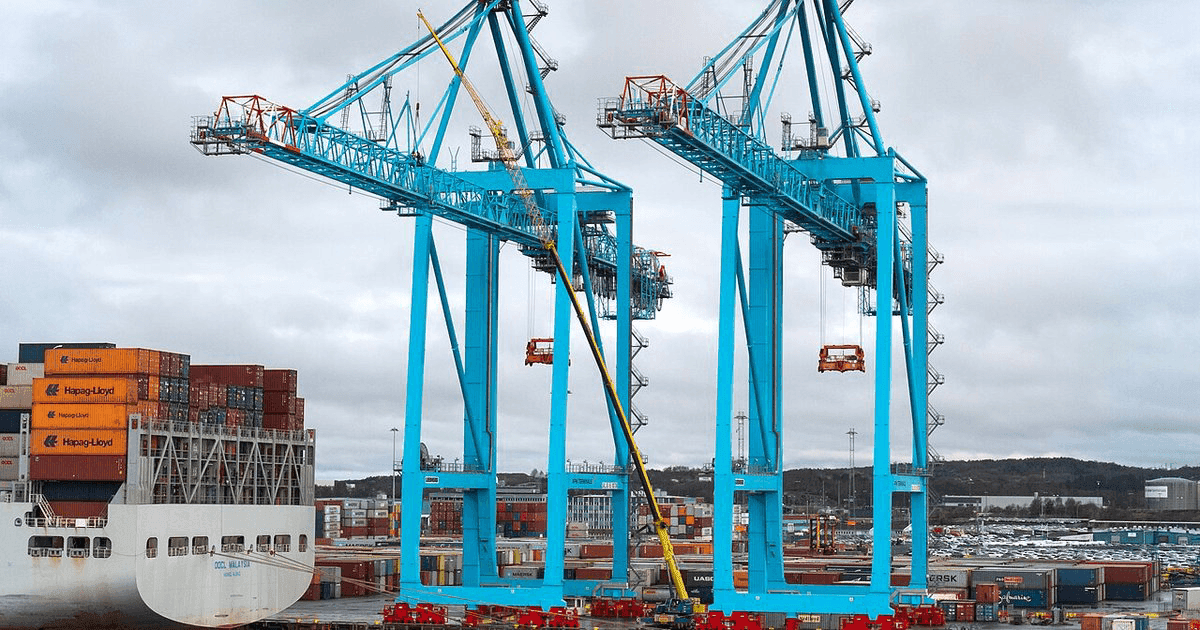
Cover photo: "Container cranes at Skandiahamnen 1" by W.carter, CC0, via Wikimedia Commons.
