Case study
The Application: What an Underground Jumbo Drill Demands From Its Cable
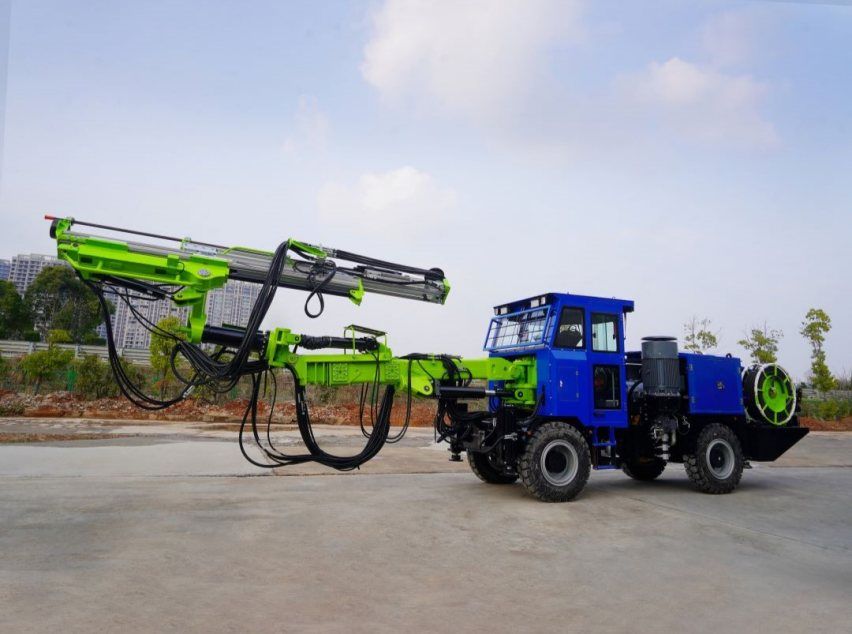
An underground Jumbo Drill, also called an underground drill jumbo, is purpose-built for underground mining and tunnel-driving work. Multiple hydraulic drill booms are mounted on a compact chassis that can maneuver through drifts and tunnels too tight for larger surface equipment, drilling blast holes, rock-bolt holes, and exploration holes as the rig advances.
As the drill booms articulate, the trailing cable feeding the rig gets dragged, flexed, and reeled in and out with every repositioning. It has to withstand rock dust and moisture underground, survive being dragged across rough tunnel floor, and support continuous ground-fault monitoring while powering mobile mining equipment around people.
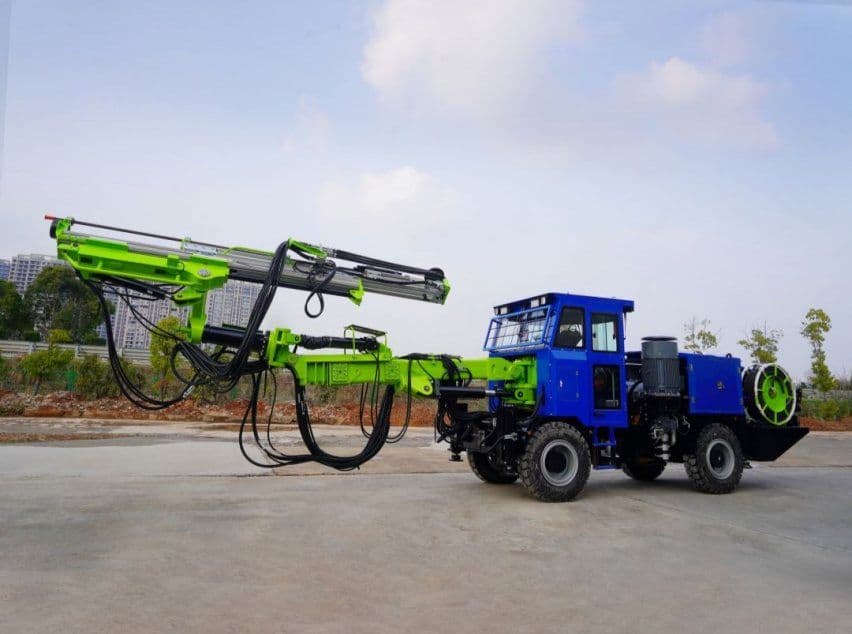
Underground drilling equipment and the duty expected from a trailing cable.
Matching Construction to Duty: Inside the 2 kV Type G-GC 3x2 AWG
Type G-GC is an established mining-cable designation: G identifies a portable power cable built for mining service, and GC means it carries an integral ground-check conductor. The ground-check circuit continuously monitors the grounding path so power can be cut if the ground connection is lost.
The construction TEBAOFLEX built for this order was selected around the equipment's actual duty cycle rather than a catalog part number.
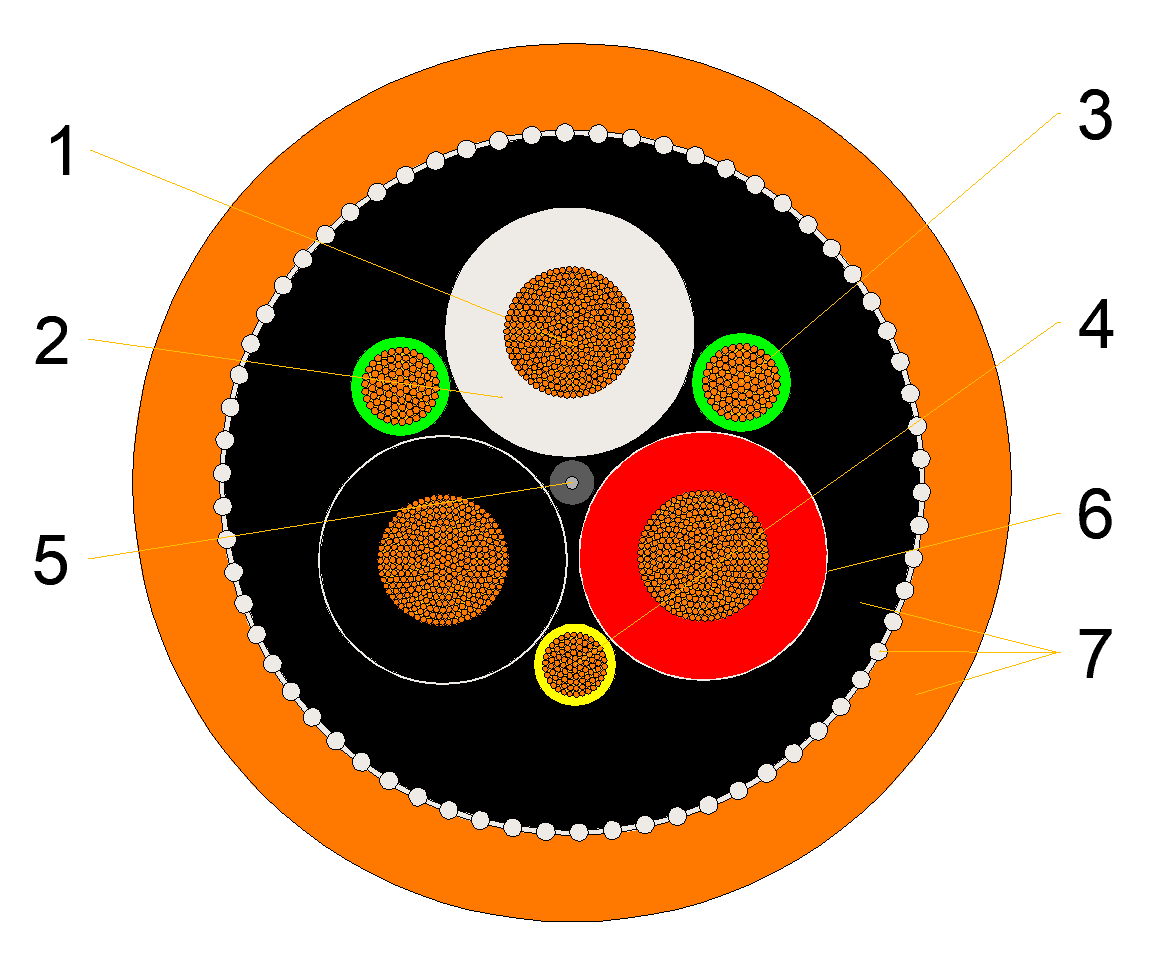
- Flexible tinned-copper conductors, fine-stranded for repeated flexing.
- Premium-grade 90°C EPDM thermoset insulation for heat, moisture, and oil resistance.
- Flexible tinned-copper ground conductor with green EPR insulation.
- Flexible tinned-copper ground-check conductor with yellow EPR insulation.
- Filler and binder tape to keep the core lay-up round and stable.
- Extra heavy-duty 90°C CPE rubber jacket with Kevlar braid reinforcement, in orange for mine-site visibility.

The Type G-GC construction specified for the underground drill application.
Three Hurdles Between Quote and Order
Ocean freight to Venezuela runs around 60 days, and there was no local stock of this cable in-country. TEBAOFLEX compressed its production schedule from the usual 20 days to 15 days and priced the cable below the European and North American alternatives.
Cross-border payment through the customer's US-registered trading entity took four to five days longer than usual. For a first order of modest value from a buyer that checked out, production began ahead of funds clearing as a deliberate risk-and-trust trade.
The buyer compared the offer with European and North American brands priced three to five times higher. VDE, CE, and UL certification, factory testing with outgoing test reports, and the cost-per-service-life argument supported the final decision.
Where Things Stand
The cable has shipped after production on TEBAOFLEX's compressed 15-day schedule. The order addressed the shorter lead time, payment timing, and certification and testing concerns that had nearly sent the buyer to a European or North American supplier.
The Takeaway
Venezuela is a difficult market to sell mining cable into because of long freight times, no local stock, and a banking environment that slows down payment. For trailing cable used on underground drilling, loading, or excavation equipment, the practical answer is to plan around the actual timeline, risk, and duty cycle instead of defaulting to whichever brand is already on-site.
If you are sourcing trailing cable for underground drilling, loading, or excavation equipment into a market with similar logistics or payment complexity, that is exactly the kind of problem worth talking through before you commit to a supplier. See more real deployments in our project case archive, or review our mining & tunnelling page for the full range of cable built for this duty.