Case study
A cable-reel retrofit at a coastal coal-fired power plant is a narrow, specific kind of buying decision. The reel equipment already exists, the drum geometry already exists, and whatever cable goes back on it has to match a diameter window that was likely set years earlier around a different manufacturer's product. This is a technical walk-through of one such replacement: a tender bidder in Vietnam sourcing a medium-voltage reeling cable, with an integrated 24-core fiber-optic unit, to go on cable-reel equipment at the Duyên Hải 2 Thermal Power Plant in Trà Vinh Province — and what it actually took, on the manufacturing side, to answer the technical questions that came with it.

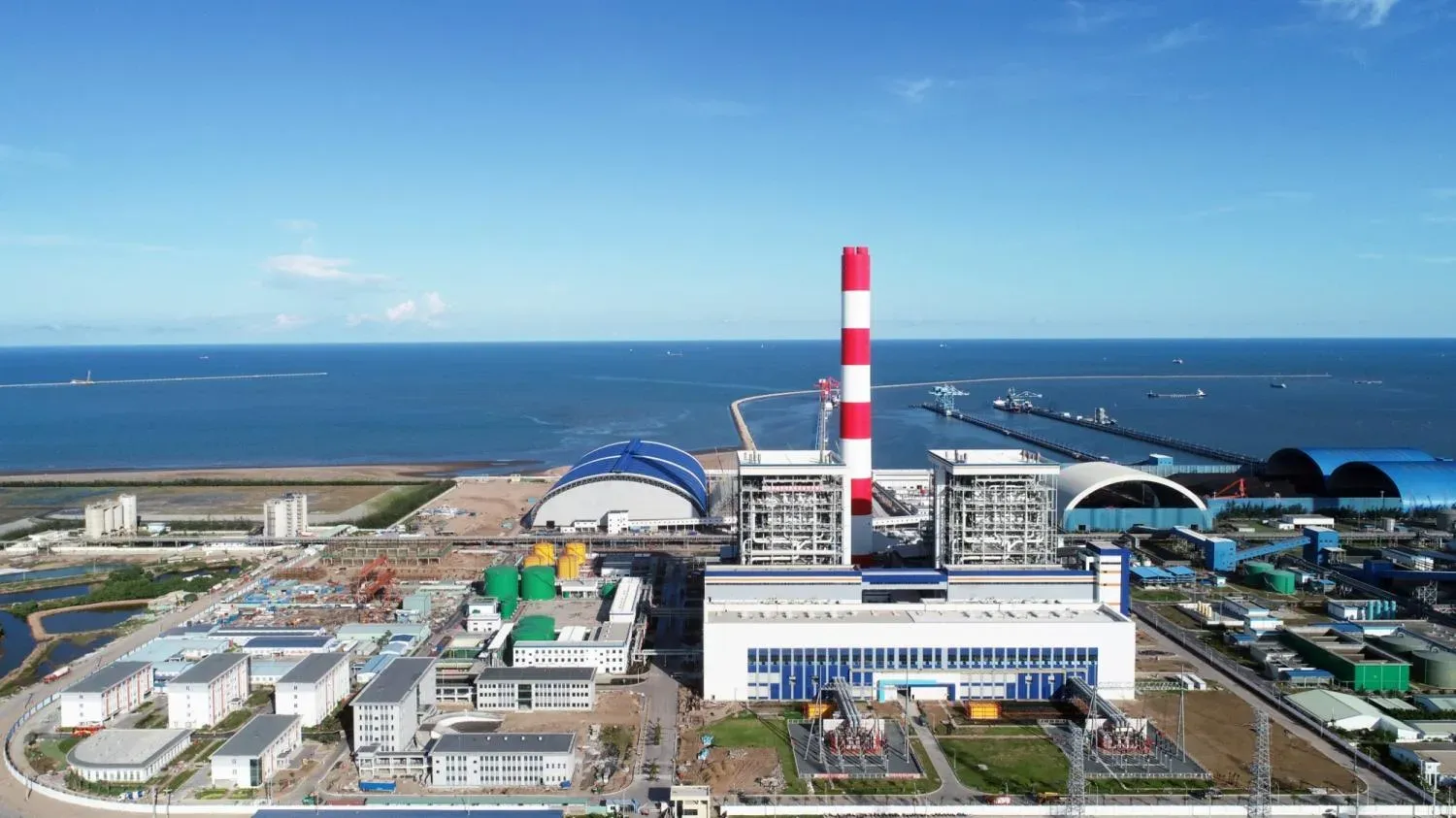
Aerial view included in the project material, consistent with Duyên Hải 2 — a 1,320 MW coal-fired plant in Trà Vinh Province that entered commercial operation in 2021 and includes a seaport coal terminal.
The starting point: aging European cable, a fixed reel geometry
The plant's cable-reel equipment was originally running on cable sourced from Tratos, an Italian reeling-cable manufacturer with a long track record in port and crane applications. Reel cable lives a harder life than fixed installation cable — it spends its service life bending, twisting, and re-spooling under tension every cycle — and equipment like this eventually needs a replacement cable, sourced through whatever procurement process the plant's operator runs at the time.
For this round, a bidder preparing a tender submission was looking outside Europe for a manufacturer that could match the existing product's construction and, critically, its physical dimensions closely enough to work on the same drum and guide hardware without a hardware change. That's what put a Chinese reeling-cable manufacturer, TEBAOFLEX, in the technical conversation — not as the plant's direct supplier, but as the bidder's manufacturing and technical-documentation partner for the submission.
Two constructions, one job
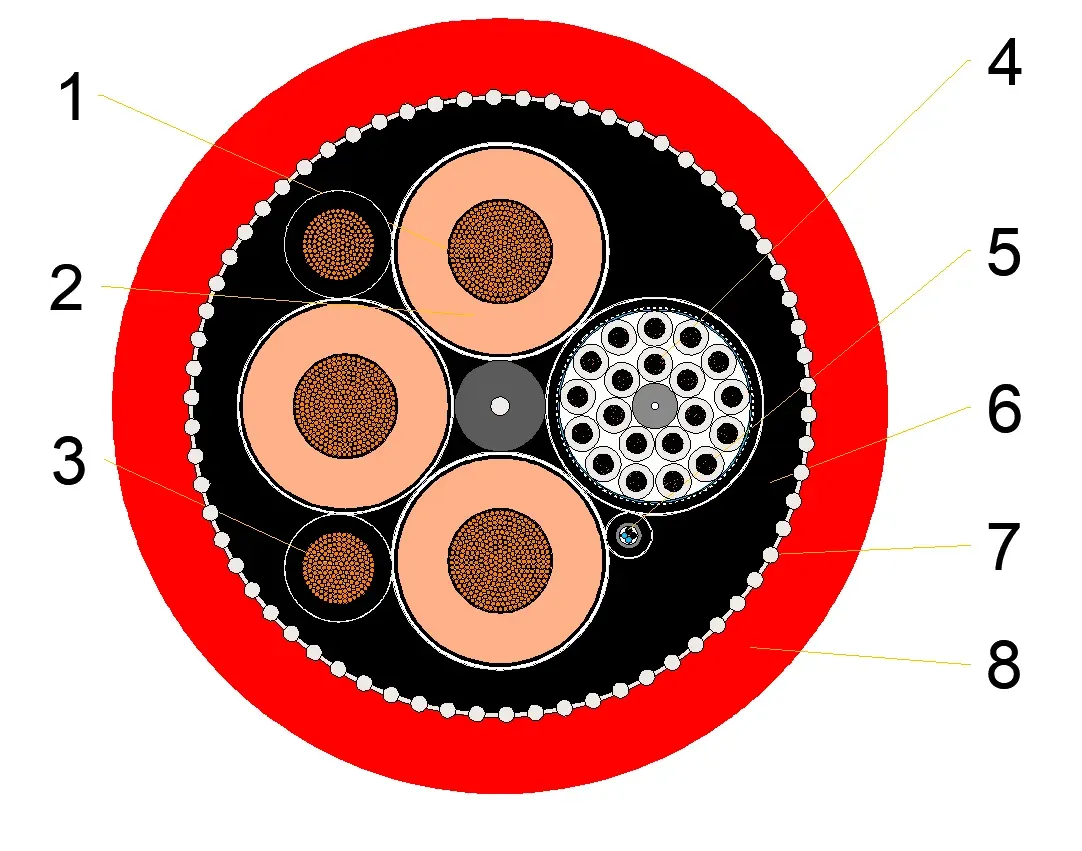
The tender covered two related cable constructions, both rated 8.7/15 kV and both built around the same core layout: three power conductors, a set of grounding conductors, a 20-core control bundle, and an optical unit with 24 fibers, all inside a Kevlar-reinforced double sheath.
- (N)TSCGEWOU 3×70 + 2×35/2 + (20×2.5)C + 24FO (9/125), 8.7/15 kV
- E5 3×35 + 3×35/3 + (20×2.5)C + 24FO (9/125), 8.7/15 kV
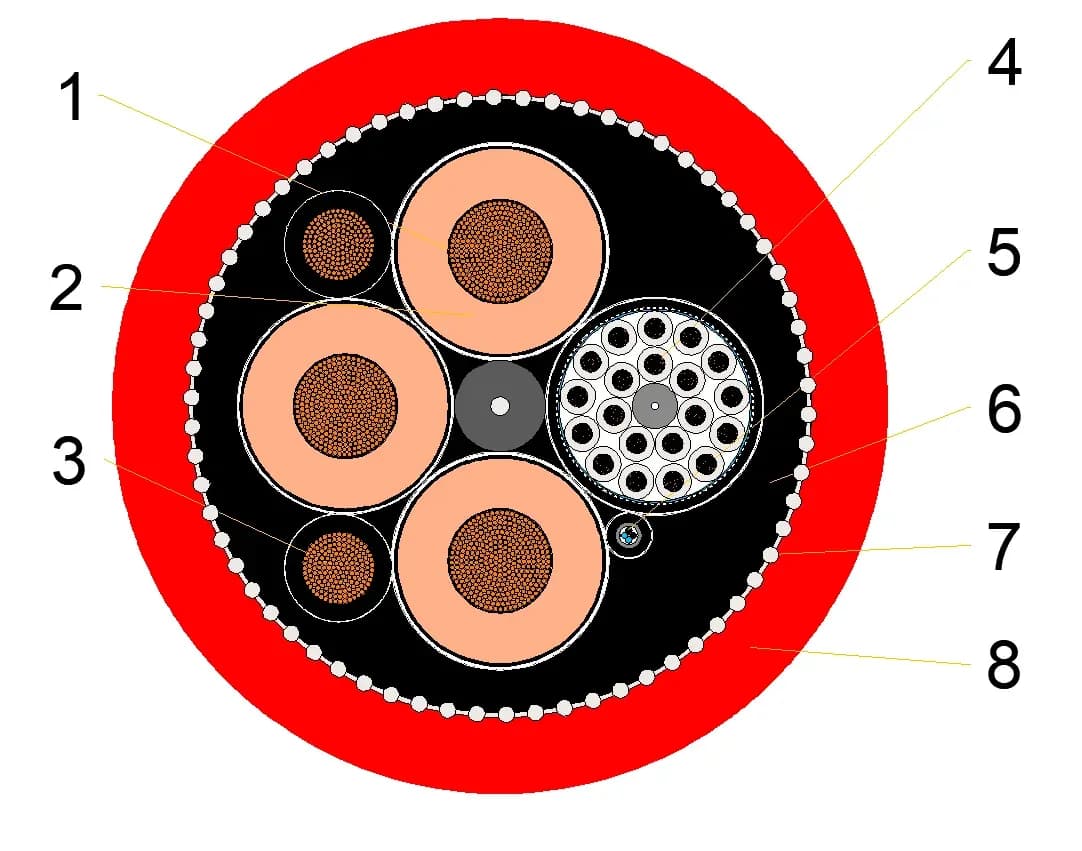
Construction diagram for the 3×70 variant, from the shared technical material. The 3×35 variant follows the same layered construction with different conductor sizes.
Both constructions specify tinned-copper power conductors built to the flexible-conductor classes under DIN VDE 0295 / DIN EN 60228 (IEC 60228) — the standards family that governs how finely a conductor has to be stranded before it counts as suitable for continuous flexing rather than fixed installation. The insulation is a 3GI3-type EPR compound, chosen for the combination of dielectric performance and mechanical durability that reel duty demands, sitting under a semi-conductive shield on both the conductor and the insulation.

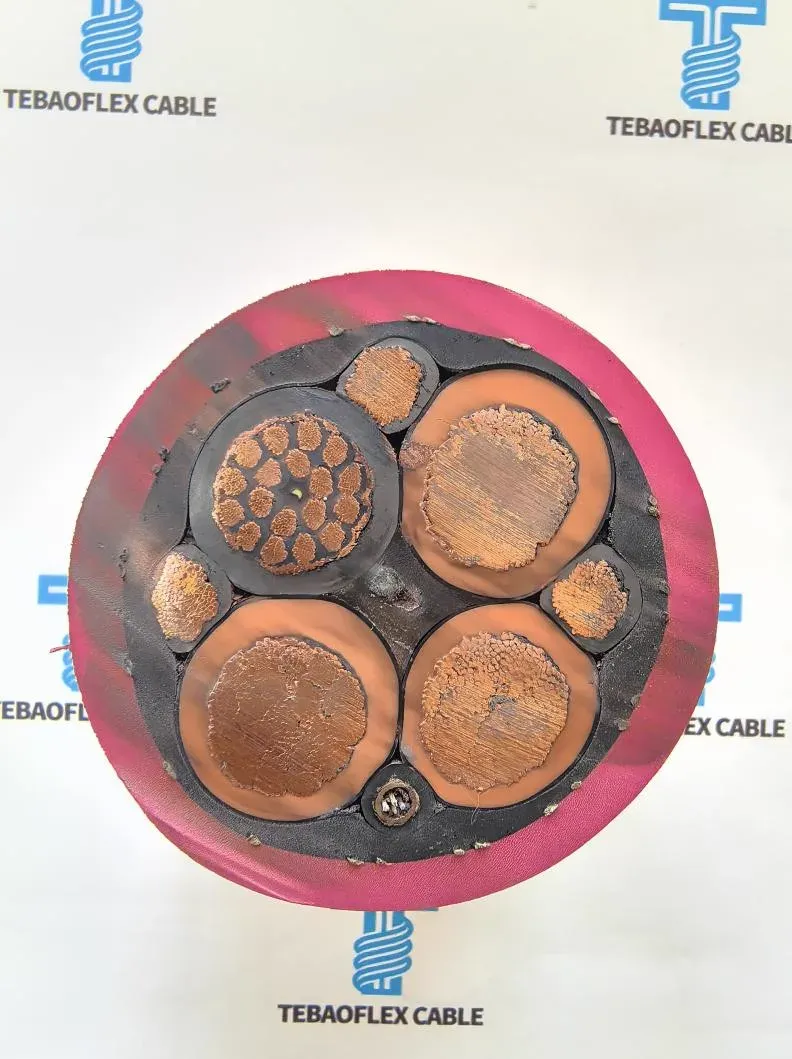
A cut cross-section from TEBAOFLEX's own reeling-cable line, shown here as a representative sample of the same multi-core-plus-fiber-optic construction family — not a photograph of the specific units built for this tender.
What actually separates a reel cable from a standard medium-voltage cable is everything wrapped around that core: the inner sheath is an extruded 5GM3-type rubber sized specifically for spooling onto a drum, and outside that sits a braided layer of Kevlar aramid fiber, whose job is to absorb the tensile and torsional load every reel cycle puts on the cable so that load never reaches the conductors or insulation underneath. The outer sheath is a 5GM5-type rubber compound formulated for weather, cold, abrasion, and UV exposure — relevant on a coastal site where salt air and direct sun are constant. Independently, insulation of this EPR/HEPR type is rated for continuous operation up to roughly 90°C, with a short-circuit allowance up to about 250°C for up to five seconds — figures consistent with the −40°C to 90°C service range and the 8×D static / 12×D dynamic minimum bending radius specified for this product.
The part that actually took engineering: hitting a diameter window
Matching a spec sheet is one thing. Matching a diameter tight enough to run on existing reel hardware is another, and it's where most of the real back-and-forth in this tender happened. The bidder's technical documents called for:
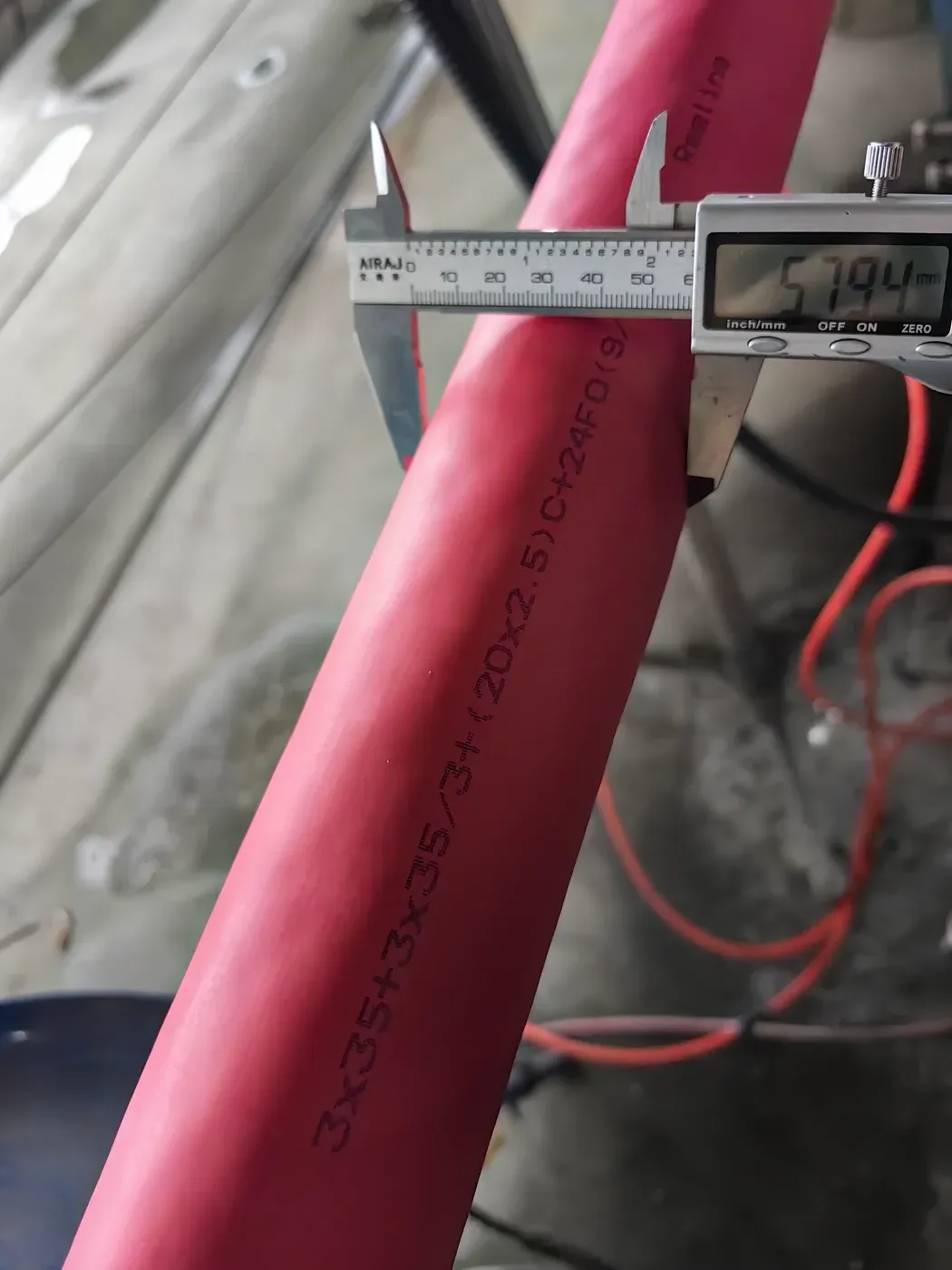
- Construction: 3×35 + 3×35/3 + (20×2.5)C + 24FO — Required diameter (with tolerance): 56–59 mm — TEBAOFLEX design diameter: 56.2 mm
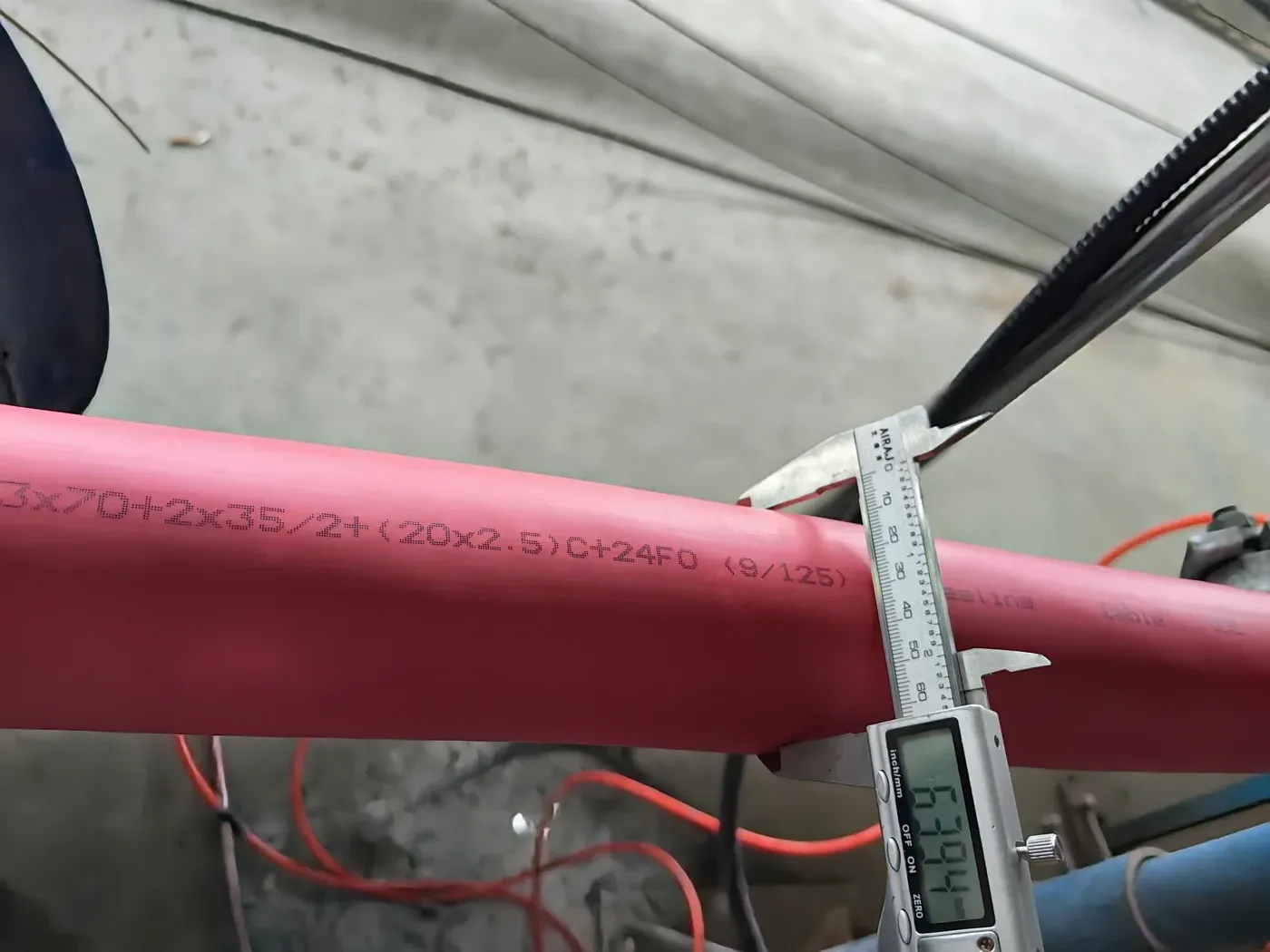
- Construction: 3×70 + 2×35/2 + (20×2.5)C + 24FO — Required diameter (with tolerance): 62–65 mm — TEBAOFLEX design diameter: 63.7 mm
TEBAOFLEX produced sample lengths of both constructions and measured them directly against those windows.
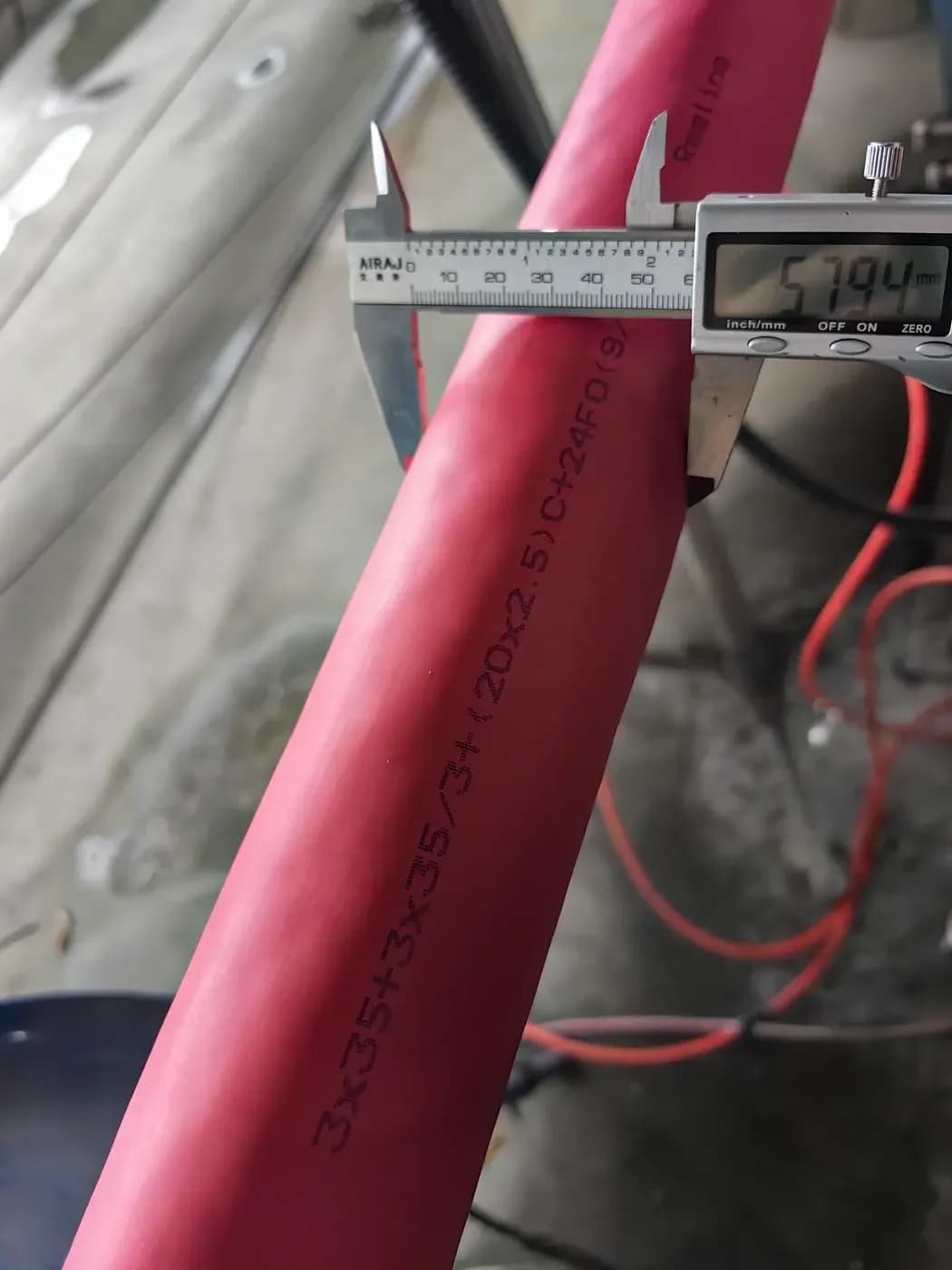
Caliper measurement on a sample of the 3×35 construction, jacket-printed with its full construction code, reading inside the 56–59 mm window.
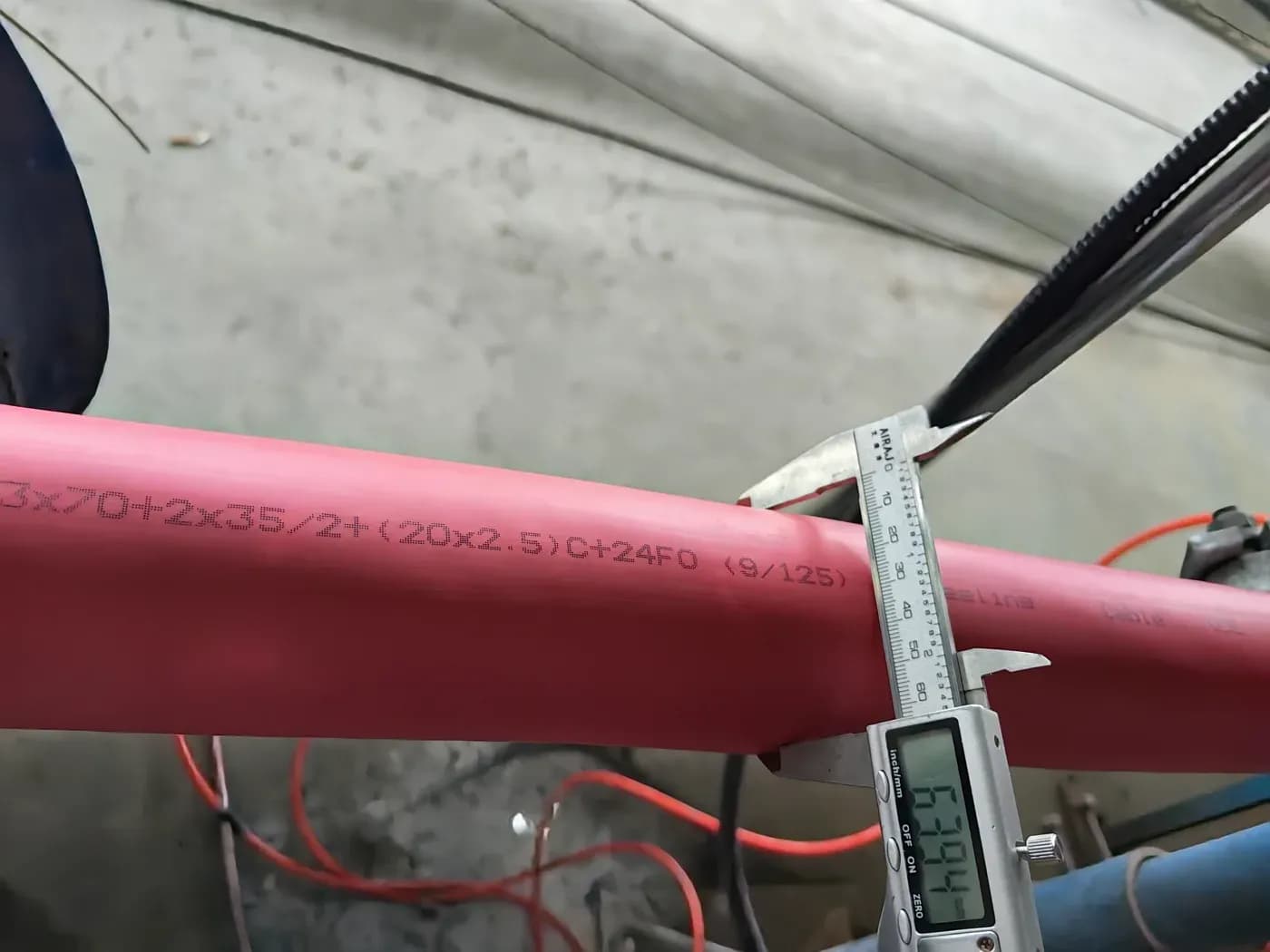
Caliper measurement on a sample of the 3×70 construction, jacket-printed with its full construction code, reading inside the 62–65 mm window.
Both samples measured inside their respective tolerance bands. That distinction matters more than it might read at first: on a reel system, an oversized cable doesn't just look wrong, it can bind against guide rollers or fail to seat correctly on the drum, and an undersized one can shift and abrade against itself during winding. Getting the outer diameter right, on the actual finished product rather than only on paper, is a large part of what "equivalent to the original" has to mean in a retrofit like this.
Clearing up a notation that trips up a lot of buyers
One exchange in the tender documentation is worth calling out on its own, because it's a genuine, common point of confusion in cable spec sheets: the difference between a grounding conductor written as 35/2 versus 35/3.
Both notations describe a conductor with a total cross-section of 35 mm² split across multiple cores — the number after the slash is the core count, not a separate size. So 35/2 means two cores sharing 35 mm² total (17.5 mm² each), and 35/3 means three cores sharing the same 35 mm² total (roughly 11.7 mm² each). The total copper cross-section is identical either way; what changes is how it's divided, which affects flexibility and per-core current handling but not the overall grounding capacity. It's a small notational detail, but it's exactly the kind of thing that can stall a technical review if a buyer reads "35/3" as "three cores at 35 mm² each" instead of "35 mm² split three ways."
Why a reeling cable carries its own fiber-optic core
Both constructions in this tender build an optical unit with 24 fibers (9/125 µm, single-mode) directly into the cable, alongside the copper conductors. That's a deliberate design choice for large material-handling machines: equipment like ship unloaders, stacker-reclaimers, and similar traveling or slewing coal-handling machines increasingly need a reliable data link back to a control room — for drive telemetry, machine monitoring, or camera and safety systems — and running a second, separate cable and reel just for fiber adds cost and another point of failure. Combining power, control, and fiber in one reeling cable means one drum, one reel mechanism, and one set of flex cycles instead of two.
The fiber unit specified here carries defined optical performance figures: attenuation below 0.4 dB/km at 1310 nm and below 0.3 dB/km at 1550 nm, numerical aperture of 0.14 ± 0.02, and chromatic dispersion below 3.5 ps/nm·km at 1310 nm and below 18 ps/nm·km at 1550 nm — standard single-mode figures, confirmed for both constructions during the tender's technical exchange.
Testing before it ever reaches a drum
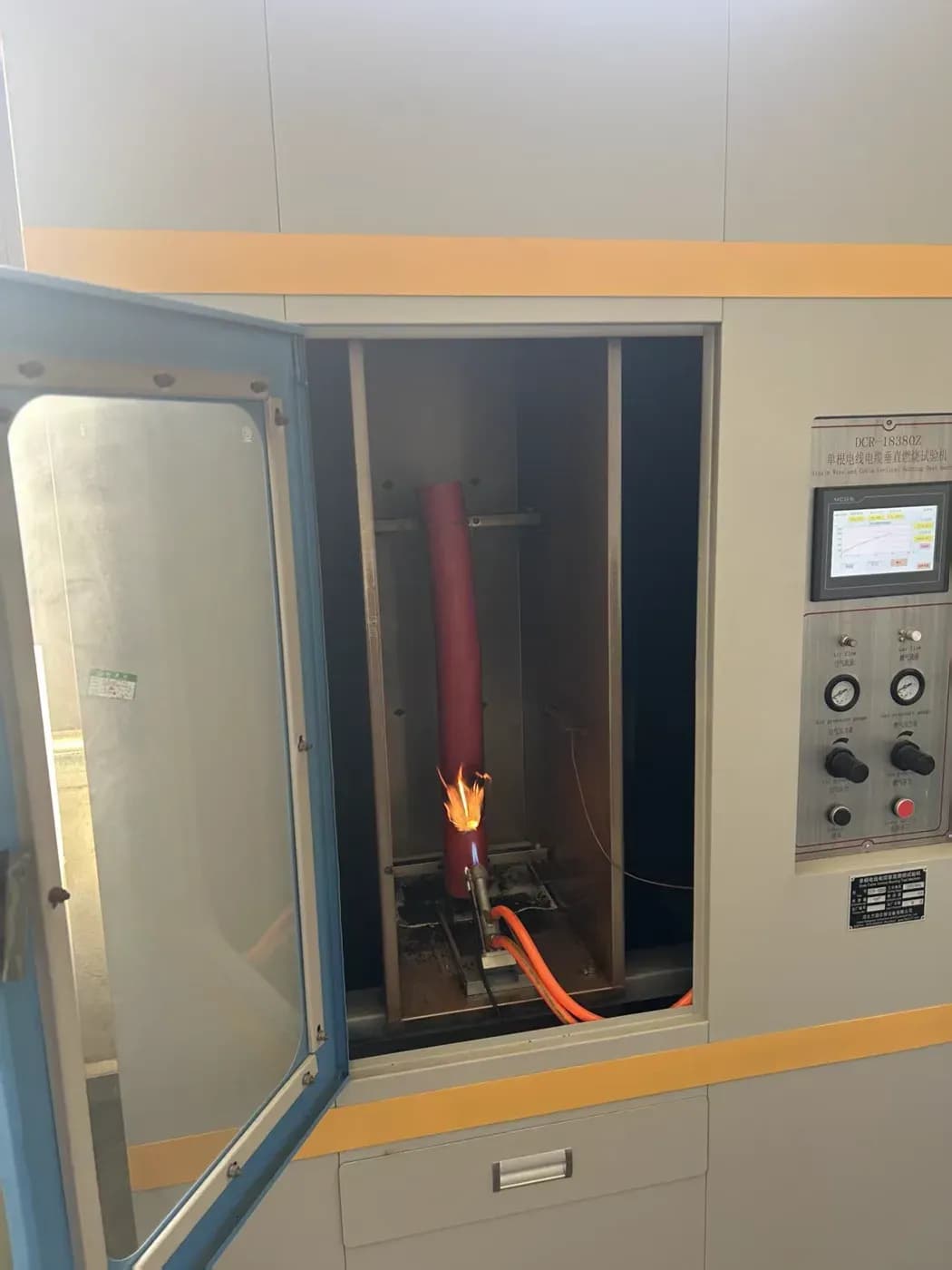
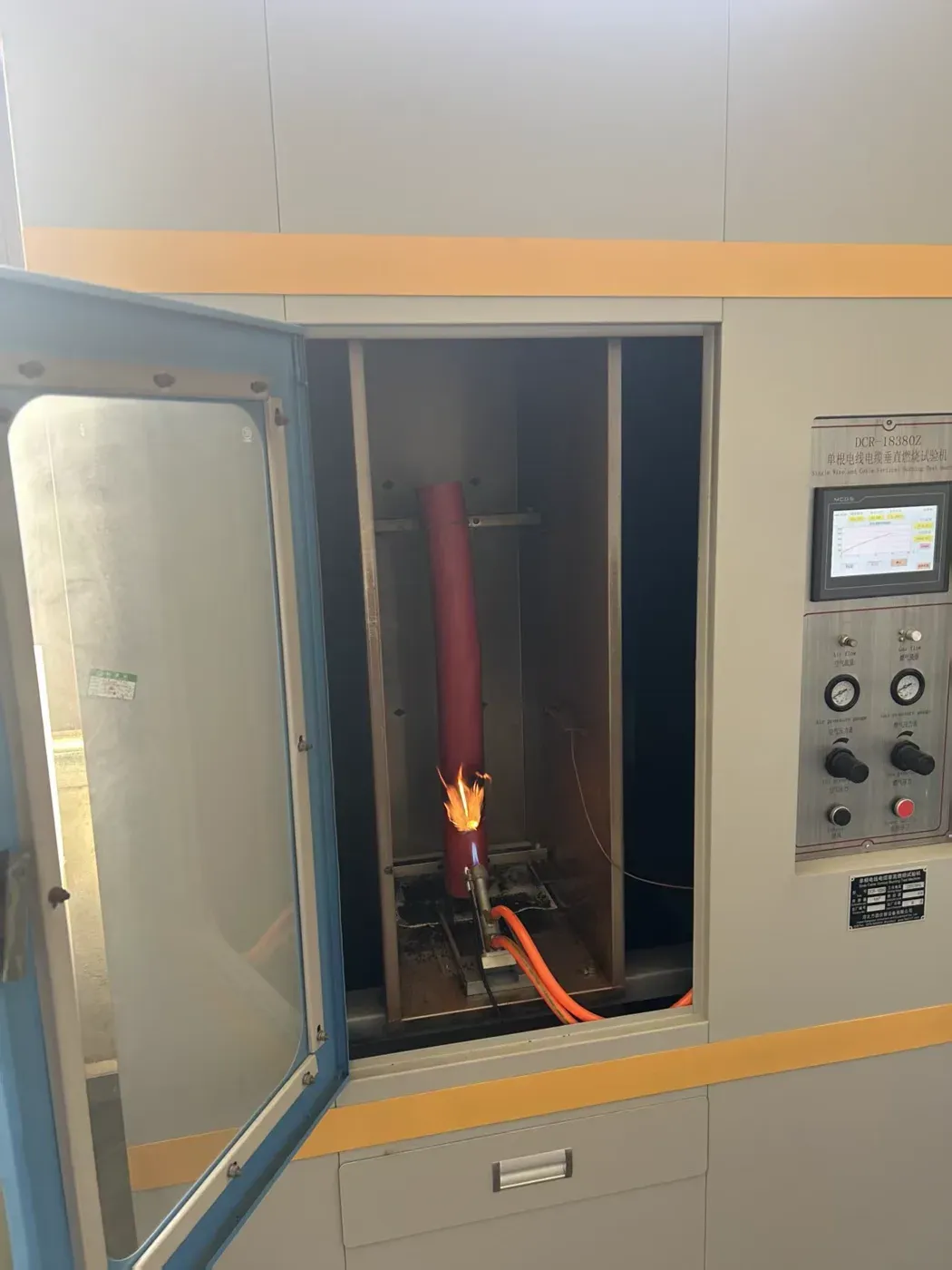
A cable sample undergoing vertical flame testing on a machine labeled as a single wire and cable vertical burning test unit, from the material shared during the tender.
Flame behavior matters for any cable running through an industrial site, and the shared material includes photographic evidence of a vertical burning test in progress on a cable sample, run on equipment specifically built for that single test (a labeled vertical burning test machine). Separately, TEBAOFLEX holds ISO 9001, ISO 14001, and ISO 45001 management-system certifications, along with VDE marks approval, UL/cUL compliance, and CE technical documentation, as listed on its own published certification register — company-level credentials that sit alongside, rather than substitute for, product-specific testing like the flame test shown here.
Getting a Chinese-made cable into Vietnam
The tender conversation also covered a detail that's easy to overlook next to the engineering specifics but matters just as much to landed cost: Certificate of Origin Form E. Form E is the certificate of origin issued under the ASEAN–China Free Trade Area, and it's what lets a qualifying Chinese-made product clear Vietnamese customs at preferential — commonly zero — import duty, rather than the full standard rate. Qualifying generally requires the product's Chinese content (materials, labor, and overhead combined) to meet a set threshold, or the product to undergo a defined tariff classification shift during manufacture. For a bid that's already being evaluated partly on landed price, having a straightforward path to Form E is a real part of the commercial case for sourcing the replacement cable from China rather than re-ordering from Europe.
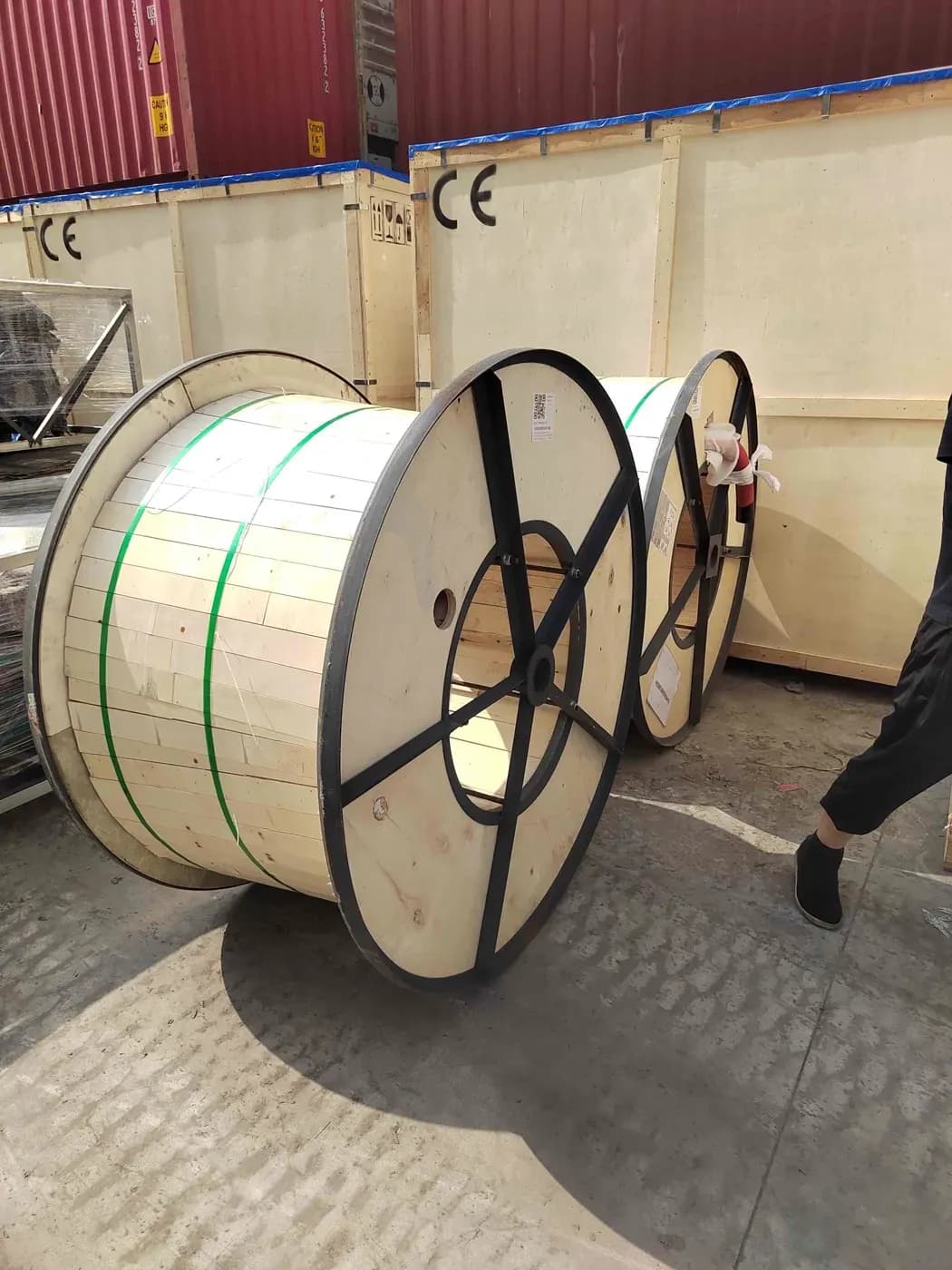
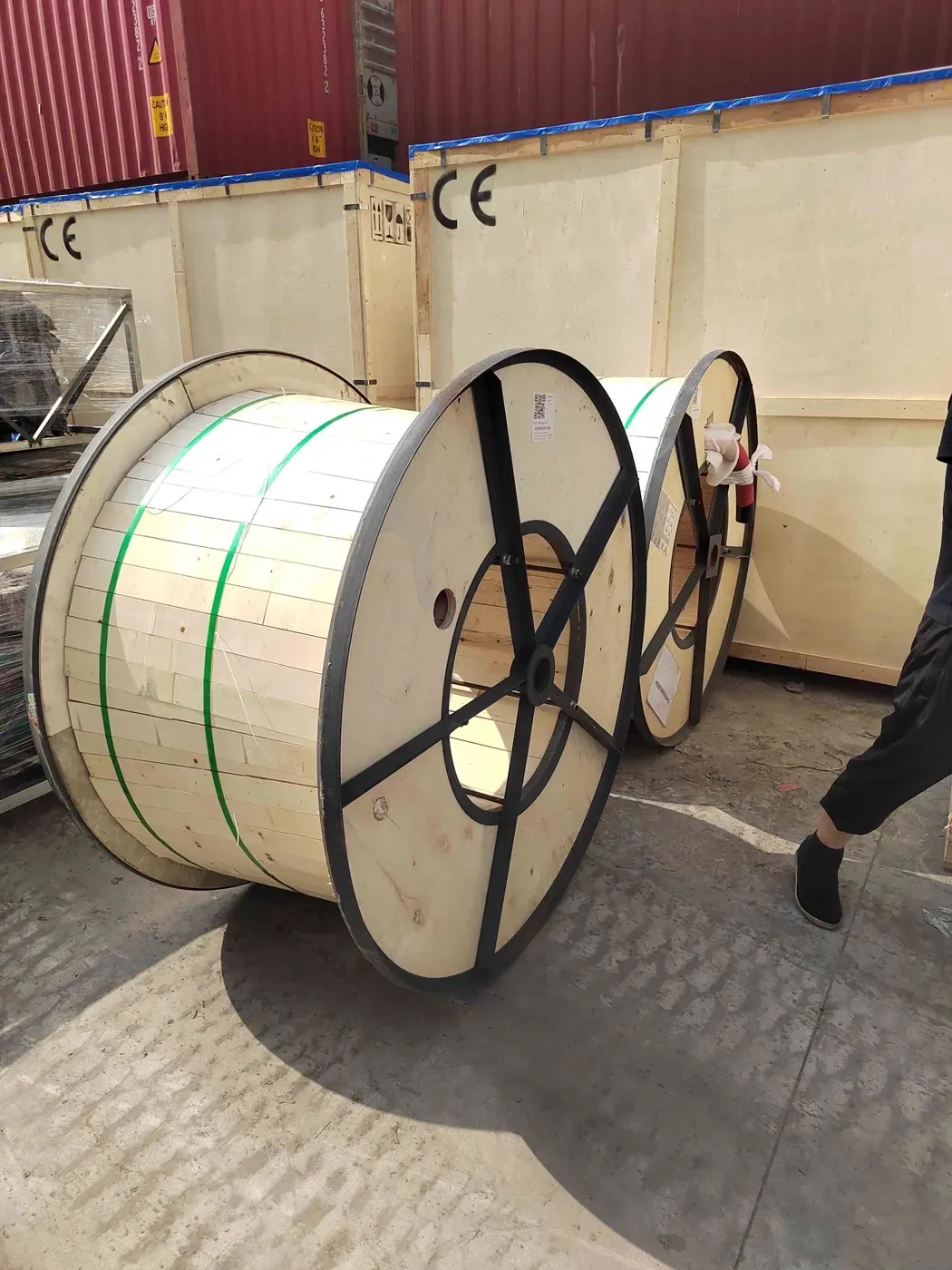
Finished cable reels staged for export alongside CE-marked wooden crates, from TEBAOFLEX's general packaging and export process — shown here as representative material, not the specific reels built for this tender.
Where this leaves the bid
At the point this material was compiled, the customer was still preparing its tender submission — the technical exchange documented here was aimed at getting the proposal's cable specification, drawings, and supporting documentation ready, not at closing an order. What's confirmed is the manufacturing and verification work behind that proposal: two constructions specified, sample lengths produced and diameter-verified against the required tolerance, and the export documentation path identified.
Frequently Asked Questions
What does "35/3" or "35/2" mean in a reeling cable's grounding conductor spec?
It's a total cross-section split across a core count, not a per-core size. 35/2 is 35 mm² total across two cores; 35/3 is the same 35 mm² total split across three cores. Both give the same total copper cross-section — they differ in flexibility and per-core current sharing, not overall grounding capacity.
What is CO Form E, and why does it matter when importing cable from China to Vietnam?
Form E is the Certificate of Origin issued under the ASEAN–China Free Trade Area. A shipment that qualifies for it can clear Vietnamese customs at a preferential tariff rate, commonly zero duty, instead of the standard rate — which is a direct, calculable difference in landed cost on an imported cable order.
What is the minimum bending radius for a medium-voltage reeling cable?
For the constructions covered in this tender, the specified minimum bending radius is 8×D (cable diameter) under static conditions and 12×D under dynamic (reeling) conditions, across a −40°C to 90°C service range. Bending radius requirements vary by cable design, so this figure applies to this specific construction rather than reeling cable in general.
Why does a reeling cable carry a fiber-optic core alongside the power conductors?
Large material-handling machines on a single cable reel — ship unloaders, stacker-reclaimers, and similar equipment — increasingly need both power and a data link to a control room. Building the fiber unit into the same reeling cable as the power and control conductors avoids running and maintaining a second cable and reel just for the data connection.
Get a Reeling Cable Spec Reviewed
Matching an existing reel cable's diameter, construction, and certification profile is a drawing-and-sample exercise before it's anything else. TEBAOFLEX's reeling cable range and material-handling and port crane cable solutions cover the same voltage classes and constructions discussed here — reach out through TEBAOFLEX's solutions page with a construction code, target diameter, or drawing to start a technical review.