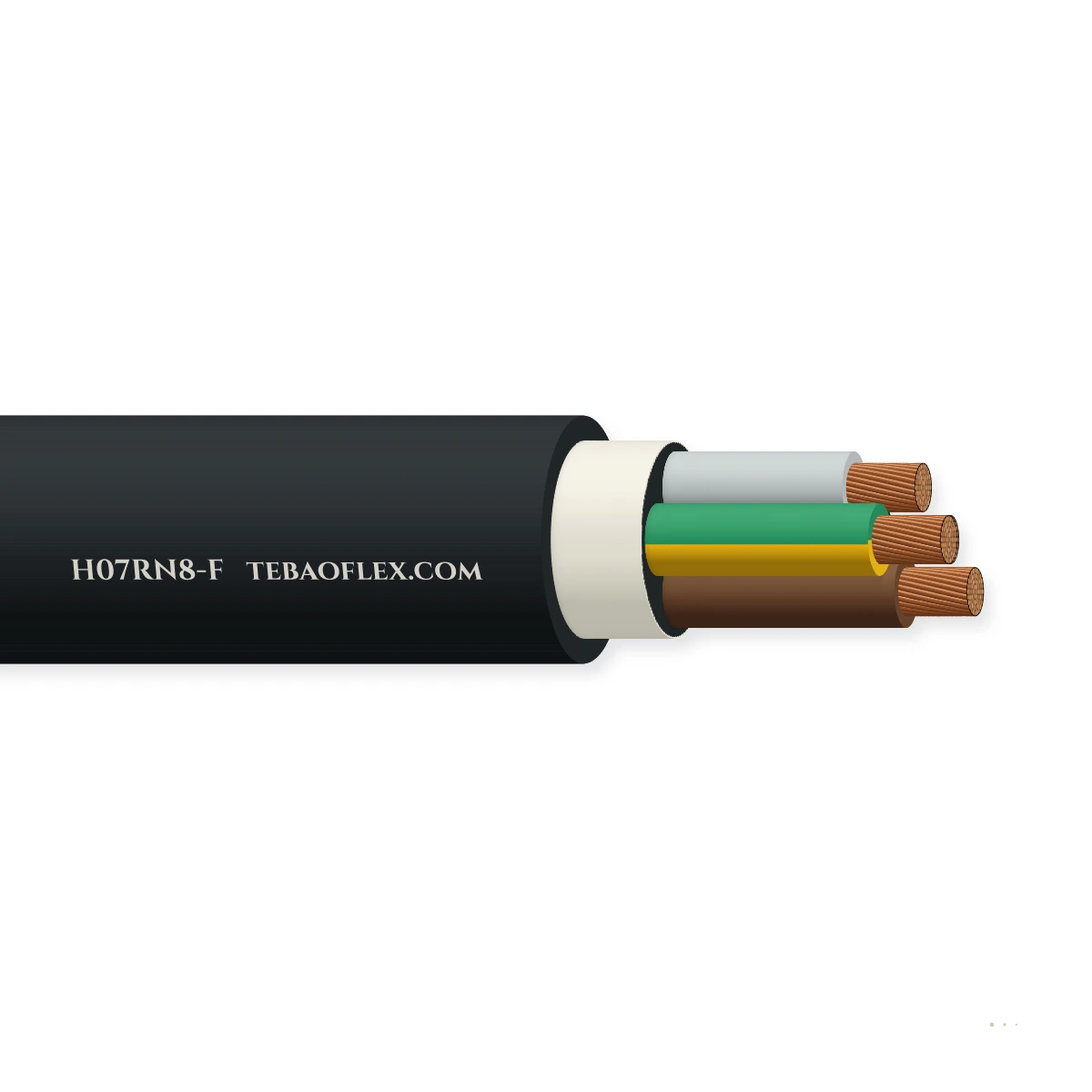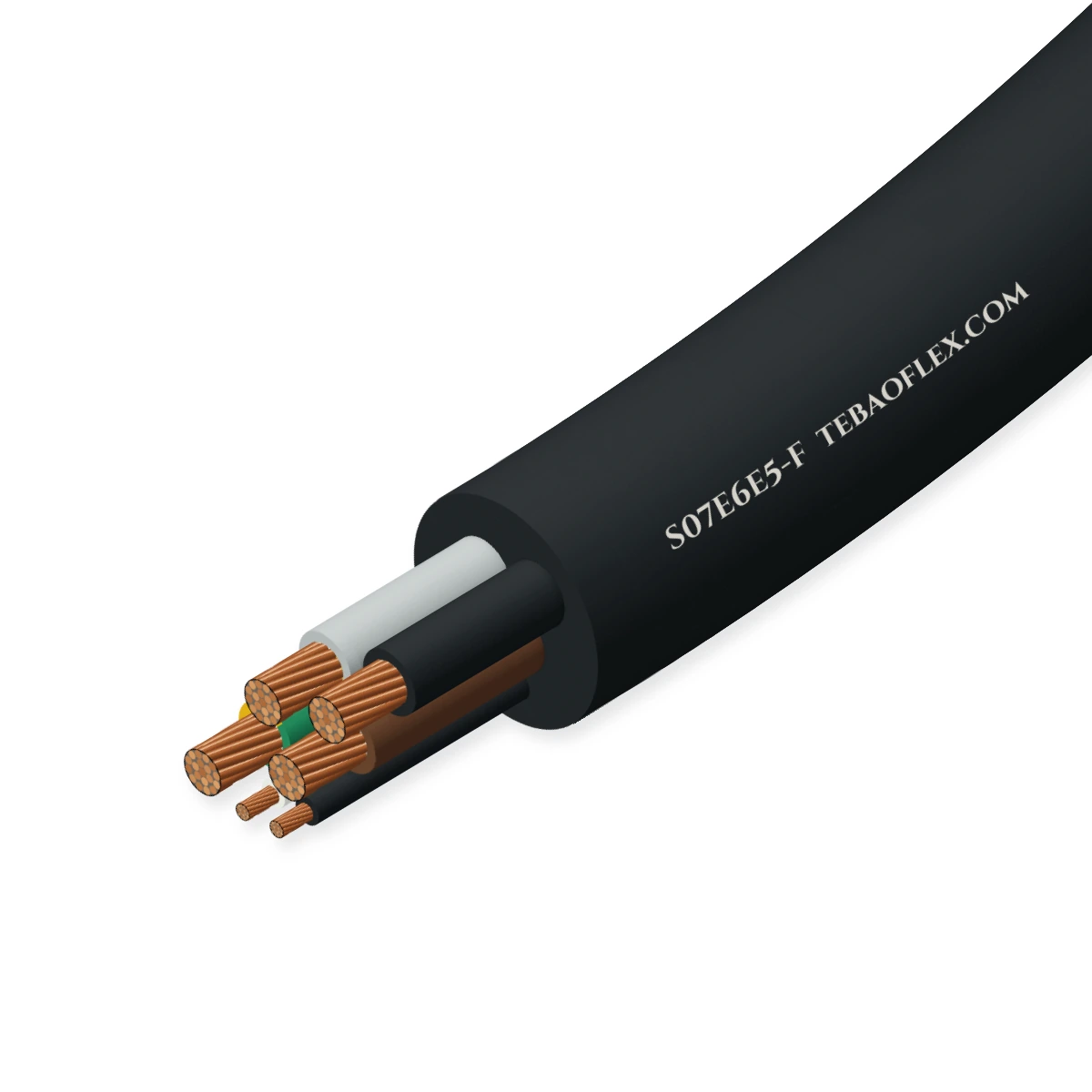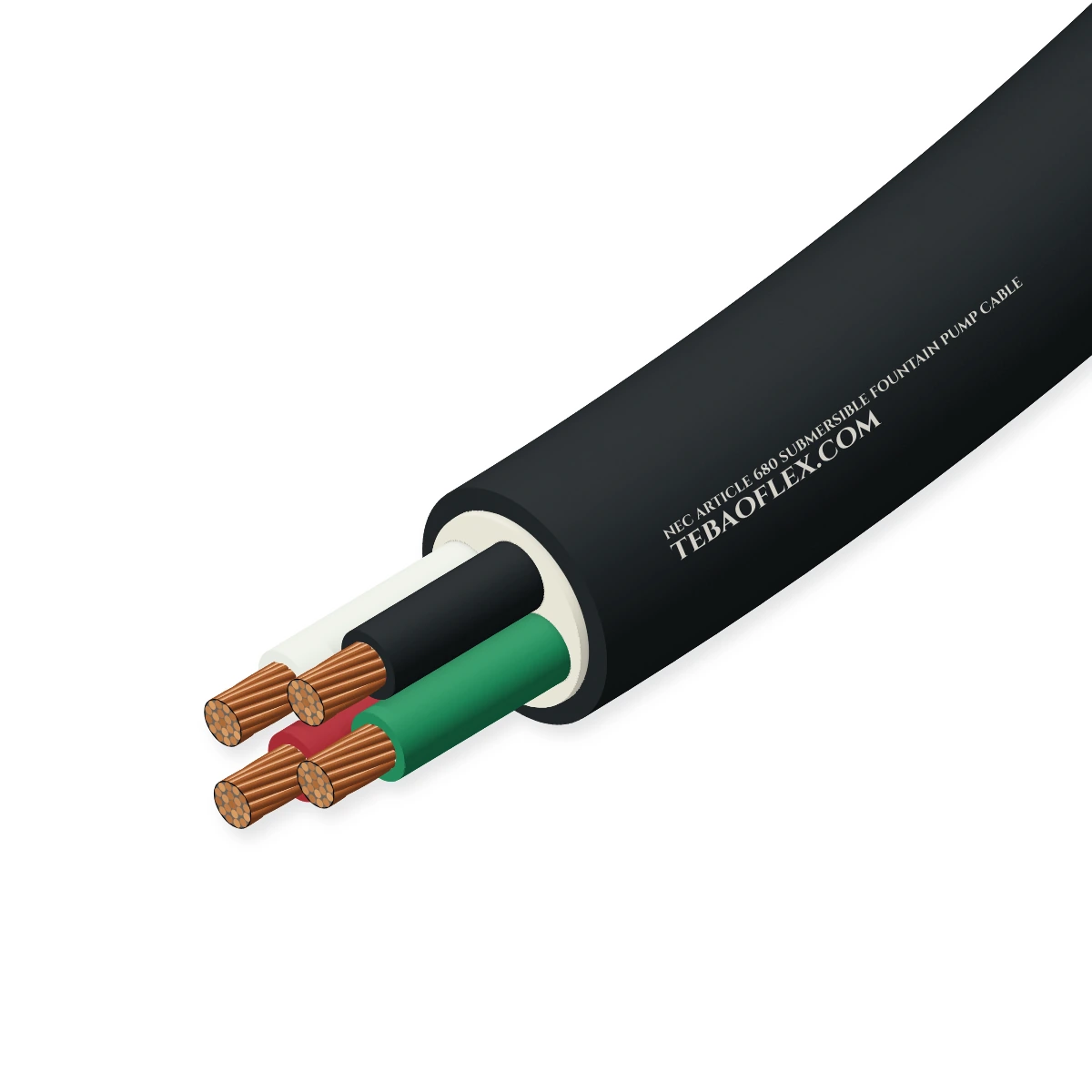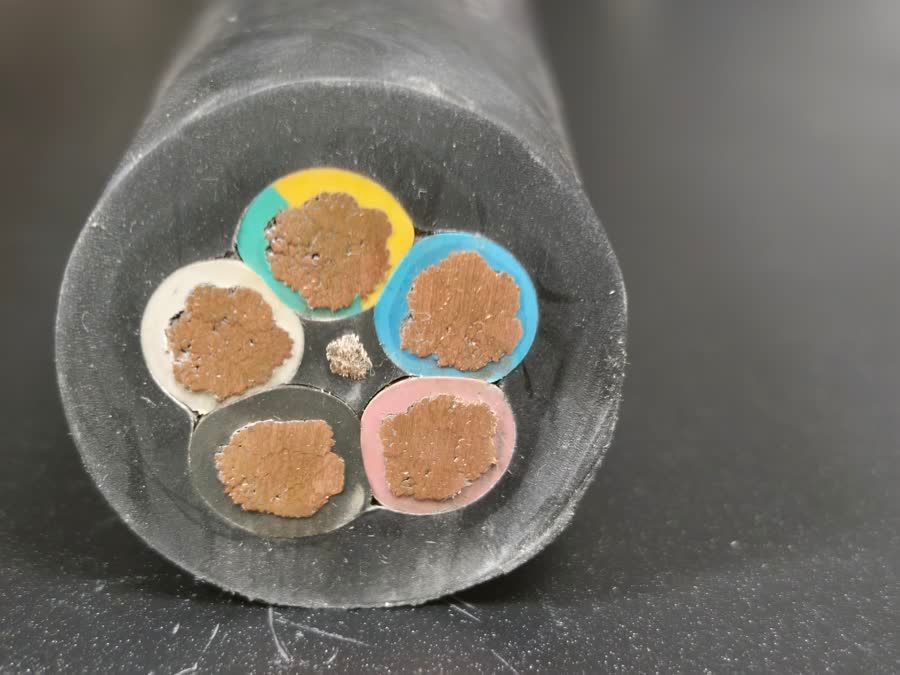
A fountain pump cable can face water, mechanical movement and cleaning chemicals during the same service life. Water immersion alone does not establish resistance to a descaler. Select the finished cable and its entry seal against the actual cleaning cycle and obtain the supplier’s written limits.
Start with the cleaning cycle
Record the cleaner’s ingredients, concentration, temperature, exposure time and frequency. Include normal water treatment, flushing, outdoor exposure and possible abrasion. A safety data sheet and the maintenance procedure give the supplier a clearer basis for a compatibility review than pH alone.
Compare sheaths by verified duty
Rubber sheaths are used for flexible pump leads, but resistance varies with the compound and the cleaning solution. Do not assume that every rubber cable will fail in acid, or that a particular compound is suitable without evidence for the intended exposure.
An FEP sheath can be considered for demanding chemical exposure when the supplier confirms the whole cable for the conditions. A general temperature rating is not proof of compatibility with every chemical at that temperature. For S07E6E5-F, confirm the actual insulation and sheath materials on the approved construction drawing before specifying the cable.
EPDM formulations can be compatible with some acids and cleaning agents; compatibility still depends on the exact formulation and exposure. Compare the supplier’s chemical data and, where necessary, request testing of the finished cable and sealing materials.

What AD8 does and does not establish
AD8 describes a permanently submerged environment; it does not establish chemical compatibility or make a cable and its terminations impervious to water. Depth, water temperature and duration must be specified for the particular product. TEBAOFLEX lists its H07RN8-F for fresh-water immersion to 10 m and +40 °C water temperature; verify the applicable version and documentation for the order.
Check the cable entry and bending
Match the finished cable’s outside diameter and tolerance to the gland’s approved sealing range. Check the seal compound against the same cleaning chemicals, temperature and pressure as the cable. Follow the pump and gland manufacturers’ installation instructions, including strain relief and approved termination methods.
For the H07RN8-F version listed by TEBAOFLEX, the stated minimum bend radius is 4 × OD for fixed installation and 6 × OD for flexing, where OD is the finished outside diameter. Other constructions can have different limits; obtain the values for the supplied cable. Do not suspend the pump by its electrical cable.
Size conductors for the pump
JIS metric sizes, IEC metric sizes and AWG designations are not interchangeable labels. Replacing a nominal 38 mm² conductor with 35 mm² reduces the nominal area by about 7.9% relative to 38 mm². Check load, voltage drop, installation conditions and the pump manufacturer’s requirements before accepting any substitution.
Confirm the conductor construction, lug, crimp tooling and pump terminal together. Gland fit is a separate check based on the finished cable diameter, not conductor area alone.
Electrical protection around water
Have a qualified designer or installer verify protective earthing, bonding, ground-fault protection and equipment approvals under the rules adopted at the site. For US installations, review the applicable edition of NEC Article 680 and its exceptions. Isolate the equipment before cleaning or maintenance, following the site’s safe-work procedure.
What to include in an enquiry
Send the chemical names and concentrations, cleaning cycle, water temperature and depth, cable length, supply voltage, conductor and monitoring-core schedule, motion duty, gland diameter range and required local approvals. Ask for the construction drawing, chemical suitability statement and relevant test records for the offered cable and entry components.
Frequently asked questions
Can H07RN8-F be used in an acid-cleaned fountain?
Only after the cable supplier and the pump or gland manufacturer confirm compatibility with the actual cleaner and exposure. An immersion rating alone does not answer that question.
Does an FEP sheath resist every cleaning chemical?
No material should be treated as universally compatible. Obtain data for the specified chemical, concentration, temperature and exposure time, and check the whole cable and seals.
References and related products
H07RN8-F product specifications
Submersible pump cable application guide
Trelleborg chemical compatibility guide
Chemours FEP material properties
NFPA fountain electrical provisions: standards development record