

Illustrative rail passenger-vehicle interior, not a customer project photograph. Image: rawpixel via Openverse, CC0 1.0; resized and cropped.
Key Takeaways
- Three cable families, one guide, one fire framework. EN 50264 (power and control), EN 50306 (thin wall) and EN 50382 (high temperature) are the cable standards. EN 50355 is the guide to using them, and EN 45545-2 sets the fire behaviour of materials.
- Fixed wiring is the design case. EN 50264-3-1 and EN 50306-4 describe their cable as "fixed wiring, or wiring where limited flexing in operation is encountered". EN 50355 excludes "cables subject to continual flexing".
- A rule of thumb from the parts we checked. 300/500 V multicore and multipair thin-wall cable is the EN 50306-4 range, single-core 0.6/1 to 3.6/6 kV is EN 50264-3-1, and a 120 °C or 150 °C rating is EN 50382. Confirm the part.
- Write the part number into the order. "EN 50264" names a series, not a single cable.
Sources reviewed 12–13 October 2026. Check the contract-specified edition before ordering.
Railway rolling stock cable standards are the EN 50264, EN 50306 and EN 50382 cable families, the EN 50355 guide to using them, the EN 50343 installation rules and the EN 45545-2 fire requirements. This overview shows how they fit together for rail and metro vehicles, where they stop, and what an order should say.
Sources and Limits
We worked from registry listings and, for EN 45545-2 cable limits, one laboratory summary. We did not read the standard texts, so take exact values for a contract from the current edition, available from your national standards body; the CEN-CENELEC site has a standards search.
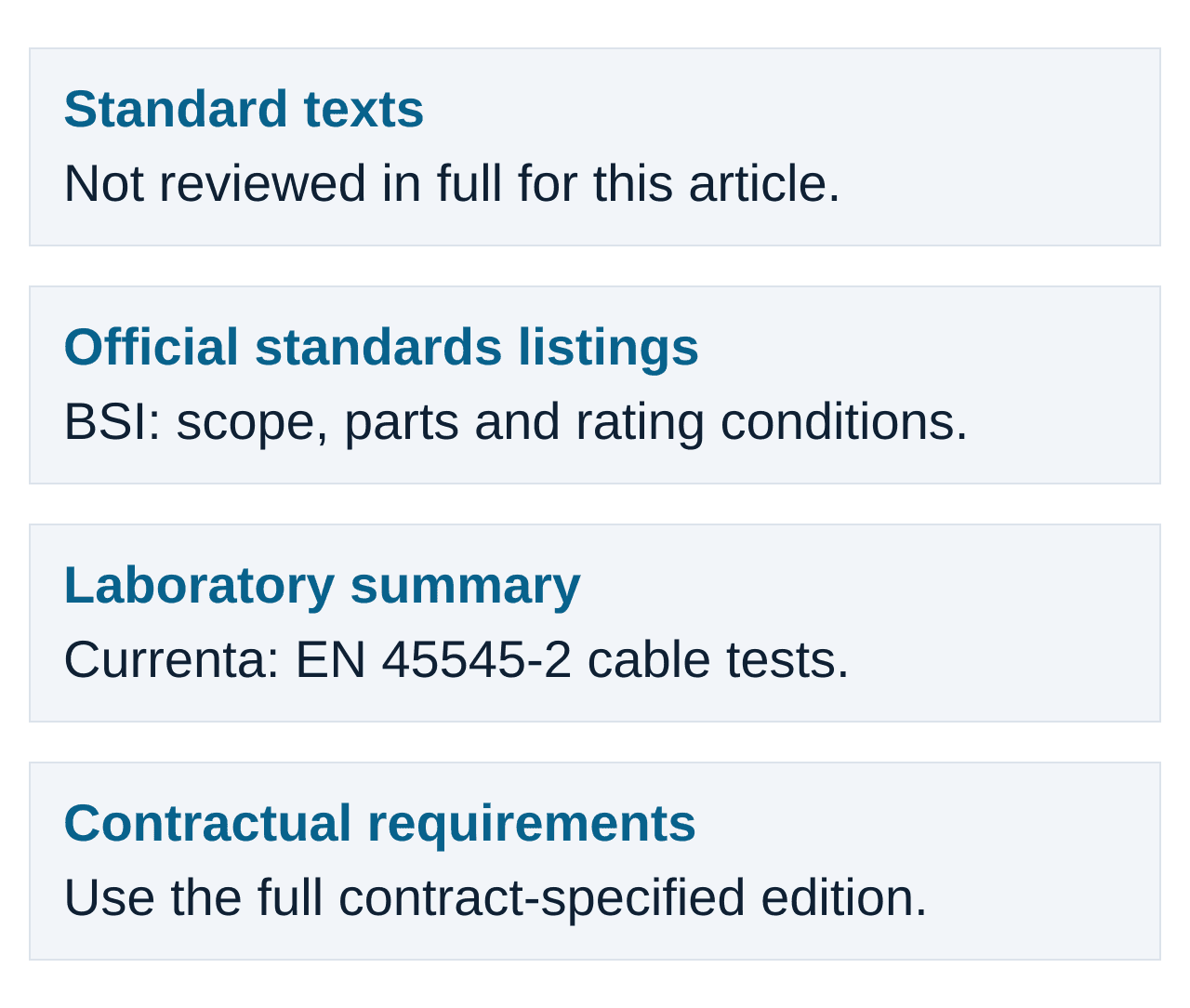
Figure 1. Evidence used in this overview. Official listings establish scope and stated ratings; the laboratory summary describes fire tests. Neither replaces the full standard.
The official BSI listing for EN 50264-3-1 identifies reduced-dimension single-core constructions and their voltage and size ranges. Similar ranges in other parts do not make the parts interchangeable: specify the construction and dimensional requirements of the selected part. BSI lists BS EN 45545-2:2020+A1:2023 as current. This overview uses BS EN 50382-1:2008+A1:2013, including its conditional limits for tinned conductors. Confirm the edition required by the vehicle contract.
Standards at a Glance
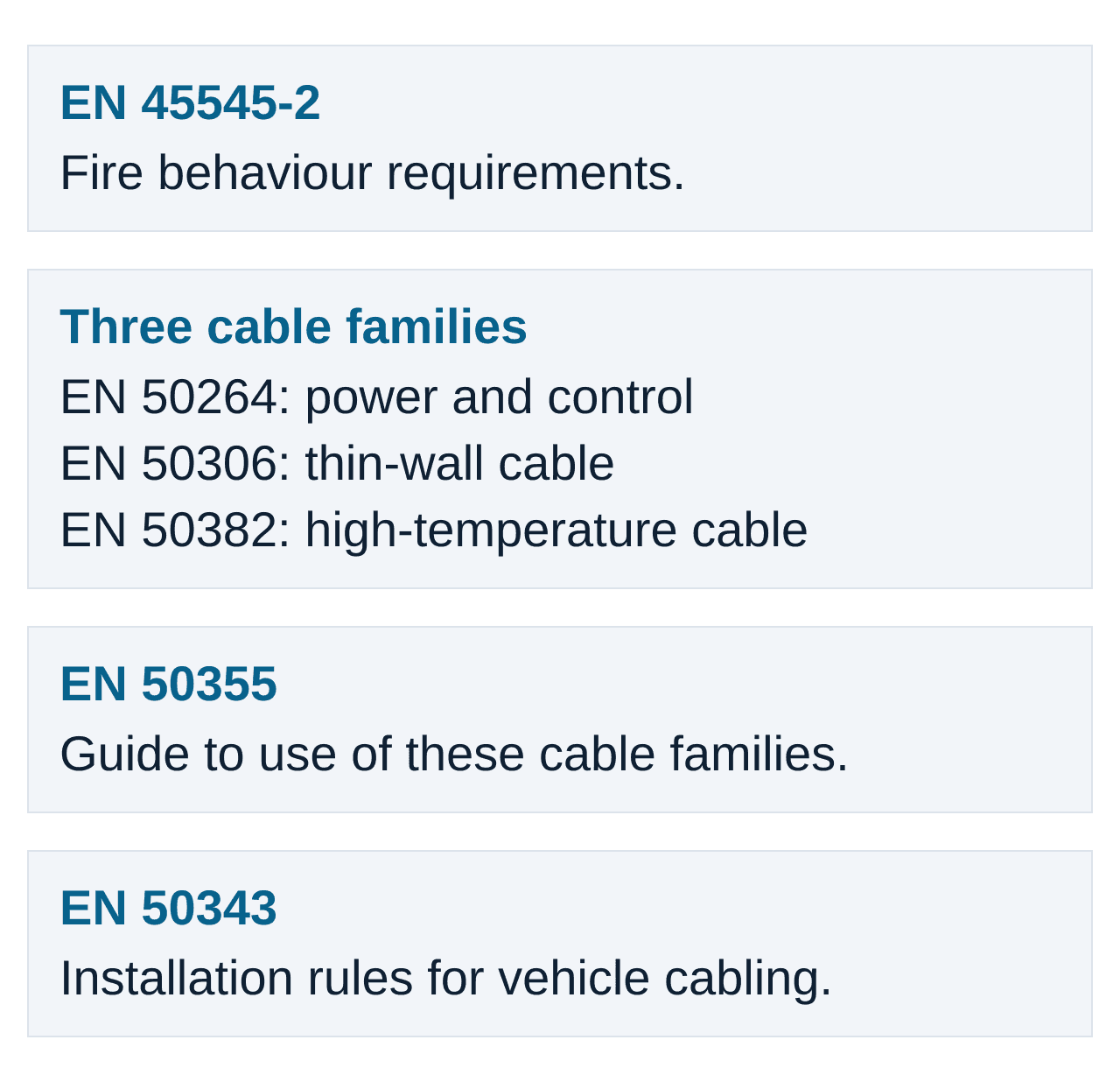
Figure 2. Our schematic of how the standards relate. The listings cited here name EN 50264, EN 50306 and EN 50382 as the cable standards that EN 50355 and EN 50343 refer to; EN 50306-1 writes its fire clauses to EN 45545 Hazard Level 3.
- Standard: EN 50264-1; What it covers: General requirements for every EN 50264 part, fire safety in particular
- Standard: EN 50264-3-1; What it covers: Single-core cable, crosslinked elastomeric insulation, reduced dimensions
- Standard: EN 50306-1:2020; What it covers: General requirements for the thin-wall parts 2, 3 and 4
- Standard: EN 50306-4:2020; What it covers: Multicore and multipair sheathed cable, screened or not
- Standard: EN 50382-1:2008+A1:2013; What it covers: General requirements for high-temperature cable
- Standard: EN 50355:2013; What it covers: Guide to use of cable under EN 50264, EN 50306 and EN 50382
- Standard: EN 50343:2024; What it covers: Rules for installation of cabling on railway vehicles
The Three Cable Families
EN 50264: power and control cable
EN 50264-1 "specifies the general requirements applicable to the cables given in all other parts of EN 50264", fire safety in particular. It rates the cables for ageing equivalent to continuous life at a 90 °C conductor, with a short-circuit limit of 200 °C for 5 s. In the single-core part, EN 50264-3-1, the ratings are 0.6/1, 1.8/3 and 3.6/6 kV in U0/U notation (conductor to earth / between conductors). Conductors are class 5 tinned copper to EN 60228, the flexible IEC 60228 class made of many thin wires (Nexans summary).
EN 50306: thin-wall cable
EN 50306 is the thin-wall family. EN 50306-1:2020 contains the general requirements, including fire performance intended to meet EN 45545 Hazard Level 3, ageing-equivalent temperatures of 90 °C or 105 °C and a short-circuit limit of 160 °C for 5 s. EN 50306-4:2020 specifically describes ageing equivalent to 90 °C. It covers 300/500 V multicore cable of 0.5 to 2.5 mm², with 2 to 48 cores unscreened or 2 to 8 cores screened. Multipair constructions cover 2 to 7 pairs with conductor sizes of 0.5 to 1.5 mm². Installation Class E is for exposed and Class P for protected situations.
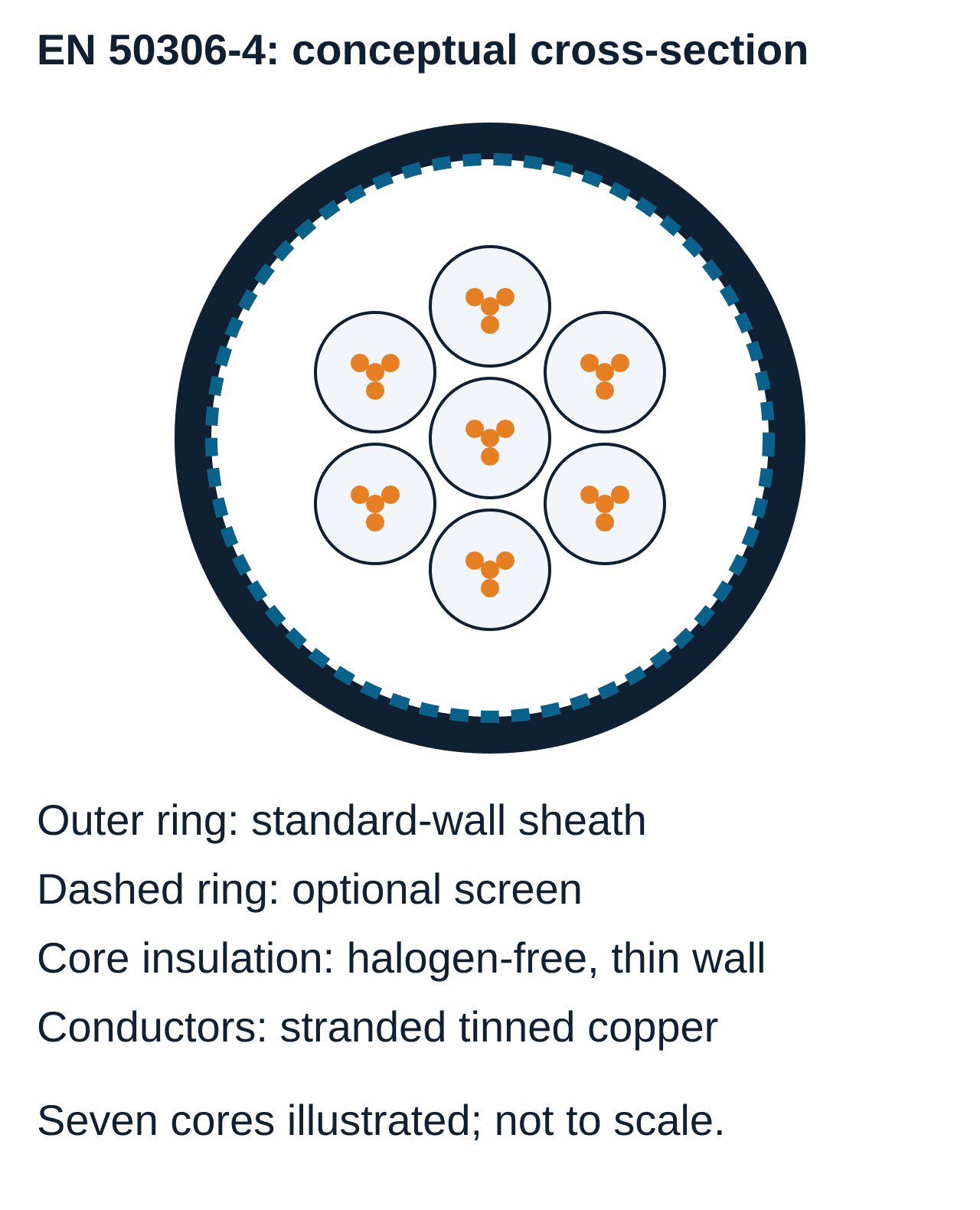
Figure 3. Schematic cross-section of the cable described in EN 50306-4:2020, not to scale. Seven cores are drawn for clarity; the listing covers 2 to 48 cores (unscreened) and 2 to 8 cores (screened).
EN 50382: high-temperature cable
EN 50382-1:2008+A1:2013 gives ageing-equivalent temperatures of 120 °C or 150 °C. With tinned conductors, the operating limit is normally 120 °C; purchaser and manufacturer may agree to increase it to 150 °C. The sheath can also limit operation to 120 °C. The silicone-rubber short-circuit limit is 350 °C for 5 s, but tinned conductors are limited to 250 °C. An unqualified 150 °C / 350 °C claim therefore does not apply to every cable. Specify the conductor, sheath and agreed operating conditions, together with the applicable Part 2 construction. See our guide to high-temperature wire types.
- Point: Rated voltage; EN 50264 (parts 1 and 3-1): 0.6/1, 1.8/3, 3.6/6 kV; EN 50306 (parts 1 and 4): 300/500 V; EN 50382-1:2008+A1:2013: not stated in the listing
- Point: Conductor size; EN 50264 (parts 1 and 3-1): 1 to 400 mm² (from 1.5 mm² at 1.8/3 kV, 2.5 mm² at 3.6/6 kV); EN 50306 (parts 1 and 4): 0.5 to 2.5 mm² (pairs to 1.5 mm²); EN 50382-1:2008+A1:2013: not stated in the listing
- Point: Ageing equivalent; EN 50264 (parts 1 and 3-1): 90 °C; EN 50306 (parts 1 and 4): Part 1: 90 °C or 105 °C; Part 4: 90 °C; EN 50382-1:2008+A1:2013: 120 °C or 150 °C; tinned normally 120 °C, up to 150 °C by purchaser/manufacturer agreement; sheath may limit to 120 °C
- Point: Short-circuit limit; EN 50264 (parts 1 and 3-1): 200 °C for 5 s; EN 50306 (parts 1 and 4): 160 °C for 5 s; EN 50382-1:2008+A1:2013: Silicone rubber: 350 °C for 5 s; tinned conductors limited to 250 °C
- Point: Flexing wording; EN 50264 (parts 1 and 3-1): Fixed or limited flexing; EN 50306 (parts 1 and 4): Fixed or limited flexing (part 4); EN 50382-1:2008+A1:2013: not stated in the listing
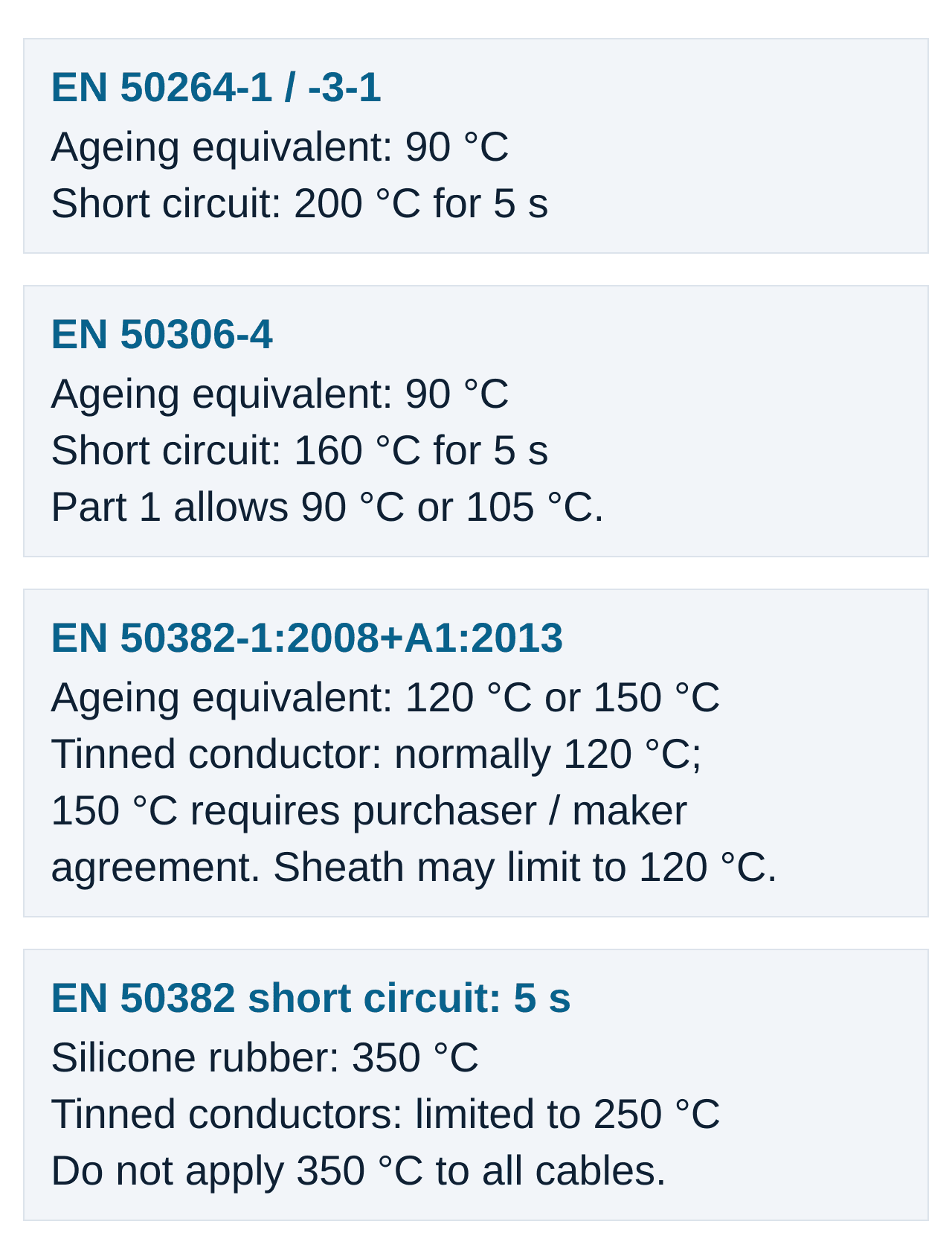
Figure 4. Thermal ratings with their conditions, based on the official BSI listings. EN 50306-4 uses 90 °C; the general part also permits 105 °C. EN 50382 values depend on conductor, sheath and purchaser/manufacturer agreement. Short-circuit limits are for 5 s.
How EN 45545-2 Sets the Fire Floor
The BSI listing for EN 45545-2 describes reaction-to-fire requirements for materials and products used on railway vehicles. Hazard levels derive from operation and design categories in EN 45545-1. The testing laboratory Currenta publishes a cable requirement-set summary: R15 for interior and R16 for exterior use. ITC is the toxicity index calculated per EN 50305 section 9.2.
The table is taken from that summary, not from the standard. It covers the 2013+A1:2015 and 2020+A1:2023 editions and gives one set of values for both, although later notes cite edition-specific clauses. Confirm each value in the edition your vehicle contract cites.
- Test: Single-cable flame: EN 60332-1-2 (all diameters); R15 (interior): Burned length ≤ 540 mm; undamaged length > 50 mm; R16 (exterior): Burned length ≤ 540 mm; undamaged length > 50 mm
- Test: EN 61034-2 smoke transmission, HL1 / HL2 / HL3; R15 (interior): ≥ 25 / ≥ 50 / ≥ 70 %; R16 (exterior): – / ≥ 25 / ≥ 50 %
- Test: EN 50305 section 9.2 toxicity (ITC at 800 °C), HL1 / HL2 / HL3; R15 (interior): ≤ 10 / ≤ 10 / ≤ 6; R16 (exterior): ≤ 10 / ≤ 10 / ≤ 6
- Test: Bunched flame, Ø ≥ 12 mm: EN 60332-3-24; R15 (interior): Destroyed length ≤ 2.5 m; R16 (exterior): Destroyed length ≤ 2.5 m
- Test: Bunched flame, 6 mm < Ø < 12 mm: EN 50305 section 9.1.1; 0.5 l/m non-metallic material; R15 (interior): Destroyed length ≤ 2.5 m; R16 (exterior): Destroyed length ≤ 2.5 m
- Test: Bunched flame, Ø ≤ 6 mm: EN 50305 section 9.1.2; 0.5 l/m non-metallic material; R15 (interior): Destroyed length ≤ 1.5 m; R16 (exterior): Destroyed length ≤ 1.5 m
For EN 60332-1-2, the Currenta summary measures the relevant damage boundaries from the lower edge of the top support. Use the method’s measurement definitions; these limits are not a substitute for the complete test procedure. The diameter ranges above do not overlap: exactly 12 mm belongs to EN 60332-3-24, and exactly 6 mm to EN 50305 section 9.1.2.
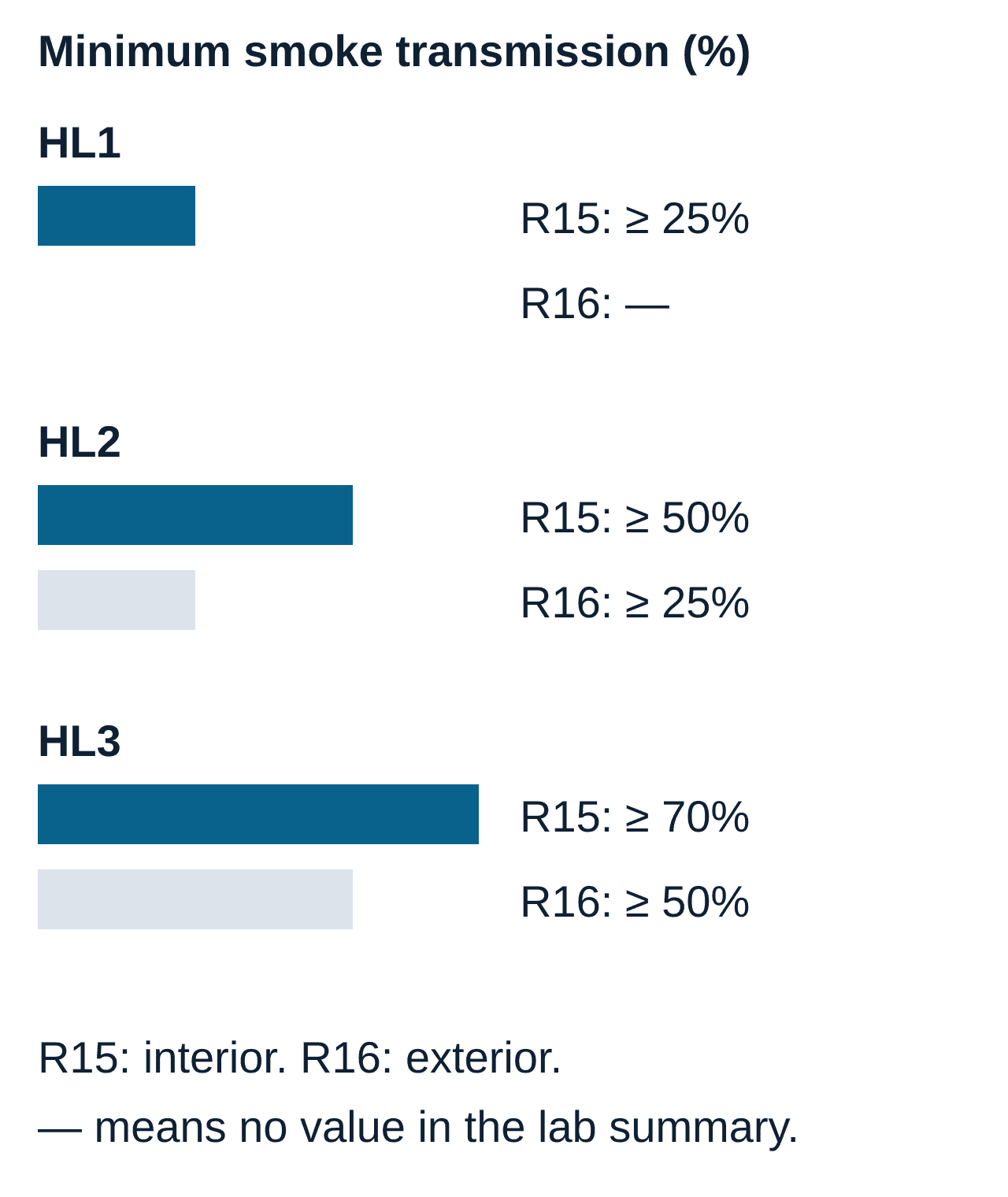
Figure 5. Minimum smoke transmission (EN 61034-2) for cable at each hazard level; higher means less smoke; a dash means the summary shows no value. Source: Currenta laboratory summary (retrieved 12 October 2026), not the standard text.
In this summary the exterior set is less strict on smoke at the same hazard level, and the flame test depends on cable diameter, so a datasheet should say which method applied to which diameter. For the methods behind smoke and halogen limits, see our article on LSZH (low smoke zero halogen) cable standards.
Where the Standards Stop
EN 50355:2013 says its cables are for fixed installation where there is no free movement of cable, and only for wiring railway rolling stock. It is "not applicable to" intercarriage jumpers, cables subject to continual flexing, pantograph cables, coaxial, data and fibre optic cables, wire wrap, cables rated above 3.6/6 kV, cables requiring circuit integrity, or other applications. EN 50343:2024 sets installation rules and, for cable making, refers to the EN 50264, EN 50306 and EN 50382 series and EN 50355; among other exclusions, it leaves out special-purpose and mining vehicles.
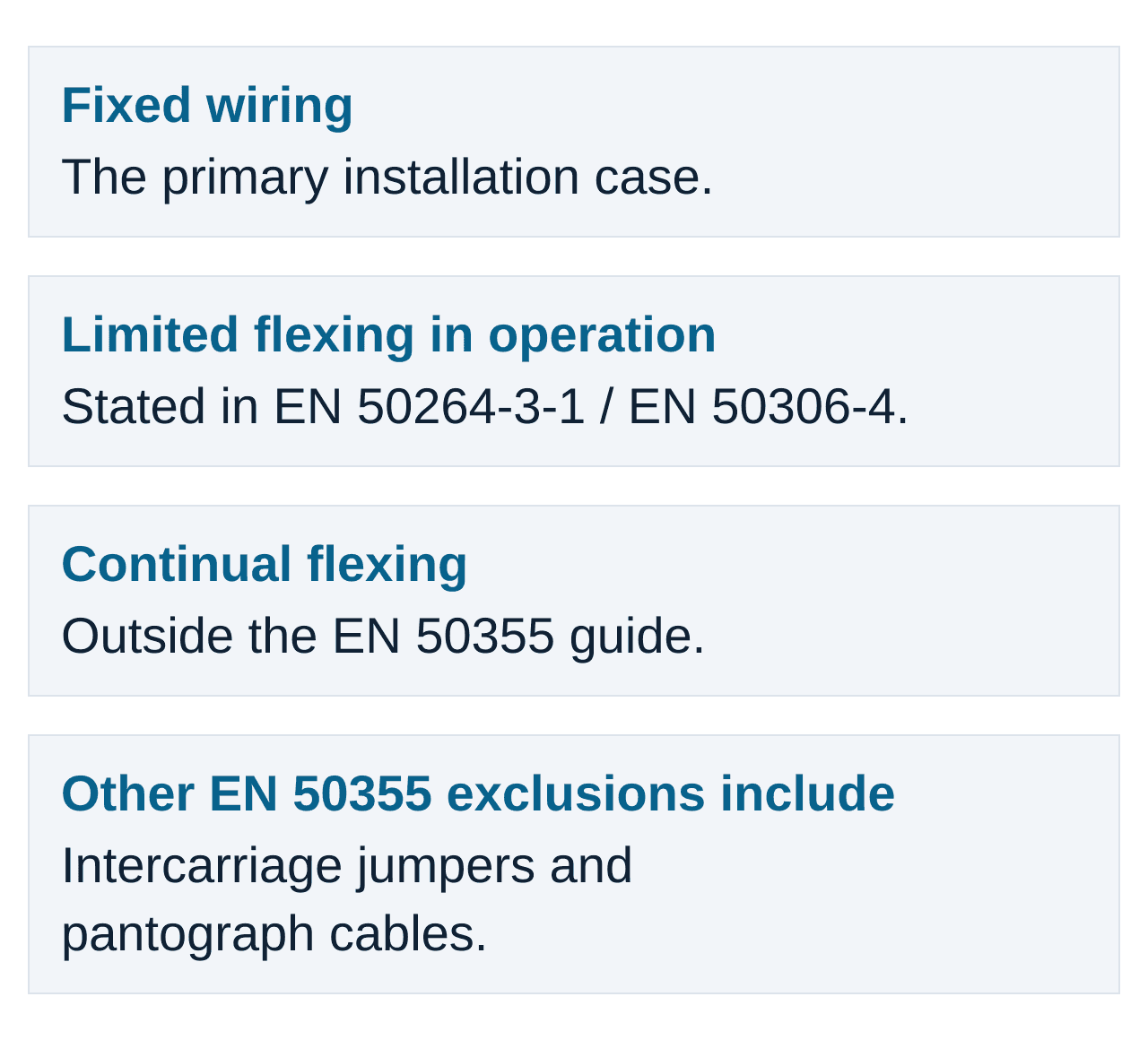
Figure 6. Scope boundary. "Limited flexing" wording comes from the EN 50264-3-1 and EN 50306-4 listings; the exclusions from the EN 50355:2013 listing.
If your cable moves continually, for example a reeled or festooned feed on a depot crane or a transfer car, these standards are the wrong basis for flexing life. You need a construction and test regime for moving cable; see our guides to reeling cable selection and festoon cable.
What to Write into the Order
- Name the part, for example "EN 50264-3-1" or "EN 50306-4", not just the series.
- State the rated voltage (U0/U), conductor size and core count.
- State the hazard level (set from the vehicle's operation and design categories in EN 45545-1), the requirement set (R15 interior or R16 exterior) and the EN 45545-2 edition your contract cites.
- State the installation class (E or P) where the part uses one.
- State the conductor temperature rating and whether the conductor is tinned.
- State whether the cable is fixed or flexes in service, and how.
- Ask for fire test reports on the delivered construction.
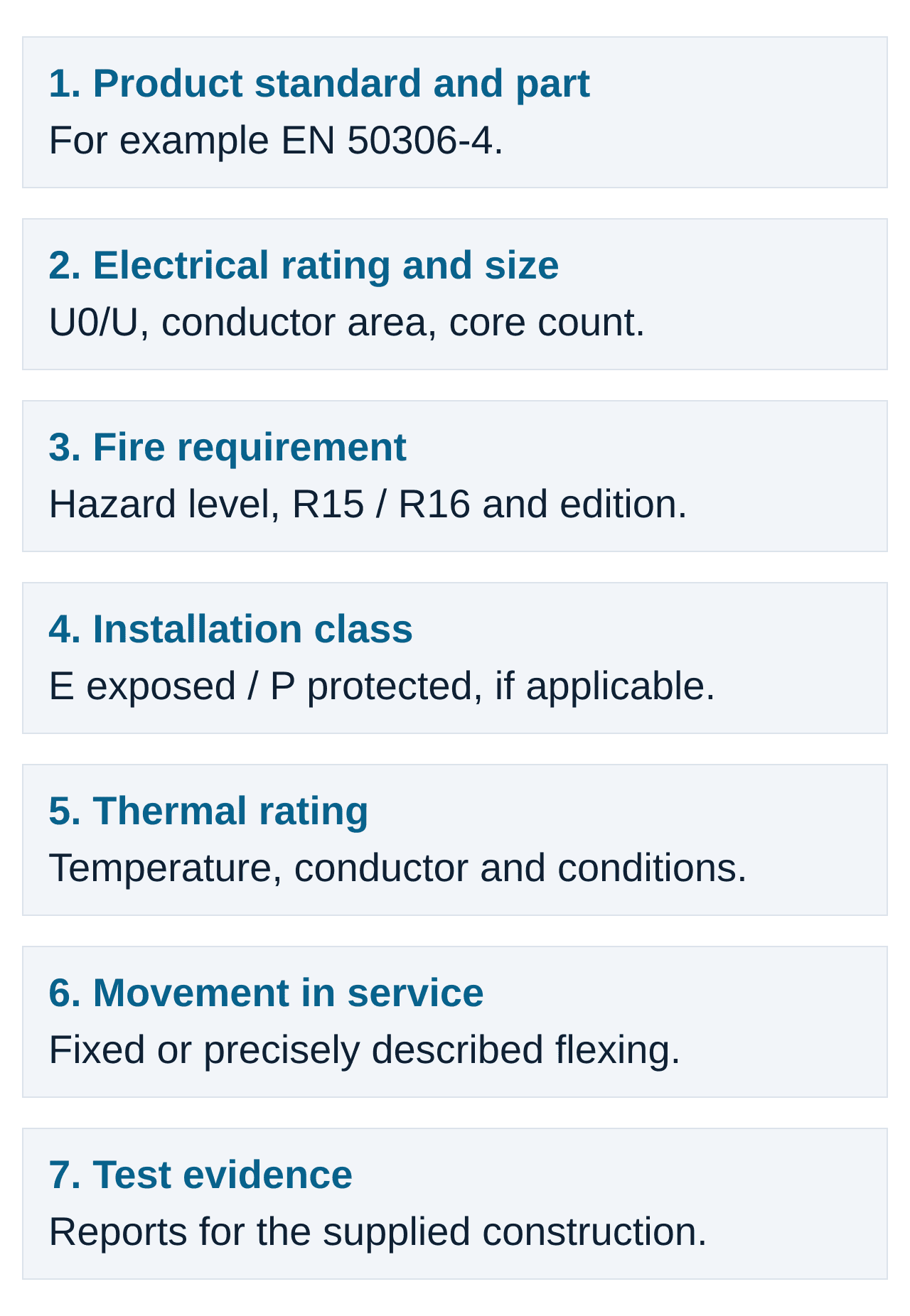
Figure 7. The seven items every rolling stock cable order should state.
Illustrative example. Fixed interior control wiring on a passenger vehicle, 300/500 V, 12 cores of 1.5 mm², unscreened, protected routing, interior fire requirements at HL3. Item 1 is EN 50306-4, whose listing covers unscreened cable of 0.5 to 2.5 mm² with 2 to 48 cores. The order line reads: "Cable to EN 50306-4, 300/500 V, unscreened sheathed, 12 × 1.5 mm², Class P, EN 45545-2 (edition per vehicle contract) R15 HL3, with fire test reports for the supplied construction." This illustrates the method for a generic vehicle; it is not a project record.
Frequently Asked Questions
What is the difference between EN 50264 and EN 50306?
EN 50306 is the thin-wall family (300/500 V multicore in part 4). EN 50264 is titled "power and control cables having special fire performance", and its single-core part lists 0.6/1 to 3.6/6 kV.
Is EN 50355 a product standard?
No. It is a guide to use, applied together with the relevant product and installation standards.
Can I use these cables on a moving or reeled application?
The product parts we checked (EN 50264-3-1 and EN 50306-4) describe fixed wiring or limited flexing, and EN 50355 excludes continual flexing. Do not use them as the basis for a flexing-life claim; ask for evidence of flexing tests on a moving-cable construction.
What do R15 and R16 mean?
Per the Currenta summary, R15 is the requirement set for interior cable and R16 for exterior cable under EN 45545-2. Flame and toxicity limits are the same for both; smoke transmission limits differ, and the summary shows no R16 value at HL1.
Is EN 45545-2:2020 still the current edition?
BSI lists the consolidated BS EN 45545-2:2020+A1:2023 as current. Do not specify the unamended 2020 edition as the latest consolidated edition; check which edition your vehicle contract requires.
Discuss Your Rail Cable Project
If you are sorting out which standard family fits a vehicle or rail-side application, send us the voltage, conductor size, hazard level and movement conditions. We will say plainly which parts of your specification we can support with test evidence and which we cannot. WhatsApp +86 185 9591 3361 or info@tebaoflex.com. See our certifications and contact pages.
About the Author
TEBAOFLEX Jyen is Chief Operating Officer at Jiangsu Tebaoflex Special Cable Co., Ltd (about the company), a special cable supplier in Taicang, Suzhou, China, responsible for the company's online business.