

Hero image: "Bullwinkle Offshore Platform" by Jay Phagan, CC BY 2.0, via Openverse. The photo page describes it as the platform being towed out to sea past Port Aransas, Texas. It is an illustration, not a cable photo.
Key Takeaways
- General requirements, product parts, selection and installation. IEC 60092-350 sets general construction and tests. Parts -353, -354 and -376 cover power at 0.6/1 and 1.8/3 kV, radial-field power from 3.6/6 to 18/30 kV, and 150/250 V control. IEC 60092-352 covers shipboard selection and installation. Offshore units use IEC 61892-4 for cable selection together with IEC 61892-6 for installation.
- The editions have just moved. Per the listings, -352 was replaced on 23 October 2025, -376 in April 2025 and -353 in June 2024. Check which edition your specification cites.
- Fixed systems are the scope, not repeated-flexing service. Ship or unit vibration and movement can be within a fixed system. These standards alone do not establish suitability for frequent or continual cable flexing.
- Write the part and the edition into the order.
Last checked against the standards listings: 13 October 2026.
Marine and offshore cable standards are mostly the IEC 60092 series for ships and IEC 61892-4 for offshore units, with IEEE 45.8 as a shipboard recommended practice. NEK TS 606, an offshore cable specification, is covered in our NEK TS 606 vs IEEE 1580 comparison. This overview shows who covers what for marine and offshore cable, which editions are current, and what an order should say.
Sources and Limits
This overview uses public scope and edition listings from the IEC, IEEE and national standards bodies, with secondary catalogue summaries as supporting material. We did not review the full standard texts; exact contractual requirements must come from the applicable edition. For IEC 60092-353, the issuing IEC record identifies the 2024 publication as edition 5, replacing edition 4 published in 2016. This article follows that record rather than the inconsistent edition-history description in the EVS catalogue.
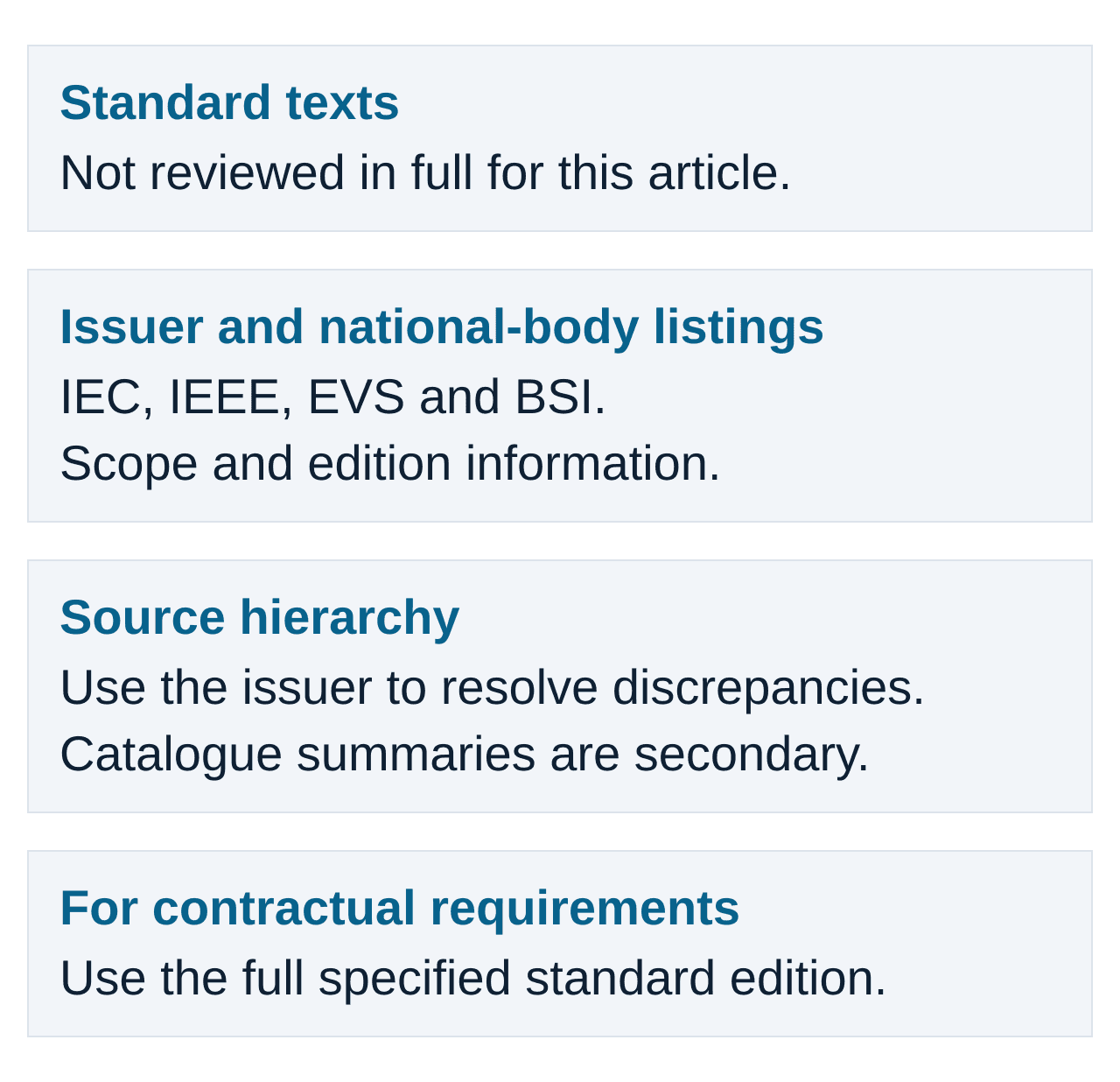
Figure 1. Evidence used for this overview. Public scope and edition summaries do not replace the full contract-specified standard.
Who Covers What
IEC 60092-350:2020 gives the general construction requirements and test methods for power, control and instrumentation cables with copper conductors, for fixed systems up to and including 18/30 (36) kV on ships and offshore units. The product parts then add ratings. IEC 60092-354:2020 covers radial field power cables from 3.6/6 (7.2) kV up to 18/30 (36) kV, IEC 60092-353:2024 covers non radial field power cables at 0.6/1 (1.2) and 1.8/3 (3.6) kV, and IEC 60092-376:2025 covers screened and unscreened control and instrumentation cables rated 150/250 V (300 V). All are for fixed installations with extruded solid insulation.
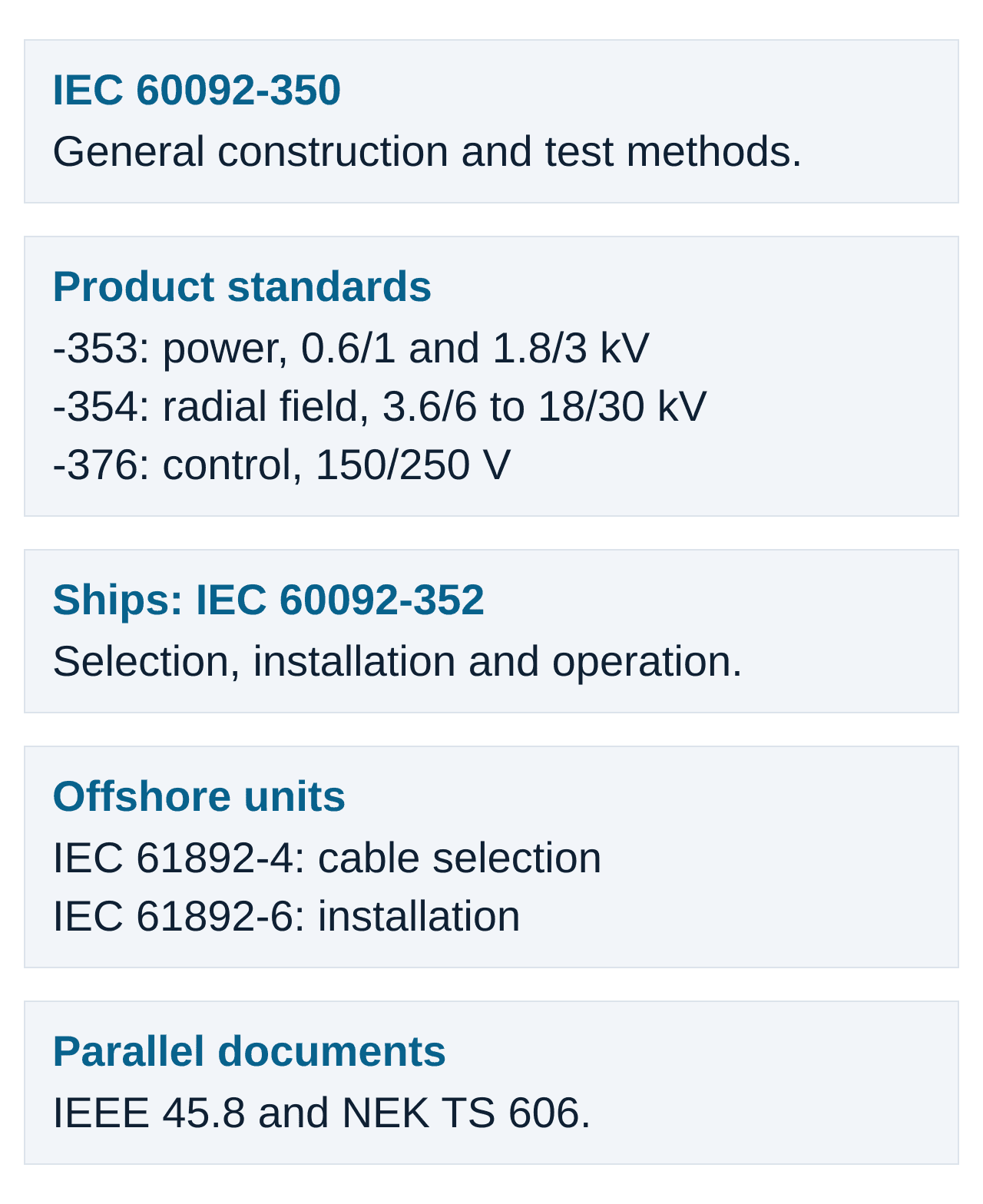
Figure 2. General and product requirements, shipboard selection and installation, and the separate offshore roles of IEC 61892-4 and IEC 61892-6. References to Part 4 in product standards remain relevant.
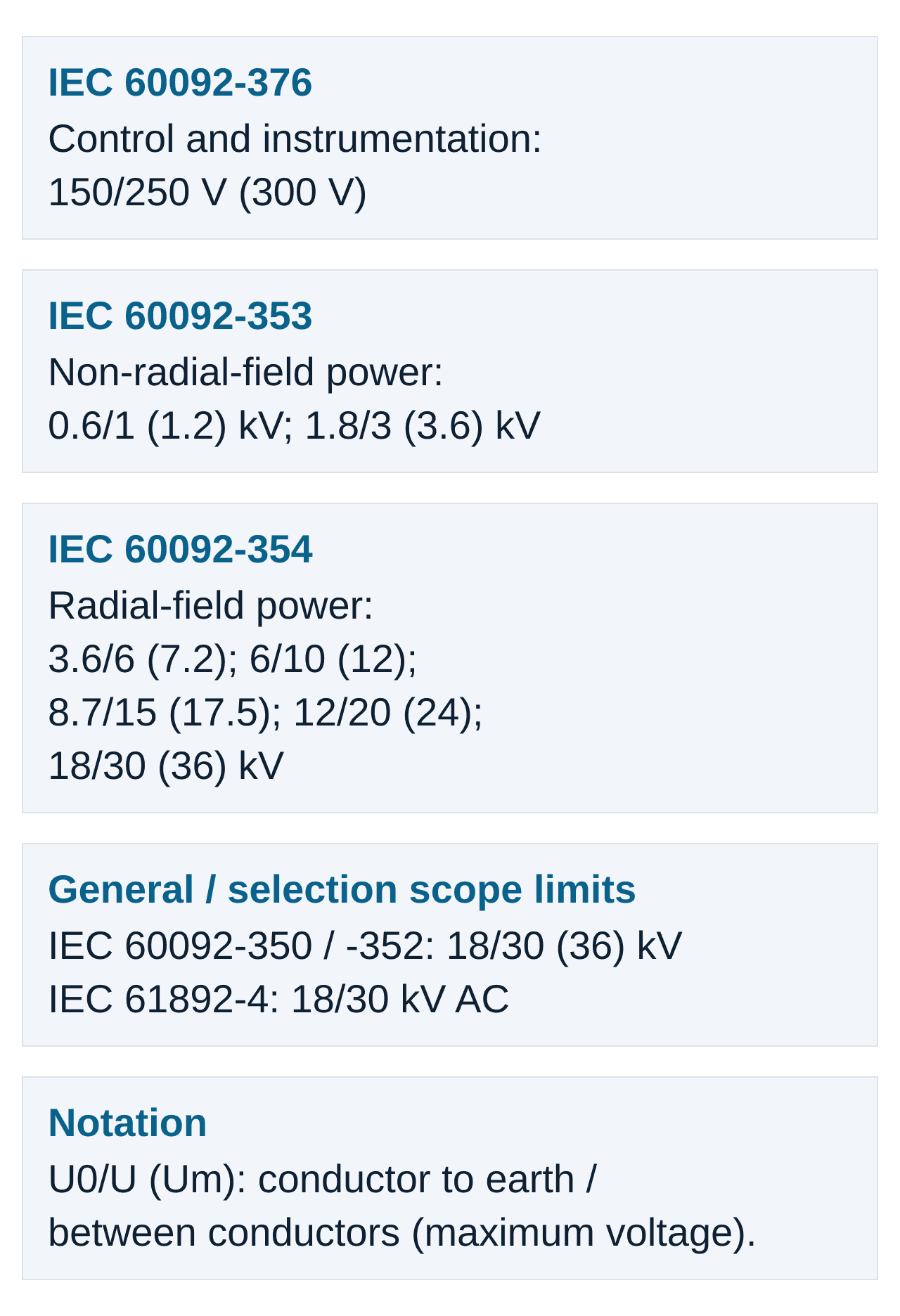
Figure 3. Rated voltage groups named in the IEC scope listings. Values in parentheses are Um. The scope ceilings for general and selection standards do not make every construction suitable for every voltage.
For ships, IEC 60092-352:2025 covers cable selection, installation and operating conditions, up to 18/30 (36) kV. For offshore units, IEC 61892-4:2019 covers cable selection up to 18/30 kV AC; use it together with IEC 61892-6:2019 for installation requirements. The product-standard reference to Part 4 remains relevant, but Part 4 should not be treated as the complete offshore installation specification. IEEE 45.8-2016 is an active recommended practice for selection, application and installation of shipboard cable systems.
- Standard: IEC 60092-350; What it covers: General construction and tests, fixed systems to 18/30 (36) kV; Edition read: Jan 2020, replaces 2014
- Standard: IEC 60092-353; What it covers: Power cable, 0.6/1 and 1.8/3 kV, includes circuit-integrity cable; Edition read: 6 June 2024
- Standard: IEC 60092-354; What it covers: Power cable, 3.6/6 to 18/30 kV, radial field; Edition read: Feb 2020, replaces 2014
- Standard: IEC 60092-376; What it covers: Control and instrumentation, 150/250 V; Edition read: Apr 2025, replaces 2017
- Standard: IEC 60092-352; What it covers: Selection, installation, operating conditions (ships); Edition read: 23 Oct 2025, replaces 2005
- Standard: IEC 61892-4; What it covers: Cable selection, offshore units; Edition read: Apr 2019, replaces 2007
- Standard: IEC 61892-6; What it covers: Installation of electrical equipment, cables and wiring on offshore units; Edition read: Apr 2019, replaces 2013
- Standard: IEEE 45.8; What it covers: Recommended practice, shipboard cable systems; Edition read: 2016, listed current
Editions Moved Recently
Three of these documents changed since mid-2024, so older specifications may cite superseded editions. The EVS listing for IEC 60092-352:2005 shows it withdrawn from 23 October 2025, and the IEC listing for the 2025 edition adds requirements for symmetrical category cables, fibre optic cable installation, and cables between explosive and non-explosive areas. IEC 60092-376:2025 adds a colour code for wires and tapes and core numbering for multicore cables.
IEC 61892-4:2019 moved material elsewhere: construction requirements were referred to SC 18A standards, current-carrying capacity tables to IEC TC 64 standards, and installation requirements to IEC 61892-6.
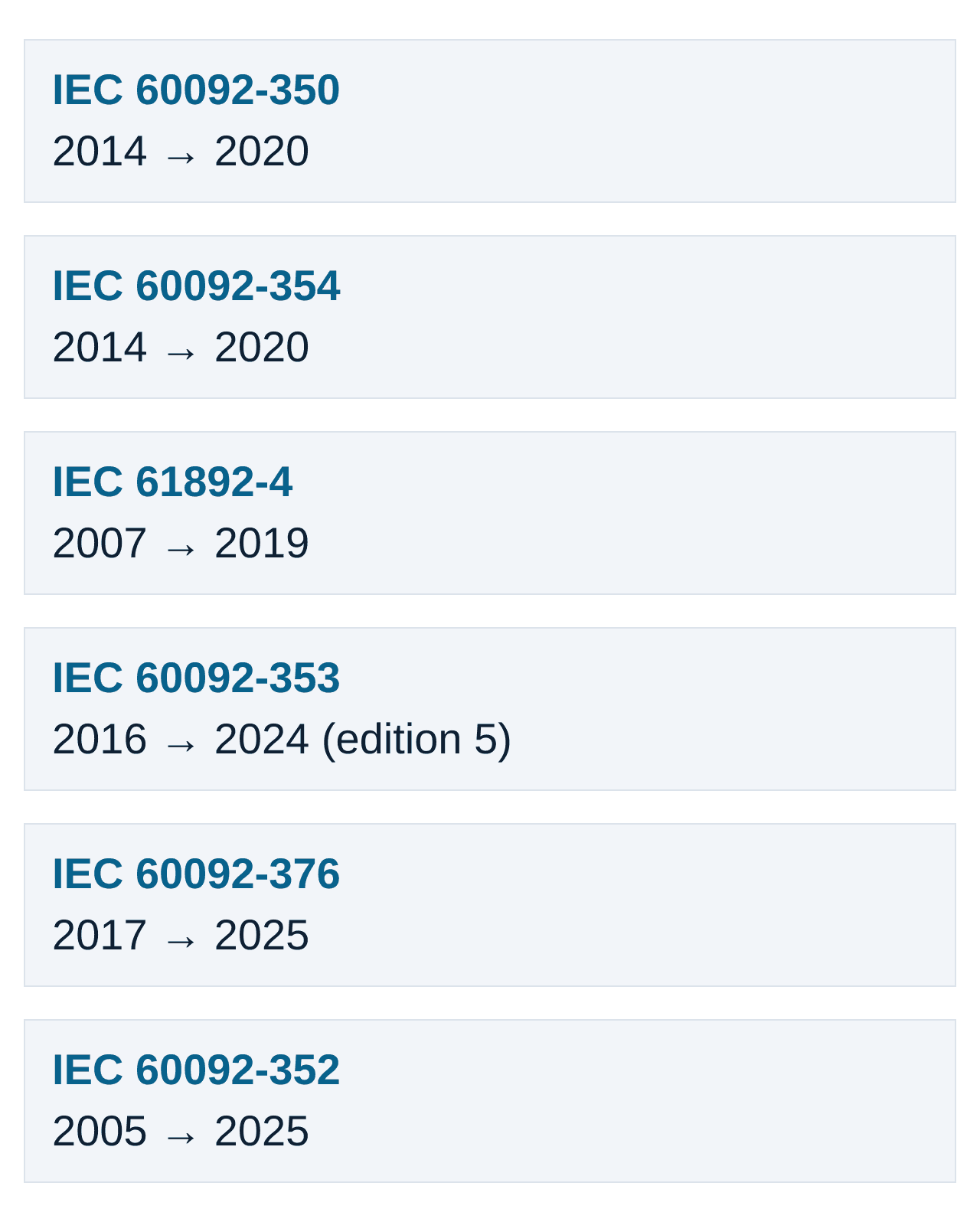
Figure 4. Replaced and cited edition years. IEC 60092-353:2024 is edition 5 and replaces the 2016 edition, according to the issuing IEC record. Verify the project-specified edition before ordering.
Fixed Systems, Flexing and Exclusions
IEC 60092-350:2020 and IEC 60092-352:2025 distinguish fixed-system vibration and vessel movement from frequent cable flexing. IEC 61892-4 similarly excludes cables intended for repeated flexing, including flexible top-drive cables and cables for portable equipment. A cable being flexible enough to install is not evidence of suitability for repeated movement in service.
IEC 60092-350 refers to IEC 60227 and IEC 60245 for examples of frequent- or continual-flexing cable use, but limits those examples to situations without direct exposure to a marine environment, such as portable tools and domestic appliances. Do not use that reference alone to qualify a cable for exposed marine moving service: specify the environment, movement duty and relevant qualification evidence.
IEC 60092-350 also excludes optical fibre, sub-sea and umbilical cables, data and communication cables, and coaxial cables. If your cable reels, festoons or runs on a moving carriage, use a moving-cable construction instead; see our guides to reeling cable selection and festoon cable. For berth connections see shore power cables.
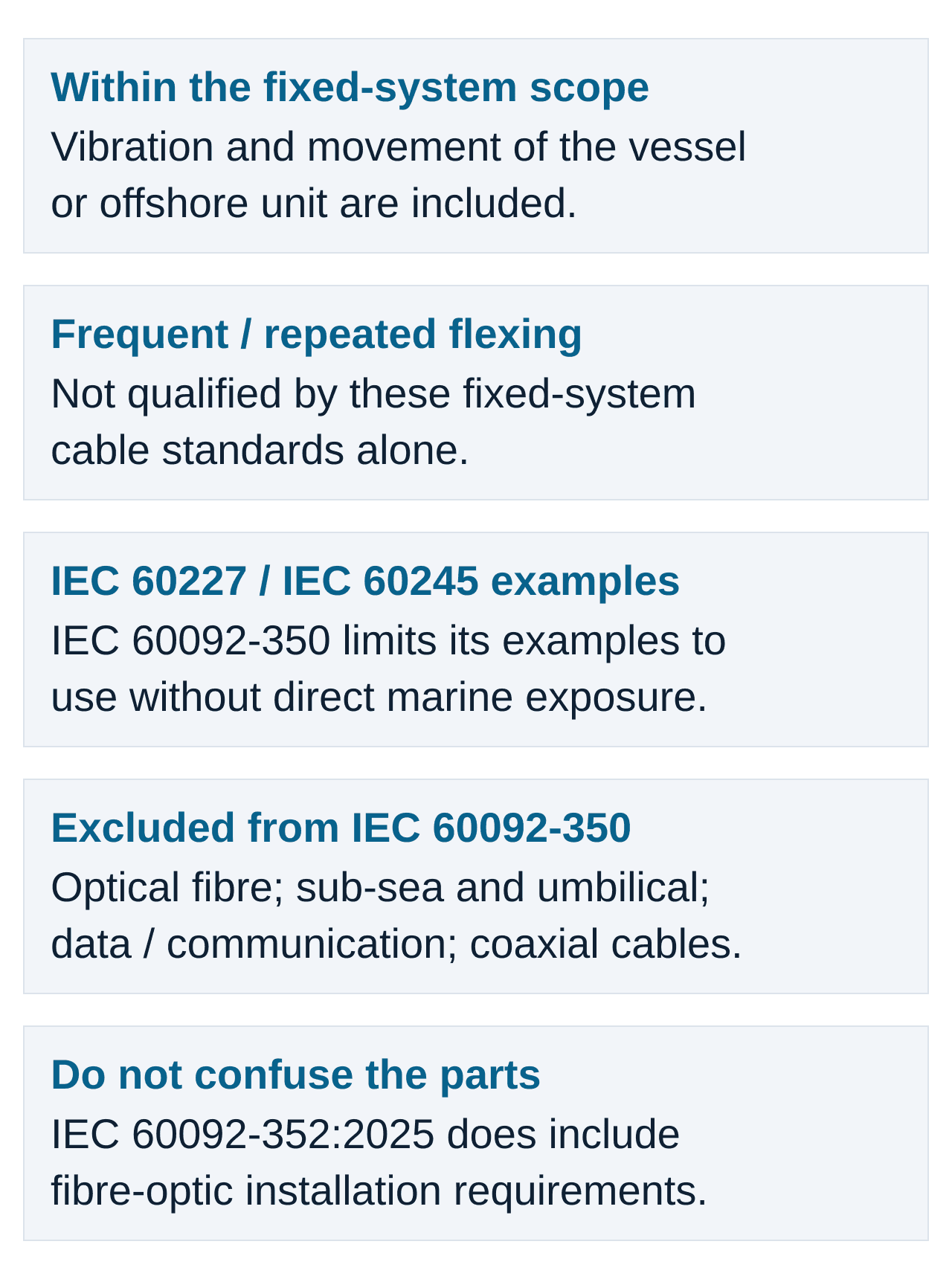
Figure 5. Fixed-system vessel or unit movement is distinct from frequent or repeated cable flexing. The IEC 60227/60245 examples in IEC 60092-350 carry a restriction against direct marine exposure.
Hazardous Areas and Fire
The latest editions added hazardous-area content. IEC 60092-353:2024 adds a table of additional tests for cables installed between areas with and without explosive atmospheres, and the IEC 60092-376:2025 listing adds design and test requirements for cables in explosive atmosphere areas and between such areas.
On fire, the IEC page says cables designed to maintain circuit integrity during a fire are included in IEC 60092-353, and that the IEC 60331-21 requirement was dropped from its Table 7. The IEC 61892-4 listing gives information on the jet fire test for hydrocarbon fire resistant cables. For flame, smoke and halogen tests, see our article on LSZH (low smoke zero halogen) cable standards.
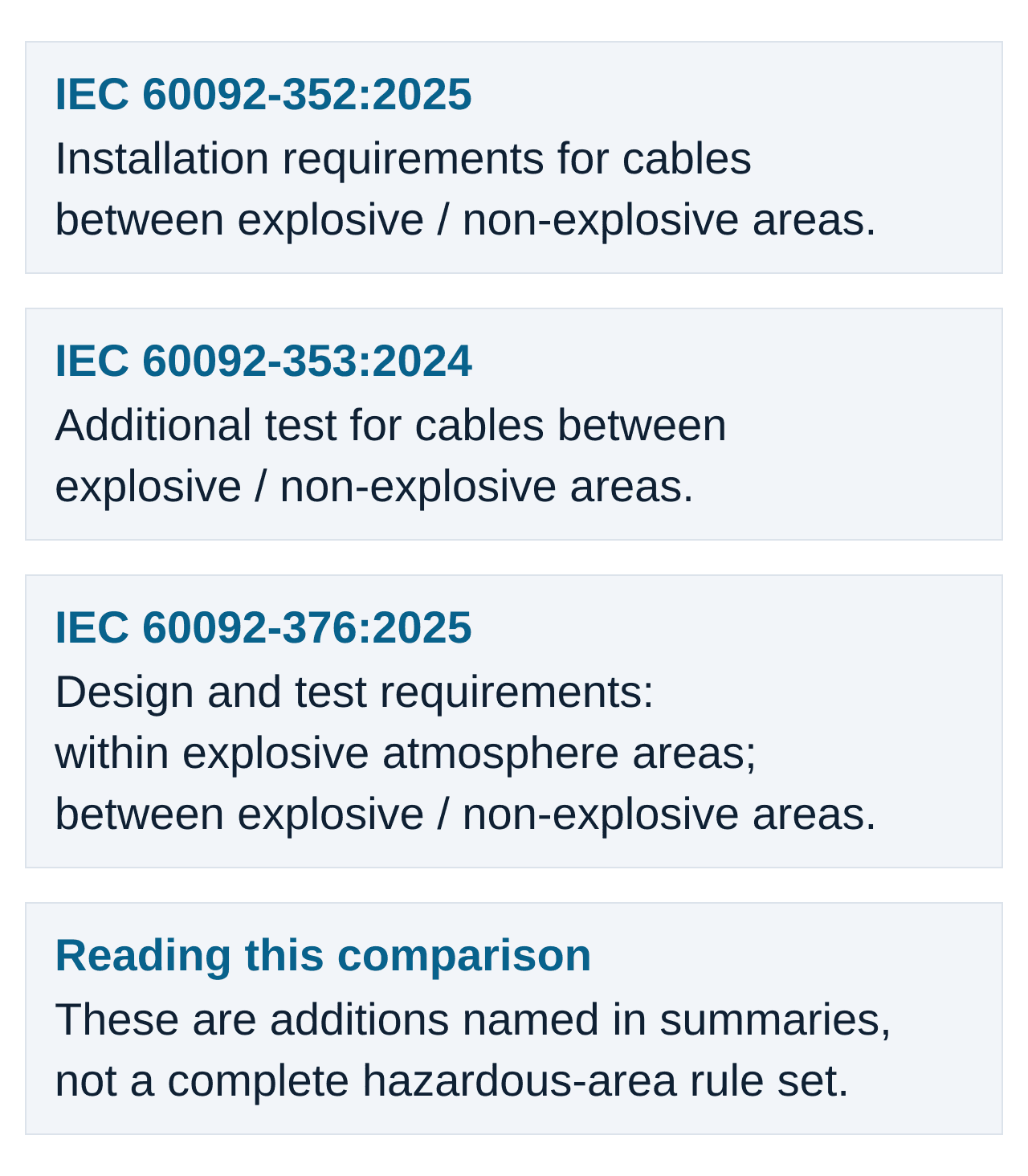
Figure 6. Hazardous-area additions explicitly named in the edition summaries. An omitted item is not evidence that the standard contains no requirement on that topic.
What to Write into the Order
- Name the part and the edition, for example "IEC 60092-353:2024", not just the series.
- State the rated voltage (U0/U), construction (radial or non radial field) and whether the cable is screened.
- State whether the cable is fixed or flexes in service, and how.
- State whether it runs in explosive atmosphere areas or between hazardous and non-hazardous areas.
- State the fire performance needed, including circuit integrity.
- State both selection and installation standards: IEC 60092-352 for ships; IEC 61892-4 for offshore cable selection together with IEC 61892-6 for installation, using the editions required by the project.
- Ask for test reports on the delivered construction.
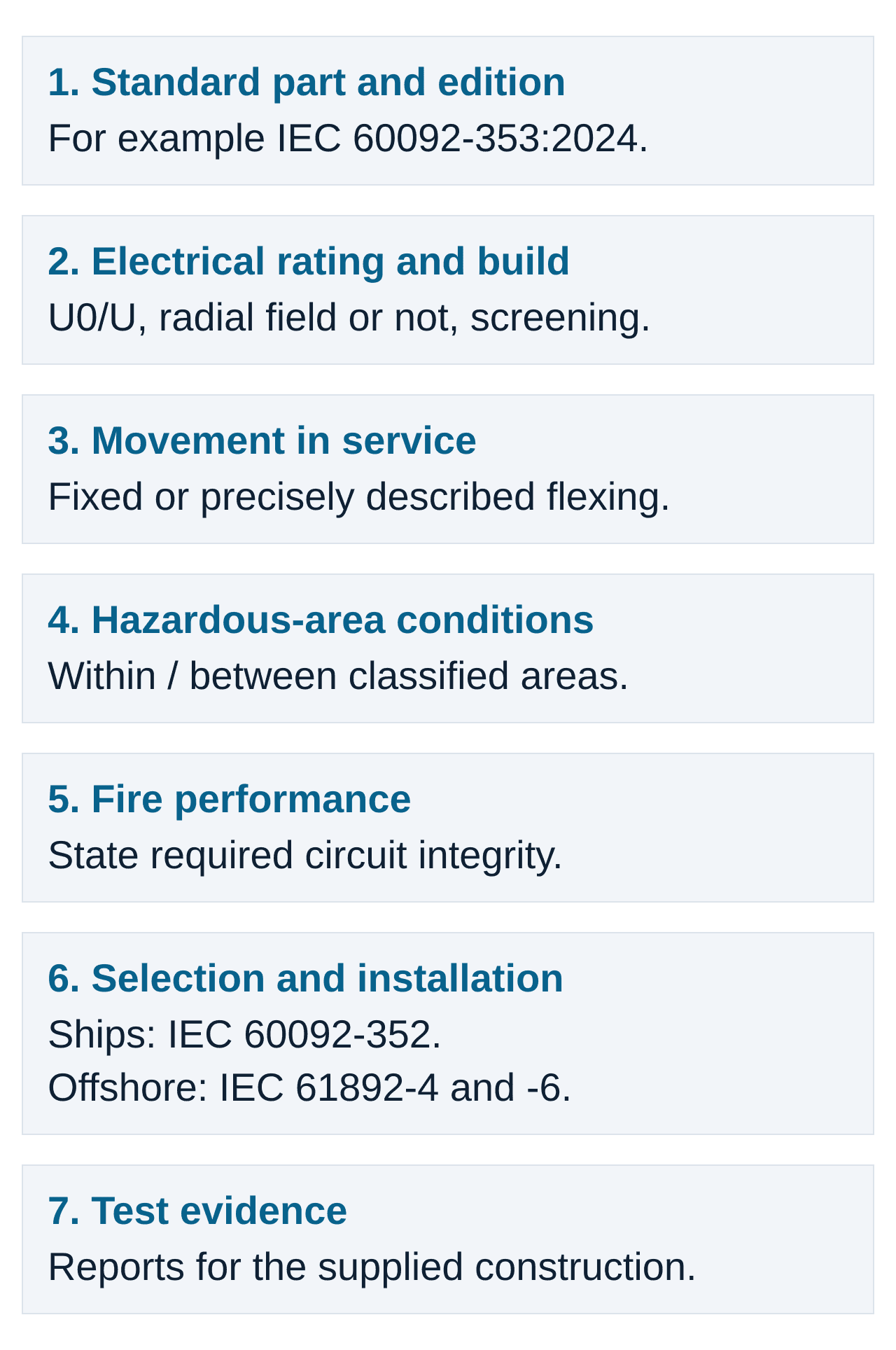
Figure 7. Seven ordering items, including both cable selection and installation requirements for offshore units.
Illustrative example. A fixed 1.8/3 kV power cable on an offshore unit, crossing from a hazardous to a non-hazardous area, with circuit integrity required. IEC 60092-353:2024 covers this power-cable range and includes an additional test for cables between those areas. Specify offshore selection under IEC 61892-4 and installation under IEC 61892-6. An example order line is: “Power cable to IEC 60092-353:2024, 1.8/3 kV, circuit-integrity type, with the additional test for cables between explosive and non-explosive areas; cable selection to IEC 61892-4:2019 and installation to IEC 61892-6:2019, subject to the project-specified editions, with test reports for the supplied construction.” This illustrates a generic unit; it is not a project record.
Frequently Asked Questions
Is IEC 60092-352:2005 still valid?
IEC 60092-352:2025 replaced the 2005 edition on 23 October 2025. Its scope includes fixed-system installation, symmetrical category cables and fibre-optic cabling. Check the edition required by your project specification.
What is the difference between IEC 60092 and IEC 61892-4?
IEC 60092 includes general construction in -350 and product parts for shipboard and offshore power and control cables. IEC 60092-352 covers shipboard cable selection and installation. IEC 61892-4 covers offshore cable selection up to 18/30 kV AC, with installation requirements in IEC 61892-6.
Can I use these cables where they flex?
Not on the basis of these fixed-system standards alone if the application involves frequent, continual or repeated flexing. Vibration and movement of the ship or offshore unit within a fixed system are not the same as repeated cable flexing. For a genuinely moving cable, specify a suitable construction, marine exposure and movement conditions, and require relevant flexing-test evidence.
Which part covers which voltage?
Per the listings: -376 covers 150/250 V (300 V) control and instrumentation, -353 covers 0.6/1 and 1.8/3 kV power, and -354 covers 3.6/6 to 18/30 kV radial field power cable.
Which edition of IEC 60092-353 is current?
The IEC issuer record lists IEC 60092-353:2024, published 6 June 2024, as edition 5 replacing the 2016 edition. Specify the year and the applicable project requirements; the inconsistent EVS description does not change the IEC publication history.
Discuss Your Marine or Offshore Cable Project
If you are choosing a cable for a vessel or offshore unit, send us the voltage, construction, movement and hazardous-area conditions. We will say plainly which parts of your specification we can support with test evidence and which we cannot. WhatsApp +86 185 9591 3361 or info@tebaoflex.com. See our certifications and contact pages, and our RFOU offshore platform case.
About the Author
TEBAOFLEX Jyen is Chief Operating Officer at Jiangsu Tebaoflex Special Cable Co., Ltd (about the company), a special cable supplier in Taicang, Suzhou, China, responsible for the company's online business.