

Mining cable testing proves quality at three points: type tests on the design, routine tests on every length before it leaves the factory, and checks after installation or repair. A large order of medium-voltage (MV) trailing, reeling or feeder cable should state which tests apply and at what levels. It should also say who may witness them and what the report must show.
A cable factory acceptance test (FAT) is where the buyer can witness those tests and check the report before shipment. Many mining regulators also expect repaired cables to be tested before they return to service. Buyers can specify these checks for cables in our mining and tunnelling range.
Our insulation resistance test video shows a 2,500 V measurement on a cable sample and a withstand-voltage control panel. Acceptance criteria for such a test come from the standard, the ordered specification and the issued test report.
Key Takeaways
- International Electrotechnical Commission (IEC) standard 60502-2 defines routine tests on each manufactured length and type tests before general supply. Its catalogue scope excludes mining cables.
- Flame resistance is the focus of Subpart K approval by the US Mine Safety and Health Administration (MSHA). The applicant or a third party tests, and MSHA may observe.
- The buyer may witness factory tests under one water utility's specification for fixed high-voltage (HV) cables. Notice is 14 days for tests in Australia or 21 outside it. The report is due within five working days or before shipment, whichever is earlier.
- Peru requires permanent splices in trailing cables at open-pit operations to be tested for continuity and insulation by qualified staff before service. Each production unit keeps a register of repairs and tests.
- In New South Wales (NSW), a safety alert describes a 10 kV direct current (DC) insulation test on an 11 kV cable network. Stored energy in the cables discharged through a worker.
Type, Routine and Sample Tests
Type tests assess a design, routine tests check every manufactured length, and sample tests check a share of production. The 2014 edition of IEC 60502-2 defines routine tests as tests "made by the manufacturer on each manufactured length of cable". Sample tests use completed cable or its components, taken "at a specified frequency". Type tests come before a cable type is supplied "on a general commercial basis".
Under the 1998 text, type tests "need not be repeated" unless changes to the materials, design or manufacturing process might change performance. That text also defines electrical tests after installation, made "to demonstrate the integrity of the cable and its accessories as installed". For oversheaths with a special protective function, IEC 60229 groups tests into routine tests, type tests and tests after installation.
Mining cables are tested to their own standards, because the catalogue scope of IEC 60502-2 excludes cables for "the mining industry". The catalogue records of the main mining standards give these scopes:
- AS/NZS 1802:2018: application, materials, construction, dimensions and tests for elastomer-insulated reeling and trailing cables in underground coal mines.
- AS/NZS 2802:2000: reeling and trailing cables for surface mining, non-coal underground mining and general use, from 1.1/1.1 kV up to and including 33/33 kV.
- SANS 1520-2:2020: HV flexible trailing cables for mines, reaffirmed on 23 July 2026.
- CSA C22.2 No. 96:23, from CSA Group, the Canadian standards body: construction and testing requirements for portable power cables subject to frequent flexing.
- S-75-381 from the Insulated Cable Engineers Association (ICEA): portable and power feeder cables for mines and similar applications.
- BS 6708:1998, for mines and quarries, was withdrawn on 22 May 2026; the British Standards Institution (BSI) notes it specified voltage, insulation and wrapping tests.
Our AS/NZS 2802 cable and DIN VDE cable standards page carry our design data. Our product pages and datasheets are design references, not approval or conformity certificates. The approval each jurisdiction requires is confirmed per order.
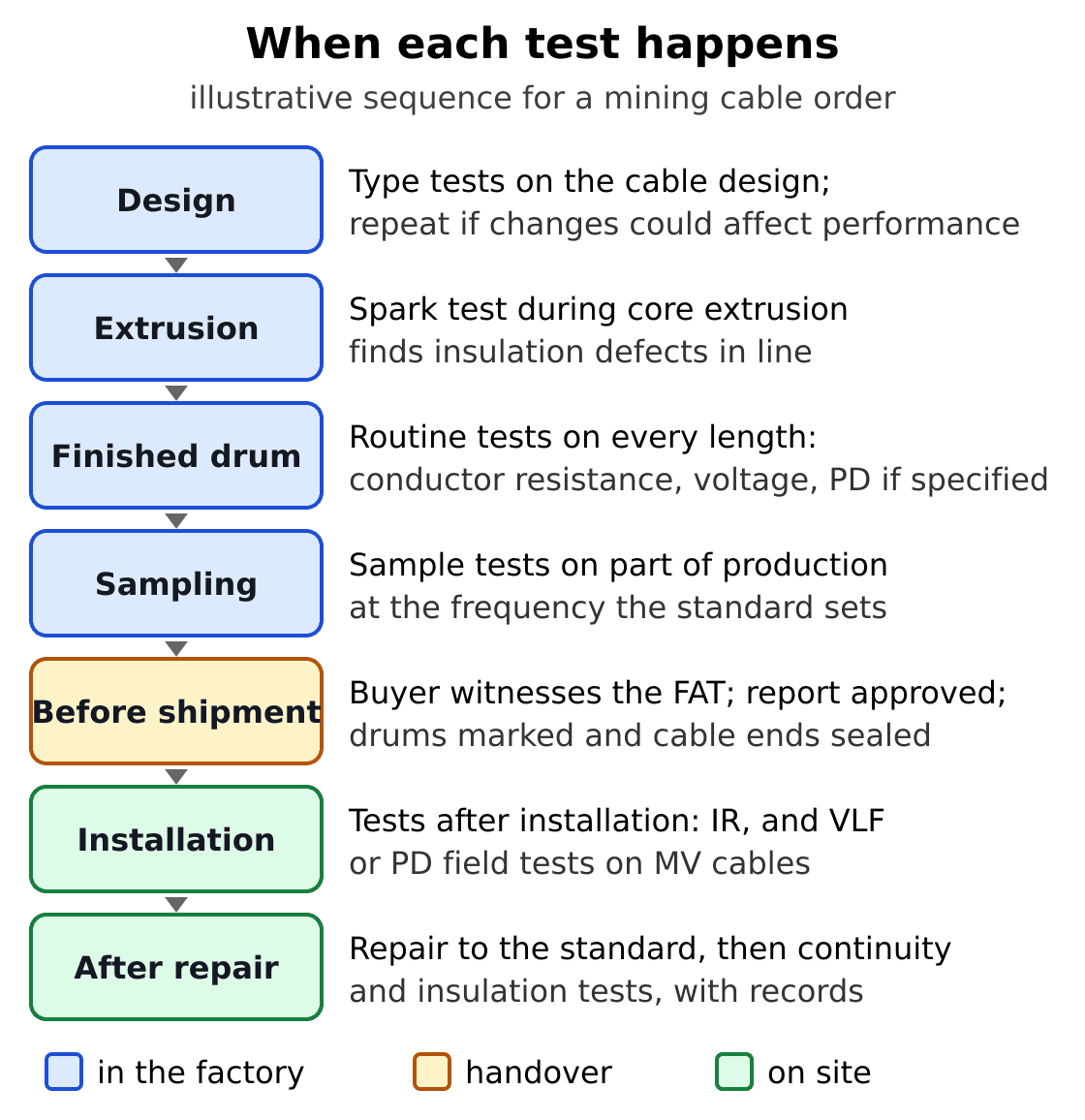
Illustrative sequence of tests for a mining cable order, from the type tests that prove a design to the checks after a repair. The cable standard and the order set which tests apply and at what levels.
When each test happens (text version)
- Design: Type tests on the cable design; repeat if changes could affect performance
- Extrusion: Spark test during core extrusion finds insulation defects in line
- Finished drum: Routine tests on every length: conductor resistance, voltage, PD if specified
- Sampling: Sample tests on part of production at the frequency the standard sets
- Before shipment: Buyer witnesses the FAT; report approved; drums marked and cable ends sealed
- Installation: Tests after installation: IR, and VLF or PD field tests on MV cables
- After repair: Repair to the standard, then continuity and insulation tests, with records
Routine Tests on Every Drum
Routine tests check conductor resistance, the voltage withstand of the insulation and, for MV cables, partial discharge (PD). The routine test clauses of IEC 60502-2 cover conductor resistance, a PD test, a voltage test and an electrical test on the oversheath.
Each conductor has a maximum resistance at 20 °C under IEC 60228. In the 2004 tables, that maximum for a 35 mm² class 5 copper conductor is 0.554 Ω/km plain and 0.565 Ω/km metal-coated. The current edition is IEC 60228:2023.
For PD, IEC 60885-3 gives test methods for lengths of extruded cable, not installed systems. IEC 60270 covers charge-based PD measurement, so results come in picocoulombs (pC), as one of our case pages notes. A spark test under IEC 62230 detects defects in insulation or sheathing layers. For single-core cables with no outer metallic layer, it is accepted as equivalent to a voltage test in water.
Our 12/20 kV excavator cable case reports the (N)TSCGECEWÖU order's alternating current (AC) voltage test: 29 kV for 5 minutes, with no breakdown. PD measured 2.0 pC against the order's 10 pC requirement, not a universal limit; the page gives no test voltage for that value. Conductor resistance was 0.529 Ω/km against 0.565 Ω/km.
At 0.6/1 kV, our stacker-reclaimer reeling cable case describes how one order was tested. Every insulated core passed a spark tester during extrusion, then a 3,500 V test under water. Finished drums were AC tested above the 3.5 kV, 5-minute level set for that order, with no breakdown.
A 1 m sample of a 70 mm² core measured 0.265 Ω/km at 20 °C. The 2004 IEC 60228 limits are 0.272 Ω/km plain and 0.277 Ω/km metal-coated.
Our (N)TSCGECEWÖU MV flexible cable datasheets list the same test voltages as our (N)TSCGEWÖU reeling cable from 3.6/6 to 12/20 kV. The chart below shows the values that reeling cable's datasheet lists by rated voltage.

AC test voltages our (N)TSCGEWÖU MV reeling cable datasheet lists for each rated voltage, from 6 kV at 1.8/3 kV to 43 kV at 18/30 kV. Our (N)TSCGECEWÖU datasheets list the same levels from 3.6/6 to 12/20 kV; our excavator case's 12/20 kV (N)TSCGECEWÖU order was tested at 29 kV for 5 minutes. Each order's test levels are set by its own specification, not by these datasheet values.
AC test voltage by rated voltage (text version)
- 1.8/3 kV: AC test voltage 6 kV
- 3.6/6 kV: AC test voltage 11 kV
- 6/10 kV: AC test voltage 17 kV
- 8.7/15 kV: AC test voltage 24 kV
- 12/20 kV: AC test voltage 29 kV
- 14/25 kV: AC test voltage 36 kV
- 18/30 kV: AC test voltage 43 kV
Type Tests and MSHA Approval
Type tests are usually done once per design, and approval schemes such as MSHA's add their own tests. For example, the type tests in IEC 60502-2 include bending, PD, heating cycle, an impulse test followed by a voltage test, and a 4-hour voltage test. Others cover ozone resistance of ethylene propylene rubber (EPR) insulation, oil immersion of elastomeric sheaths, flame spread on single cables and insulation screen strippability.
General requirements for testing insulating and sheathing materials sit in IEC 60811-100. One flame test is IEC 60332-1-2:2025, which checks vertical flame propagation on a single insulated wire or cable.
MSHA's cable approvals fall under Part 7 of Title 30 of the Code of Federal Regulations (CFR). Subpart K sets the "flame-resistant requirements for approval of electric cables, signaling cables and cable splice kit designs".
Part 7 testing can be done by the applicant or a third party. Under 30 CFR 7.4, applicants keep records of results and procedures for three years. If MSHA elects to observe, the applicant must let an MSHA official attend at an agreed date, time and place.
Under 30 CFR 7.405, each production run, batch or lot requires a flame-tested sample. Alternatively, samples of both flame-resistant materials and the cable or splice-kit assembly are inspected or tested to ensure flame resistance. Approved cable carries its approval number in markings no more than 3 feet (about 0.9 m) apart, under 30 CFR 7.409. Buyers can check that number against MSHA's list of accepted flame-resistant cables.
MSHA's electrical inspection handbook says its approval centre tests permanent splice kits "for the sole purpose of determining the flame-resistant qualities". The approval covers flame resistance, so insulation and voltage performance still rest on the electrical test reports.
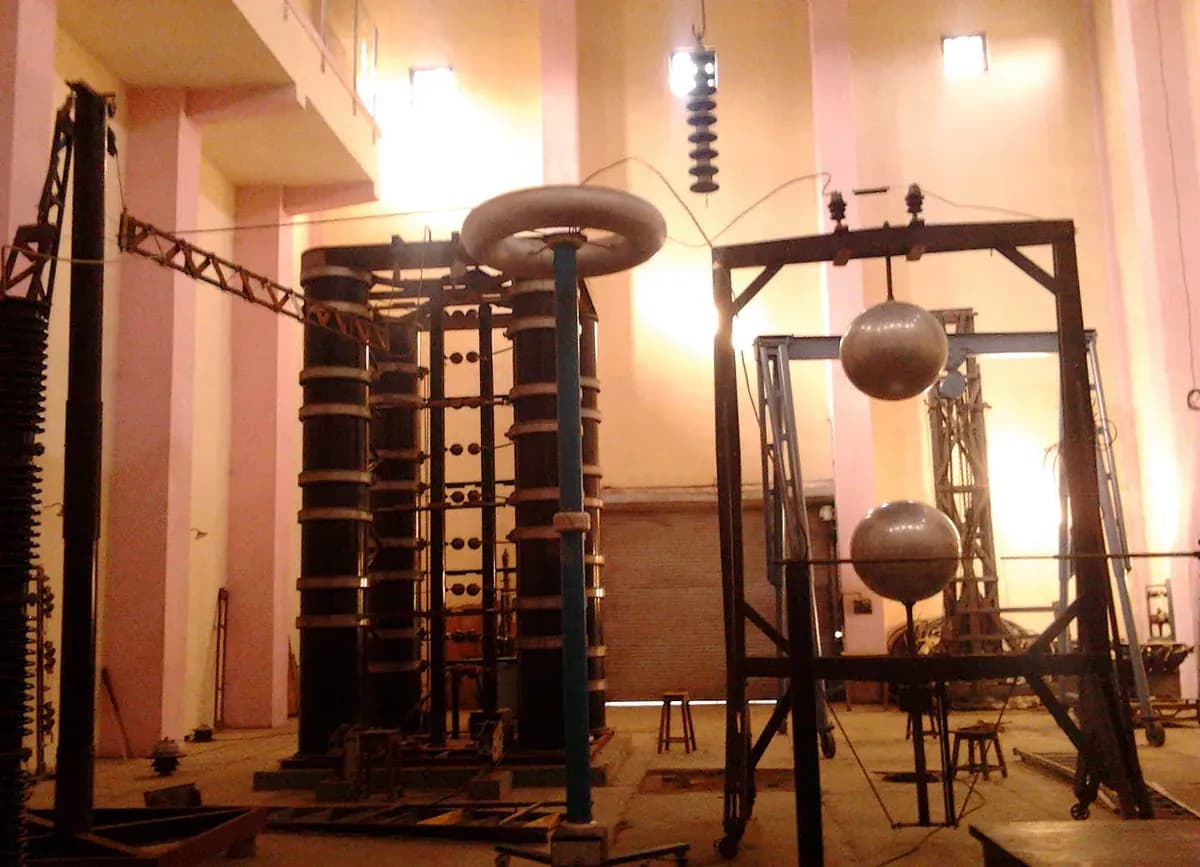
An impulse voltage generator and sphere gap in an engineering college's high-voltage laboratory, the kind of equipment used for impulse type tests. Photo: "Jabalpur Engineering College (JEC)'s High Voltage Lab" by R K Alaria, CC BY-SA 3.0, via Wikimedia Commons, resized.

Factory Acceptance Test: Witnessing and Reports
Write witness rights, the notice period, report contents and a shipping hold into the order. One Australian water utility's HV cable specification (version 4, March 2025), for fixed cables to AS/NZS 1429.1, shows the pattern. Its routine factory tests before shipment include conductor examination and resistance, an outer sheath spark test, PD and an HV test. Chile adds a legal angle: DS 132 Art 422 requires mine materials and equipment to be of a quality certified by an authorised body.
The utility must be given the chance to witness, with 14 calendar days' notice for tests in Australia and 21 outside it. All results must be available for review during the tests. The Factory Test Report is due within five working days of the tests or before shipment, whichever is earlier. It carries the results, factory defect or punch lists and a compliance statement, and defects are fixed before shipment unless agreed otherwise.
Type test reports come with a covering report that must explain "why any differences do not affect the integrity of the type tests". Drum markings include length, direction of roll, maximum pulling tension, minimum bending radius and the position of cable ends. Cable ends must be sealed by an approved method "to prevent the ingress of moisture".
Our 12/20 kV mining order had similar terms. The customer wanted every drum tested and the report sent for approval before shipping, with measured results rather than pass marks. That meant conductor and earth resistance corrected to 20 °C, the voltage test, insulation resistance (IR) and verified dimensions, plus PD results, screen inspections and a Declaration of Conformity. Those inspections look at the screens described in our shielded cable guide.
The case page notes that its summary gave IR as about 5,000 MΩ at 2.5 kV without the tested length, temperature or reading time. Ask for the test conditions behind every value.
Testing Repaired Trailing Cables
Many jurisdictions require damaged trailing cables to be repaired to a standard and tested before use, with records kept. Our shovel and dragline trailing cable guide covers cables these rules address.
Australia, Latin America and Africa
- Queensland: s 189 requires underground coal mines to have a system for repairing and testing reeling, trailing and feeder cables. A defective cable stays out of use until effectively repaired and tested, unless only its outer sheath was damaged and repaired to a competent person's satisfaction.
- Western Australia: r 641E(d) requires trailing and reeling cables to be repaired and tested to AS/NZS 1747:2003, which the 2022 edition has since superseded. The 2022 edition covers underground coal, metalliferous and open cut mines, tunnelling, quarries and dredges.
- NSW: a code of practice (May 2025) quotes the regulation requiring circuits to be tested by a competent person before first energising, including after recommissioning. It expects records of those tests. In underground coal mines, repairing flexible reeling, feeder or trailing cables for hazardous zones is licensed. Signatory applicants need 2 years' repair experience, including 8 months testing cables.
- Peru: DS 024-2016-EM requires permanent trailing cable splices at open-pit operations to be tested for continuity and insulation by qualified staff before service.
- Chile: DS 132 Art 423 requires repairs to restore conductivity, insulation and protective covers.
- South Africa: reg 3.25 (2015) requires reasonably practicable measures so no flexible or trailing cable has over 15 joint repairs, including sheath patches, per 200 metres. Joints, repairs and patches must sit at least 5 metres apart and 3 metres from the plug or terminal connection.
United States
In US underground coal mines, 30 CFR 75.604 requires permanent trailing cable splices to be mechanically strong, conductive, flexible, insulated and sealed against moisture. Splices must be treated to provide flame resistance and a good bond to the outer jacket. Kits must be accepted or approved by MSHA as flame resistant.
30 CFR 75.810 bars temporary splices in HV trailing cables. The coal splice rules describe how splices are made, not a test after splicing.
In underground metal and nonmetal mines, 30 CFR 57.12013 requires permanent splices and repairs to be insulated "to a degree at least equal to that of the original". 30 CFR 57.12028 then requires continuity and resistance tests of grounding systems immediately after installation, repair and modification, and annually. Surface mines have parallel requirements in 30 CFR 56.12013 and 30 CFR 56.12028.
MSHA's handbook says approved splice kits must be applied without substitution or alteration of parts. It tells inspectors to check a representative number of shielded splices with a non-contact voltage detector.
Field Tests: Insulation Resistance, VLF and DC
IR tests are quick checks, very low frequency (VLF) and PD tests assess MV insulation in the field, and DC tests carry risks. The Institute of Electrical and Electronics Engineers (IEEE) covers field testing of shielded power cable systems rated 5 kV and above in IEEE 400-2023.
IEEE 400.2-2024 covers VLF withstand and diagnostic tests using AC voltage below 1 Hz; IEEE 400.3-2022 covers field PD diagnostics. In Canada, CSA M421:23, the standard for electricity in mines, revised clause 7.6.2 to add a note to use IEEE 400 test methods.
An Electric Power Research Institute (EPRI) report from 1995 found that DC testing harms aged cross-linked polyethylene (XLPE) cable. Utilities were advised not to DC test XLPE cable after it had been energised in service. The finding concerns aged XLPE utility cable, not EPR mining cable.
IR readings fall as tested length grows, so our stacker-reclaimer case explains normalising them to MΩ·km. Our NTSKCGEWÖU insulation test video shows main and control cores tested separately at 2,500 V. Our mine power feeder cable guide covers feeder field tests.
Testing Safely
HV test sets and charged cables can kill, so testing needs isolation, discharge and trained people. In Queensland underground coal mines, s 187(2)(d) addresses live-testing procedures in a non-explosion-risk zone. They must cover using HV test equipment and discharging stored energy after testing.
In 2005, an electrician was killed at the office of a Kentucky underground coal mine while demonstrating a high-potential cable tester rated to 10 kV. MSHA's report found that proper precautions, including personal protective equipment, were not taken before high-voltage mode was used.
NSW safety alert SA08-01 (2007) advises applying test set earth connections first and removing them last. A 2016 NSW incident summary reports an electrician shocked while discharging a tested longwall monorail cable. It says IR testing should only be done by trained, assessed and appointed electricians.
In 2020, workers at a Georgia surface sand mine with an electric dredge spliced a trailing cable with the wrong phase rotation. During the repair, a worker died after contacting components in a 4,160 V enclosure. MSHA's root causes include no policy limiting HV work to trained miners.
What to Write Into the Order
An order should name the cable standard, inspection and test plan (ITP), witness rights, report contents, shipping requirements and field test duties. Our stacker-reclaimer case notes that its checks find broken cores and insulation faults, not factory joints. Buyers who care about joints should ask in writing.
- Standard and type. Name the cable standard, type and required approvals.
- Routine tests. List each test with its voltage and duration, and give the PD limit at a stated test voltage.
- Sample tests. State which sample tests apply and how often.
- Type test reports. Ask for full reports and a covering note on why any differences do not affect them.
- Witness rights. Set who may witness and the notice period.
- Drum reports. Require a report for each drum, with measured values and test conditions, before shipment.
- Drum marking and ends. Specify the marking items and sealed cable ends.
- Site and repair tests. Agree tests after installation and after repair, with records.
Frequently Asked Questions
What is the difference between a type test and a routine test?
A type test qualifies a cable design, while a routine test checks every manufactured length before delivery. Routine tests in IEC 60502-2 include conductor resistance, PD and voltage tests. Its 1998 text says type tests need not be repeated unless materials, design or process changes might alter performance.
Does IEC 60502-2 apply to mining cables?
No, IEC 60502-2 does not cover mining cables. Its catalogue scope excludes cables for "the mining industry" among other special installation and service conditions. The test definitions remain useful common terms, but mining cables are specified to standards such as AS/NZS 1802, SANS 1520-2 or CSA C22.2 No. 96.
Should a cable FAT cover every drum?
Yes, routine tests should cover every drum, with the report reaching the buyer before shipment. Our 12/20 kV mining customer asked for that. One water utility's fixed HV cable specification wants the report within five working days of testing or before shipment, whichever is earlier.
What partial discharge level should a buyer ask for?
Ask for a PD limit in picocoulombs at a stated test voltage, taken from the cable standard or agreed for the order. Our 12/20 kV order measured 2.0 pC against a 10 pC order requirement, not a universal limit; its summary states no test voltage. IEC 60885-3 gives test methods for cable lengths, and ICEA lists a PD test procedure, T-24-380.
How should a repaired trailing cable be tested?
Test a repaired trailing cable for continuity and insulation before service, as the local rule or repair standard requires, and record the results. AS/NZS 1747:2022 sets requirements for repairing and testing reeling, trailing and feeder cables. In US metal and nonmetal mines, 30 CFR 56.12028 and 57.12028 require grounding tests after repair for surface and underground mines respectively.
Is DC hipot testing safe for MV cables?
Not always: DC hipot (high-potential) testing can harm aged XLPE cable, and charged cables can shock workers. A 1995 EPRI report found it harms aged XLPE, and utilities were told to avoid it after service. The finding concerns utility XLPE, not EPR mining cable. An NSW alert describes stored energy from a DC test discharging through a worker.
Enquire About Cable Testing
To enquire, send our engineering team the cable type and standard, the test list and levels, and your witness plan. Include the report format, drum and shipping requirements, and the site test plan. Use our contact page to send them.
About the Author
Jyen is a technical and operations engineer at TEBAOFLEX, responsible for the company's online platforms. This guide draws on US federal mine safety rules and MSHA reports, and on Australian, Peruvian, Chilean and South African mining rules and guidance. It also uses a water utility specification, standards catalogue records and TEBAOFLEX case pages and datasheets. The product pages cited are TEBAOFLEX's own; requirements quoted from regulators and standards bodies describe their scope, not certification or approval of our products.
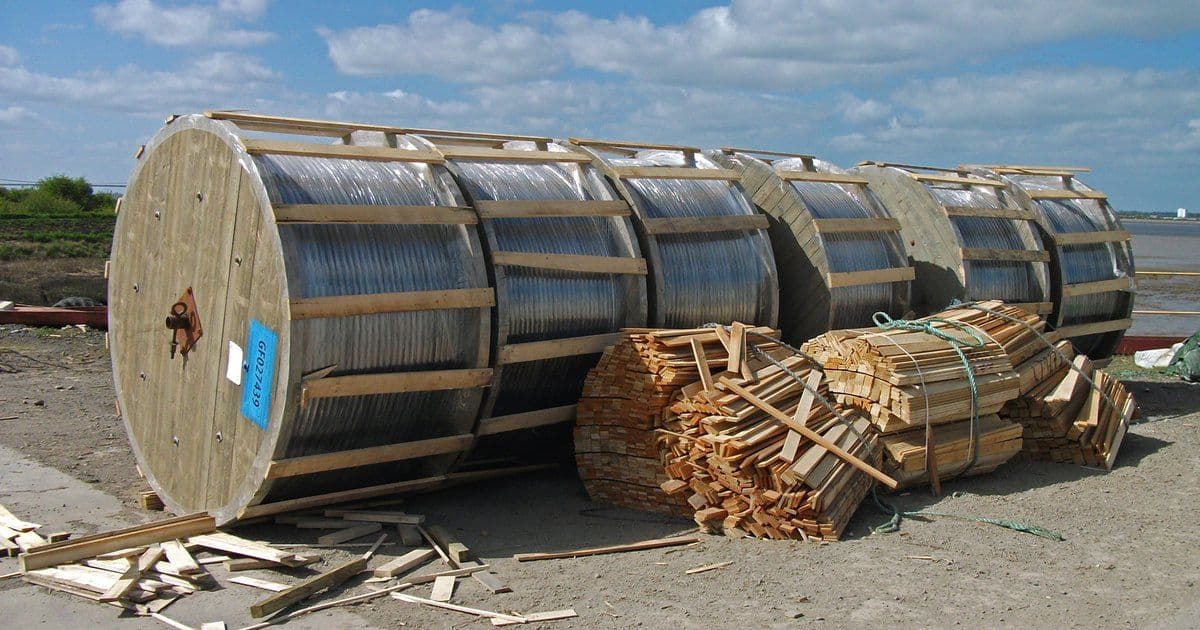
Cover photo: "Power Cable Reels" by David Wright, CC BY-SA 2.0, via Wikimedia Commons, cropped.
