
Video
What the video shows
The video combines close views of a yellow 0.6/1 kV (N)SHTÖU-J 3 × 185 + 3 × 95/3 sample (the labelled cross-section, the printed cable on the line, finished cable on a drum and a cut cross-section held by hand) with footage from TEBAOFLEX's own production line.
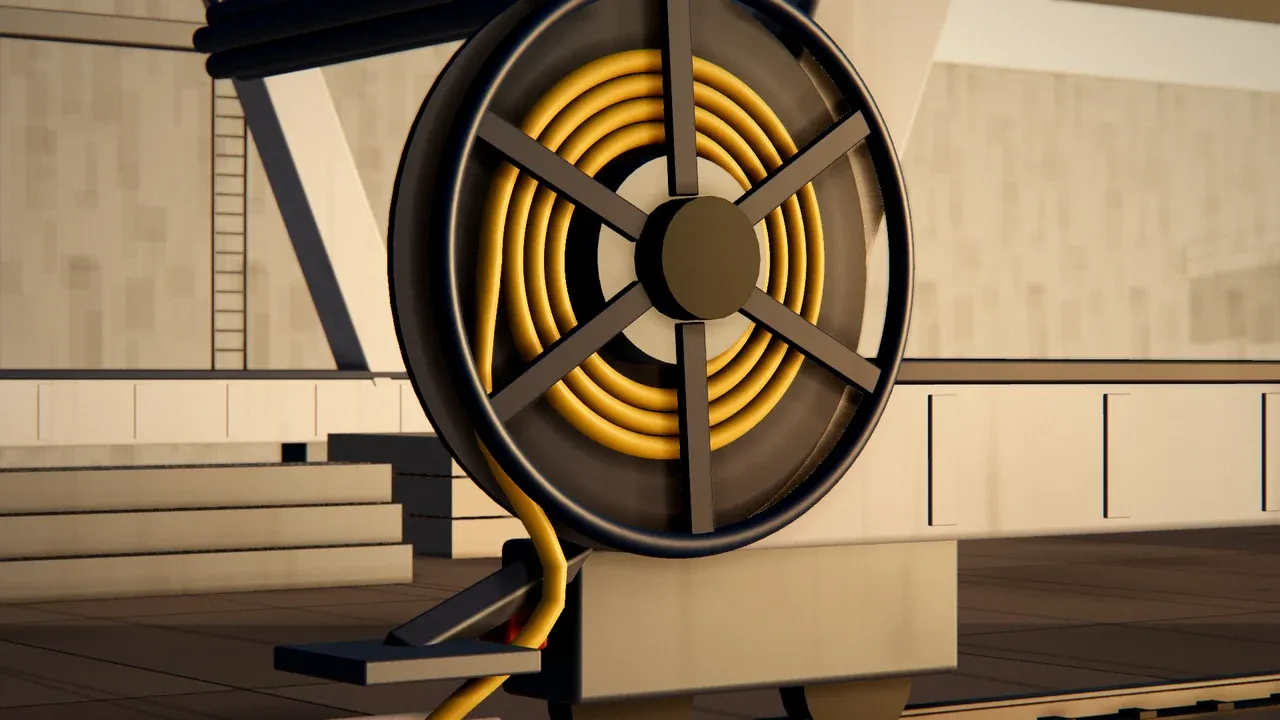
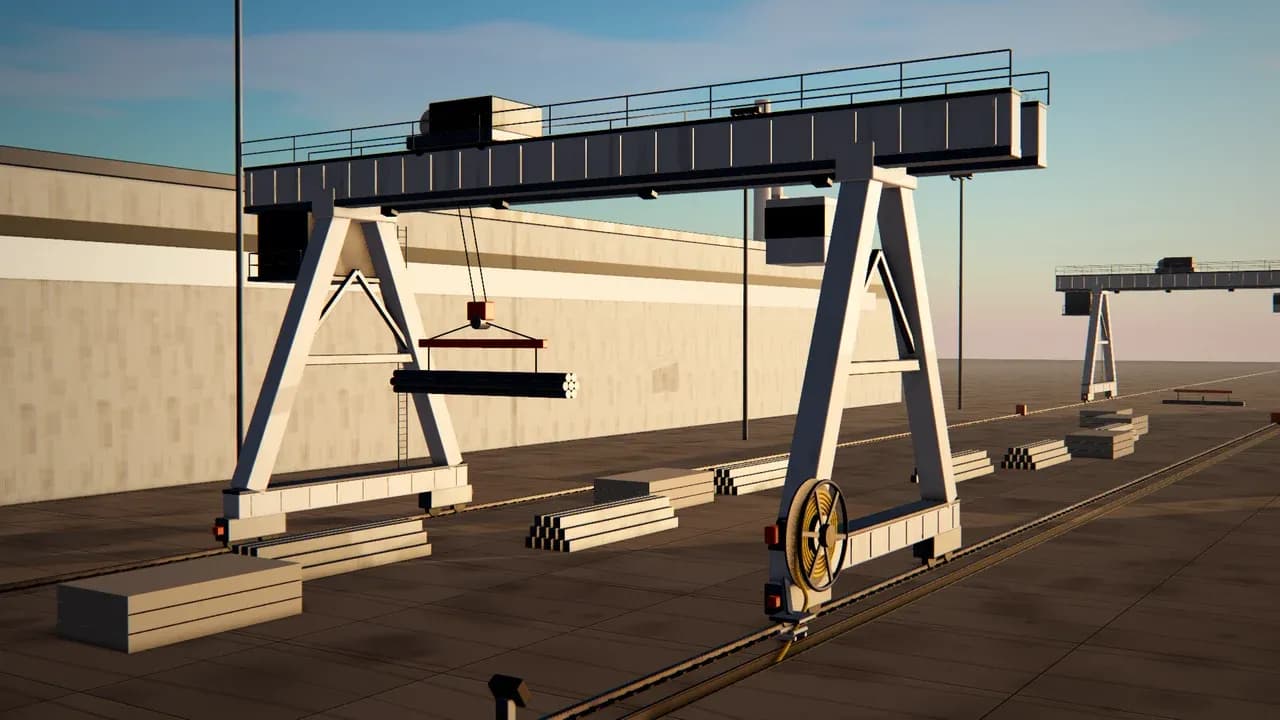
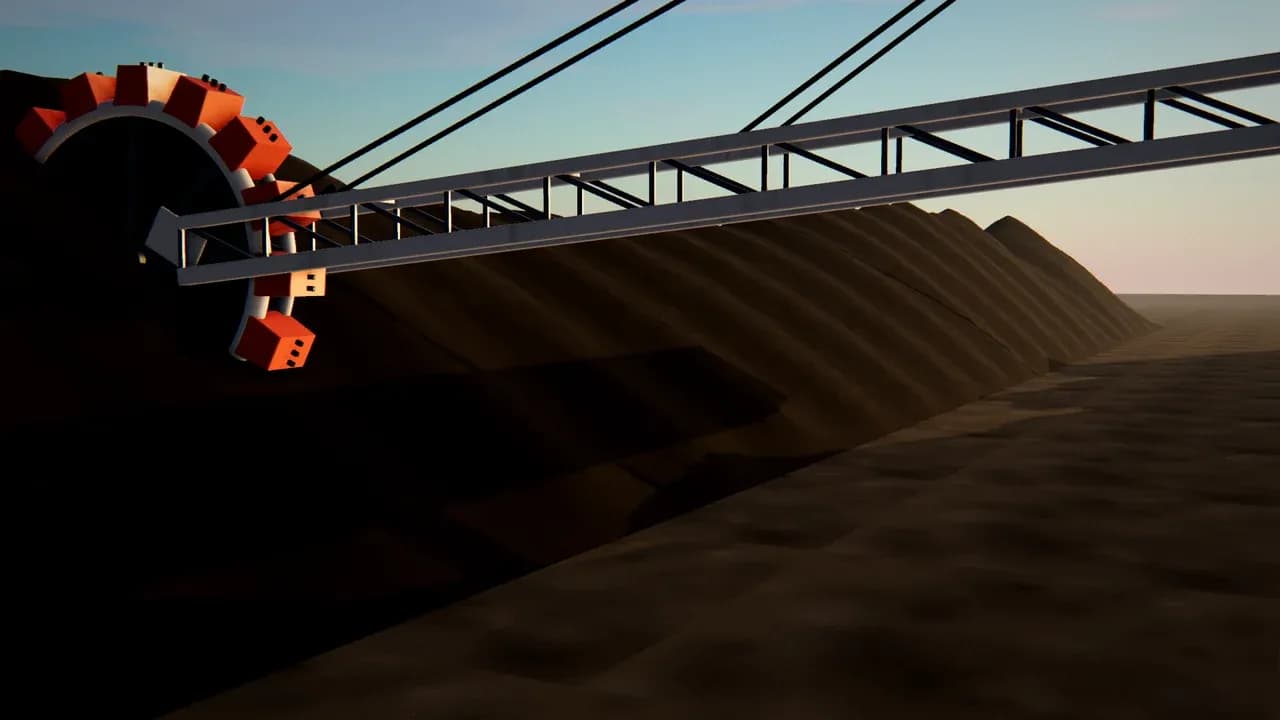
Two 3D animations illustrate where this type of cable typically works: a rail-mounted gantry crane whose motorized cable reel pays the cable out and takes it back as the crane travels, and a bucket-wheel stacker-reclaimer powered through its own reel in a bulk-handling yard. The animations are schematic illustrations, not site footage, and are not to scale.
The video illustrates a sample, process, or operating context. Final product construction, suitability, standards, and test acceptance criteria are confirmed against the ordered specification.
NSHTÖU product specifications
Review construction, applications and enquiry requirements for the NSHTÖU 0.6/1 kV rubber reeling cable.
NSHTÖU product specificationsA Reeling Cable for Moving Equipment
(N)SHTÖU-J, also written (N)SHTOEU-J or NSHTOU-J, is a 0.6/1 kV rubber reeling cable for mobile equipment that needs continuous power while it moves. The video follows one sample from the production line into two typical reeling duties and back to its cross-section.
Why a Reeling Cable Has to Follow the Machine
A fixed cable cannot follow a machine's working path. On a crane runway, a conveyor traverser or a mobile handling machine, a reeling cable carries power and control circuits between fixed supply equipment and the moving machine, while a drum pays it out and takes it back. The cable is repeatedly wound, unwound and guided along the operating route, so its construction has to cope with repeated bending while tensile and torsional stress act at the same time.
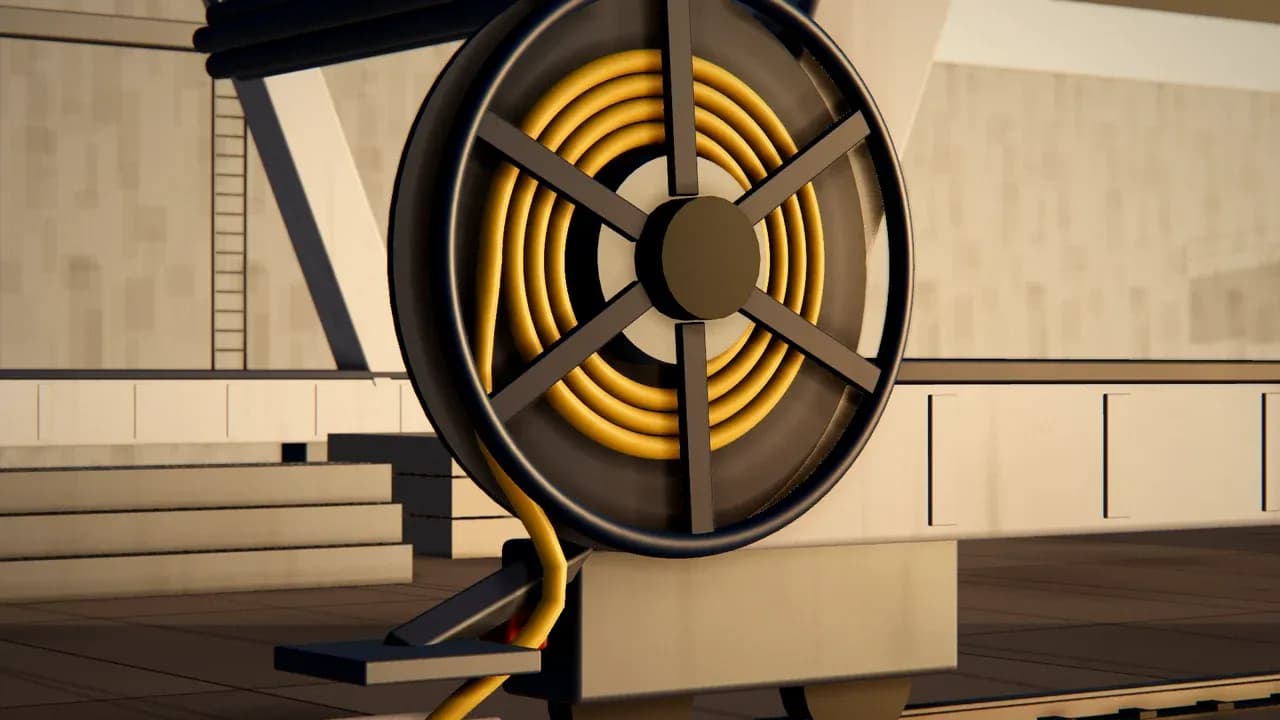
Application 01: Gantry Crane with a Motorized Cable Reel
In the first animation, the reel sits on the crane's sill beam on the feed side. As the crane travels away from the centre feed point, the drum pays the cable out through a guide into a trench beside the rail. When the crane returns, the drum takes the cable up again, so it stays guided instead of being dragged. Cranes, hoists and lifting equipment, together with horizontal cable-reel and drum systems, are among the applications listed for the NSHTÖU family. The 0.6/1 kV rating suits low-voltage machine supplies; medium-voltage reel circuits call for a medium-voltage reeling cable.
Application 02: Stacker-Reclaimer in a Bulk-Handling Yard
The second animation shows a bucket-wheel stacker-reclaimer travelling along a coal stockpile, fed through a motorized reel in the same way. Bulk-handling machinery moves alongside dirt, moisture and mechanical contact. Conveyors and material-handling machinery, and dry, damp, wet and outdoor industrial environments, are part of the family's listed duties, and TEBAOFLEX reeling cable is already in service on customer stacker-reclaimers. Related cables for these machines are grouped under cranes and material handling.
Inside the Cable: 3 × 185 + 3 × 95/3
The sample is a 3 × 185 + 3 × 95/3 construction: three 185 mm² phase conductors, with a 95 mm² protective earth divided into three green-yellow cores that sit in the gaps between them. This puts power supply and protective earth in one flexible cable. The J suffix marks the version with a green-yellow protective conductor. The NSHTÖU family uses IEC 60228 Class 5 fine-stranded copper conductors and rubber insulation, with a maximum conductor operating temperature of 90 °C, and is identified with DIN VDE 0250-814 as its construction standard. Confirm the complete construction of the ordered size against its datasheet.
What to Send Us for Cable Selection
Reel type, travel distance and mechanical load should be considered during cable selection. For a quick recommendation, send:
- the reel type and the drum barrel, flange and guide-roller dimensions;
- the travel distance and the cable length that stays on the drum;
- the mechanical load: travel speed, acceleration, reversals and the cable mass being moved;
- the system voltage, load current and the number of power, control and earth cores;
- the ambient conditions along the route, such as outdoor, wet or abrasive exposure.
We will analyze your application and recommend the right cable. See also How to Choose a Crane Reeling Cable in 7 Steps and the full reeling cable range.
Frequently Asked Questions
Are (N)SHTÖU-J, (N)SHTOEU-J and NSHTOU-J the same cable type?
Yes. They are spellings of the same type designation; OE replaces Ö where the umlaut is not available. The J suffix identifies a version with a green-yellow protective conductor, while O versions have none.
Can the cable be used on a vertical reel or in a basket?
NSHTÖU is positioned for horizontal drum and reel systems. Vertical suspension and basket service impose different load paths and need their own cable-management specification.
Why does the length left on the drum matter?
Turns that stay wound on the drum release heat differently from cable that is fully paid out. Current selection therefore depends on conductor size, installed length, circuit arrangement, ambient conditions and the reel's operating state, with VDE 0298-3 and VDE 0298-4 as the reference for bending and current-rating guidance.